Tag Archives: pernod ricard india

Blenders Pride Launches Zenith Black Edition

Blenders Pride, a leader in India’s premium whisky segment, has launched Blenders Pride Zenith Black Edition, a limited-edition expression. One million bottles of Zenith Black will be available in Pan-India markets soon. Presently, it is available in exclusive stores only.

Encased in a striking black design that signifies luxury, the Zenith Black Edition is crafted for discerning whisky connoisseur, for the One in a Million.

Long associated with Blenders Pride, black now takes centre-stage in an innovative design expression that redefines the codes of premium whisky.

Debashree Dasgupta, CMO, Pernod Ricard India, said, “Blenders Pride continues to redefine the benchmarks of premium whisky in India. The launch of the Zenith Black Edition marks the brand’s most refined expression yet—an evolution that translates its enduring legacy into a bold new design language. This year, Blenders Pride brings its core values to life through an aesthetic that celebrates aspiration, distinction, and craftsmanship. Limited to one million bottles, the Zenith Black Edition is created for individuals who don’t merely admire excellence—they embody it.”


December 2025 Issue

The December 2025 issue of Ambrosia is now live! (Click here)

The December 2025 issue of Ambrosia Magazine is here!

It features engaging and insightful articles such as:

• INDSPIRIT 2026
• What to expect in 2026
• Updates on the MML vs ISWAI case
• Pernod Ricard: India’s bet on repertoire drinking
• India’s alcohol economy in 2025: Scale, state power, and structural friction
• Court allows PLL holders to register labels, pending final order
• Exclusive interviews with Pernod Ricard and Bacardi, and many more

As 2026 Beckons: Reading the Signals of a Changing Alcobev India

INDSPIRIT 2026 and Tunes & Tonic Announced

If the final month of this year is anything to go by, 2026 promises to arrive with more than just optimism — it comes with momentum. The year gone by has been anything but quiet for India’s alcobev industry. From the Maharashtra government’s face-off with ISWAI to intense conversations around state control, taxation, and regulatory balance, 2025 has underlined how scale, state power, and structural friction continue to define this business. Yet, amid these challenges, the industry has also demonstrated resilience, adaptability, and an unmistakable appetite for growth.

Throughout the year, Ambrosia has stayed at the forefront of these developments — tracking policy shifts, decoding consumer behaviour, and spotlighting growth stories that make India’s alcobev landscape one of the most dynamic in the world. It is an industry shaped as much by regulation as it is by aspiration, and one that continues to evolve at a pace few global markets can match.

And speaking of consumer behaviour, 2026 will also mark the 21st edition of INDSPIRIT 2026, alongside the debut of Tunes & Tonic, a new consumer-facing experience set to take place in Gurugram on 6–7 March 2026. Together, these events promise to be bigger, bolder, and more immersive — celebrating the industry’s achievements while creating an energetic, music-led atmosphere that resonates with today’s experience-driven consumer.

In this issue, we continue that focus. Our editorial lens turns firmly toward the year ahead, unpacking insights that help decode where the Indian consumer is headed in 2026. From changing drinking occasions and premiumisation to the growing influence of moderation, mixers, and experience-led consumption, these stories are designed to help brands, distributors, and industry stakeholders plan better — whether that means sharper portfolios, smarter strategies, or more meaningful consumer engagement.

For those looking to understand the year that was, our feature India’s Alcohol Economy in 2025 offers a comprehensive snapshot of the forces that shaped consumption, regulation, and market sentiment. Built on perspectives from industry leaders, the article captures both the pressures and possibilities that defined the past year.

Equally compelling are our conversations with Jean Touboul, CEO of Pernod Ricard India, and Inderjit Singh Dhingra of Bacardi. Their insights shed light on how consumer preferences are shifting, how brands are responding, and what trends are likely to shape portfolios and conversations in the year ahead.

As the industry steps into a new year, one thing is clear — 2026 will reward those who listen closely to the market, adapt swiftly to change, and remain committed to quality and relevance. The challenges are real, but so are the opportunities. At Ambrosia, our endeavour remains unchanged: to inform, to question, and to provide clarity in a fast-evolving landscape. As the next chapter unfolds, we look forward to chronicling an industry that continues to redefine itself — one decision, one policy, and one drink at a time.

Inside Pernod Ricard India’s Bet on Repertoire Drinking

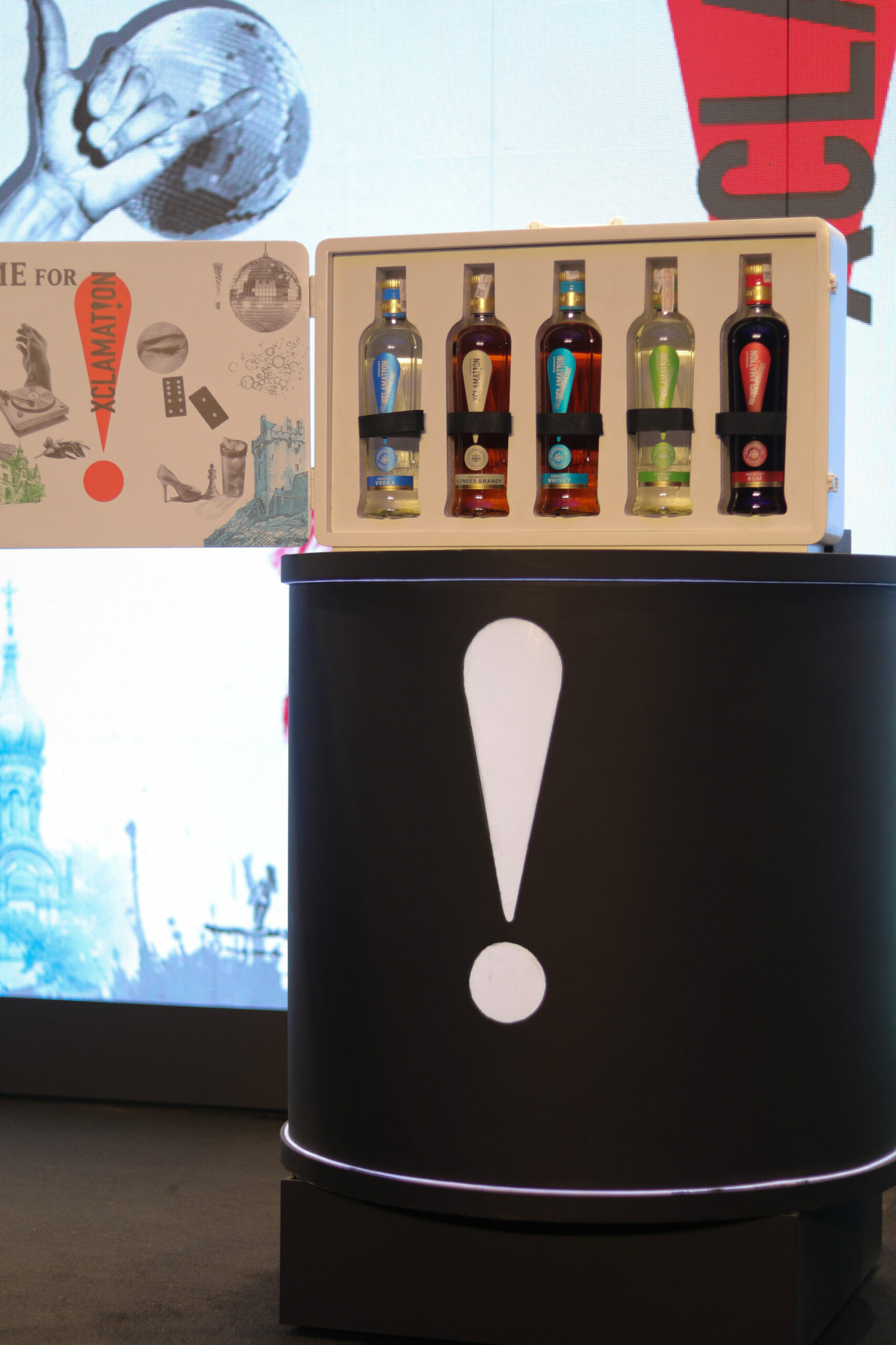
Seagram’s Xclamat!on unites whisky, gin, vodka, rum, and brandy under one name, responding to a generation that values flexibility, quality, and continuity across occasions.

India’s premium spirits market has been changing in ways that are subtle yet consequential. The shift is visible less in headline numbers and more in how people drink. Younger urban consumers are increasingly comfortable moving across categories, assembling their preferences around setting, company, and mood. A whisky-led evening may give way to gin another night, vodka on a different occasion, with brand trust travelling across those choices. Pernod Ricard India’s introduction of Seagram’s Xclamat!on sits squarely within this behavioural turn.

Launched as a single brand spanning whisky, vodka, gin, rum, and brandy, Xclamat!on reflects an attempt to respond to how consumption now unfolds in practice. The idea grew out of sustained engagement with drinkers in the 26–35 age bracket, a segment that shows high openness to experimentation alongside a growing insistence on quality. Jean Touboul, CEO of Pernod Ricard India, has observed that this cohort seeks “choice beyond whisky, with drinking acting as an expression of personality.” That insight pointed to a wide, under-addressed space: aspirational, price-aware, and underserved by structures that traditionally separated spirits into rigid compartments.

Xclamat!on has been positioned within this space with restraint. A uniform price architecture across five spirits introduces clarity, while distinct liquid identities preserve individuality. The brand does not require consumers to recalibrate expectations when shifting categories. It reflects repertoire-led drinking as an established behaviour.

A Unified Label for a Plural Consumer

For a company with a long history of category-specific branding, bringing five spirits under one label marks a notable shift. Xclamat!on is Pernod Ricard India’s first unified brand, conceived in response to consumption habits that privilege flexibility and situational choice. Internal research highlighted higher discretionary spend, increased at-home occasions, and a clear movement beyond whisky-centric consumption.

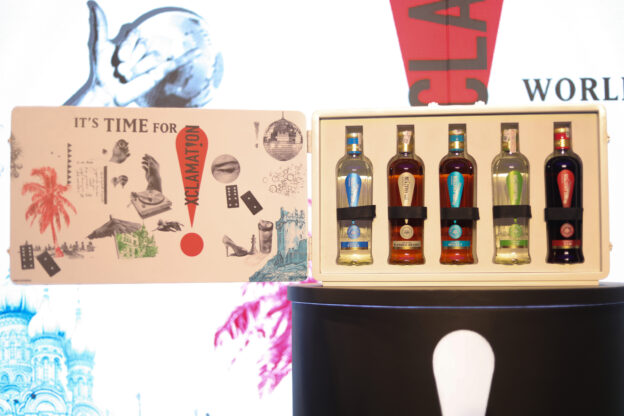
Jean has spoken of consumers expressing the need for “one reliable name that delivers quality and diversity across categories.” The liquids themselves are varied in composition and reference. The whisky combines Speyside Scotch malts matured in dual casks with Indian grain spirits. Vodka is produced from Indian grain and filtered using Russian moonstone technology. Gin brings together juniper berries sourced from Germany with Indian botanicals, resulting in seven expressions. Brandy draws on Indian and French grapes aged in Limousin wood, while rum blends Indian jaggery spirit with aged Jamaican rum, distilled using multi-column copper stills.

What holds these expressions together is not sameness but coherence. Jean has described Xclamat!on as offering “distinct taste and positioning within a single brand framework,” reflecting the way contemporary drinkers assemble their choices across different moments rather than committing to a single narrative.

Local Production, Global Reference

Xclamat!on has been produced in India, with local teams closely involved in formulation and execution. The range aligns with the Atmanirbhar Bharat vision. The emphasis remains on relevance and suitability for domestic preferences, supported by international reference points.

As Jean has noted, the brand has been “developed locally for India’s growing base of aspirational and quality-conscious consumers.” Global inputs appear throughout the portfolio as supporting elements. The approach focuses on alignment with domestic palates and social settings.

Packaging choices reinforce this outlook. Glow-in-the-dark labels, aluminium snap lids, and a bold visual language establish shelf presence, while the absence of mono-cartons reflects Pernod Ricard India’s sustainability-by-design approach. The bottles arrive unboxed, reducing material use while maintaining premium cues.

Expansion in a Complex Operating Climate

Xclamat!on’s rollout begins across Haryana, Uttar Pradesh, Goa, Rajasthan, and Daman, with plans to extend to fourteen markets within the first year. The phased approach suggests calibration rather than haste, allowing the brand to settle into distribution networks before wider availability. This pacing aligns with Pernod Ricard India’s broader growth outlook, where innovation occupies a central role.

India remains Pernod Ricard’s second-largest market globally by value and its largest by volume. Jean has indicated that innovation is expected to contribute around a quarter of the company’s growth over the next decade, with Xclamat!on projected to play a meaningful role in that trajectory.

At the same time, the operating environment remains demanding. Recent reporting has drawn attention to supply interruptions and regulatory constraints affecting retail presence in major metros, including New Delhi. These factors shape cash cycles, market access, and the sequencing of new launches, requiring companies to balance ambition with operational discipline.

Within this context, Xclamat!on reads as a long-horizon commitment. It enters the market with an awareness of governance expectations, compliance frameworks, and the realities of scaling in a fragmented regulatory landscape. Jean has spoken of India as a springboard for global innovation, a market whose scale and consumer maturity justify sustained investment. That confidence rests on the belief that premiumisation in India will continue to be driven by informed choice and responsible expansion.

Pritisha Borthakur

Pernod Ricard India Raises a Toast to Atmanirbhar Spirit with Seagram’s Xclamat!on

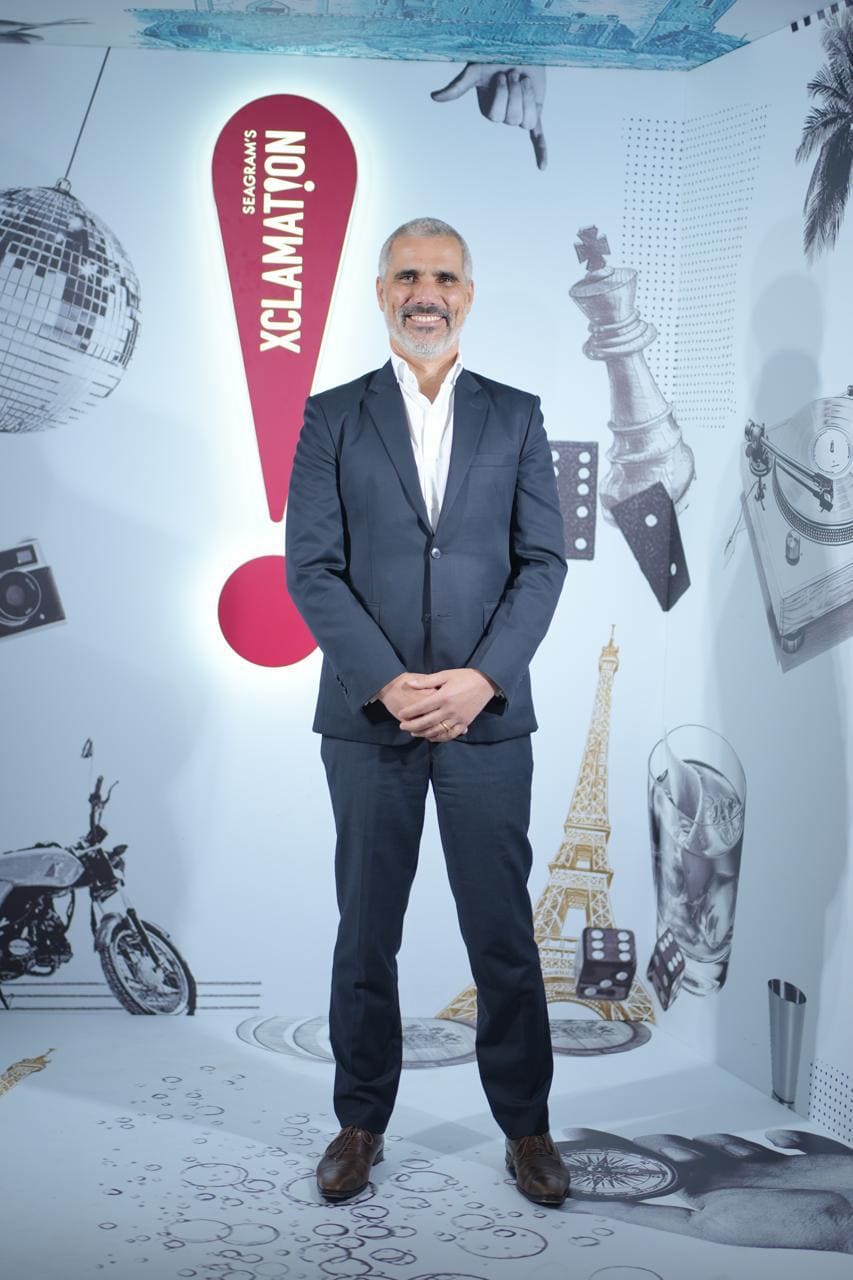
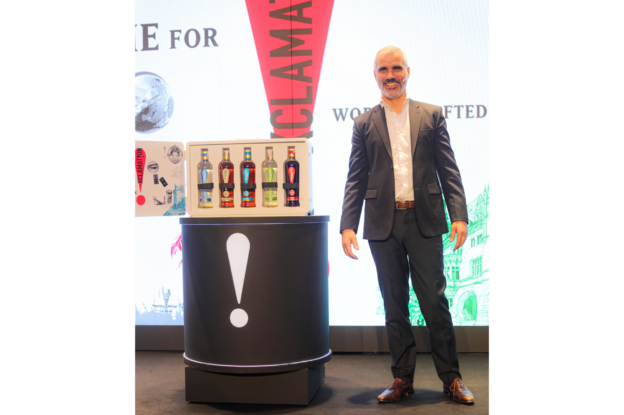
Pernod Ricard India unveiled Seagram’s Xclamat!on at an exclusive launch event held at The Oberoi, Gurugram, introducing a striking new portfolio that unites five premium spirits—whisky, vodka, gin, brandy, and rum—under one identity. Designed and crafted in India, the range reflects the company’s ambition to meet the tastes of a new generation of drinkers seeking quality and variety. With its bold design and accessible price point, Xclamat!on signals Pernod Ricard India’s next growth chapter in the premium admix space and is expected to drive a tenth of the company’s expansion over the next decade.

At the launch event, Jean Touboul, CEO of Pernod Ricard India, described Xclamat!on as “boldness, innovation, and celebration in a bottle,” adding that the brand brings together five spirits under one label for the first time in the company’s portfolio. His words captured the intent behind the creation; an Indian-made collection with international finesse and character.

The collection highlights a blend of local craft and global expertise: whisky made with Speyside malts matured in dual casks, brandy created from Indian and French grapes aged in Limousin wood, and rum infused with the richness of jaggery and aged Jamaican spirit. The vodka draws purity from Indian grain, filtered with Russian moonstone technology, while the gin brings together German juniper and Indian botanicals in seven distinct expressions.

Even the design language of Xclamat!on mirrors its spirit: vivid, expressive, and confident. Glow-in-the-dark labels and aluminum snap lids redefine shelf presence while reducing packaging waste, aligning with Pernod Ricard’s sustainability goals. The rollout begins across Haryana, Uttar Pradesh, Goa, Rajasthan, and Daman, eventually covering 14 markets in the first year. With this launch, Pernod Ricard India strengthens its commitment to innovation, homegrown excellence, and a future-forward drinking culture.

Tilaknagar Completes Acquisition of Imperial Blue from Pernod Ricard

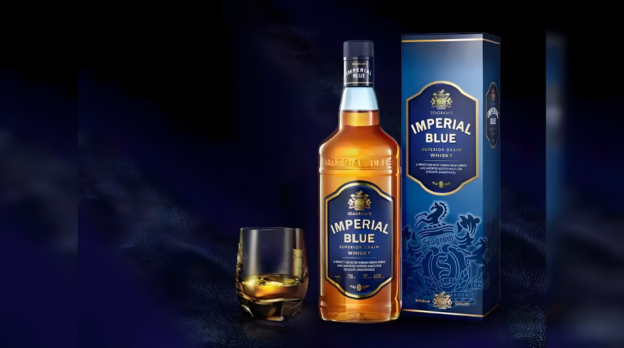
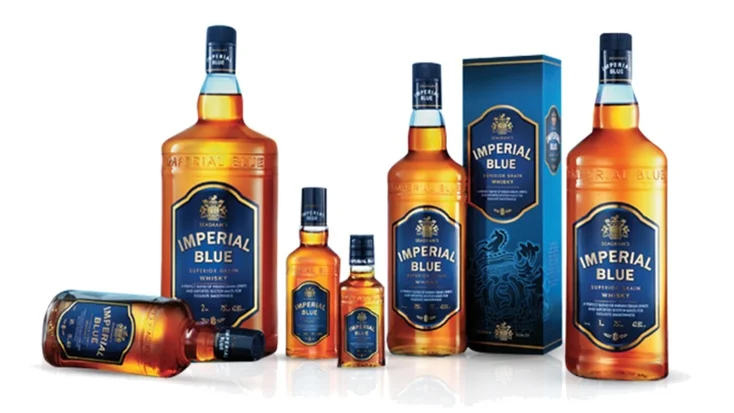
Tilaknagar Industries Limited (TI), a leading Indian-Made Foreign Liquor (IMFL) manufacturer, has completed the acquisition of the Imperial Blue business division (IB) from Pernod Ricard India (PRI) via a slump sale for a lump-sum consideration of `3,442 crore. The Competition Commission of India had earlier approved the transaction on October 7, 2025.

In addition to this amount, a deferred payment of €28 million will be made after four years from the date of closure of the transaction.

The acquisition has been funded through a mix of internal cash accruals, fresh equity and external debt. A preferential issue of equity shares and warrants to marquee investors and the Promoter Group helped raise `2,093 crore, in addition to securing `2,100 crore through term loans.

Imperial Blue is the third-largest whisky brand in India by volume, selling approximately 22.4 million nine-litre cases for the year-ended March 2025 across India and other markets. With over 25 years of brand heritage, the business reported a revenue of `3,067 crore for the trailing twelve months ending March 2025.

Through this transaction, TI gains access to the “Imperial Blue” brand and allied trademarks, including “Imperial Black” and “Imperial Red” globally. Additionally, TI has entered into a Trademark License Agreement for the use of “Seagram’s” in connection with IB for a defined transition period.

The company has also entered into a long-term supply agreement with Chivas Brothers for Concentrated Alcoholic Beverage (CAB), an essential raw material for manufacturing IB products. To ensure a seamless transition, TI has entered into a Transitional Services and Manufacturing Agreement (TSMA) with PRI.

The manufacturing footprint, as part of the transaction perimeter, includes two owned units located in Punjab and Maharashtra, as well as two exclusive sub-leased units in Telangana and Punjab. Additionally, TI will have access to certain shared units during the TSMA period. As part of the transaction, 116 employees are expected to be transferred from PRI to TI.

Amit Dahanukar, Chairman and Managing Director, TI said, “The acquisition of Imperial Blue significantly scales up our business, representing a decisive step in our ambition to build a truly pan-India presence across all IMFL categories. This acquisition also accelerates our premiumisation journey, enabling us to broaden our offerings across Prestige-and-Above price-points and enhance the value we deliver to consumers.”

Deutsche Bank and Avendus Capital acted as financial advisors for the transaction, with Avendus Capital also serving as the debt financing arranger to TI. Crawford Bayley & Co. and W.S. Kane & Co. acted as legal counsels, while Deloitte served as the finance and tax diligence advisor to TI. Additionally, TI has appointed Ernst & Young to provide Integration Planning & Execution Advisory for the acquisition.

ISWAI Takes Maharashtra to Court Over Policy Discrimination and Tax Hike

  • The tax rate for MML is 270 per cent with zero foreign investment/ownership, while IMFL and other premium brands ranges from 300% to 450%
  • Sales of impacted brands have fallen by 35-40% since the hike in excise duty
  • Beer hit harder with ₹20–30 jump in per-bottle MRP

The International Spirits and Wines Association of India (ISWAI) has filed a lawsuit in the Bombay High Court against the Maharashtra government, challenging a sharp hike in excise duty on premium affordable liquor brands and also for exclusion of brands of major players such as Diageo India and Pernod Ricard India from a newly-created lower tax category – Maharashtra Made Liquor (MML).

The petition was filed on November 14 and the court is slated to hear the matter on December 9.

In mid 2025, the Maharashtra government introduced policy changes to incentivise local investment. It brought in the MML category, to include grain-based spirits produced exclusively by local manufacturers. The tax rate for MML is 270 per cent with zero foreign investment/ownership. The government believes that this will spur the local industry.

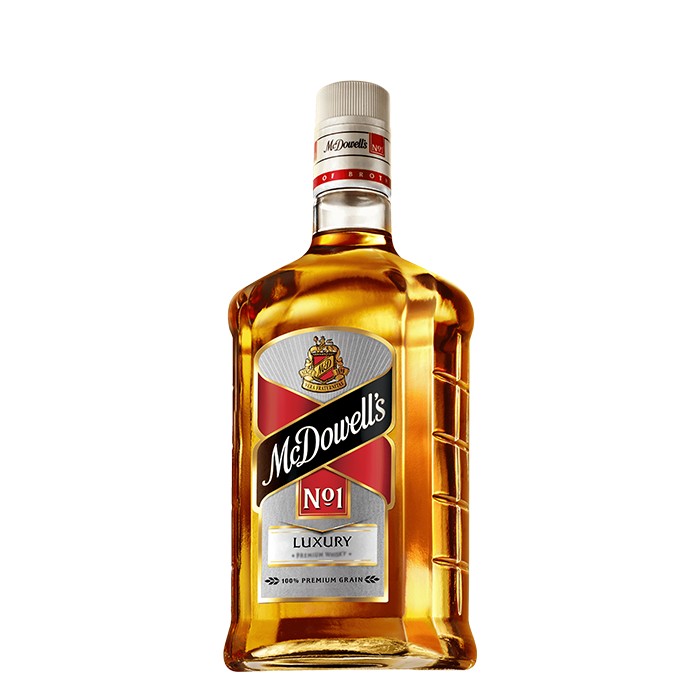
Parallelly, the government increased taxes on premium brands with production costs below ₹260 per litre from 300% to 450% and this is a big pain point. Several brands have been hit by this hike and they include Diageo’s McDowell’s No.1 and Pernod Ricard’s Royal Stag, among others. In the lawsuit, ISWAI mentions that the state sought to grant an artificial competitive advantage to the preferred class.  

Not just brands from international companies are affected. Indian companies such as Allied Blenders and Tilaknagar Industries are also impacted. According to the Confederation of Indian Alcoholic Beverage Companies (CIABC), the affordable segment affected by the tax hike contributes 70% of Maharashtra’s premium spirit sales. It is estimated that sales of impacted brands have fallen by 35-40% since the hike in excise duty.  

Maharashtra’s liquor market, one of India’s largest and most premium-heavy, is now navigating its sharpest disruption in recent years. The excise changes have triggered a noticeable drop in demand and widened price gaps with neighbouring states. The State government, however, is insisting that the policy changes will fetch in more revenue, encourage local industry and create new jobs.

As the liquor industry is a soft target, the government recently increased excise duties across IMFL, beer, and imported spirits. IMFL duties were increased by 15–20%, depending on category; beer saw a cumulative tax load rise of roughly 10–15%, when the revised excise plus additional fees are considered. For premium and imported spirits, the new slab pushed shelf prices far above national averages.

A bottle of mid-range whisky that retailed for ₹1,000 now sits closer to ₹1,150–1,250. Premium blends that previously hovered around ₹1,800–2,200 now breach the ₹2,500 mark in several cities. Imported labels have crossed psychological price barriers: a Scotch priced at ₹4,500 in 2023 is said to be retailing between ₹5,300–5,800.

Industry insiders say the difference in excise per case between the lower slab and next-higher slab can be as high as ₹90–₹140 per bottle equivalent, affecting retail pricing significantly. Smaller regional players, which operate with lower production costs, find it easier to qualify for the lower slab, allowing wider price gaps and competitive advantages.

The state’s argument is that Maharashtra, with its large consumption base and heavy urban footprint, can absorb a higher tax load. Industry counters that the elasticity of demand has been underestimated.

The impact has been immediate. Industry bodies estimate a 12–18% dip in overall IMFL sales in the first 4–5 months post-hike, with several premium categories reporting declines of 20–25%. Beer volumes fell faster because of price sensitivity  ranging between 15–20% down, year-on-year during peak season.

Mumbai and Pune, which typically account for nearly 45% of premium spirits demand, has seen the sharpest contraction. Retailers in Mumbai reported that walk-ins dropped by 10–12%, but average bill values dropped even more as consumers down-traded to cheaper brands. Bars and restaurants also saw margins compress as selling prices increased while consumption slowed.

According to reports, neighbouring states are gaining. It is reported that Goa saw double-digit pickup in cross-border purchases. Karnataka’s border districts, especially Belgaum and Bidar, reported higher out-of-state footfall. Consumers with weekend travel habits shifted buying patterns, eroding Maharashtra’s taxable volumes.

Despite the volume decline, reports suggest that the state’s monthly excise collections grew by 6–8%, owing to the steeply increased tax per bottle. But industry believes this is short-term. If current trends continue, the full-year volume contraction could touch 12–15%, dragging down long-term revenue and pushing consumers toward parallel informal channels.

Retailers say the tax-led price jump has altered buying patterns with customers replacing a ₹2,000 whisky with a ₹1,200–1,300 option. Mumbai’s suburban retailers estimate that premium SKUs now contribute only 25–30% of sales, down from 35–40% last year.

Excise Revenues Up till March 2025

Maharashtra’s excise revenue rose to a new high of Rs 23,250 crore in 2023-24, 8% higher than the previous year. From April to March 2024-25, the revenues were Rs. 25,467.96 crore. It remains to be seen what the impact has been post March.

Maharashtra has one of the highest liquor taxes in India, competing only with Kerala and Tamil Nadu at the upper end of the spectrum. The consumption slowdown has also hurt hospitality venues which have reported lower beverage sales and shrinking margins, while distributors face cash-flow strain.

Even within large companies, strategy is shifting. Value whisky and rum brands are being pushed aggressively. New formats such as 90 ml, 180 ml, and smaller packs are showing stronger traction than 750 ml bottles. Premium Scotch and single malts, typically strong performers in cities like Mumbai, are said to be registering a 15–20% reorder slowdown from retailers.

Similarly, bars are said to be rewriting menus. Many have replaced several mid-tier imported labels with Indian premium whiskies or craft spirits. Cocktail bars that rely on imported bases have reported cost increase in the range of 18–25% per drink.

Beer, traditionally the most affected by price hikes, is hit even harder. The ₹20–30 jump in per-bottle MRP has nudged consumers toward home-grown mild beers, downtrading sharply from premium lagers and craft options.

Experts suggest rationalising slabs (bringing down the gap between economy and mid-tier segments); price stability; and increased border controls to reduce leakage to Goa and Karnataka.

Industry hopes that the state government will revisit the tax structure ahead of FY2026 budgeting, especially if volume declines continue. The legal battle could also force a relook at category classification criteria.

The liquor ecosystem in Maharashtra is too large, too important, and too revenue-rich to remain in a prolonged slump. But the current year is that of a market adjusting to a steep tax shock and recalibrating demand, supply, and legal frameworks.

_____________________________________________________________________

MML, Will it Upset the Apple Cart?

The new category, Maharashtra Made Liquor (MML), has already stirred the hornet’s nest. With MML getting preferential treatment in excise duty (270%), compared to 450% for IMFL and also MML remaining the exclusive domain of local producers, the larger alcobev sector (including domestic and international players) is up arms and has approached the courts for remedy.

At the time of MML announcement, government officials projected an incremental revenue target of ₹3,000 crore, on top of the existing ₹25,000 crore excise intake. However, industry insiders remain cautious about whether these numbers are achievable, citing consumer behaviour, market fragmentation, and distribution challenges. The industry has already reported slump in sales of some brands.

Maharashtra’s IMFL market currently stands at around 30 lakh cases per month. The proponents of MML say that once all MML producers become operational, the new segment could account for 8–10 lakh cases monthly, effectively redistributing a share of the existing market rather than creating an entirely new one.

As per reports, six licences have been already given and they are in the process of setting up production, while another 18 are at various stages of approval, either with the Ministry or in the excise department.

Under the new guidelines, MML manufacturers must have their registered head office in Maharashtra; maintain at least 25% state-resident shareholding; avoid producing or marketing MML outside the state; and register their brands within one year. Third-party production is not allowed, though leasing of plant capacity is permitted if the facility remains dedicated to MML production. If sold outside Maharashtra or if rules are violated, the MML status will be revoked, the guidelines state.

Economic Impact

At an assumed manufacturing cost of ₹400 per litre, IMFL retails at roughly ₹2,200 (including ₹1,800 in excise), while MML is expected to cost around ₹1,480 (with ₹1,080 excise), making it about ₹700 cheaper per litre. The government has set a minimum retail price of ₹148 for a 180 ml bottle of MML, compared to ₹205 for IMFL and ₹80 for country liquor. The MML category is positioned as a bridge offering, designed to be more affordable than top-tier IMFL yet higher in quality than country liquor.

According to reports, Maharashtra currently has 48 licensed IMFL manufacturing units, but only 10 dominate production; many operate at minimal capacity just to retain their licences. The government hopes MML will revive idle plants and generate up to ₹3,000 crore in additional annual revenue. The move is part of wider excise reforms targeting ₹14,000 crore yearly collections through measures including AI-powered monitoring of production and sales; new divisional excise offices; revised duty structures, IMFL at 3× to 4.5× manufacturing cost (capped at ₹260/litre), country liquor up to ₹205 per proof litre; and higher licence fees for FL-2 (retail) and FL-3 (bars) outlets.

The belief is that the affordability factor will drive this category. The entire industry is undergoing realignment and the next six to eight months, sales and consumer preferences will determine the fate of brands. Before that, there is the expected Court decision which will set the tone for the industry.

_____________________________________________________________________________________________

Kartik Mohindra takes over as Managing Director, India of William Grant & Sons

  • Debasree Dasgupta to take charge as CMO & Head of Global Business Development of Pernod Ricard India on November 1

Kartik Mohindra took charge as Managing Director of WG&S, India on October 1. He was formerly the Chief Marketing Officer & Head of Global Business Development at Pernod Ricard India. Sachin Mehta, the current MD, will be taking up an international role within the WG&S business, as Managing Director, Canada.

Kartik Mohindra’s position in Pernod Ricard India is being taken by Debasree Dasgupta, effective November 1.  Currently Global Vice President for Absolut, Dasgupta took on the position in 2023 and has since overseen the brand’s international strategy. Her career spans senior marketing roles at PepsiCo, Reckitt, and Unilever, giving her a diverse portfolio across categories and geographies.

Premium spirits company William Grant & Sons is signalling a focused push to strengthen its presence in one of the world’s most promising alcoholic beverage markets. Kartik joined the business with over 26 years of experience as a senior leader in marketing and sales, primarily in the alcohol, beverage and FMCG sectors.

In his former role, he played a role in transforming business performance at Pernod Ricard, leading brand strategy and expanding into new global markets. He has also overseen brand-led innovation across various categories, from whiskies and wines to brand extensions.

“These appointments reflect WG&S’ continued investment in key growth markets and a commitment to strengthening our global leadership team. We are excited to welcome Kartik to our team in India – a strategically important market for us. Driven by his expertise, we’re confident that we will further build on the great progress Sachin and the team have made in India in recent years,” said Doug Bagley, Chief Commercial Officer, WG&S.

The company’s portfolio includes brands of Scotch whisky, like Grant’s Blended Scotch, Glenfiddich, The Balvenie range of handcrafted single malts and other spirits brands such as Monkey Shoulder, Hendrick’s Gin and Tullamore DEW Irish Whiskey. William Grant & Sons operates in India through its 100% subsidiary William Grant & Sons (India).

Tilaknagar Industries to Acquire Imperial Blue from Pernod Ricard India

  • Tilaknagar Industries to become a PAN-India Player in Alcoholic Beverages
  • Acquisition is a strategic move to fast-track Tilaknagar Industries’ whisky foray
  • Pernod Ricard to accelerate focus on Premiumisation and Innovation

IMFL manufacturer Tilaknagar Industries Limited (TI) has entered into a definitive agreement to acquire Imperial Blue business division (IB) from Pernod Ricard India Private Limited via slump sale, for a lump sum consideration, basis enterprise value of €412.6 million (which translates to approx. ₹4,150 crores as on date). The consideration includes deferred payment of €28 million (₹282 crore as on date), to be paid four years after the date of closure of the transaction.

The proposed transaction includes acquisition of the IB, with 22.4 million 9-litre cases sold in the year ended March 2025 across India and other markets, including two owned units and services from co-manufacturing bottlers across India.

Imperial Blue is the third largest whisky brand in India by volume, with over 25 years of brand heritage. The underlying business had reported revenue of ₹3,067 crore for the year ended March 2025. TI is one of the leading IMFL players with leadership in brandy, the second largest IMFL category. Mansion House Brandy, TI’s flagship brand, is one of the largest selling brands in India and globally.

This landmark acquisition, largest in Indian alcoholic beverages space by an Indian company, fast-tracks TI’s foray into whisky segment, the largest IMFL category in India. It also significantly expands TI’s distribution reach, reinforcing its evolution into a truly pan-India player having strong scale across both brandy and whisky with a combined volume of 34 million 9-litre cases for the year ended March 2025.

Amit Dahanukar, Chairman and Managing Director, Tilaknagar Industries Limited said, “Having achieved leadership in the brandy segment, it is now time for us to broaden our portfolio and cater to India’s diverse and evolving consumer base. While we continue to grow our business organically, this strategic acquisition allows us to enter the whisky category with one of the country’s most trusted and admired brands.”

Imperial Blue will act as TI’s launchpad for a significant whisky premiumisation journey, enabling TI to build a strong whisky portfolio across premium price-points. “We’re excited to build on Imperial Blue’s strong foundation and take it to new heights”, Dahanukar added.

Tilaknagar Industries reported revenue of ₹1,405 crore and EBITDA of ₹226 crore for the year ended March 2025. The transaction is a result of the continuous assessment and evaluation of strategic opportunities, in line with a longstanding policy to deliver sustainable value for the shareholders, employees and partners of TI.

India, second-largest market for Pernod Ricard

Pernod Ricard said that the sale strengthens Pernod Ricard India’s portfolio, enabling the business to fully tap into premiumisation trends and support sustained, profitable growth. As Pernod Ricard’s second-largest market, India is a strategic priority, and this realignment improves the ability to capitalise on the country’s strong macroeconomic fundamentals and long-term potential. Upon closing, the transaction is expected to be immediately and meaningfully accretive to Pernod Ricard India’s operating margin and net sales growth rate.

Pernod Ricard’s active portfolio management is a key contributor to its dynamic growth across categories and geographies. The transaction is the result of the Group’s continuous assessment of its strategic opportunities, in line with its long-standing commitment to deliver sustainable value to its shareholders, employees, clients and partners. 

Alexandre Ricard, Chairman and CEO of Pernod Ricard, stated, “We are pleased to announce the sale of the Imperial Blue business division, a strategic move to sharpen our focus on more profitable and faster growing brands in India, like in the rest of the world. This transaction represents a win-win for all stakeholders involved, both at the global and local level. It fuels our ambition to succeed even further in one of our top markets. This will further streamline our operations as we continue to invest in India’s outstanding growth.”

Jean Touboul, CEO of Pernod Ricard India added, “By exiting the Admix Value segment, this disposal will allow Pernod Ricard India to unlock further profitable growth and sharpen its focus on premiumisation and innovation. It will also enable the company to allocate resources more effectively toward high-growth brands such as Royal Stag, which has already surpassed the 30-million cases milestone, Blenders Pride, and international brands like Chivas, Jameson, Absolut, and Ballantine’s. 

Driving the next phase of growth, we are entering an exciting new chapter, one that will see bold innovations and an expanded premium portfolio tailored specifically for the evolving Indian consumer.”

The proposed transaction is subject to approval from the Competition Commission of India, with closure anticipated in about six months from signing the definitive agreement. TI will raise a mix of debt and equity to finance the transaction.

Deutsche Bank and Avendus Capital acted as financial advisors, with Avendus Capital also serving as the exclusive financing arranger to TI. Crawford Bayley & Co. and W.S. Kane & Co. acted as legal counsels while Deloitte served as the diligence advisor to TI.

Longitude 77 launched in Punjab

Pernod Ricard India has launched Longitude 77 in Punjab offering seekers of authentic, contemporary Indian luxury a memorable experience which was marked by a launch event at the 10th anniversary of EYP Creations. The launch was held at the 10-year celebration of EYP Creations, which specializes in handling Punjabi music artist. 

EYP Creations manages Punjabi artist like Parmish Verma, Jassie Gill, B Praak, Babbal Rai, and others out of which the event witnessed the presence of B Praak, Gurnazar, and Jassie Gill.

With the availability of Longitude 77 in Maharashtra, Goa, Haryana, Chandigarh, Rajasthan, Uttar Pradesh, Dubai, and at Delhi Duty Free, the brand is further making its way in the Indian markets with the launch in Punjab. It is aimed at providing a premium convivial experience while establishing a new benchmark for Indian whisky drinkers in Punjab.

The culinary experience featured Punjab’s bold flavours, reimagined in contemporary, experimental dishes. The event culminated in an exclusive Longitude 77 tasting experience, featuring serves along the Longitude such as Punjab Old Fashion that highlighted the finest local ingredients, recognized with GI tags for their exceptional uniqueness.

Watch our review of Longitude 77 here.

Kartik Mohindra, Chief Marketing Officer, Pernod Ricard India said, “We are proud to bring Longitude 77 to Punjab, a region known for its deep appreciation of authenticity and grandeur. This launch marks an exciting chapter as we continue to share this unique spirit of India with connoisseurs across the country.”Nikhil Dwivedi, Founder & Director, EYP Creations said, “As we celebrate a decade of EYP Creations, it’s truly exciting to mark this milestone by partnering with such a prestigious brand like Longitude 77 for their launch in Punjab. The brand reflects the same values we stand for.”

Pernod Ricard India Launches Longitude 77, a New Indian Single Malt

Pernod Ricard India has entered the Indian Single Malt category with the introduction of Longitude 77, marking three decades of the company’s presence in India. The move reflects the increasing popularity of premium Indian spirits, with Longitude 77 aiming to pay homage to India’s rich heritage, craftsmanship, culture, landscape, and terroir.

Named after the line of longitude that runs through the length of India at 77° East, the brand seeks to symbolize India’s position on the world map. The launch event was recently held at DLF Golf & Country Club in Gurugram, showcased what was termed a ‘Reimagined India’, which was led by Arjun Rampal. The evening also featured contemporary Indian luxury elements, including a presentation of Indian soundscapes by musician Karsh Kale, a fashion showcase by designer Ashish Soni, and a culinary exploration by Chef Vicky Ratnani.

Produced in small batches in a distillery in Dindori, Nashik, Longitude 77 brings together locally sourced ingredients with a double-matured single malt is aged in American Bourbon barrels and wine casks, presenting a mahogany colour and a flavour profile described as smooth, full-bodied, and balanced, with hints of caramel, vanilla, and faint peat smoke.

The packaging of Longitude 77 features an indigo-coloured matte finish box and bottle, paying homage to the colour that India gave to the world. Both the box and the bottle depict the map of India with the Longitude 77° passing through, symbolizing the essence of the country.

Longitude 77 Bottle and Packaging

Kartik Mohindra, Chief Marketing Officer, Pernod Ricard India, said, “As we celebrate 30 incredible years in India, our commitment to delivering quality brands and experiences gets enhanced with the launch of Longitude 77. Inspired by the line that runs through the heart and soul of India, Longitude 77 is a symbol of authentic contemporary Indian luxury. Our Master Distiller has carefully crafted an exquisite liquid to celebrate and showcase India’s rich culture, heritage, terroir and craftsmanship. We believe that Longitude 77 will give the world a taste of “India Reimagined”. We are confident that this exceptional addition to our portfolio will be embraced by whisky enthusiasts across the world and elevate their convivial experience.”

Longitude 77 Master Distiller, R Natrajan shared, “It is an exciting time for Indian single malts as whisky enthusiasts discover the beauty of home-grown spirits. Longitude 77 is an Indian single malt that’s proud of its provenance, crafted with utmost care and attention. Produced in small batches, it seeks to represent the best of India’s rich terroir and local ingredients. The liquid has been double matured and brought to perfection in American Bourbon barrels and wine casks. The result is an exquisite, full bodied single malt with notes of caramel, vanilla, and subtle peat smoke. Longitude 77 is more than just a single malt; it is our homage to the enchanting spirit of India.” 

The launch event also had a sipping experience of the whisky, featuring serves celebrating unique Indian ingredients with Geographical Indication (GI) tags. Currently the malt is available in selected regions, including Goa, Maharashtra, Chandigarh, Rajasthan, Haryana, Uttar Pradesh, and Delhi Duty Free, the brand aims to expand its presence in other markets, targeting a premium convivial experience for Indian whisky drinkers.