
Tag Archives: Ambrosia magazine

Methanol in wine

Greg Hodson1, Eric Wilkes2, Sara Azevedo1 and Tony Battaglene1

1 – FIVS, 18 rue d’Aguesseau, 75008 Paris, France

2 – Australian Wine Research Institute, Hartley Grove, Urrbrae SA 5064, Australia

Abstract

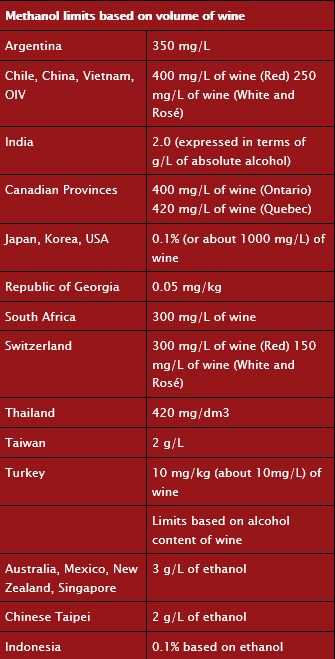
This paper examines the origins of methanol in grape wine and the quantities typically found in it, as well as in other foods such as unpasteurised fruit juices. The toxicology of methanol and the associated regulatory limits established by competent authorities in various parts of the world are also considered. It is concluded that such limits are not driven by public health considerations and thus authorities are requested to consider the need for methanol analyses to be performed and reported on certificates of analysis as a condition of market entry for wine. Where methanol limits are still deemed to be necessary to achieve policy objectives, authorities are encouraged to establish them in the light of the levels of methanol typically found in grape wines produced by the full array of internationally permitted winemaking practices, and to consider harmonising their limits with those that have already been established by other governments or recommended by appropriate intergovernmental organisations.

© The Authors, published by EDP Sciences 2017

This is an Open Access article distributed under the terms of the Creative Commons Attribution License 4.0 (http://creativecommons.org/licenses/by/4.0/).

  1. Introduction

The origin and significance of methanol in wine, and the associated establishment of regulatory limits for its presence there, are causes of much confusion and misunderstanding in international trade. This paper, produced by the FIVS Scientific and Technical Committee, reviews the topic in some detail, providing reference materials to assist with further study. It concludes that the levels of methanol commonly found in grape wines are broadly similar to those that may be found in many freshly squeezed and unpasteurised fruit juices if they are stored for a period of time after squeezing. It is further demonstrated, from a comparison of regulatory limits for methanol in wine with food safety risk assessments that have been conducted by reputable bodies, that the limits themselves do not serve any real food safety purpose. This is because many litres of wine per day or even per hour would need to be consumed (even if the product contained the highest content of methanol permissible in regulations) to even approach intake levels of any known toxicological concern [1].

2. Chemical properties and other information for methanol

Methanol is chemically characterized as follows [2]:

2.1. Chemical Formula, Synonyms, CAS Registry number

Chemical formula: CH3OH

Synonyms: Methyl alcohol, Carbinol, Wood alcohol

CAS Registry Number: 67-56-1.

2.2. Physico-chemical properties

Physical appearance: Methanol is a colourless liquid with characteristic odour.

Melting Point: –98 °C

Boiling Point: 65 °C

Solubility in water: Miscible.

3. Origin of Methanol in wine

3.1. Action of pectinase enzymes

3.1.1. Action of endogenous pectinase enzymes on pectin in grapes

Methanol is produced before and during alcoholic fermentation from the hydrolysis of pectins by pectinase enzymes (such as pectin methylesterase) which are naturally present in the fruit. More methanol is produced when must is fermented on grape skins; hence there is generally more in red wines than in rosé or white wines (see Sect. 4 below).

3.1.2. Use of exogenous pectinase enzymes in winemaking

Exogenous pectinase enzymes are permitted for use in winemaking (generally as clarifying agents) in at least the following countries: Australia, Canada, the 28 Member States of the European Union, Japan, the Republic of Georgia, New Zealand, South Africa, and the United States. Their use is also deemed to be an acceptable winemaking practice by the International Organisation for Vine and Wine (OIV) [3]. As with the activity of pectinases naturally present in grapes, the use of exogenous pectinases as a winemaking practice will have the effect of increasing the levels of methanol in the resulting wine.

3.2. Treatment of wine with Dimethyldicarbonate

Dimethyldicarbonate (DMDC) is an effective pre-bottling sterilant, accepted for use in winemaking in Argentina, Australia, Cambodia, Canada, Chile, the 28 Member States of the European Union, the Republic of Georgia, Hong Kong China, Myanmar, New Zealand, Russia, Singapore, South Africa, Thailand, Turkey and the United States, whose use is generally limited in international regulations and recommendations to a maximum treatment of 200 mg/L of wine [4]. For other alcoholic beverages and mixtures of alcoholic and other beverages with an alcoholic strength by volume of less than 15%, the limit on usage is often set at 250 mg/L. The use of DMDC can be important in stabilizing lower alcohol products from additional fermentation in the bottle, and also allows a reduction in the quantity of sulphur dioxide that is used where the oxygen in wine is kept below 1 mg/L. DMDC breaks down rapidly in wine, producing carbon dioxide and leaving methanol at very low levels not harmful to health and other innocuous products in the wine. Methanol at a level of about 100 mg/L is created in wine from a DMDC treatment at the typical maximum treatment level of 200 mg/L [5].

4. Typical levels of methanol in wine

It was noted above that the presence of low levels of methanol in wine is expected due to the action of pectinase enzymes that are naturally present in the grapes. A study of the literature indicates the following information concerning the typical levels of methanol that may be found in wine (these levels generally do not account for any additional amount that may result from a DMDC treatment):

• Red wines will tend to contain more methanol (between 120 and 250 mg/L of the total wine volume) than white wines (between 40 and 120 mg/L of the total wine volume), because of the longer exposure to grape skins during the fermentation [6].

• Wines made from grapes that have been exposed to Botrytis cinerea (e.g. late harvest wines, such as Sauternes or Tokay) also have higher methanol levels than standard grape wines (as much as 364 mg/L of the total wine volume) [7].

• Wines made from non Vitis vinifera grapes tend to contain more methanol than wine from pure Vitis vinifera [8].

4.1. Case study: Typical levels of methanol in Australian wine

A recent survey looked at 150 wines from across Australia to determine typical levels of methanol in commercial wine [9]. The sample set consisted of 90 red and 60 white wines from multiple varieties and vintages. All wines were analysed using a GC-FID in the Australian Wine Research Institute’s ISO 17025 accredited laboratory. No evidence of DMDC treatment (a source of methanol) was found for any of the wines tested.

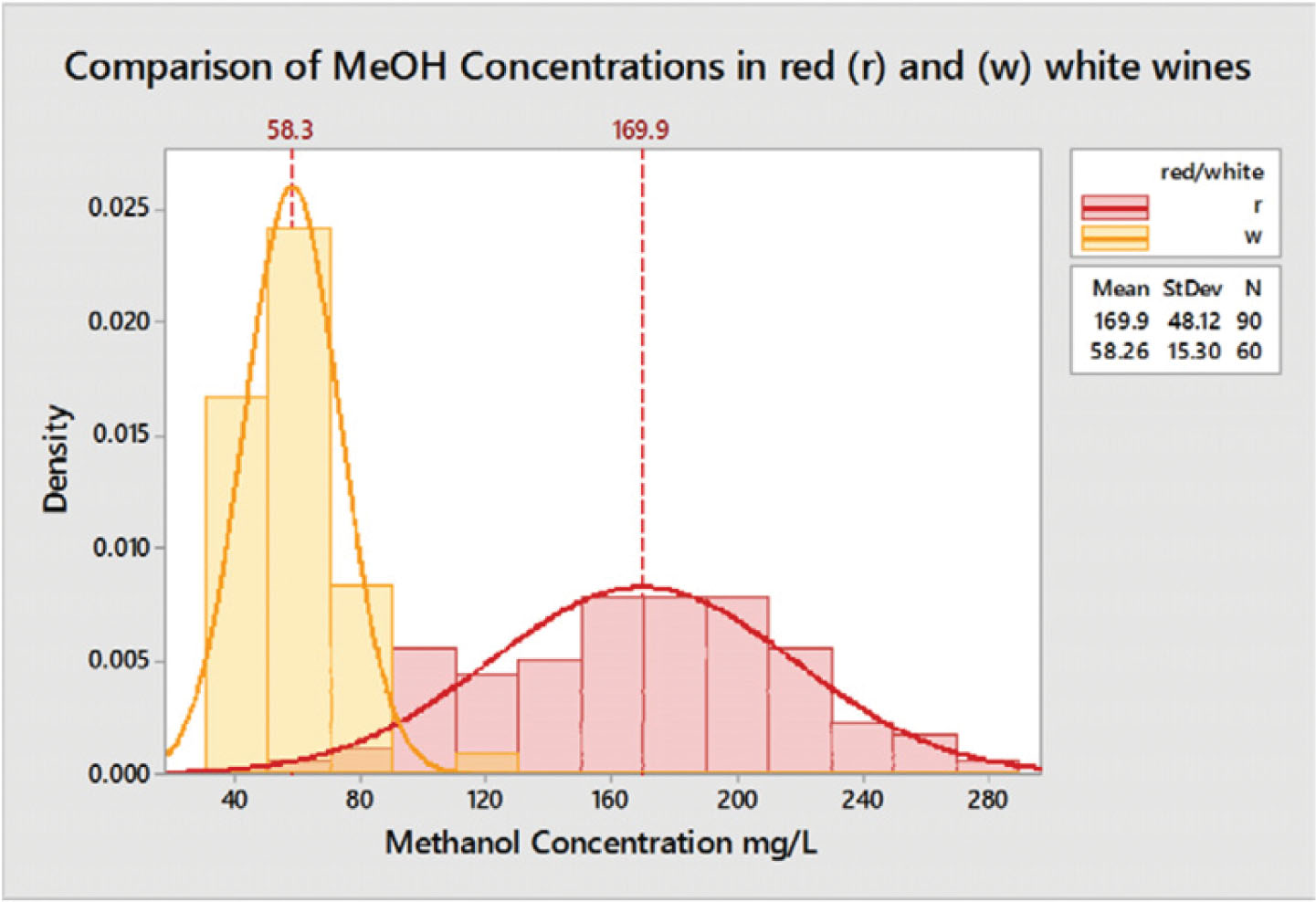
Typical ranges for methanol found in Australian wines were; 60–280 mg/L in reds (mean 170 mg/L) and 40–120 mg/L in whites (mean 58 mg/L). All wines tested had some methanol content. The main driver for higher methanol levels appeared to be skin contact during processing. Variety or vintage had no significant impact.

4.1.1. Typical values

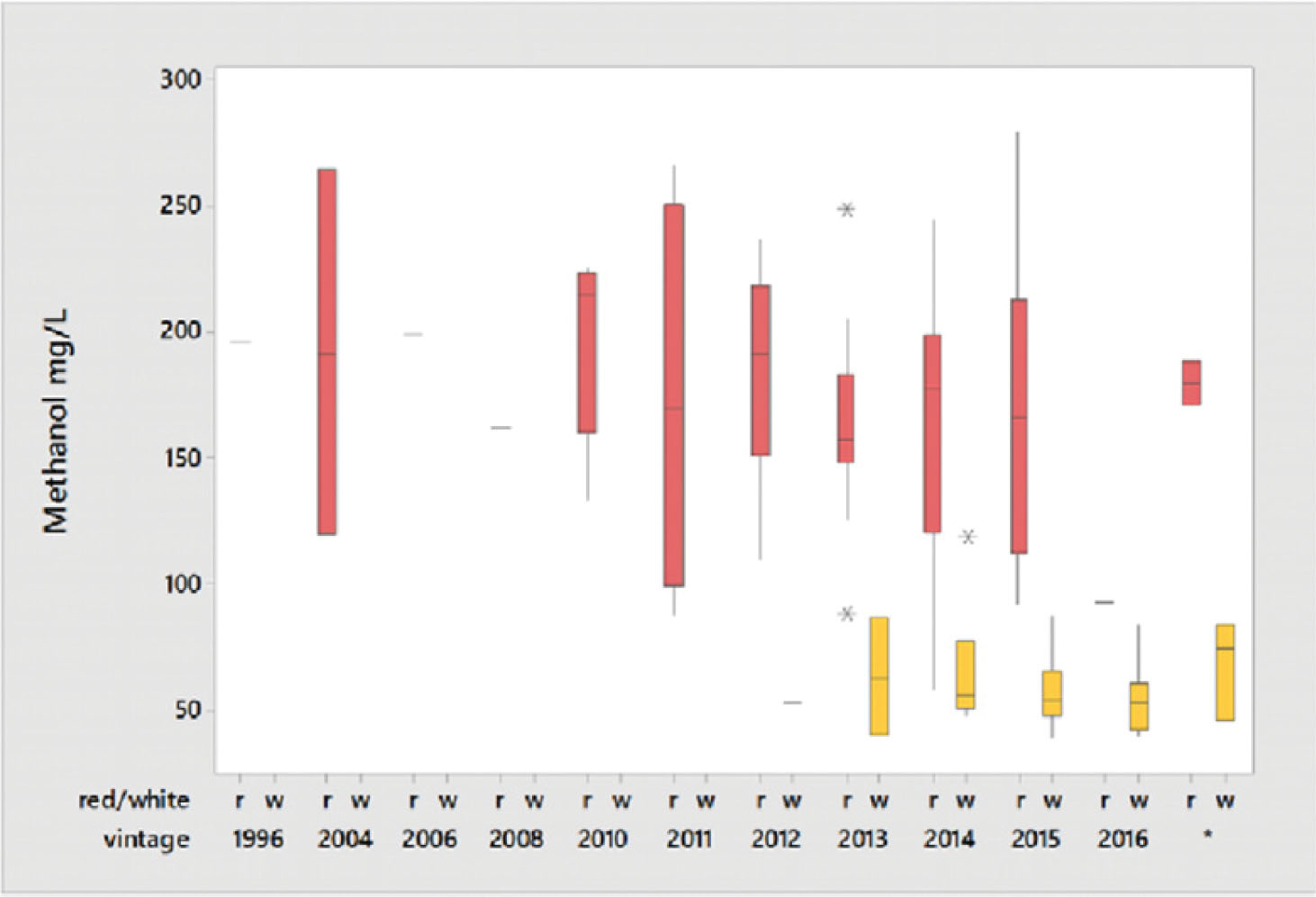
Results for red and white wines were significantly different. Red wines typically contained higher levels of methanol across a larger range of content, reflecting greater variation in skin contact times. All wines were found to be within Australian and OIV guidelines (Fig. 1).

Figure 1

4.1.2. Impact of variety

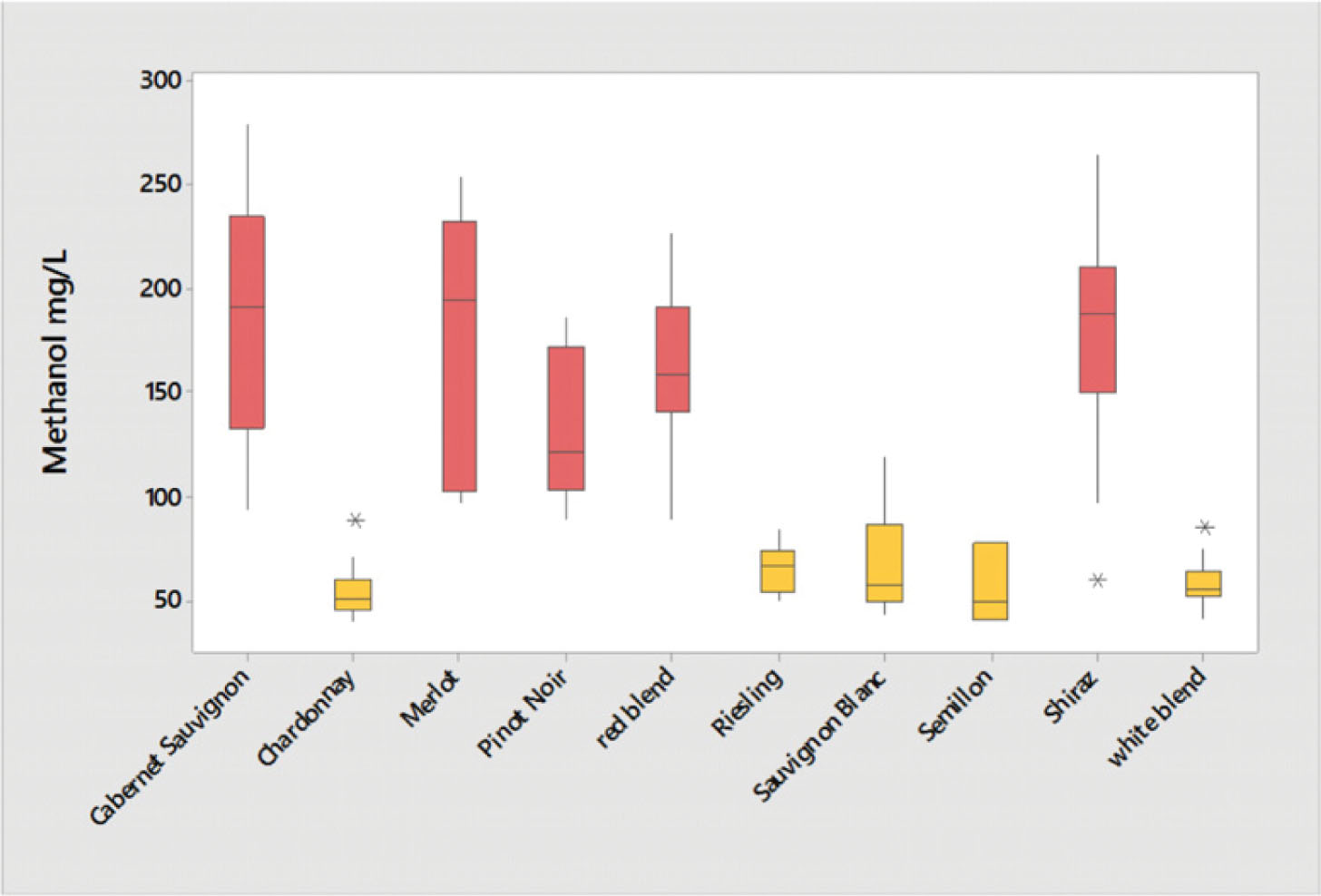
No significant differences of methanol content were found based on grape variety. The only difference found was between red and white wines, reflecting the differences in processing for the different wine styles (Fig. 2). 4.1.3. Impact of vintage

Figure 2

4.1.3. Impact of vintage

Figure 3

No significant impact of year of production on the methanol concentration was found (Fig. 3).

Indri Indian Single Malt Review

Indri Single Malt comes from the house of Piccadilly Distilleries who also jointly brought us the Kamet Whisky. But Indri is now independently brought to you from the house of piccadilly and what makes this single malt special is that recently it won the top honours catapulting its demand amongst the favourites for consumers. So let’s taste and see how it is and if you like viewing video review then click above and enjoy watching the experience instead of reading it.

The price of this whisky is Rs. 5,100 in Maharashtra and it is much cheaper in some of the other States like Haryana, Goa, UP, Delhi and Bangalore at Rs. 3,100.

What’s in the Name?

Now you might be thinking what’s in this name Indri? It is very unique and different from what we have seen? So the name of the malt is based on Indriya, which are the five golden senses of our body like the smell, taste, touch, sight and sound and also on the name of the distillery based in Indri, Haryana.

Now there is another important thing about this malt, which is the word Trini – which denotes the word three, meaning 3 woods that have been used to mature this malt. Now what’s interesting is that the Kamet whisky was also matured using the same woods. These include ex- bourbon, ex-wine, and PX sherry casks and as we know these add a unique flavour to that blend. And like Kamet this also comes from Piccadily’s Distillery based in Kurukshetra. Indri has been developed by two people, a Master Blender, Surrinder Kumar and a Master Distiller, Graeme Bowie, who was also one of our judges at the Ambrosia Awards this year. They both come from a rich experience and combined they have the capability of blowing your senses away.

Now this malt is made from six-row barley and then distilled in an onion head pot still and then maturing it in 3 casks that adds a unique flavour to the blend.

Packaging

But before we taste it let’s take a look at the packaging and at first look although this is a 750ml bottle it really looks tall and makes you feel like a 1 ltr bottle. The colours are nice soothing beige with a slight gold on the outside with the words Product of India beaming loud and clear. You do have the signature of the blenders as well alongwith all the necessary info.

On the inside it is you have the label and also the packaging material and colour that looks familiar like the Kamet whisky. What we liked is also that there is a QR code that takes you to the dedicated Indri Page. I wish more manufacturers would do this so that the consumer can get more info on the product.

Nosing

Now let’s get to the nosing and at the first instance you get a little bit of those spices, some sweet notes, surely some wood as well. The spirit does seem refined and also doesn’t really hit you hard, which is always a good thing.

Tasting

The spirit does feel really smooth and relaxed. There is a hint of that nutty, caramelly flavour with a little spice. You do get sweet savoury fruit as well which is nice and balanced. Not something that is over powering or over bearing.

Kamet Whisky Tasting

Since we also tasted Kamet Whisky recently, we did a quick taste of that as well to see the difference honestly. Now you do get a nice flavour profile and also those notes of the sweetness, spiciness.

Conclusion

Indri is nice and you can get the sense of the consistency as well from these, which means that there is a method that has been followed while making these malts. And finally what do we think about Indri? It is really good. It is balanced, nice, smooth and also consistent in delivering the taste it does, which naturally explains why it won the accolades. Is it worth Rs. 5,100 in Maharashtra. Not really, especially since you can get it for Rs. 3,100 at other places. So if you can get your hands on this outside of Maharashtra then surely it is something that you should taste because there is something there that will surely satisfy your taste buds.

Barents Whisky Review

Barents whisky comes from Rock and Storm Distilleries and the reason for its name is that it is dedicated to famed Dutch Arctic explorer of the 16th century, Williem Barentsz, who searched the Northeast Passage From Europe To Asia. And Yes it is Williem and not William. Now this is available in few States currently like Delhi for a price of this is Rs. 840. It is also available in Uttrakhand, Punjab, Jammu and Telangana and will soon be available in Goa, Himachal Pradesh, Chandigarh and CSD stores as well. There is a specific reason why this was made in this article we will decode that. And incase if you like viewing video reviews then click above and check that out as well.

So this is a small-batched distilled whisky that was made with an inspiration as a premium whisky. Now of course this is very competitively priced and it competes with the likes of Blenders, 8 PM and so on in the premium Indian whisky market. Infact the idea behind this whisky was to benchmark its packaging and give the feel to the consumer which is on the lines of popular scotches and single malts. And to achieve this the makers followed Williem Barents discovery voyage and his enthusiasm and zeal that led to the creation of this blend.

Now of course targeting products into the premium market has become the go to thing for most makers as the Indian consumer is now looking for better experiences. Infact the premium market segment has expanded rapidly and is growing faster than any other segments of the beverage industry.

Nosing

In terms of nosing you have the aroma of sweet spices with a hint of that floral hit. It is also smoky, you surely getting that peat.

Tasting

In terms of tasting you get that Nutty and Toffee flavour, that slight fruity punch also hits you in the middle and it ends with a smoky aroma. The finish is very smooth and you can understand that it is being made with good malts.

Conclusion

So how do we find the Barrents whisky? Honestly for a price of Rs. 880 we think it is able to give you a decent experience. But we love the fact that they have been ambitious and looked at possibilities to do new or different things. So if you are a regular at using products in this price bracket or category then we think there is enough here to atleast taste this product.

Single Reserva Whisky Review

Single Reserva Whisky is made by India Glycols and this is the company’s first product in the semi-premium whisky market. They have another product in the vodka category called Amazing Vodka (which you can view by clicking on the link) as well which comes in different flavours as well. And if you enjoy watching video reviews then you can click above and watch the video review.

So this whisky is priced around Rs. 600 in Chandigarh and currently it is available in UP , Delhi , Uttrakhand and Chandigarh. It will soon be available in other states like Rajasthan, Punjab, HP and Mumbai and of couse the prices are expected to be higher at that point. This whisky positions itself in the popular/semi-premium category between Blenders Pride and Royal Stag, both of which are very popular Millionaire brands. Which means that Single Reserva has its task cut out for itself right from its launch phase.

But if you are thinking that India Glycols is a new company who might not know much about the industry, then you would be wrong. Infact chemicals are the primary cornerstone of India Glycols Ltd business and as we know that ENA, Sugar, Chemicals, all of these are by-product that lead to liquor, which means it was only natural that at some point the company would foray into this business. And the company is a massive player in the country liquor market with its popular brand ‘Bunty and Bubbly’, which sells a whopping 1.32 lakh cases a month. We have done a full length interview with the team when these products were launched, so do check that out as well.

So this whisky is manufactured at two different plants, one is at IGLs Kashipur plant which caters to all the States and the other is at their Gorakhpur plant that caters only to the UP market.

When it comes to the Single Reserva Whisky, the new concept of blending has been made with the help and research of none-other than the legendary Peter J Warren and you can see his signature as well on the bottle as well. And if you don’t know this name, then Warren is credited with creating some of the malts that go into creating some of the world’s highest selling whisky’s like Johnnie Walker and J&B. But the actual blend of the whisky is made my Surrinder Kumar, who is already a known name in the industry in India.

Packaging

If we talk about the packaging then a lot of thought has gone into this and I think the brand is trying to provide a premium experience to the consumer at a semi-premium price bracket. The bottle is well designed and looks great. Deep drawn long caps, typical Single Malt bottle design and excellent colour scheme of labels. Brilliant branding on Labels and Exotic Canister packing.

Tasting Notes

In terms of the tasting you surely get that peaty and smoky Malt notes. Like a lot of the Indian Malts that we have tasted recently you get that nutty and honey, sweet notes as well.

Conclusion

So what do we think about the Single Reserva Whisky? Well for a price tag of Rs. 600 in Chandigarh, it does provide you with enough to come back to that bottle again. There is some amount of mystery to it for you to enjoy. So does it serve the objective of India Glycols of providing a premium experience in a semi-premium price bracket? We think it does.

Sterling Reserve B10 Whisky Review

Sterling Reserve B10 whisky is made by ABD, which is Allied Blenders and Distilleries, the largest manufacturer of IMFL spirit by volume. The whisky is priced at Rs. 1,350 in Maharashtra and it is available almost Pan India. The reason why this whisky is called ‘B10’ is because it is supposed to give the experience of 10 different flavours to the consumer. If you are more of a video person then you can check out the video review on top as well.

Before we start talking about Sterling Reserve let’s take a look at ABD. So ABD is a very renowned name in the industry and has been in the market for decades now. One of their best- known millionaire brands is Officers Choice, which also is a category leader in that segment. For ones who don’t know what a millionaire brand is, millionaire brand means that it sells more than a million cases in a year, which isn’t an easy feat to achieve.

Now what is interesting is that this is also a millionaire brand which means it automatically puts pressure on it to taste good. This whisky is placed in the same segment as Blenders Pride and Antiquity Blue. So basically, this is positioned in a category where you have some of the best premium and highest selling Indian whisky’s honestly. This whisky comes in two variants, B7 which is positioned in the popular category and of course this, which is the B10. If we talk about the blend of this whisky, then there isn’t much clarity about the age of the malts that have been used in this. But this uses imported Scotch malts, which means malts that have aged at least 3-year’s have been used. This is combined with the Indian grain spirits with the Scotch Malts used from different barrel origin including bespoke bourbon oak casks. Naturally there is neutral spirits that are used as well in this since it has Indian grain spirits as well. Now this whisky is also chill-filtered, which means it won’t change colour when you add ice or water to it.

Packaging

If we talk about the packaging of the brand, then it is very clear that ABD wanted to create an impact since it is a tough market and they have spent a considerable time on this packaging as well. In comparison with blenders and antiquity it is the only brand that comes in a canister, which shows how serious they are about this category. In terms of packaging, it gives you a feel of the premiumness like others as well. They’ve gone with the deep Purple as the base colour and I think it could be coz they want to stand out on the shelf and they’ve managed to achieve that as well to some extent. In terms of the bottle as well it is nice and reminiscent of Indian whisky bottles.

Nosing

In terms of the nosing you get some honeyed sweetness, nuttiness of the barley and a fruity and heathery nose.

Tasting

The ABV is 42.8% and it gives you that punch as you taste it. The flavours of oak are clear and also a sweet flavour also comes from the whisky. Although it feels like honey but it is more of vanilla. There is a fruit as well which I think it berries. The finish is meduim-longish and honestly it is difficult to identify 10 flavours honestly but the whisky does seem smooth.

Conclusion

So what do we think about the Sterling Reserve B10 whisky? For a price of Rs. 1,350 in Maharashtra it is already a very popular brand. It gives you that mix of nice flavours, smooth refines for the price and you really can understand why the people who have this brand swear by it and won’t touch anything else. It is not something that you can have on the rocks naturally like most of the whisky’s in this segment. But with water or a mixer of your choice is suited. Maybe you can try it next when you are going to have any whisky’s in this segment and let us know how it is in the comments.

ABD India wins ‘Distiller of the Year’ at Icons of Whisky India 2022

Allied Blenders and Distillers (ABD), maker of iconic products like Officer’s Choice Whisky and Sterling Reserve, won the ‘Distiller of the Year’ high commendation at the Icons of Whisky India 2022.

Instituted by the London publication Whisky Magazine, Icons of Whisky celebrates the people, places and products that make exceptional contributions to the dynamic whisky ecosystem.

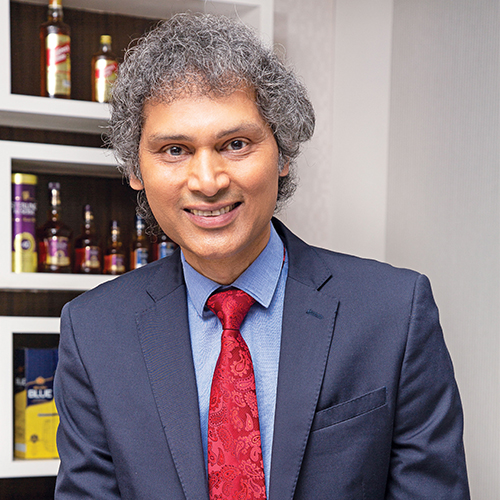
Speaking on the occasion, Shekhar Ramamurthy, Executive Deputy Chairman, ABD stated, “It is a great honour for ABD to be recognised by the industry. We have always kept the consumer central to our brands and have phenomenal success in Officer’s Choice, the 3rd largest whisky brand globally, and more recently, Sterling Reserve which is amongst the fastest growing worldwide.”

Oh Summer Beer

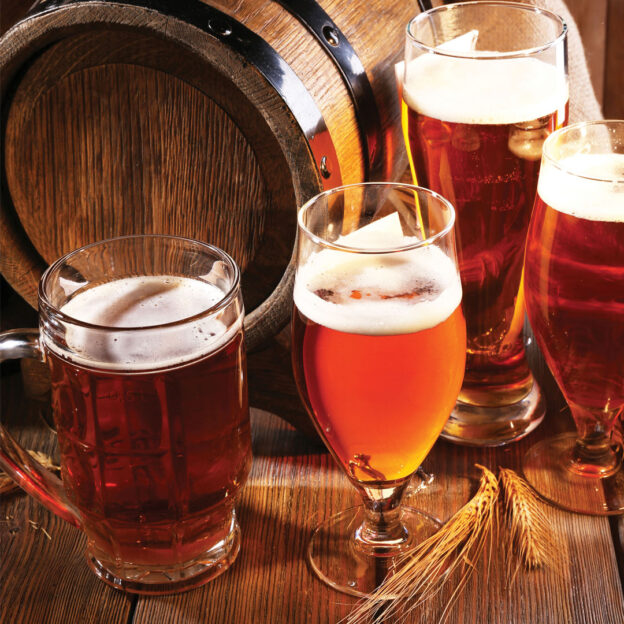
A summer beer can be just about any style, as long as it’s crisp and refreshing and makes you never want to go back inside again. They range from light and fruity to hoppy and complex, but the best summer beer is the one you come back to again and again as soon as the temperature crawls above 60 degrees.

The global beer market size reached US$ 640.2 billion in 2021. Looking forward, IMARC Group expects the market to reach US$ 750.3 billion by 2027, exhibiting at a CAGR of 2.7% during 2022-2027, according to a new report by IMARC Group.

Beer is a fermented alcoholic beverage that is made by brewing and fermenting starches derived from cereal grains. It is flavoured using hops that not only add a buttery flavour to the beverage, but also act as a natural preservative. Apart from this, other flavourings, such as herbs and fruits, are also added to attribute a specific flavour and fragrance to the drink. It is a rich source of niacin, folate, riboflavin, pyridoxine, potassium and magnesium.

Moderate consumption of beer is widely associated with numerous health benefits and aids in maintaining blood pressure levels, preventing kidney stone formations, and minimising the chances of developing cardiovascular disorders, including angina, stroke and heart attack. Owing to this, it is gaining widespread popularity across the globe.

Global Beer Market Trends:

One of the major factors influencing the global beer market is the rapid spread of the Coronavirus disease (Covid-19) and the consequent social distancing norms and lockdowns imposed in several countries as a control measure. The decrease in the number of social gatherings is projected to lead to a decline in the on-premise consumption and sales of beer in bars, restaurants, pubs and public events. However, this trend will to be offset by the demand for to-go packs as well as home delivery services, mainly through online platforms. Another factor driving the market is the widespread preference for specialty beer among individuals. These beers are brewed to a classic style by incorporating different flavours, such as honey, chocolate, ginger and sweet potatoes. This adds a distinct flavour and aroma, which further adds innovative and eccentric flavours to the drinks. The growing inclination toward craft beer is also accelerating the market growth. Since microbreweries produce portioned amounts of beer, they lay enhanced emphasis on the flavour, quality and brewing techniques as compared to large-scale commercialised breweries.

The potential for beer growth in India is strong as well. AB InBev, for example, began brewing Budweiser in the market back in 2010. In January 2021, Kirin Holdings announced an investment of $30 million in New Delhi-based B9 Beverages, the maker of the Indian craft beer Bira. IWSR anticipates beer consumption in India to return to pre-Covid-19 levels by the end of 2023, continuing on its growth path from there.

Expanding beyond beer

As consumers moved to the at-home occasion, the trend for convenience has helped to shape purchasing behaviours. In markets such as the US, the ready-to-drink (RTD) category, which includes hard seltzers, has been taking share from beer.
RTDs provide a growing opportunity for brewers to diversify their product portfolios. Indeed, Heineken entered the hard seltzer category in September 2020, with the launch of Pure Piraña in Mexico and New Zealand. In the US, Heineken partnered with AriZona to launch the AriZona SunRise Hard Seltzer in October 2020. AB InBev states that Bud Light Seltzer is their leading innovation in the US market, with over 75% of volume being incremental to their portfolio. In fact, 2021 was the first year in which a hard seltzer commercial (Bud Light Seltzer) aired during the Super Bowl.

Malt-based RTDs are currently dominant in the US owing to their taxation base, and brewers they are in prime position to take advantage. Elsewhere, the alcohol base of choice varies by country, driven by consumer preference and local alcohol tax structures.

Changes in purchasing behaviour propel e-commerce

As with the wider beverage alcohol industry, Covid-19 has propelled the value of the alcohol e-commerce channel. Heineken, for example, reported that Beerwulf, its direct-to-consumer platform in Europe, nearly doubled its revenues in 2020, while in the UK, its revenues tripled. Online sales of its home-draught systems grew as well.

Beer has traditionally under-traded online, primarily due to the channel offering lower margins. However, this will change as consumers continue to buy more groceries online and beer is included in the weekly shop. This is especially true in the US, where IWSR expects sales of online beer to grow rapidly as supermarket chains increasingly invest in the channel.
Online beer sales hold the greatest market share in countries including Japan, the UK and the US. From a lower base, online beer sales will also grow rapidly over the next five years in markets such as Israel and Nigeria.

The entrepreneurial spirit of small-batch players

Craft breweries, which tend to be more dependent on the on-premise, have propelled interest in the global beer category and revitalised its fortunes in many markets. IWSR believes that the entrepreneurial spirit of the sector will mean that craft brewery regeneration will be quick. In the US, for example, IWSR has seen the pandemic lead to a “buy local” approach amongst some consumers, which will benefit small-batch players.

Innovation in the no/low space reignites the category

No- and low-alcohol beer is a bright spot for the category, as moderation and wellness trends continue to resonate with consumers. IWSR data shows that, to date, most volume has come from no-alcohol rather than low-alcohol beer across 10 key markets.

Broadly, low-alcohol beer is giving way to no-alcohol offerings particularly in markets such as Australia, France and the UK. Spain, for example, is seeing a shift from low- to no-alcohol beers, as consumers seek healthier choices and view the newer 0.0% brands as more modern. In South Africa, investment from Heineken and the emergence of a craft segment has helped to generate interest in the no-alcohol category.

While no-alcohol beer has existed for decades, in markets like the US, no-alcohol beer has premiumised through the release of no-alcohol versions of non-lager styles, long the domain of no-alcohol beer. More recent no-alcohol styles, such as IPAs, stouts or porters, are starting to make a real impression, driven particularly by new challenger brands, many of which are not linked to traditional brewing. The recent no-alcohol extension of Guinness – despite some teething issues – will help to underline that no-alcohol beers are no longer the sole domain of lagers.

While several key beer players continue to steer the no/low beer category, the market is fragmented with a number of smaller brands vying to establish themselves as market leaders in this space. The segment is likely to become even more of a focus for smaller craft producers who are able to bring a diverse range of products to the market in future.

Himachal Pradesh new liquor policy aims to boost revenues, while curbing illicit trade

The Chief Minister Jai Ram Thakur, under whose chairmanship, the Cabinet met announced that the government intended to collect Rs. 2,131 crore revenue from state excise. This would be a jump of nearly Rs. 264 crore and a 14% jump in excise revenues over the previous financial year.

The policy includes renewal of retail excise vends for the financial year 2022-23 at the renewal fees of 4% of the value of unit/vend. The objective is to gain adequate enhancement in government revenue and curb the smuggling of country liquor from the neighbouring states by a reduction in its price.

Annually, Himachal Pradesh earns Rs. 1,800 to 1,900 crore from excise, which includes the sale and consumption of foreign liquor brands and country liquor sold in open markets, vends, bars and restaurants. Excise is one of the biggest source after the sale of power, mining (minerals) and tourism in the hill state.

Country Liquor prices reduced

The brands of Country Liquor will be cheaper as license fees has been reduced. This will help in providing good quality liquor at a cheaper rate to the consumers and they won’t be tempted towards purchase of illicit liquor and evasion of duty will also be checked.  In new excise policy, the 15% fixed quota of country liquor for manufacturers and bottlers to be supplied to the retail licensees has been abolished. This step will give the retail licensees to lift their quota from the suppliers of their choice and further assure supply of good quality country liquor at competitive prices. The MRP of country liquor will be cheaper by 16% of existing price.

The fixed annual license fee of bars has been rationalised by abolishing the area specific slabs of license fee. Now throughout the State there will be uniform license slabs based upon the room capacity in hotels.

Fixed license fee of bars in tribal areas reduced   

As Himachal Pradesh is known for its tourism, the government intends to provide better facility to the tourists visiting tribal areas and also provide relief to the hotel entrepreneurs, the rates of annual fixed license fee of bars in the tribal areas.

To keep a check on illicit trade and to monitor the manufacturing, operations of liquor, its dispatch to wholesalers and subsequent sale to retailers, it has been made mandatory for all the above stakeholders to install CCTV cameras at their establishments. The government also has imposed stringent penalties to ensure that irregularities detected by the department in liquor bottling plants, wholesale vends and retail vends are curbed. An effective end to end online Excise Administration System shall be setup in the State which shall include the facility of track and trace of liquor bottles besides other modules for real time monitoring.

As per the policy the Renewal fee (non-refundable) for each vend/unit shall be paid @ 4% of the value of vend/unit (MVV) for 2022-23 while filing application for renewal. b) Renewal Fee of Country Fermented Liquor (Lugdi/Jhol) Vends Sr. No. Value of vend Renewal Fee (i) Upto Rs. 1.00 Lakh Rs. 20,000 (ii) Above Rs. 1.00 Lakh upto Rs. 10 Lakh Rs. 25,000 (iii) Above Rs. 10.00 Lakh Rs. 30,000.

The policy said that the Zonal Collectors/District Incharges shall not be allowed to proceed with the conditional renewal of any vends/units. Sub-vends shall be granted to a retail licensee within the State subject to payment of annual license fee of Rs. 8,00,000 or 10% of the vend value whichever is lower subject to the minimum of Rs. 4,00,000. Whereas, keeping in view the issue of smuggling of liquor into the State, the sub-vends shall be granted within a distance of 100 meter from the State border on the payment of annual license fee of Rs. 3,00,000. The sub-vends shall be approved and
granted by the Collector of the Zone concerned.

Fixed License Fee

The fixed license fee on annual basis (including renewal fee) for various Licenses of Foreign Liquor, Country Liquor and Beer per license for the year 2022-23 have been changed.

Type of license Fixed license fee per annum

L-1 (Wholesale vend of IMFS/Foreign liquor/Beer/Wine)Minimum license fee of ₹20,00,000/- for lifting upto 3.00 lakh proof litres. Beyond 3.00 lakh proof litres an additional ₹3.00 per proof litre
L-1A (Storage of Foreign Liquor in Bond)₹2,00,000/- excluding such other fee as may be prescribed
L-1B (i) Wholesale vend of Foreign Liquor to L-1 vend only₹4.25 per P. L. on Foreign Spirit and ₹1.50 per B.L. of RTD Beverages subject to minimum of ₹4,00,000/-
Exclusively for Beer₹1.50 per B.L. subject to minimum of ₹4,00,000/-.
L-1BB (wholesale vend of imported foreign liquor) from outside India to L-1 & L-2 as well as to the Club and Bar license holders.Annual fixed license fee ₹5,50,000/-
L-1BIO (License for space holder in Custom Bonded Warehouse for wholesale of imported BIO brands to L1BB)Annual fixed license fee ₹10,50,000/-
L-1C (Wholesale vend of foreign liquor by distiller or bottler only).₹6,00,000/-
L-1E for export of IMFS for non-manufacturer wholesale licensee for interState sale₹3.00 per proof litre subject to minimum of Rs. 10.75 lakh per annum.

The much-awaited Resvera Lounge is now Open!

Nasik is recognized as the “Wine Capital of India” and is situated in the Western Ghats, on the banks of the River Godavari. Its climate and scenic beauty attract a lot of tourists from around the country as well as overseas. People visit Nashik for a tranquil experience which is perfect for families and friends to spend time with good food and wine. The socialising aspect is a vital part of the wine tour and tasting. Apart from weekend groups, there is also a strong interest among overseas travellers in following wine trails in India. Their goal is to taste Indian wine after having tasted wines from established regions around the world for years. The vineyards offer more than wine tasting. They also provide the opportunity to meet the winemakers and learn about the winemaking process.

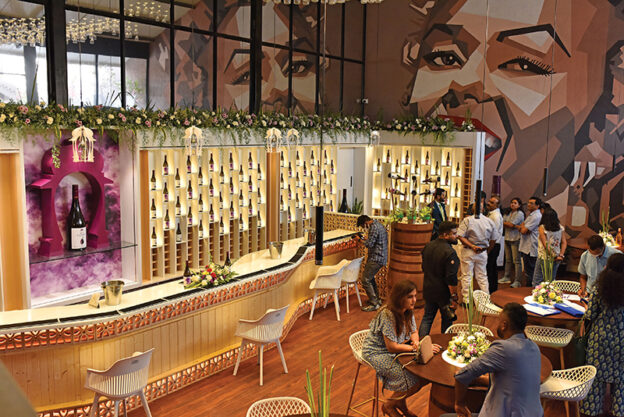
Resvera Lounge with unique Jamun wines in its bouquet is opening its doors for a similar experience and to boost Wine Tourism in Maharashtra.

Jamun fruit forms the core of Resvera Wine, a fruit wine made with a focus on creating a delicious flavour. Creating a wine that is consumed and enjoyed 365 days a year is an ultimate goal. This makes it a wholesome gift for each and every wine lover around the world. Resvera is committed to responsible winemaking and produces magical juice from organically sourced Jamun fruit from the Jungles of Maharashtra. Resvera is also responsible for empowering the tribal community of regions where the Jamun fruit is extracted, giving them an opportunity to earn a living. A fusion of Jamun fruit combined with divine smoothness, Resvera creates a rich, luxurious taste that enhances your alluring lifestyle.

This wine’s enticing aroma makes it a perfect pairing with most meals. Take a swirl, breathe the scent into your veins, and taste the magical purple liquid that makes you want to drink more. Resvera Winery creates its wines with a holistic philosophy and believes in giving back to nature.

The taste of Jamun is the biggest USP of the product, since it is a crowd-pleaser, and offers something special that complements the Indian palate very well. Jamun fruit would also be a USP due to its health benefits. It is a rich source of nutrients, is anti-diabetic, and purifies the blood. The brand’s intention wasn’t to become an alcohol brand, but rather to give people a delicious experience. “An elegant and tastefully-done lounge is set beautifully in the midst of the grape city. With Resvera Lounge, we aim to bring a world of contrasts and paint the town with Jamun. A lounge thoughtfully created to give you a one of a kind experience that offers a beautiful ambience. When the sun goes down and the city lights go up, sip on the World’s First Jamun Wine complemented by exquisite food,” says Komal Piyush Somani, Co-founder & Director, Resvera Winery.

“Nashik has been recognised as the Wine Capital of India, and the history of wine in India traces back to as many as 5000 years. Under the one district one product scheme, Govt of India recognised wine as the main product for Nashik. indigenous fruits like Jamun, Mulberry, Jackfruit, Indian Gooseberry, Apple, and Mango have their mention in Scriptures like Rigveda, these fruits have proven health benefits.

There is a need to make these native Indian fruits popular and have a global footprint of the same in the present times. Resvera is processing some of these native Indian fruits and making wine from these fruits. We need to promote these made-in-India wines of fruits that are native to our country” said Nikhil Khode, Co-founder & and Head of Production. “The opening of the Resvera Lounge will make sure that Nashik is a testimony to the age-old traditions of making wine from not only grapes but other native fruits of India which are well understood to the Indian pallet,” continued.

Lastly, Dr Neeraj Agarwal – Director, added, “Every glass of wine enjoyed by the Resvera lovers at this new Lounge will also result in the plantation of few Jamun Trees in the reserved areas. So far Resvera team and all the tribal people associated with Resvera have planted more than 1 lakh trees in the last six years. Creation of this beautiful Resvera lounge is to give a different experience of fruit wines to the wine lovers and our first offering is world’s first Jamun wine.”

With the inauguration of the tasting room at The Cobble Street, Gangapur-Savargaon Road, Nashik, Resvera aims at enhancing the wine experience for its audience. The tasting room reflects the same philosophy that governs Resvera Wines. They are also keen to partner with players in other parts of the country to start such dedicated Wine Lounge of Resvera.

The war in Ukraine could impact how much your favourite beer costs

Some beer prices are climbing as most parts of the process cost more – from aluminum cans to transportation.

The Ukraine accounts for about 20% of beer’s usage of barley. It’s one of the top five global producers of barley. So brewers, particularly at a global level, will be watching the supply and price of barley.

Molson Coors, which brews Milwaukee’s Miller Beer, and other major brewers have so far been able to absorb the higher costs.

For Craft Beers it’s really hard to absorb price increases in raw materials without passing that along to the customer.

According to a new RaboResearch report (Rabobank), malting barley prices in western Europe are currently 50% above levels seen a year ago. This is anticipated to have a major impact on maltsters, for whom barley inputs make up 65% of costs.

For brewers, the impact is less severe as barley accounts for only 5% of costs. But RaboResearch indicates there is a risk that protectionism could derail the entire value chain, such as in the case that western Europe were to stop exporting malting barley or other grains to countries outside the EU and brewers might not get the right quantity or quality of malt.

21 Mar 2022 – Russia’s invasion of Ukraine has triggered a prominent domino effect on the prices of agricultural commodities, with analysts forecasting critical impacts on both supply and demand of food products. While energy prices are rising as a result of international sanctions on Russia, costs for grains, packaging and logistics are anticipated to surge on.

RaboResearch indicates there is a risk that protectionism could derail the entire value chain, such as in the case that western Europe were to stop exporting malting barley outside the EU. Russia produces around 13% of global barley, while Ukraine accounts for 5% (2020/21 crop). Together, these countries account for 30% of global barley exports, a significant amount.

Although the Black Sea region is a major producer of barley, very few maltsters in the rest of the world depend on its crop, as the barley produced and exported from the region is mainly feed barley.

Although some maltsters in China might use Ukrainian barley, malt plants in the rest of the world are mostly sourcing from other regions. Ukraine and Russia are major barley export nations, accounting for 28% of global barley exports in 2020.

Most Black Sea region barley flows find their way to countries without a strong beer culture. In 2019/20, 64% of Russian barley was exported to the Middle East and 9% to North Africa.

Energy costs have also risen because of the conflict. While prices of oil and natural gas have almost doubled over the past 12 months, there are many points in the value chain where higher energy costs will impact the cost of beer.

Energy is used to turn barley into malt, but RaboResearch estimates that this accounts for just 1% of the cost price of beer. The energy used in the brewing process represents 3% of overall costs. Malting barley prices in western Europe are currently 50% above levels seen a year ago.

But the largest impact is seen in the cost of packaging materials (~25%), which have a major energy component. RaboResearch estimates that the total cost price of beer has risen by 15% as a result of rising energy costs.

“The discussion about the possibility of beverage companies introducing returnable packaging has resurfaced in recent years as part of broader discussions about sustainability. We wonder if, in light of rising fuel prices, the idea might be starting to gain momentum,” states RaboResearch.

Although sea freight is much more energy efficient than road transport, some brewers might be tempted to follow AB InBev’s example to brew Stella Artois near its US consumers. While localising production can save on fuel costs, the diseconomies of scale of a smaller location could offset these benefits.

Although many brewers have focussed on international brands and the premium end of their product offering in recent years, a broad portfolio of products and channels is desirable to offset current risks, concludes RaboResearch.

Russia, the world’s fifth largest country in terms of overall beer drinking, was one of the few major markets around the world where beer consumption actually rose during the pandemic-hit year of 2020. It also grew by a further 3.3% during 2021.

That is why the decisions from Carlsberg and Heineken to pull out completely from Russia will have been difficult.

For Carlsberg, in particular, this is a big deal. The Danish group owns Baltika, Russia’s biggest brewer, which has a market share of just shy of 30%. Carlsberg, which last year made 10% of its total sales and 6% of its operating profits in Russia, had already said that it will stop selling its flagship brand there and will not make any new investments in the country.