
Tag Archives: alcobev news

John Distilleries bullish despite hiccups

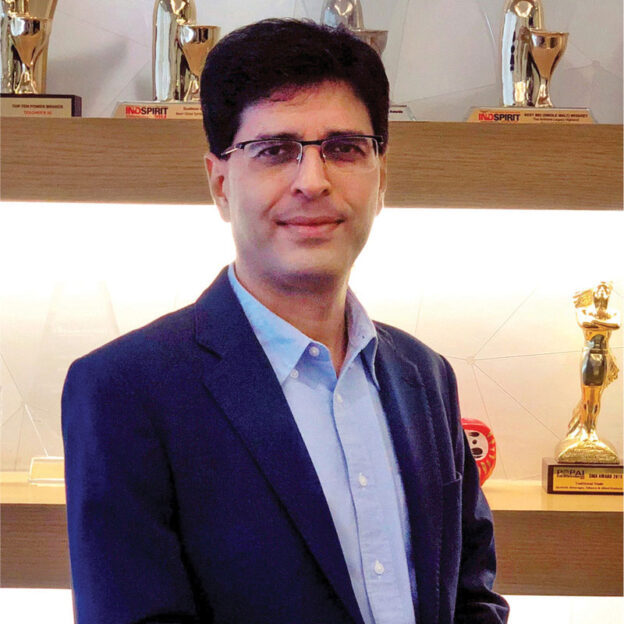
Covid has been challenging but John Distilleries is ready to bounce back thanks to the success of its Single Malt Brands. Being based in the South the company has also got its South strategy right. Paul John, Chairman and Managing Director, John Distilleries Pvt. Ltd., outlines the strategy to pave the way for the company’s bright future.

How has 2021 been for John Distilleries?

2021 was a challenging year, however we maintained resilience, built a growth in share points of our core brands in our stronger markets and expanded into new markets with our luxury portfolio.

What is the strategy for this year given Covid 3 and post Covid?

To stay positive and drive our internal strategy of prioritising channel mix and segment mix to deliver growth, this strategy has been working well for us over the past few years.

What has been the overall response to your premiumisation strategy?

The response has been very promising especially with our single malt portfolio garnering popularity across the country and the globe. In the domestic arena we’ve recently launched Roulette Premium Whisky – a peated whisky that stands apart from other whiskies in its segment/category, and expanded Fireball Cinnamon Flavoured Whisky into new markets, along with our BIO portfolio – Sazerac Rye and Buffalo Trace.

Are you looking at moving to the brandy segment given that the South is a strong market?

With Paul John XO we’ve already established a presence in the luxury brandy segment in the South as well, along with Roulette brandy which is popular across South markets.

What has been the impact of Covid on the company’s fortunes?

The impact has been tough as with most companies, and these past couple of years have been transformative in several ways for every industry with demands to adapt and evolve, but it has not deterred our zeal to deliver high quality products and maintain an innovativeness with consumer interest as priority.

Do you see a strong comeback for the company post Covid?

We believe in constantly and consistently delivering premium quality products for our consumers, and our efforts over the years have been recognised and appreciated. We will continue to dedicate our efforts to deliver the best and this gives us the impetus to keep moving forward.

How is the IMFL Division faring?

IMFL is a competitive segment, our core brands in this segment in the South are doing significantly well. We are now slowly expanding to newer markets with new brands and the initial feedback is very encouraging!

Has the success of the premium brands had an effect on the growth of regular brands?

Definitely. The success and popularity of our premium brands has had a positive rub-off on our new brands with the halo effect encouraging consumers to try our new offerings in the market.

What are your plans for sourcing raw materials for your single malts?

We’ve been producing single malt for the past 12 years, the major ingredient in the production of single malt is malted barley. We have annual contracts with different suppliers across India and we shall continue to source our raw material from these suppliers in future as well.

What are your expansion plans for 2022?

Our focus will be to build the footprint of our existing and recently launched brands especially our luxury portfolio, across markets.
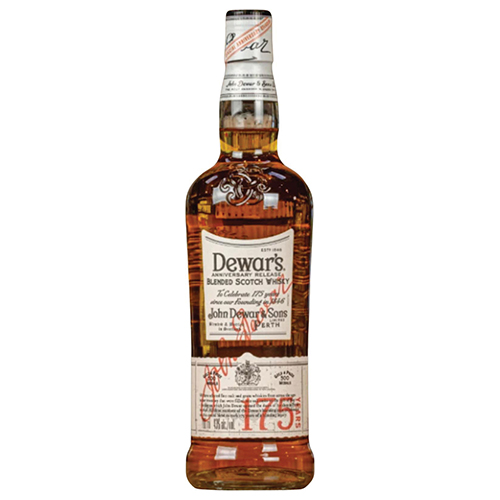
Dewar’s Scotch Whisky Celebrates its 175th Anniversary

Dewar’s Scotch whisky marked 175 years of Scotch-making recently. Over the course of these spectacular 175 years, Dewar’s has created some mighty fine products along the way and crafted an unparalleled experience for patrons. The whisky maker has a rich history with over 15 plus products which cater to the premium category. Dewar’s is also widely known for pioneering the double ageing process to serve its drinkers a refined and balanced taste.

Founded in 1846 by John Dewar, the journey of Dewar’s started from a small wine and spirits merchant shop in Perth, Scotland to become a global brand that it is today. John Dewar was so proud of the quality of his blended Scotches that he was one of the first Scotch blenders to put his name on a bottle as a guarantee of quality. In 1880’s, Alexander and Tommy Dewar inherited Scotch whisky business from their father. They divided the responsibility between themselves and embarked on a journey to make Dewar’s one of the fastest growing premium whiskies in the world. In 1890, Master Blender A.J. Cameron joined Dewar’s and pioneered the novel Double Ageing process for greater harmony and extra smoothness to all the Dewar’s blend.

Taking inspiration from Dewar’s first Master Blender- A.J. Cameron’s achieved notes, Master Blender Stephanie Macleod created the Dewar’s Double Double whisky range using an innovative four-step ageing process. The unique taste of this double blended scotch has enabled the brand in winning multiple/several prestigious titles and accolades like ‘World’s Best Blended’ and ‘Best in Class’ among others.

Commenting on the wins, Vijay Dev, Consumer Marketing Lead, Whiskies at Bacardi India said, “This is a significant milestone for Dewar’s! We are elated to be a part of one of the world’s most awarded Scotch whisky, after all double is better. With our commitment to serve the smoothest blend to our consumers, we will be bringing multiple variants like Japanese Smooth and Ultra-Premium Double Double Series 21, 27 and 32 year old to India in the near future.”

Currently at the historical achieve of Dewar’s in Glasgow, Jacqui Seargeant, Global Heritage Manager & Whiskies Archivist, Bacardi has been preserving more than 10,000 items from the rich heritage of the DEWAR’S family including bottles from the 19th century, documenting family photos from company founders, curating museum collections, and fact finding the origin stories of classic cocktails. The archive has inspired bottle designs, brand campaigns, and recipes. While going through the archives, Jacqui came across Tommy Dewar’s Original Highball recipe, which is today whisky drinkers’ favourite cocktail across the globe.

Pass Code Hospitality expanding footprints

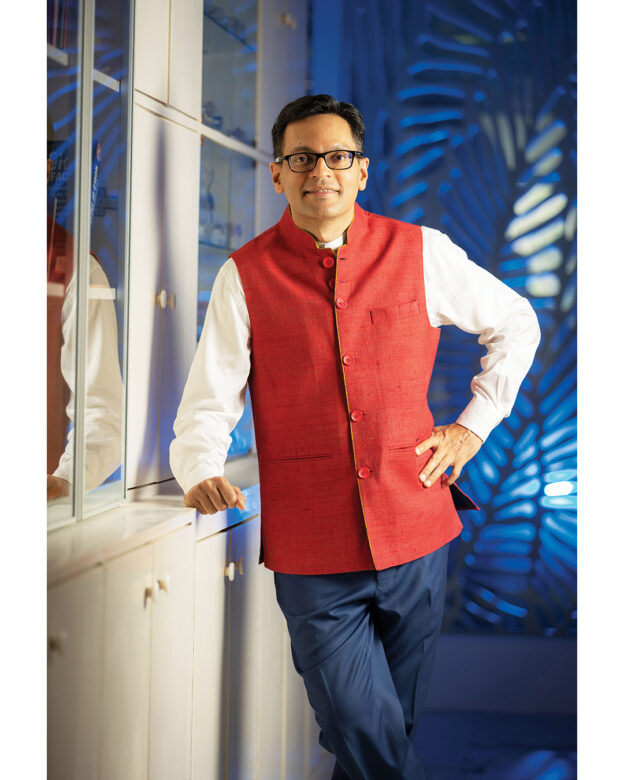
One of the original speakeasies’ which serves finest cocktails in all of India, and all you need to know is the passcode to enjoy them. Rakshay Dhariwal founder and MD speaks to Lopamudra Ganguly about his plans of expansion post pandemic.

PCO stands for ‘pass code only’, and as you may have guessed, this PCO is the place to go in Delhi and Gurgaon for perfect classic cocktails, as they skip no steps. PCO, ATM, SAZ, Jamun are all such outlets. Customers especially love their barrel-aged cocktail line (think Manhattans and Negronis), which truly shows off passion for their craft in spades, as does their rotating list of specials. To sweeten the pot, they also serve a tasty menu full of bar bites, and we can’t think of a better place to spend a night in the capital post pandemic. Excerpts from the interview.

Please tell us about your company and the concept behind it?

Pass Code Hospitality is a boutique food and beverage firm that specialises in creating experience-driven, fun-dine restaurants and bars. We started our company in 2012 with cocktail bar PCO, which was the first speakeasy in the country. Since then we have gone on to start the “first” of many types of restaurants – ATM a private member’s supper club, Ping’s, a healthy asian street food restaurant, SAZ, a new-orleans inspired American Brasserie, and Jamun, an Indian restaurant serving food from all over the country. Our motto is to bring new dining concepts to our patrons.

Tell us something which is special about your company?

We are known for our boutique brands and we make sure that each of our brands is different and truly representative of the product while maintaining very high standards for food, beverage and service. We are fortunate that each of these brands has grown into a market leader in its segment.

What was your marketing strategy in this Covid situation?

There was not a lot we could do – and the sentiment during the first lockdown vs the second lockdown was very different. In the first one we ran online auctions of experiences in our restaurants and had tied-up with a charity partner for this. But during the second lockdown, we were simply trying to help by providing food packages including rice, oil, salt, daal, wheat, sugar, soap and other basic necessities and distributing them to those in need.

What were the strategies to keep up the brand image in the consumers’ mind?

Most of our marketing efforts were centered around delivery and encouraging consumers to order directly with us. Due to the financial pressures of the lockdown, offering discounts and promotions was out of the question – instead we tried to focus on the quality and high standard that one can expect from dining at any PCH outlet.

What are your present projects running?

We are fortunate that all of our restaurants that were running pre-pandemic in Delhi, Goa and Kolkata are still operating today. We hope that as the months progress, footfalls keep increasing. We have been encouraged by the response we have seen since the second opening and actually have planned in the near future.

Are your expansion plans part of your post Covid revival?

Absolutely! We think food and beverage will bounce back in a big way. At the end of the day, people want to go out, meet their friends and feel connected to the larger world around them. To that end, we have very exciting plans to bring our brands to Mumbai and further expand in Goa.

Tell us something about your future plans?

We are just about to launch a version of SAZ in Goa called SAZ on the Beach, a beautiful beach bar and restaurant with spectacular sunset views. We are also opening Ping’s Cafe Orient, PCO and SAZ Cafe in Kamala Mills in Mumbai and SAZ American Brasserie in Jio World Drive BKC.

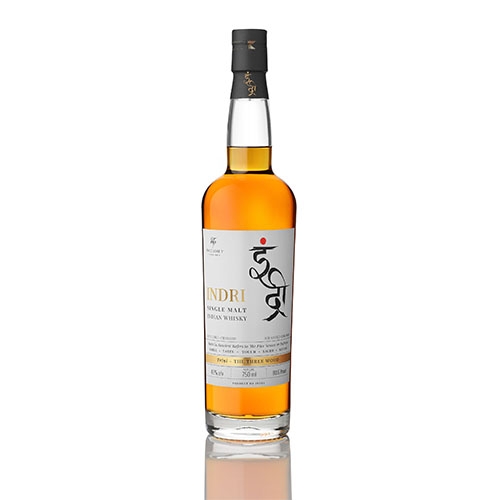
Indri – The Indian Single Malt

Indri – Trini is the first Single Malt expression to be launched from the house of Piccadily, which will be available to select customers in India, the US and Europe by Christmas this year. Trini has been created by its Master Blender, Mr Surrinder Kumar, who has a rich experience of more than 40 years in the Single Malt Industry. This malt manufacturing powerhouse is also set to bring to us soon some new variants of the exotic Indian Single Malt ‘Indri’.

Indri: A Taste through the Five Senses

Indri is a single malt whisky that is aptly named after the area in which it is situated. It is also synonymous with ‘Indriya’ or the five Indris responsible for Touch, Taste, Smell, Sight, Sound. Indri professes to pleasantly evoke all your five senses and make you enjoy the smooth golden liquid on the palate and the burst of flavours that soon follow. Indri – Trini is the first Indian whisky to be launched using the three-wood expression, ex-bourbon, ex-French wine and PX Sherry casks.

Indri single malt has a tropical good taste and it is not harsh. The name Indri is used very thoughtfully because it reflects the senses used in whisky-making at a distillery. Graeme Bowie, who is the Master Distiller and has 32 years of rich experience in the Scottish Malt Industry.

Flavour Profile of the Whisky

Nose: Hints of black tea, caramelised pineapple with a whiff of oak from the barrel comes forward, followed by vanilla and honey from the bourbon oak and traces of spiced tannins from the European oak, finally topped up with vinous raisin and sweet sherry notes. Gentle and mellow on the nose.

Taste: Elegant richness, smooth and warm on the sides of the mouth. Gentle spice and wood characters come through, followed by nutty flavours and hints of burnt pineapple, citrus and raisins.

Finish: A subtle and balanced finish where each flavour compliments one another without dominating. A smooth and long after taste with sweet fruity flavours coming up from the warmth of the throat, lingering long after.

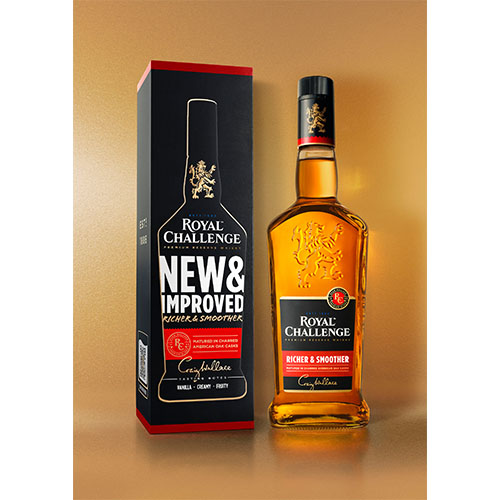
The All-New Royal Challenge: A Smooth & Rich New Blend

Royal Challenge Whisky, India’s most aspirational whisky brand that’s known to challenge the norms, recently unveiled its brand-new renovation. The new Royal Challenge Whisky has a completely new liquid and a striking new pack that will stand out on the shelf.

Diageo India has created a truly unique blended whisky dedicated to the spirit of Delhi. The all-new Royal Challenge whisky is a perfect fusion of select imported scotch blended with perfection to deliver a sweet profile and subtle notes of vanilla, that will give the consumers a richer and smoother drinking experience.

With the vision to be an iconic millennial brand, Royal Challenge’s new pack has been re-designed for a premium look-and-feel and an elevated experience – the Lion sigil and red and black colours represent the bold and fearless spirit that the brand exemplifies. Further, with this renewed blend, Royal Challenge has evolved to be the most accessible and preferred brand for the younger generation.

Speaking about the renovation, Ruchira Jaitly, VP of Marketing and Prestige portfolio head said, “Royal Challenge is a brand which has always believed that, to build a better tomorrow, we must challenge the stereotypes of today and reinvent the rules. With the vision to become the first whisky of choice that appeals to the people of Delhi, there was a need to reinvent and offer an experience that perfectly blends into the changing consumer palettes and choices. I am excited with what is in store and look forward to the people of Delhi embracing an all-new refreshed Royal Challenge as they have always done.”

The launch of the all-new pack will look to explore an integrated communication strategy in Delhi that builds on this new positioning.

The phased launch will see the refreshed pack on shelves across the city this Festive season.

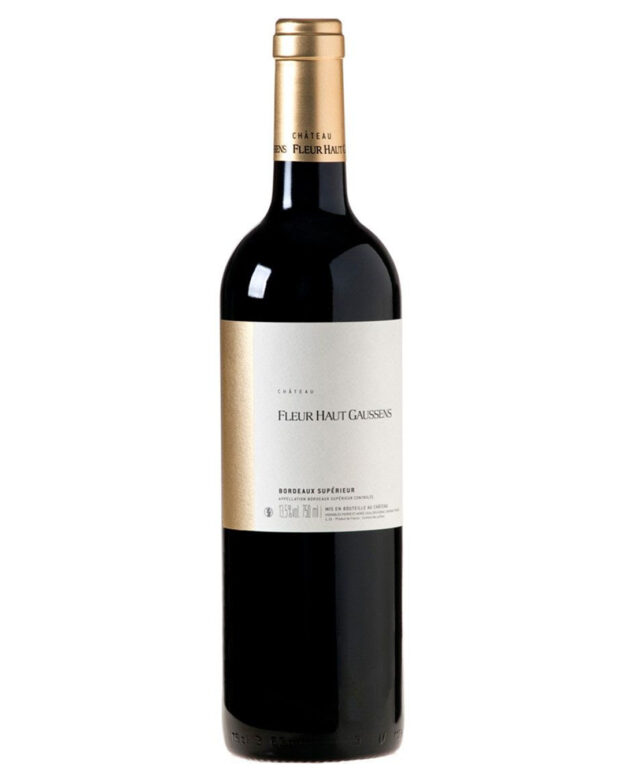
Château Fleur Haut Gaussens looking to launch in India

Château Fleur Haut Gaussens, located in Vérac, not far from Saint-Emilion, is the result of the heritage of a family of winegrowers. It was in 1996 that Hervé Lhuilier created it. Over the years, he has managed to keep a dynamic company, by carrying out work to improve the technical tool. The winemaker now cultivates the 40ha of vines on the property, spread over 27 plots, combining tradition and innovation. Concerned about the environment and the ecosystem have adopted a reasoned management of the vines and are certified Hight Environmental Value level 3.

The wines, recognised throughout the world with numerous distinctions, are worked according to the criteria of the PDO Bordeaux Supérieur. They distinguish themselves by the production of atypical wines. Indeed, offer a modern approach to Bordeaux wine through the production in 400L barrels of varietals wines with an access profile on the fruit such as La Bergeronette a 100% Cabernet Franc, its annual production is around 14,000 bottles.

They obviously offer blended wines. Château Fleur Haut Gaussens produces around 165,000 bottles per year and has been the bestseller for 20 years now. It results from a blend of a majority of Merlot with a hint of Cabernet Franc, Cabernet Sauvignon and Malbec. This is aged at 50% in French oak barrels for 6 months. This is a modern Bordeaux wine that knows how to (re) discover the wines of the region.

Their inventory management allows them to offer you ready-to-drink vintages. Their wines offer a very interesting quality-price ratio, and many partners already trust them in more than 20 countries.

In parallel to their wine activity linked to Château Fleur Haut Gaussens, in 2018 they created “Le Couturier du Terroir”, a trading company attached to their family-run wine estate. They developed a range of wines from different horizons. Thanks to their various hats, they can thus offer their red Bordeaux Supérieur wines Château Fleur Haut Gaussens ranked in the top 5 of the PDO but also entry-level Bordeaux and other products according to your needs.

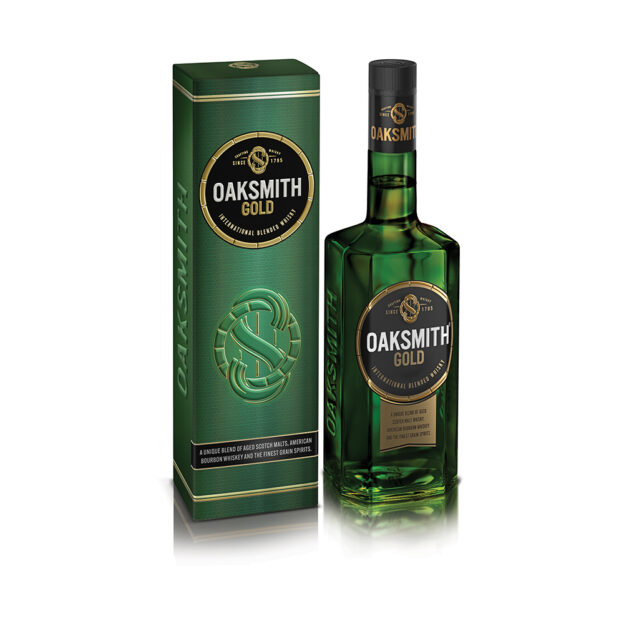
Oaksmith launched in Delhi

Oaksmith, India’s First Truly International Blended Whisky, crafted by Suntory’s Chief Blender Shinji Fukuyo, creator of iconic Japanese whiskies Hibiki and Yamazaki – combines the finest Scotch Malts with the smoothest American Bourbons using world class Japanese blending techniques, bringing the best of East and West to Indian consumers

.

Beam Suntory, a world leader in premium spirits, has launched Oaksmith, India’s first International Blended Whisky in Delhi. After a successful launch in December 2019 in Maharashtra and Telangana followed by rapid expansion in West Bengal, Goa, Assam, Chandigarh, UP and Karnataka, the iconic brand is now available in Delhi with both blend variants – ‘Oaksmith Gold’ and ‘Oaksmith International’. The brand has delivered 300,000 cases since its launch in India.

Oaksmith has been created by world-renowned Shinji Fukuyo, Chief Blender, Suntory, the founding house of Japanese Whiskies – with world-class Japanese craftsmanship, blending high quality Scotch Malt whiskies and smoothest American Bourbons to build a recipe that is unique and designed taking inspiration from the Indian palate. From seed to sip, the whisky is meticulously crafted to achieve a blend like no other resulting in a bold spirit that is rich on the nose yet approachable and well balanced with a bright, smooth and unexpectedly long finish. Launch of Oaksmith Gold and Oaksmith International whisky in Delhi is key to Beam Suntory’s growth strategy, and this expansion signifies the importance of India to the global spirits company.

“We are delighted with the response that the blends of Oaksmithhave received from consumers since it’s launch. The growing premiumisation of the Indian market and the appreciation for finely crafted spirits made this the right time to expand the brand across various markets in India, finally bringing it to the nation’s capital – New Delhi. Delhi’s rich history blended with modernity adorned with touches of its traditional heritage attracts people from across the country and the world. We see a growing opportunity for high quality, world class spirit brands and look forward to receiving the same overwhelming appreciation for Oaksmith Gold and Oaksmith International here,” says Neeraj Kumar, Managing Director of Beam Suntory India.

India Travel Retail Market

GROWTH, TRENDS, COVID 19 IMPACT AND FORECASTS (2021-2026)

Travel Retail is the next great frontier of the Indian Retail Sector, and as people’s incomes rise, India’s position as a business powerhouse and tourist destination will also continue to solidify, leading to the growth and prosperity of this industry.

Covid-19 has all but wiped out the travel industry in India and the passenger numbers continue to be affected in India even in 2021 owing to existing lockdowns and restrictions in the wake of the second wave of the pandemic. In 2020, less than 3 million foreign tourists visited India with a dip of around 75% when compared to 2019 due to travel restrictions imposed. The Covid-19 outbreak is impacting duty-free shopping behaviour, spend, and browsing likelihood on a category level, with this being particularly the case with luxury items in India. As a result of the pandemic, shoppers have moved to online shopping in greater swathes than before, and several travel retail operators, including Delhi Duty-Free, have introduced new online retail services facilitating home delivery of travel retail exclusive and duty-absorbed products.

A combination of a large and growing population, increasing air connectivity, inbound tourism, and the growing disposable incomes and propensity to travel internationally by India’s middle class are some of the major factors fuelling the growth of India’s travel retail market.

As per a research, it is estimated that nearly 80% of the country’s duty-free shoppers are Indians which is quite unlike other markets in the region, such as Korea or Thailand, where most duty-free sales are from international travellers rather than local travellers. However, this is likely to change with the growth in international tourism in the country. While India accounts for only 4.8% of the Asia Pacific region’s total international tourist arrivals, its year-on-year growth rate has been well above the region’s average in recent years and as of 2019, India attracted nearly 17.9 million international tourists. The changes by the Indian Government to its e-visa regime are simplifying procedures, making it friendlier to international tourists and these developments will further help in the growth of India’s travel retail market.

The growth of e-commerce can be seen as part of a broader digitalisation of the travel industry in India and especially airports. This is in part due to younger profiles of travellers, growth of low-cost airlines, and airport privatisation. The introduction of Goods and Service Tax (GST) has decreased the cost and time of logistics and interstate transport which has made the Indian retail market more lucrative for foreign investors who can invest in single brands, multi brands, wholesale/ cash and carry, e-commerce and duty free.

Travel Retail is commonly used to describe the duty-free retail industry, in addition to all retail activities dedicated to travellers and tourists. A complete background analysis of the Indian Travel Retail Market which includes an assessment of the economy, market overview, market size estimation for key segments, and emerging trends in the market, market dynamics, and key company profiles are covered in the report. The Indian Travel Retail Market is segmented by Product Type into Fashion and Accessories, Wine & Spirits, Tobacco, Food & Confectionary, Fragrances and Cosmetics, Others (Stationery, Electronics, Watches, Jewelry, etc.) and by Distribution Channel into Airports, Airlines, Ferries and Other Distribution Channels. The report offers market size and forecasts for the Indian Travel Retail Market in terms of value (USD Billion) for all the above segments.

Airports Constitute the Major Retail Channels in India’s Travel Retail Market

Nearly 50% of an international airport’s revenue is generated from duty-free and travel retail activities and in terms of sheer size and range offered, the duty-free retail areas at Indira Gandhi International Airport in Delhi, Chhatrapati Shivaji International Airport in Mumbai are nothing less than high-end malls. The largest duty-free area in India is currently operated by Mumbai Duty-Free at Mumbai International Airport Limited (MIAL) followed by New Delhi International Airport Limited (DIAL) which is operated by New Delhi Duty-Free Services (DDFS). The duty-free revenue per passenger for New Delhi and Mumbai was the highest in India at USD 11 and 10 per passenger for FY2019.

The future of airport retail is defined by data, omnichannel, and personalisation. Online pre-purchase orders for airport pickup are more popular in the Indian market than anywhere else in the Asia Pacific region and there is a growing response by duty-free operators to the increasing flexible payment, ordering pickup, and delivery needs of customers. Delhi Duty-Free’s ‘Shop and Collect’ plan for instance offers an extra 10% discount to those who pre-book orders at the airport on their outbound journey and pick them upon return.

Beam Suntory moves towards 2030 goal, launches Oaksmith in North India

Following a massive success in various markets since its launch, Oaksmith, a premium Indian whisky and the Iconic portfolio from The House of Suntory – Yamazaki, Hibiki, Toki – and Japanese craft gin – Roku –  are all set to expand presence in North Indian states including UP, Haryana, Chandigarh, Rajasthan, Punjab and Delhi.

Beam Suntory, the global premium spirits company, has introduced a range of five premium spirits in markets of North India, signaling its commitment and strategy to grow in India in line with its ambition to reach USD 1 billion in revenue by 2030. Continuing the momentum after launching successfully in pilot markets in 2019, the entry of five premium brands in North Indian market is a huge stride for the company to tread strongly towards its 2030 ambition. The launch of Oaksmith in North India is key to Beam Suntory’s growth strategy in India.

“India is a strategic market for Beam Suntory, and we are thrilled by the appreciation that Oaksmith, Toki, Hibiki and The Yamazaki have received from consumers in India. The growing premiumization of the Indian market and the appreciation for finely crafted spirits make this an exciting time to expand the launch of these brand in India. Indians today are exposed to global trends, which inspired the creation of Oaksmith for whisky lovers in India,” says Neeraj Kumar, Managing Director of Beam Suntory India. On Oaksmith and Oaksmith Gold, he said, “The beautiful blend incorporates our East Meets west competitive advantage and incorporates years of tradition that the Beam Suntory family upholds while showcasing Shinji-san’s award-winning blending capabilities making it a whisky that, quite simply, no one else could possibly create. We are excited to launch our brands across North India with its diverse offerings in terms of culture, people and places. We see a growing opportunity for premium quality spirits across these states”

Lotus Family Trust to pick up 7.13% stake in Tilaknagar Industries

Alcoholic beverage manufacturer, Tilaknagar Industries Limited (TI) in an intimation to the stock exchange has said that its Board of Directors has approved issuing over one crore eighteen lakh equity shares on preferential basis to Barclays Wealth Trustees (India) Pvt. Ltd. acting as a Trustee of Lotus Family Trust.

TI said that the preferential issuance of equity shares would be done for cash at a price of `53 per share, including a premium of `43 per share. After the issue of the aforesaid equity, the Lotus Family Trust would hold 7.13% whereas the promoters would continue to hold nearly 49% equity in TI. The company has got shareholders’ approval for the same at an Extra-Ordinary General Meeting on November 27, 2021.

Recently, TI had reported having completed its debt-restructuring process which included one-time settlements (OTS) with banks, resulting in a financial turnaround. As part of the process, the company had entered into a long restructuring agreement with Edelweiss Asset Reconstruction Company (EARC) wherein total loans of `523 crore have been restructured at `344 crore at an interest rate of 9%.

Earlier, TI had issued approximately 1.39 cr shares to Edelweiss Asset Reconstruction Company Limited (EARC) at a price of `24.36 per equity share (including premium of `14.36 per equity share). The allotment of shares on preferential basis to EARC was done in respect of conversion of part of the debt owed to EARC by the company amounting to approximately `33.86 cr.

The company has also said that the Board of Directors has approved issuing over Twenty Seven Lakh Equity Shares to Edelweiss Asset Reconstruction Company Limited (“EARC”), an asset at a price of `53 per share (including a premium of `43 per share), fully paid-up towards restructuring of debt by way of conversion of part of the debt owed to it by the Company amounting to over Fourteen Crores into Equity Shares of the Company on preferential basis.

Led by strong growth and sharp decline in finance costs, TI, maker of the famous Mansion House brandy, registered profit in the April-June quarter of the current financial, after a series of quarters. The company also reported a 140% increase in net sales to `135.30 crore in the quarter ended June 2021 as against `56.38 crore in the same period a year ago.