
Tag Archives: industry news

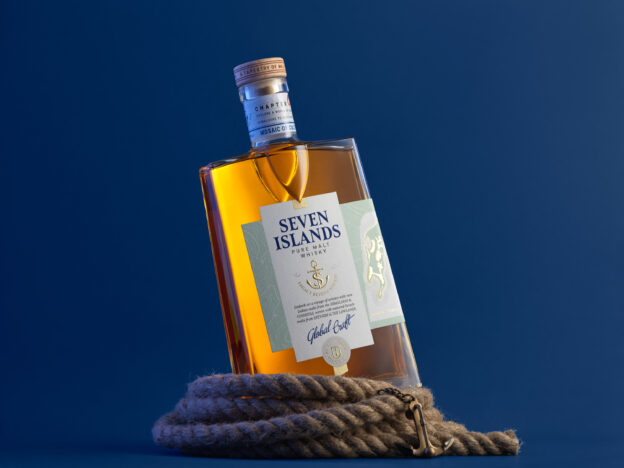
Tilaknagar Industries Debuting Seven Islands Pure Malt Whisky

  • Launch marks entry into whisky for India’s largest brandy producer 
  • Seven Islands is an Indo-Scottish 100% Pure Malt Whisky, made with four distinct single malts 

Tilaknagar Industries Ltd. (TI) has recently enterd into the premium whisky category with the launch of Seven Islands Pure Malt Whisky. Crafted from select Indian and Scottish malts, it is a distinct 100% pure malt expression.  

The launch marks a significant strategic expansion for TI, best known for building India’s brandy market with icons like Mansion House and more recently, Monarch Legacy Edition, and comes on the heels of its announcement of the acquisition of Imperial Blue, the world’s third largest-selling whisky brand. With this, the 90-year-old company establishes whisky as its second major growth pillar alongside its long-standing leadership in brandy. 

“India’s whisky story is evolving faster than ever, with growing consumer demand for premium and luxury expressions. Seven Islands marks TI’s entry into this dynamic category, bringing together Indian craftsmanship and global expertise to create a whisky that is both distinctly Indian and globally competitive. With whisky commanding over 60% of India’s spirits market, expanding into this category was the next natural step for us,” said Amit Dahanukar, Chairman and Managing Director, Tilaknagar Industries.

A New Style of Whisky 

Seven Islands introduces a style that moves beyond the single-malt focus that has shaped recent conversations around Indian whisky. As a pure malt, it blends four single malts—two from India and two from Scotland, allowing it to draw unique characteristics from multiple distilleries, regions and maturation styles. 

The Indian malts are sourced from the Himalayan foothills and the Vindhyan ranges, bringing the influence of high-altitude and tropical ageing. These are paired with malts from Speyside and the Lowlands, two of Scotland’s most recognised whisky regions. This Indo-Scottish duality creates a profile not possible through a single-region malt. With single malts driving recent premium growth, Seven Islands offers a new direction: a pure malt style shaped by two climates, two traditions, and a more complex blending philosophy. 

A Tribute to Mumbai’s Seven Islands 

Seven Islands takes its name from the archipelago of seven islands that once formed the city of Mumbai—the long-time home of Tilaknagar Industries and the backdrop to much of its growth. This connection is built into the bottle design. Two converging lines create the V-cut neck, hinting at the Indian and Scottish malts coming together, while fine cartographic lines reference the contours of the original islands. At the centre sits an anchor motif, a nod to Mumbai’s maritime heritage. The palette of sage, cream and gold keeps the design crisp, contemporary and quietly premium. 

“Seven Islands reflects our vision for House of TI, our new vertical which includes our premium portfolio and investments arm. House of TI was created to shape our premium and craft-led portfolio, beginning with Monarch Legacy Edition. With Seven Islands, we wanted to bring a new perspective and style to Indian whisky. It felt like the right way to introduce something distinctive, and a meaningful step forward for us as we expand into the whisky category,” said Sanaya Dahanukar, Marketing Manager, Tilaknagar Industries. 

 The Whisky Opportunity in India 

Whisky remains India’s most loved and aspirational spirits category, accounting for about 66% of total consumption in 2024 according to IWSR. By volume, Indian whisky grew 7% year-on-year in H1 2025, crossing 130 million cases and showing continued premiumisation. Exports are expanding as well, signalling rising global interest in Indian-made whiskies and premium expressions. For TI, a company that has built scale and expertise through long-standing leadership in brandy, the opportunity in whisky presents a clear and timely growth avenue. 

Tasting notes:   

  • Colour: Natural, brilliant, golden yellow.  
  • Aroma: Smooth and inviting, with tropical fruits, dried nuts, and hints of French and American oak layered with Indian spice.  
  • Taste: Full-bodied and balanced, with sweet, dried fruits, soft spice, creamy texture, and a touch of smoke.  
  • Finish: Long, smooth, and warm, with lingering notes of oak, spice, and dried fruits.

Product Details:

  • Size: 750 ml  
  • ABV: 42.8% 
  • Price & Availability: `5,200 (Maharashtra) 

Ankur Jain Clarifies on Bira91 Crisis; Mixed Reactions

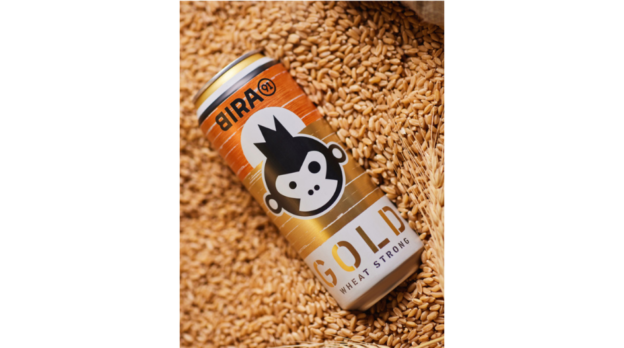
The Founder and CEO of Bira91, Ankur Jain in a LinkedIn post has briefly addressed his ‘team’ on the ongoing crisis and there has been mixed reaction to the post, some baying for his blood, while others hoping that the brand will bounce back.

Jain’s post read “Most of you may have read media articles about the company in the past couple of days and I would like to address these articles and share light on the direction in which we are headed.

“First, my singular focus is on completing the fundraise and protecting the interests of Bira 91 and its employees. My commitment to Bira 91 and to each of you is foremost: I am in discussions with investors to secure the capital required to protect your interests and stabilize the business. A lot of you may have read recent media coverage on the progress we have made on capital raise in the recent days – and while there are still many bridges to cross, we are confident that we will be able to bring these efforts to a positive conclusion, subject to co-operation of our investors. All stakeholders have been supportive of positive outcomes for the company in the past, and we are sure that they will continue to stand by the company and support our efforts.

“Second, it is my commitment that employees are being and will be prioritized in entirety in the fundraise efforts. I am keenly aware of the disappointment and distress, however, trust me – no employee’s interest will be sacrificed as we succeed in our efforts. In the last ten plus years, my attempt has been to ensure that payroll goes out on time, even at the cost of other critical investments. Our track record from 2015 to early 2025 has demonstrated this value and prioritization, and I am confident continuing the same culture with the new fundraise. We have seen negative press on the company recently – which is inaccurate in several facts, unsubstantiated and driven by convoluted and cynical objectives. Despite this speedbump, I am optimistic that we will bring back Bira 91 on the growth highway.

“Third, I along with the management team are standing firm and are doubling-down on our efforts to restore the company to the heights we achieved together – including to raise capital and accelerate business operations. We are here to stay, and I firmly believe, no one cares about this team, brand and organization more than this leadership team. We are certainly the most committed team that wants to bring this company back to its much deserved health, and in short order, we will get there.”

A strong reaction came from Arun Purohit, a minority stakeholder in Bira, who said that Jain’s post was generic and did not address specific issues damaging the reputation of the company.

Purohit questioned “Why was the renaming planned and executed in such horrible/haphazard way that BIRA disappeared from all stores for months? Why proper compliance officers who handle excise and interstate logistics were not consulted?”

He also pointed to news items wherein some key employees had sought the removal of Jain from the post of CEO and wanted to know what brought things to this abysmal level. “The tone of your post communicates -BIRA is struggling for its fund raise. It doesn’t have clear support of existing investors today. I didn’t subscribe to the Rights issue. Thumb rule of investing: You are not ready for funds when seeking the investors out but when they are seeking you.”

Purohit concluded that Bira needed good management guidance and a person who can speak truth to the CEO. “Sycophants around will only drive you down the doom loop.”

A similar reaction came from Kedar.D who said “Bira91 asked employees to resign the same day, no warning, no option. HR was furious if someone delayed resignation by even a day — but now it’s been months and not a single full & final or Provident Fund has been cleared.

“You promised to pay dues and protect employees — but those same people are struggling with home loans, kids’ fees, and family needs.

“You don’t even reply to mails. Instead, you come here on LinkedIn to sound  sympathetic.
Should I post screenshots of the conversations and promises made?” Kedar also questioned
Kirin Holdings Co., Ltd and Peak XV Partners asking them whether this is “your definition of leadership and accountability?”

Kirin, a global brewing major that owns around 20.1% of Bira 91, has been a key strategic investor since 2021. The Japanese company, known for its Kirin Ichiban beer, entered India through Bira to capture a share of the country’s rapidly growing premium beer segment. Peak XV (Sequoia Capital) was the largest shareholder in Bira with 24.83% holding.

There are vendors who have posted that their bills have not been cleared, one mentioned a bill of Rs. 17 lakhs pending.

Akshay Tiwari in his reaction to the post said he knew an employee whose daughter had been sent back home from school for not paying fees and a person who had defaulted on home loan. “You have literally destroyed people’s lives.”

But there are many who are backing Ankur Jain and the brand Bira to bounce back from these troubling times. The Senior Vice President, Chief of Integrated Supply Chain and People at Bira91, Sudhir Jain said “I am confident that Bira 91 will bounce back.”

Sources have told Ambrosia that there are a number of employees who haven’t got their salary arrears and also vendors who haven’t got their due payments running into lakhs, waiting to see how this plays out and then file criminal cases against the CEO. Sources reminded that this was playing out like Kingfisher where the employees who were left in the lurch filed court cases.

How Ankur Jain is going to navigate through these difficult times, remains to be seen. However, one aspect is crystal clear – those in the alcobev industry have to be up to date with the quagmire of excise rules of the various states, if they need to survive.

Suntory Holdings establishes Suntory India

Names Masashi Matsumura as Managing Director

Suntory Holdings has announced the establishment of Suntory India Private Limited, which aims to cover corporate functions required to build a firm business foundation and accelerate growth in its existing spirits business and establish opportunities for soft drinks as well as health and wellness businesses in the Indian market. The new company will commence its operations in July.

“We are delighted to unveil a new base of Suntory Holdings in India, a country with a large population and a rapidly growing economy,” said Tak Niinami, President & CEO of Suntory Holdings. “India is a remarkably attractive market and a key geopolitical player on the global stage, with strong cultural and economic ties with Africa, the Middle East, and Asia. Together with our spirits business, Suntory Global Spirits, we will enhance our presence as a multifaceted beverage company in this vital market by supporting our soft drinks and health & wellness businesses to build foundations in India through investments and partnerships.”

Suntory India will be headed by Managing Director, Masashi Matsumura with its office located in DLF Cyber City, Phase II, Gurgaon, Haryana.

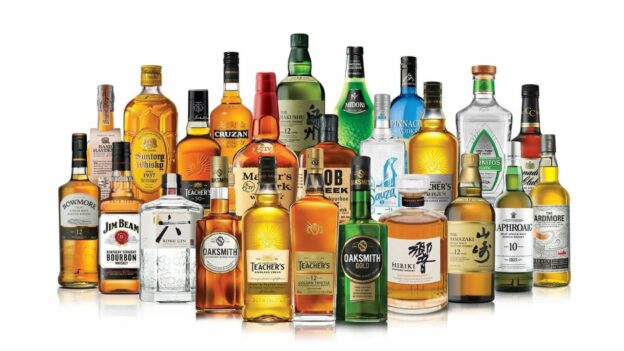
The Group offers a diverse portfolio of products, from award-winning Japanese whiskies Yamazaki and Hibiki, iconic American whiskies Jim Beam and Maker’s Mark, canned ready-to-drink -196, The Premium Malt’s beer, Japanese wine Tomi, and the world-famous Château Lagrange. Its brand collection also includes non-alcoholic favourites Orangina, Lucozade, Oasis, BOSS coffee, Suntory Tennensui water, TEA+ OolongTea, and V energy drink, as well as popular health and wellness product Sesamin EX. Founded as a family-owned business in 1899 in Osaka, Japan, Suntory Group has grown its operations throughout the Americas, Europe, Africa, Asia and Oceania, with an annual revenue (excluding excise taxes) of $20.9 billion in 2023. It has a strength of 41,511 employees across the world.

Alcobev Sector Soft Target, Governments Keep Hiking Taxes Arbitrarily

  • Telangana government’s delay in settling dues, liquor industry in dire straits
  • Cash-strapped Congress government mulling increase in liquor prices
  • Third tax hike in the last five years

With the exception of States which have prohibition, all other States, if they need to shore up their revenues, first target alcobev sector. State government after state government have increased excise duties, license fees etc without batting an eyelid and in most cases without taking the industry into confidence. The alcobev sector is the milch cow.

The latest news is that the cash-strapped Congress-led Telangana government is looking at the liquor industry to come to its rescue.  Telangana’s alcobev sector, which is a major revenue earner for the state, is now faced with two major issues – government’s inability to clear outstanding dues of over Rs. 4,700 crore and its impending decision to increase taxes on liquor – both of which adversely impacting the sector.

To give a perspective, the Telangana government is depending on Overdrafts, Ways and Means Advances and Special Drawing Facility (SDF) from the Reserve Bank of India to meet its expenditure. The Congress government which came to power in December 2023 in Telangana has so far raised Rs. 12,358.48 crores through these routes.

In many states, excise is a major revenue generator and in Telangana revenue from liquor sale doubled from Rs. 12,703 crores in 2015-16 to Rs. 31,225 crores in 2021-22. For 2022-23, the state government had projected a revenue of around Rs. 37,500 crores from liquor. In 2023, the Telangana Excise Department managed to collect Rs. 2,639 crores without selling a single bottle of liquor, the money coming from nearly 1.32 lakh applications charging Rs. 2 lakh non-refundable application fee for the allotment of 2,620 liquor shops.

Fiscal deficit up

Despite the increase in revenues, the government has not been able to reduce the fiscal deficit as the Congress government has announced quite a few freebies that is costing the exchequer. To shore up revenues, the Congress government is planning to increase tax on liquor which in turn will push up the prices. The proposal made recently is expected to come into effect soon. The previous Bharat Rashtra Samiti (BRS) government in its term had hiked the liquor prices twice and now the Revanth Reddy government is contemplating, in five years that would be the third tax hike.

An industry veteran told Ambrosia “Nobody likes a tax increase. As liquor is a discretionary product, people slip down the value chain or they resort to alternate sources of supply, so both of which have implications to both the state government and the suppliers. In that respect, it is not the best of moves.  This kind of thing is happening in other states, given that they have made electoral promises and have to fund that and alcobev is the soft target.”

The veteran who has held top posts in various companies said “As of now, we don’t know what levels the tax is going to be increased. Somewhere, there is a mention of license fee going up, we don’t know whether it is tax on consumer or manufacturers/suppliers or both we don’t know yet.”

The CEO of the International Spirits & Wines Association of India (ISWAI), Nita Kapoor in an interview with ET Hospitality has called for urgent attention to the critical issue of high state excise duties that account nearly 70- 80 percent of consumer MRP, inflationary pressures adding significant pressures on the industry. As inflation rates rise in the country, the alco-bev sector faces significant challenges due to escalating costs of production, transportation, raw materials, and exorbitant import duties. This combination poses a dire threat to the industry’s sustainability.

Ms. Kapoor said, “The liquor industry has consistently and significantly contributed by generating 25-40 percent of revenues for state governments and nearly 2 percent of nominal GDP. However, the current tax and tariff structure, characterised by high excise duties, limited supplier price flexibility, and exorbitant import duties of 150 percent (50 percent BCD + 100 percent AIDC), is pushing the industry toward a crisis. Regulators must recognise the necessity of inflation-linked adjustments in supplier prices as the Alcobev industry is a cornerstone of economic activity.”

Beer suppliers due Rs. 1,200 cr

On the one hand hike in liquor prices and on the other the government not releasing outstanding dues, both are hitting the industry hard. Beer suppliers, it is estimated, are to get nearly Rs. 1,200 crores, pending since October 2023. The alcobev sector has urged the government to resolve the issue as some of them were finding it difficult to go ahead with production.

The Director General of the Brewers Association of India, Vinod Giri said, “In absence of immediate resolution of this problem, I fear some companies may be forced to opt out of the state.”  Of the Rs. 1,200 crores due to beer suppliers by Telangana State Beverage Corporation (TSBCL), around Rs. 900 crore is beyond tender credit terms of 45 days, he said, adding some of it is even 120 days overdue. “Payments are being released but amounts are too small and don’t even cover new outstandings, leave aside past ones.”

The alcobev companies in a statement said, “Delayed payments is creating a stressful cash flow situation for the manufacturing companies, hindering their ability to invest in operations, buy raw materials, pay employees and continue supplies to the consumers. Despite repeated attempts by industry leaders to meet key ministers in the state, the issue remains unresolved. This lack of communication and action is causing frustration and uncertainty amongst manufacturing companies in the state.”

It said that this might force companies to curtail supplies to Telangana. Unless the government does something soon, some companies may be forced to cut costs, including job retrenchment. This situation, the alcobev sector said would further dent industry confidence and dampen investor sentiment in Telangana.

As regards the delay on the part of the government on outstanding dues, the industry veteran mentioned that “All suppliers put together beer, spirits and wine, as of May 31st the outstanding was over Rs. 4,700 crore. That itself is an additional cost the supplier is bearing and if consumers resort to alternate sources, it is not good for the suppliers. The suppliers have held on for quite some time, the question is for how long can they hold on.”

Telangana major liquor consumption state

Liquor consumption in Telangana is high as the state guzzles over 6 crore cases of beer or 15% of 40 crore cases sold across the country per annum. As regards Indian Made Foreign Liquor (IMFL), Telangana’s consumption is about 3.4 cases or 9% of 39 crore cases sold.

The non-payment of dues and the constant hike in liquor prices had left some in the trade to sell liquor above the maximum retail price (MRP) to make up for the losses. Besides, some licensed vendors were reported to have opened bars in the guise of permit rooms. The Bar Owners Association complained to the Excise Department against the wine shops which were allowing consumers to drink on the premises. The Association argued that they were already burdened by the excise rules of the government and adding to the woes were the so called ‘permit rooms’. In the process, the government was also losing revenue. The bar owners, on the other hand, complained that bars with retail outlets on the premises was affecting their business.

Despite woes, AP traders planning to move to Telangana

Whatever the issues, the consumer in Telangana continues to patronise the alcobev sector and this has enthused some liquor manufacturers to move or add liquor businesses from Andhra Pradesh to Telangana. According to reports, some of the liquor dealers in Andhra Pradesh were selling unknown brands at exorbitant prices through the state-run AP Beverages Corporation Limited (APBCL). Brands such as President’s Medal, Capital, Timer, Boom Boom, Classic Blue, Old Admiral, Royal Green and Sentinel were out in the market, particularly rural, in large numbers.

There have been allegations that out of 100 liquor companies, the APBCL procured 75% of its liquor from only 15-16 manufacturers like SPY Agro, Adan Distilleries, PMK Distilleries, etc., which are controlled by the erstwhile ruling party leaders of YSRCP. It now remains to be seen how the Telegu Desam Party which has come to power in Andhra Pradesh will take a call. However, the Telangana market being a lucrative one, the AP businesses are looking at Telangana.

Meanwhile, in Telangana there are charges and counter charges from the ruling dispensation and the BRS. In an open letter to the Telangana Chief Minister, A.Revanth Reddy, the BRS leader M.Krishank urged the Chief Minister not to introduce adulterated liquor in Telangana.  Krishank said that on May 21, minister Jupally Krishna Rao stated that no proposals had been made to allow new liquor companies to operate in Telangana State. He warned that if anyone reported such news, a defamation suit of Rs 100 crore would be filed against them. However, on May 27, the BRS party exposed minister Jupally Krishna Rao’s falsehood, revealing that the government had indeed granted permissions to a company named Som Distilleries, pointed out Krishank. The Minister acknowledged stating that the decision was taken by the Beverages Corporation. It is now reported that the government has decided to cancel the permission given to Som Distilleries to sell its liquor in Telangana.

The liquor industry not just in Telangana is looking for stability in policy making but also to ensure that the government takes care of the liquor industry which is a revenue-spinner.

UBL, AB InBev, Carlsberg jointly form Brewers’ Association of India

In a move that might not be surprising to many, India’s leading beer manufacturers United Breweries – controlled by Dutch manufacturer Heineken, AB InBev, and Carlsberg have come together to jointly forming a new industry body Brewers’ Association of India (BAI). The three companies own the 85% of the beer market in India via their brands Budweiser, Hoegaarden, Corona, Carlsberg, Tuborg among others.

While UBL leads the Indian beer market with its brands Kingfisher, Kalyani Black, Heineken, Amstel Bier. BAI, which is formed in partnership with the World Brewing Alliance (WBA), and is expected to focus on growing the beer category in India, drive innovation, moderation, and sustainability in the Indian beer market.

WBA is the global industry body consisting of brewers and brewing trade associations from leading markets, including Australia, Canada, the US, Europe, Japan, Korea, Latin America, Brazil, and New Zealand.

BAI is headquartered in Delhi and is going to be headed by Vinod Giri, who will assume office on June 1, 2024. Giri until now was heading the Confederation of Indian Alcoholic Beverage Companies (CIABC), the apex body of the Indian alcoholic beverage industry.

“The time is right for brewers to raise their voice on these issues. The Brewers of India will be a vital part of promoting moderate drinking, promoting our industry,” said Justin Kissinger, President and CEO, WBA.

The new association will also be open to other brewers, Indian and international both, who share the belief in growing the Indian beer industry responsibly.

AB InBev India President Kartikeya Sharma said, “There are many barriers to the growth of India’s beer category, including inequitable taxation, accessibility, and the ease of doing business. We will continue to advocate to unlock a new era for the beer category.”

Carlsberg India MD Nilesh Patel said, “The beer industry is an important sector for the states as it provides significant direct and indirect employment and generates significant revenues for the state to invest for its citizens.

“Through the Brewers’ Association of India, the industry expects to bring best global practices and further strengthen the sector.”

UBL MD & CEO Vivek Gupta said, “Together, the industry can help shape policies promoting responsible choices for consumers around moderate alcohol beverages, a robust taxation and regulatory framework and promoting investments for socio-economic benefits. We look forward to collaborate with governments and other stakeholders.”

The three companies have significantly invested in India. While Carlsberg operates seven breweries, UBL has 19 and AB InBev India has 10 of them across the country.