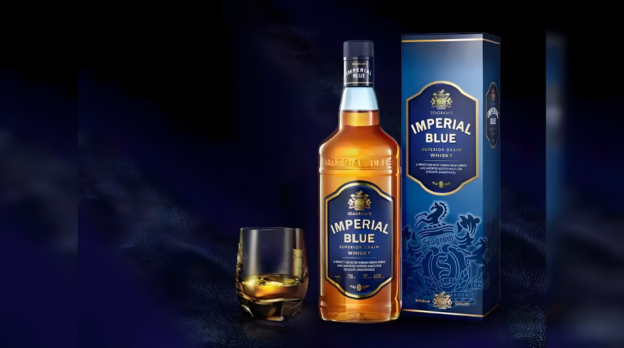
Tilaknagar Industries Limited (TI), a leading Indian-Made Foreign Liquor (IMFL) manufacturer, has completed the acquisition of the Imperial Blue business division (IB) from Pernod Ricard India (PRI) via a slump sale for a lump-sum consideration of `3,442 crore. The Competition Commission of India had earlier approved the transaction on October 7, 2025.
In addition to this amount, a deferred payment of €28 million will be made after four years from the date of closure of the transaction.
The acquisition has been funded through a mix of internal cash accruals, fresh equity and external debt. A preferential issue of equity shares and warrants to marquee investors and the Promoter Group helped raise `2,093 crore, in addition to securing `2,100 crore through term loans.
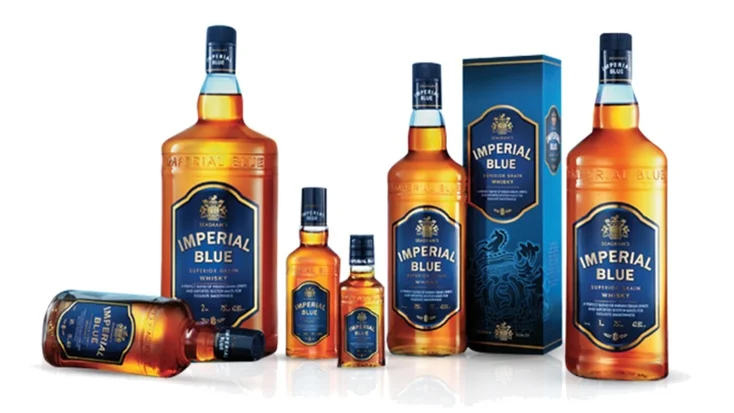
Imperial Blue is the third-largest whisky brand in India by volume, selling approximately 22.4 million nine-litre cases for the year-ended March 2025 across India and other markets. With over 25 years of brand heritage, the business reported a revenue of `3,067 crore for the trailing twelve months ending March 2025.
Through this transaction, TI gains access to the “Imperial Blue” brand and allied trademarks, including “Imperial Black” and “Imperial Red” globally. Additionally, TI has entered into a Trademark License Agreement for the use of “Seagram’s” in connection with IB for a defined transition period.
The company has also entered into a long-term supply agreement with Chivas Brothers for Concentrated Alcoholic Beverage (CAB), an essential raw material for manufacturing IB products. To ensure a seamless transition, TI has entered into a Transitional Services and Manufacturing Agreement (TSMA) with PRI.
The manufacturing footprint, as part of the transaction perimeter, includes two owned units located in Punjab and Maharashtra, as well as two exclusive sub-leased units in Telangana and Punjab. Additionally, TI will have access to certain shared units during the TSMA period. As part of the transaction, 116 employees are expected to be transferred from PRI to TI.
Amit Dahanukar, Chairman and Managing Director, TI said, “The acquisition of Imperial Blue significantly scales up our business, representing a decisive step in our ambition to build a truly pan-India presence across all IMFL categories. This acquisition also accelerates our premiumisation journey, enabling us to broaden our offerings across Prestige-and-Above price-points and enhance the value we deliver to consumers.”
Deutsche Bank and Avendus Capital acted as financial advisors for the transaction, with Avendus Capital also serving as the debt financing arranger to TI. Crawford Bayley & Co. and W.S. Kane & Co. acted as legal counsels, while Deloitte served as the finance and tax diligence advisor to TI. Additionally, TI has appointed Ernst & Young to provide Integration Planning & Execution Advisory for the acquisition.
Launch marks entry into whisky for India’s largest brandy producer
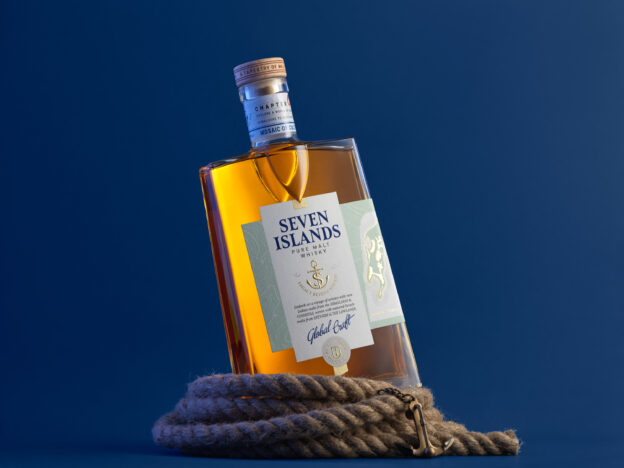
Seven Islands is an Indo-Scottish 100% Pure Malt Whisky, made with four distinct single malts
Tilaknagar Industries Ltd. (TI) has recently enterd into the premium whisky category with the launch of Seven Islands Pure Malt Whisky. Crafted from select Indian and Scottish malts, it is a distinct 100% pure malt expression.
The launch marks a significant strategic expansion for TI, best known for building India’s brandy market with icons like Mansion House and more recently, Monarch Legacy Edition, and comes on the heels of its announcement of the acquisition of Imperial Blue, the world’s third largest-selling whisky brand. With this, the 90-year-old company establishes whisky as its second major growth pillar alongside its long-standing leadership in brandy.
“India’s whisky story is evolving faster than ever, with growing consumer demand for premium and luxury expressions. Seven Islands marks TI’s entry into this dynamic category, bringing together Indian craftsmanship and global expertise to create a whisky that is both distinctly Indian and globally competitive. With whisky commanding over 60% of India’s spirits market, expanding into this category was the next natural step for us,” said Amit Dahanukar, Chairman and Managing Director, Tilaknagar Industries.
A New Style of Whisky
Seven Islands introduces a style that moves beyond the single-malt focus that has shaped recent conversations around Indian whisky. As a pure malt, it blends four single malts—two from India and two from Scotland, allowing it to draw unique characteristics from multiple distilleries, regions and maturation styles.
The Indian malts are sourced from the Himalayan foothills and the Vindhyan ranges, bringing the influence of high-altitude and tropical ageing. These are paired with malts from Speyside and the Lowlands, two of Scotland’s most recognised whisky regions. This Indo-Scottish duality creates a profile not possible through a single-region malt. With single malts driving recent premium growth, Seven Islands offers a new direction: a pure malt style shaped by two climates, two traditions, and a more complex blending philosophy.
A Tribute to Mumbai’s Seven Islands
Seven Islands takes its name from the archipelago of seven islands that once formed the city of Mumbai—the long-time home of Tilaknagar Industries and the backdrop to much of its growth. This connection is built into the bottle design. Two converging lines create the V-cut neck, hinting at the Indian and Scottish malts coming together, while fine cartographic lines reference the contours of the original islands. At the centre sits an anchor motif, a nod to Mumbai’s maritime heritage. The palette of sage, cream and gold keeps the design crisp, contemporary and quietly premium.
“Seven Islands reflects our vision for House of TI, our new vertical which includes our premium portfolio and investments arm. House of TI was created to shape our premium and craft-led portfolio, beginning with Monarch Legacy Edition. With Seven Islands, we wanted to bring a new perspective and style to Indian whisky. It felt like the right way to introduce something distinctive, and a meaningful step forward for us as we expand into the whisky category,” said Sanaya Dahanukar, Marketing Manager, Tilaknagar Industries.
The Whisky Opportunity in India
Whisky remains India’s most loved and aspirational spirits category, accounting for about 66% of total consumption in 2024 according to IWSR. By volume, Indian whisky grew 7% year-on-year in H1 2025, crossing 130 million cases and showing continued premiumisation. Exports are expanding as well, signalling rising global interest in Indian-made whiskies and premium expressions. For TI, a company that has built scale and expertise through long-standing leadership in brandy, the opportunity in whisky presents a clear and timely growth avenue.
Tasting notes:
Colour: Natural, brilliant, golden yellow.
Aroma: Smooth and inviting, with tropical fruits, dried nuts, and hints of French and American oak layered with Indian spice.
Taste: Full-bodied and balanced, with sweet, dried fruits, soft spice, creamy texture, and a touch of smoke.
Finish: Long, smooth, and warm, with lingering notes of oak, spice, and dried fruits.
The genesis of the crisis was changing name from a ‘Private Limited’ to a ‘Limited’
Every state excise department operates as a separate ecosystem, compliance accordingly matters
B9 Beverages Limited reported accumulated losses of Rs. 1,904 crore for FY2024
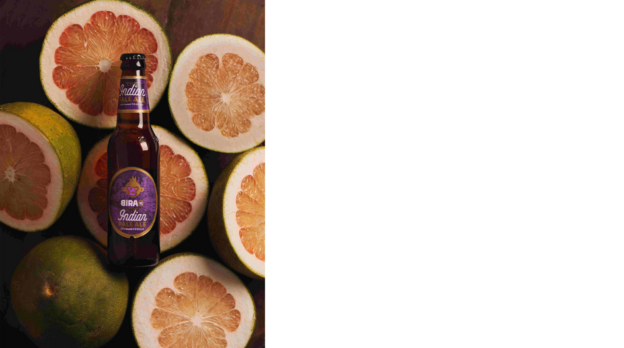
Once the toast of India’s new-age alcoholic beverages market, Bira91, the youth-focused beer brand that helped popularise craft brewing across urban India, is now in deep trouble, hit by a combination of regulatory missteps, cash flow pressure, employee unrest and investor anxiety.
The company, B9 Beverages Limited, which built its image around fun branding and innovative brews, is battling a perfect storm that has left operations disrupted, morale shaken, and market share eroding across key states. The auditor of B9 Beverages has reported that the company’s net worth has fully eroded. In its report for the fiscal year 2024, the auditor noted that the group is exposed to market risk, credit risk and liquidity risk, impacting the fair value of its financial instruments.
What first began as a routine legal formality converting from a “Private Limited” to a “Limited” company ahead of a proposed IPO, quickly snowballed into a full-blown crisis. Under India’s highly fragmented and state-driven excise regime, even a small change in company name triggers a cascade of fresh licensing, label registration and regulatory approvals. Bira91 was caught in the regulatory mess.
The state excise departments treated the name change as a new entity altogether, effectively blocking the sale of its products until new clearances were obtained. Overnight, inventory worth an estimated Rs. 80 crore was rendered unsellable because packaging and labels carried the old entity name. Warehouses piled up with stock that couldn’t be invoiced, distributors were left stranded, and sales teams were left explaining to retailers why one of India’s most visible beer brands had suddenly vanished from shelves.
Regulatory Bottlenecks Lead to Financial Distress
As regulatory bottlenecks dragged on for months, the financial impact deepened. For FY24, it reported accumulated losses of Rs. 1,904 crore, negative cash flow of Rs. 84 crore, and liabilities exceeding assets by Rs. 619.6 crore as of March 31, 2024. The company is yet to file its financials for fiscal 2025.
Volumes have dropped from roughly nine million cases to about six million. For a company that once prided itself on doubling output every year, the reversal is steep and painful.
Liquidity quickly became the next casualty. Employees across multiple offices began complaining of delayed salaries and reimbursements, vendors said payments were months overdue, and even statutory dues like provident fund contributions and TDS remittances reportedly lapsed. In an effort to bridge working capital gaps, the company turned to fintech platforms such as KredX to raise short-term funds by discounting trade receivables, but even those arrangements began showing strain, with some investors reporting delayed interest payouts.
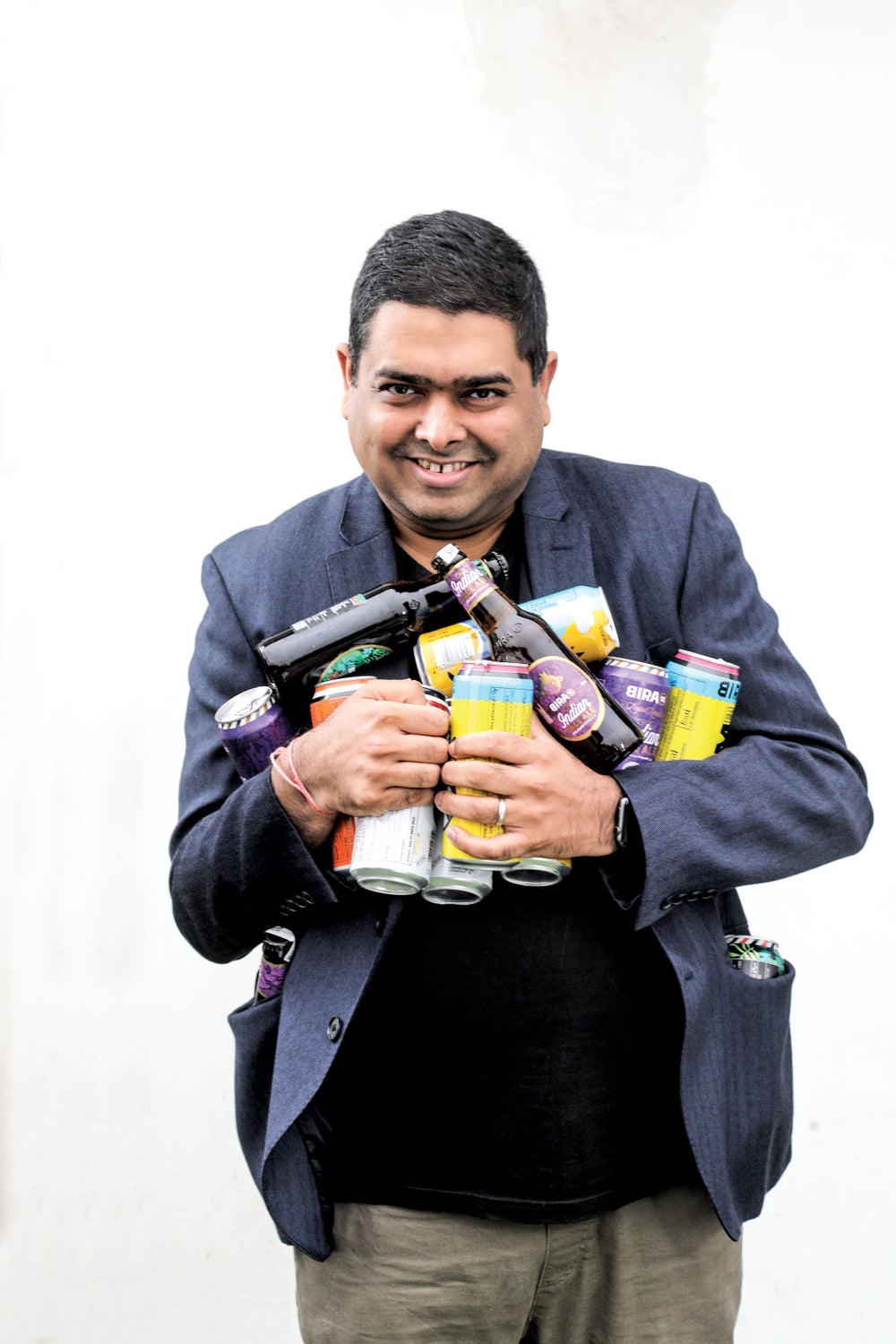
Ankur Jain, Founder-CEO, BIra91
Internally, the crisis has sparked serious governance turmoil. In September this year, over 250 employees signed a petition demanding the removal of Founder-CEO Ankur Jain, alleging lack of transparency, poor communication and non-payment of dues. The employee strength of the company has come down drastically from over 700 to barely 260. “There’s no clarity from the top, and even HR doesn’t have answers,” one former mid-level executive lamented.
For investors, the crisis has not been any different. Bira91 had attracted marquee backers including Japan’s Kirin Holdings, Peak XV Partners (formerly Sequoia India), and Sofina. The brand was widely viewed as a rare Indian startup that had cracked the consumer lifestyle code, blending bold design with mass appeal. The proposed 2026 IPO was to be its coming-of-age moment, a chance to exit early investors and showcase scale profitability. Instead, the company finds itself firefighting on multiple fronts, scrambling to raise fresh funds to simply stay afloat. Reports suggest negotiations are underway for a Rs. 500-crore structured debt infusion from BlackRock through the promoter group, but those close to the talks say due diligence has been protracted given the scale of losses and ongoing regulatory uncertainties.
Damage Control Mode On
According to some reports, the company has been in damage control mode, restarting sales in some states, cutting fixed costs, and resetting its compliance roadmap. Delhi and Uttar Pradesh markets are reportedly back online, though Haryana and a few others remain mired in paperwork. The company brought in Vikram Qanungo as Chief Financial Officer, replacing Meghna Agrawal. It is working on streamlining operations and putting in place new governance protocols. Insiders say the focus now should be on cost rationalisation and restoring confidence among distributors and employees.
Industry observers see the episode as a cautionary tale for India’s alcobev sector, where every regulatory nuance matters. A name change that would be routine in most industries became a nightmare because excise laws treat such events as new entities altogether. In the alcobev sector if one is operating in 10 or 12 states, that means one has to reset one’s business that many times. The case underscores the fragility of scaling in a market where compliance, not consumer demand, often determines survival.
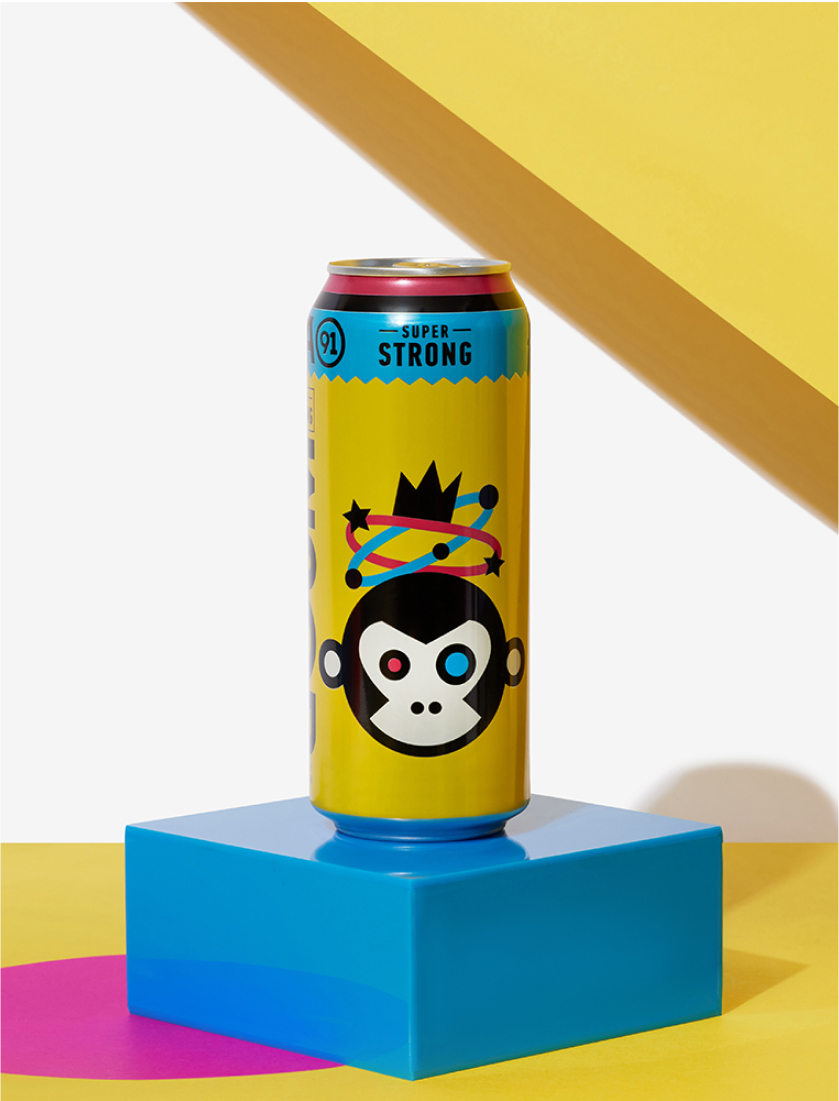
For years, Bira91 symbolised the aspiration of India’s urban millennials, fun, contemporary, and proudly local. Its colourful monkey logo became an icon of the “new India” bar culture. The brand’s rapid rise between 2015 and 2020 was driven by aggressive marketing, smart positioning and flavour experimentation, from white ale to IPA, making beer cool again for a generation raised on mass lagers. But the same velocity that powered its rise also resulted in its fall. The push for rapid expansion ahead of an IPO, without sufficient compliance buffers or cash discipline, left the company over-leveraged and exposed.
The immediate challenge now is survival, ensuring that distributors return, vendors get paid, and employees regain trust. But the question is, can it rebuild credibility with investors and regulators alike? Analysts say the fundamentals of the Indian premium beer segment remain strong, with per-capita consumption still among the lowest in Asia and rising disposable incomes driving steady growth. Bira91 could yet stage a comeback if it can stabilise operations and re-establish regulatory compliance. That is a big ask, as of now.
Rebuild Compliance Network
The company has to focus on a few key points—rebuild compliance network by mapping every state’s regulatory nuance before corporate actions; exercise tighter cash flow management with full transparency on employee and statutory dues; prioritise core markets where licences are active and distributors loyal; and restore governance credibility. Bira still has brand equity, though dented, as of now.
The broader takeaway for the industry is clear: the alcobev business in India is not just about branding and flavour, it’s about regulatory foresight and disciplined execution. Even large, well-funded players can falter if they underestimate how state excise frameworks respond to structural changes. With every state operating as a separate ecosystem, a single oversight can cascade into months of paralysis. For startups and established companies alike, the lesson is that growth must be matched by governance.
As things stand, Bira91’s journey reads like a case study in how quickly success can unravel in a sector where compliance is king. The brand that once defined India’s craft beer movement now faces the challenge of its life, navigating the quagmire of regulation, rebuilding financial credibility, and re-earning the trust of the very people who made it a good brand. The next couple of months is going to be critical for the brand. Will it emerge from the crisis, it remains to be seen.
The Competition Commission of India (CCI) has given the green signal to home-grown alcoholic beverage maker Tilaknagar Industries’ Limited (TIL) proposal to acquire the Imperial Blue whisky business from the Indian arm of French liquor giant Pernod Ricard for Rs 4,150 crore.
In July this year, TIL had announced that it was set to acquire the Imperial Blue whisky business from Pernod Ricard at an enterprise value of 412.6 million Euros (around Rs 4,150 crore).
CCI in a post on X said “Commission approves the acquisition of the business of production, bottling, marketing, and sale of alcoholic and other beverages under the ‘Imperial Brands’ from Pernod Ricard India Pvt Ltd by Tilaknagar Industries Ltd.”
The acquisition will make TIL, which owns brands such as Mansion House Brandy, Courrier Napoleon Brandy, Mansion House Gold Whisky and Blue Lagoon Gin, a leading player in the fast-growing whisky market.
TIL and Pernod Ricard India had entered into a definitive agreement for the transaction related to the sale of the Imperial Blue business division (IB). The consideration includes a deferred payment of 28 million euros (Rs 282 crore as of date) to be paid four years after the date of the closure of the transaction, said a joint statement.
Imperial Blue is the third-largest whisky brand in India by volume. It has reported a revenue of Rs 3,067 crore for the year ended March 2025.
India is the second-largest market for Pernod Ricard. With a consolidated sales revenue of Rs 26,773.22 crore in FY24, Pernod Ricard India is the largest spirit maker in India. TIL had reported a revenue of Rs 1,405 crore and EBITDA of Rs 226 crore for the year ended March 2025. In the September quarter, it had become net debt-free after successfully restructuring its debt.
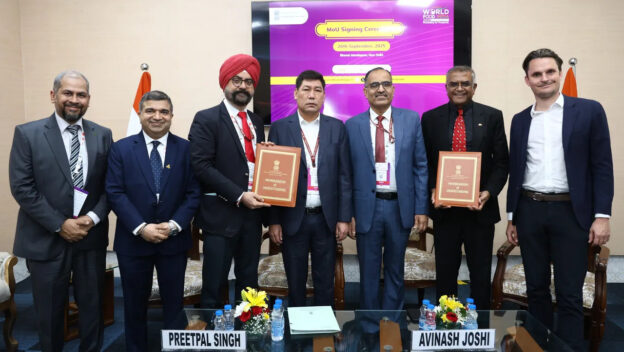
Carlsberg India, the wholly owned subsidiary of Carlsberg Group, announced the signing of a Memorandum of Understanding (MoU) with the Ministry of Food Processing Industries (MoFPI), Government of India, at World Food India 2025. The agreement reaffirms Carlsberg’s long-term commitment to India through proposed investments of ₹1,250 crore across key states.
The investments will strengthen Carlsberg India’s brewing and packaging footprint with investments of ₹500 crore towards a new greenfield facility in Ahilyanagar, Maharashtra, ₹400 crore for brownfield expansion in Hoogly, West Bengal, ₹350 crore for brownfield expansion in Mysuru, Karnataka (previously announced).
Over the next three years, Carlsberg India expects incremental procurement of nearly ₹600 crore in raw and packaging materials, directly benefitting industries such as malt production, glass, cans, cardboard, and logistics.
Speaking on the occasion, Nilesh Patel, Managing Director, Carlsberg India, said, “India is a priority growth market for Carlsberg Group. Our investments in Maharashtra, West Bengal, and Karnataka underline our long-term commitment to India’s future. These projects will expand our operational capacity, create meaningful employment, and generate excise revenues for the states.”
Carlsberg India is also embedding sustainability at the core of these investments, with a focus on renewable energy, water efficiency, and sustainable packaging solutions. These initiatives are aligned with India’s climate and development goals, as well as the Carlsberg Group’s global sustainability programme, Together Towards ZERO and Beyond.
In a move aimed at reviving underutilised liquor manufacturing units and offering consumers more affordable choices, the Maharashtra Government has formally introduced a new category of alcoholic beverage—Maharashtra Made Liquor (MML). The decision, approved by the State Cabinet in July, has now been formalised through a Government Resolution (GR) amending the Bombay Foreign Liquor Rules, 1963.
The policy positions MML as a distinct sub-category under the Indian Made Foreign Liquor (IMFL) framework. To qualify, the liquor must be grain-based and produced using rectified spirit sourced exclusively within Maharashtra.
One of the biggest attractions for producers and consumers is the reduced excise duty, 270% for MML compared to 450% for IMFL. At an assumed manufacturing cost of ₹400 per litre, IMFL retails at roughly ₹2,200 (including ₹1,800 in excise), while MML is expected to cost around ₹1,480 (with ₹1,080 excise), making it about ₹700 cheaper per litre. The government has set a minimum retail price of ₹148 for a 180 ml bottle of MML, compared to ₹205 for IMFL and ₹80 for country liquor.
Under the new guidelines, MML manufacturers must have their registered head office in Maharashtra; maintain at least 25% state-resident shareholding; avoid producing or marketing MML outside the state; and register their brands within one year. Third-party production is not allowed, though leasing of plant capacity is permitted if the facility remains dedicated to MML production. If sold outside Maharashtra or if rules are violated, the MML status will be revoked, the guidelines state.
Economic Impact
According to reports, Maharashtra currently has 48 licensed IMFL manufacturing units, but only 10 dominate production; many operate at minimal capacity just to retain their licences. The government hopes MML will revive idle plants and generate up to ₹3,000 crore in additional annual revenue. The move is part of wider excise reforms targeting ₹14,000 crore yearly collections through measures including AI-powered monitoring of production and sales; new divisional excise offices; revised duty structures, IMFL at 3× to 4.5× manufacturing cost (capped at ₹260/litre), country liquor up to ₹205 per proof litre; and higher licence fees for FL-2 (retail) and FL-3 (bars) outlets.
In 2024-25, Maharashtra excise revenue stood at ₹25,467.96 crore. Of the six excise regions, Nashik region (Nashik, Nandurbar, Dhule and Jalgaon) earned ₹6,186.82 crore; followed by Chhatrapati Sambhajinagar region (Chhatrapati Sambhajinagar, Beed, Jalna, and Dharashiv) at ₹5,995.07 crore; Pune region (Pune, Ahilyanagar and Sholapur) at ₹5,809.79 crore; Thane region (Mumbai City, Mumbai suburbs, Thane, Palghar and Raigad) at ₹4,513.02 crore; Kolhapur Greater Region (Kolhapur, Satara, Sangli, Ratnagiri and Sindhudurga) at ₹1,265.21 crore; Nagpur region (Nagpur, Wardha, Bhandara, Gondia, Chandrapur and Gadchiroli) at ₹874.43 crore; Nanded region (Parbhani, Latur, Nanded and Hingoli) at ₹592.73 crore; and Amravati region (Amravati, Buldhana, Akola, Washim and Yavatmal) at ₹230.09 crore.
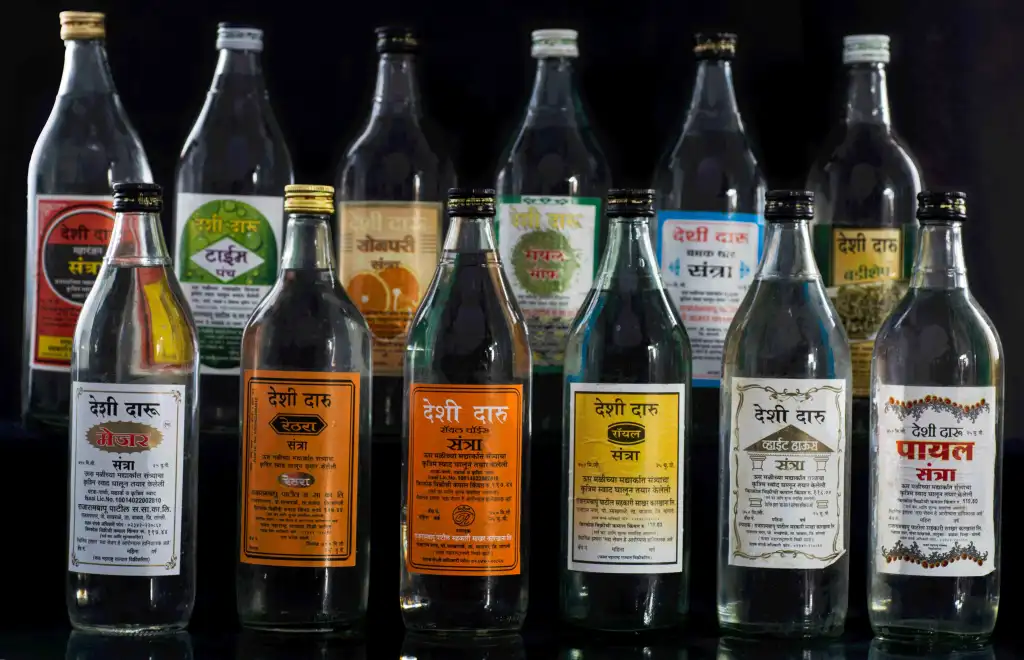
Unlike IMFL’s foreign-style blends, MML will feature simple, traditional flavours such as orange, cumin and herbs. Popular varieties are expected to include Santra, Chandni and Sugandhi. Packaging is expected to be basic, in bottles or sachets and to be labelled “For sale only in Maharashtra”. Distribution will focus on rural and semi-urban markets, though MML will also be available in urban centres. Production is said to be undertaken by state-run units, cooperative sugar factories, and private distilleries.
By creating a regulated, lower-cost option, the government hopes MML will help curb illicit liquor trade and reduce consumption of illicit brews.
Tilaknagar Industries to become a PAN-India Player in Alcoholic Beverages
Acquisition is a strategic move to fast-track Tilaknagar Industries’ whisky foray
Pernod Ricard to accelerate focus on Premiumisation and Innovation
IMFL manufacturer Tilaknagar Industries Limited (TI) has entered into a definitive agreement to acquire Imperial Blue business division (IB) from Pernod Ricard India Private Limited via slump sale, for a lump sum consideration, basis enterprise value of €412.6 million (which translates to approx. ₹4,150 crores as on date). The consideration includes deferred payment of €28 million (₹282 crore as on date), to be paid four years after the date of closure of the transaction.
The proposed transaction includes acquisition of the IB, with 22.4 million 9-litre cases sold in the year ended March 2025 across India and other markets, including two owned units and services from co-manufacturing bottlers across India.
Imperial Blue is the third largest whisky brand in India by volume, with over 25 years of brand heritage. The underlying business had reported revenue of ₹3,067 crore for the year ended March 2025. TI is one of the leading IMFL players with leadership in brandy, the second largest IMFL category. Mansion House Brandy, TI’s flagship brand, is one of the largest selling brands in India and globally.
This landmark acquisition, largest in Indian alcoholic beverages space by an Indian company, fast-tracks TI’s foray into whisky segment, the largest IMFL category in India. It also significantly expands TI’s distribution reach, reinforcing its evolution into a truly pan-India player having strong scale across both brandy and whisky with a combined volume of 34 million 9-litre cases for the year ended March 2025.
Amit Dahanukar, Chairman and Managing Director, Tilaknagar Industries Limited said, “Having achieved leadership in the brandy segment, it is now time for us to broaden our portfolio and cater to India’s diverse and evolving consumer base. While we continue to grow our business organically, this strategic acquisition allows us to enter the whisky category with one of the country’s most trusted and admired brands.”
Imperial Blue will act as TI’s launchpad for a significant whisky premiumisation journey, enabling TI to build a strong whisky portfolio across premium price-points. “We’re excited to build on Imperial Blue’s strong foundation and take it to new heights”, Dahanukar added.
Tilaknagar Industries reported revenue of ₹1,405 crore and EBITDA of ₹226 crore for the year ended March 2025. The transaction is a result of the continuous assessment and evaluation of strategic opportunities, in line with a longstanding policy to deliver sustainable value for the shareholders, employees and partners of TI.
India, second-largest market for Pernod Ricard
Pernod Ricard said that the sale strengthens Pernod Ricard India’s portfolio, enabling the business to fully tap into premiumisation trends and support sustained, profitable growth. As Pernod Ricard’s second-largest market, India is a strategic priority, and this realignment improves the ability to capitalise on the country’s strong macroeconomic fundamentals and long-term potential. Upon closing, the transaction is expected to be immediately and meaningfully accretive to Pernod Ricard India’s operating margin and net sales growth rate.
Pernod Ricard’s active portfolio management is a key contributor to its dynamic growth across categories and geographies. The transaction is the result of the Group’s continuous assessment of its strategic opportunities, in line with its long-standing commitment to deliver sustainable value to its shareholders, employees, clients and partners.
Alexandre Ricard, Chairman and CEO of Pernod Ricard, stated, “We are pleased to announce the sale of the Imperial Blue business division, a strategic move to sharpen our focus on more profitable and faster growing brands in India, like in the rest of the world. This transaction represents a win-win for all stakeholders involved, both at the global and local level. It fuels our ambition to succeed even further in one of our top markets. This will further streamline our operations as we continue to invest in India’s outstanding growth.”
Jean Touboul, CEO of Pernod Ricard India added, “By exiting the Admix Value segment, this disposal will allow Pernod Ricard India to unlock further profitable growth and sharpen its focus on premiumisation and innovation. It will also enable the company to allocate resources more effectively toward high-growth brands such as Royal Stag, which has already surpassed the 30-million cases milestone, Blenders Pride, and international brands like Chivas, Jameson, Absolut, and Ballantine’s.
Driving the next phase of growth, we are entering an exciting new chapter, one that will see bold innovations and an expanded premium portfolio tailored specifically for the evolving Indian consumer.”
The proposed transaction is subject to approval from the Competition Commission of India, with closure anticipated in about six months from signing the definitive agreement. TI will raise a mix of debt and equity to finance the transaction.
Deutsche Bank and Avendus Capital acted as financial advisors, with Avendus Capital also serving as the exclusive financing arranger to TI. Crawford Bayley & Co. and W.S. Kane & Co. acted as legal counsels while Deloitte served as the diligence advisor to TI.
Ambrosia Magazine 2025 Awards jury member and global spirits expert shares his take on the future of Bourbon and American whisky in India. He is an award winning whisky expert, Keeper of The Quaich and Whisky Magazine Hall of Fame Member.
For the last twenty-five years whisky has enjoyed an unprecedented global growth in popularity, profit, expansion and appreciation in the alcobev industry, and among adult beverage consumers. While Scotch whisky has definitely dominated the landscape for decades, increasing – global travel, social media and global awareness has seen the world’s whisky industry explode. Whisky drinkers are now global explorers, enjoying flavours, aromas, enthusiasm and excitement from all over.
Nowhere is that more exciting than in India, the world’s largest whisky consuming and whisky producing country. India’s own export whiskies are gaining worldwide recognition, almost daily, as they continue to receive accolades and awards at major international competitions. The excitement is in India as well, not just for locally produced products but for whisky from other countries. The popularity of whisky continues to grow among Indian consumers as they explore outside the traditional boundaries.
Bourbon, together with its sibling Tennessee whisky and with its cousin, American Rye whisky, is America’s most popular spirit and has been enjoying growth at home and abroad. Virtually every alcohol consuming culture has a whisky or two which uniquely identifies with the local ingredients, natural resources and climate. Some emulate Scotch whisky, as Scotch is iconic and renowned for its flavour and its traditions. Others celebrate their differences and use local grains and ingredients to achieve a whisky experience which reflects their origins.
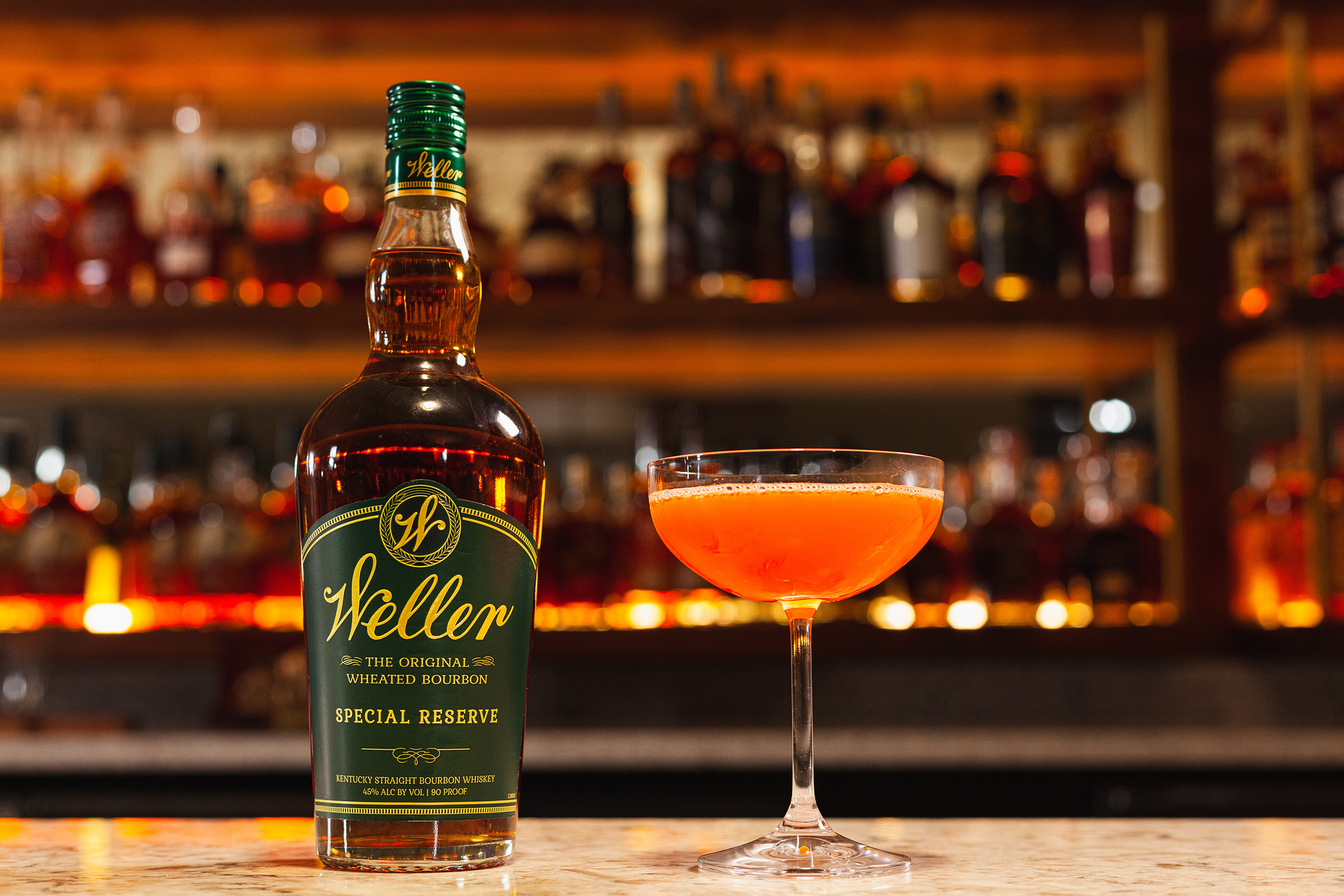
Bourbon is a uniquely American spirit and, by law, regulation and international trade agreements, it is acknowledged and protected as such. To carry the label ‘Bourbon’, it must be made in the United States and distilled from at least 51% corn maize, which brings a sweet and fruity character all its own. The balance of grain, called a “mash bill” must be composed of cereal grains – generally rye or wheat – with some malted barley. Bourbon must be matured in new, charred oak containers. The production standards are very specific and while most Bourbon is produced in the state of Kentucky, it can be made in any part of the U.S.
What does the future hold for Bourbon globally and in India? The global Bourbon spirits market is experiencing strong growth, despite a current slowdown due to international tariffs and uncertainty, with projections indicating a rise from approximately $8.2 billion in 2022 to $12 billion by 2030, driven by factors like premiumisation, craft distilleries and international demand.
Here’s a more detailed look at the bourbon volume growth.
• Premiumisation:
Consumers in India and elsewhere are increasingly seeking higher-quality and premium whisky offerings, leading to growth in the high-end and super-premium categories.
• Craft Distillery Interest:
There is growth in craft distilleries and artisanal whisky production which caters to the demand for unique and distinctive spirits.
• International Demand:
Bourbon’s popularity is expanding internationally, with key export markets like Europe, Japan, and Australia showing significant recent gains.
• Popular Cocktail Culture:
The “Cocktail Revolution” continues to expand internationally. The growing popularity of Bourbon-based cocktails and the expansion of cocktail culture further fuels demand. Many classic whisky cocktails are quite adaptable to Bourbon. India is a current global hotspot for this revolution.
• Cross Demographic Appeal and Affordability:
Bourbon has two very important characteristics which make it particularly attractive. First, accessibility – there is the range of pricing from value brands, which are priced to compete with popular, less expensive spirits to ultra-premium labels which appeal to connoisseurs and collectors. The second, perhaps more important, appeal – Bourbon is transgenerational in its appeal and crosses the full range of enthusiasts of all ages, genders and economic classes. In India, this translates into a product which will appeal to younger, aspirational drinkers and explorers.
• Tourism and Distillery Visits:
With return to global travel and the unique relationship between The US and India, particularly in the tech industry where whisky enjoys exceptional popularity, there is resurgence of tourism and distillery visits, providing immersive experiences for consumers, contributes to market growth. This is particularly apparent in Kentucky and Tennessee just as it is also beginning to happen in India.
• Sustainability:
Many distilleries are embracing eco-friendly practices, aligning with consumer demand for environmentally responsible products.
Market Projections:
• Global Market Value:
The global bourbon spirits market is expected to reach $12 billion by 2030, growing at a compound annual growth rate (CAGR) of around 5.6% between 2023 and 2030.
• North America Dominance:
North America remains the dominant market for bourbon, benefitting from strong local demand and a well-established production infrastructure.
• India and Asia-Pacific Growth:
The Asia-Pacific region is projected to experience the fastest growth in the bourbon spirits market. The opportunities in India are exciting as US Bourbon currently enjoys an import duty advantage over its Scotch whisky competitors and cheaper local IMFL products, making it competitive.
• Producers such as DIAGEO, which makes the incredibly fast growing and much celebrated brand, Bulleit Frontier Whiskey Bourbon, as well as several other American whiskey brands, have a strong advantage because of their already well-established infrastructure and market presence in India as well as their familiarity with local whisky culture.
Specific Growth Figures:
• In 2022, bourbon and Tennessee whiskey volumes in the U.S. grew by 4.2% to 29.7 million 9-liter cases, with revenues increasing by 10.5% to USD 4.5 Billion.
• The global bourbon spirits market was valued at nearly US$ 8 billion in 2022 and is expected to reach US$ 15 billion by 2030.
• The global Bourbon category is predicted to grow by 5% between 2022 and 2031.
• The global bourbon spirits market was valued at $7.8 billion in 2021, and is projected to reach $12.8 billion by 2031, growing at a CAGR of 5% from 2022 to 2031.
The Bottom Line – Bourbon’s Future in India
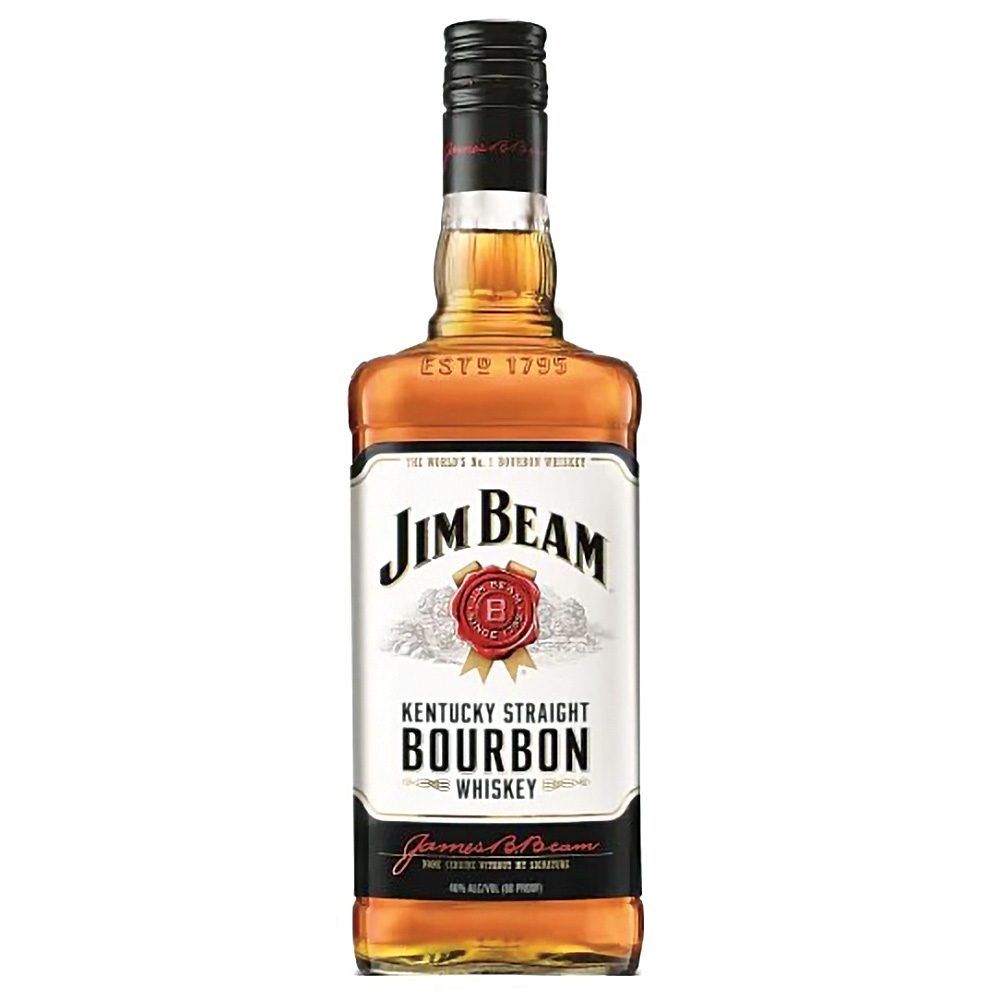
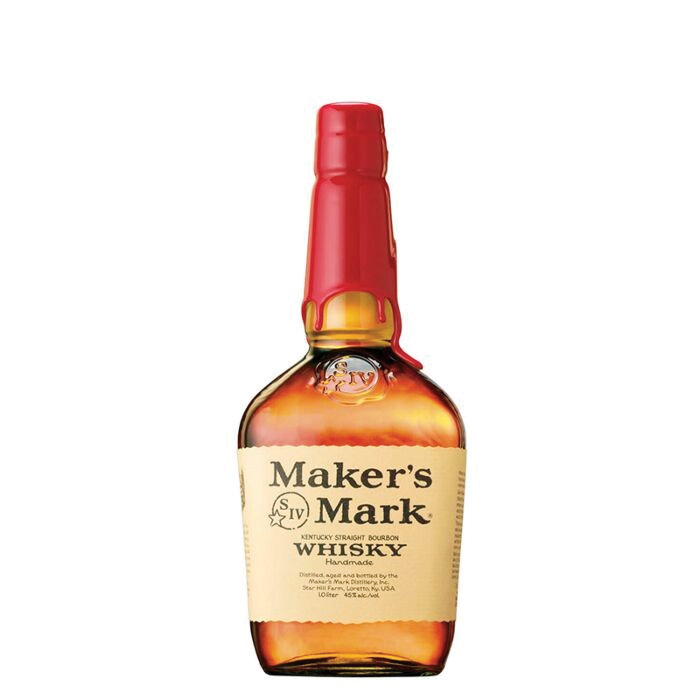
India is excited about American whiskey. A new, younger generation of educated, globally aligned consumers is energising the whisky market in India and Asia. Currently there are number of products available in India which includes Jack Daniel’s, Jim Beam, Woodford Reserve, Maker’s Mark, Gentleman Jack and Old Forester. And with the entry of Sazerac through John Distilleries Ltd as well as scores of other US companies, the Indian market will be flooded with bourbon and Tennessee whiskeys. Bourbon enjoys a particularly competitive advantage over other imported spirit products. My prediction – a bright and sunny future for Bourbon in India.
spiritsEUROPE has said that it is extremely concerned by the announcement of the European Union on rebalancing tariffs on US whiskey and other US spirits categories in response to US tariffs on steel and aluminium. It has urged the EU and the US to keep spirits out of unrelated disputes.
The announcement comes at a particularly difficult time for the spirits sector, amidst geopolitical tensions and a marked slowdown in many key markets. If implemented on 1 April, these tariffs will have a hugely damaging impact on the EU companies that produce US spirits, US companies that are heavily invested in Europe and all actors in the value chain, putting at risk the many jobs they support, including in rural areas.
“Yet again, spirit drinks have become collateral damage in an unrelated trade dispute. As highlighted in our numerous engagements with the European Commission over the last seven years, we fail to understand how this will help with the broader, unrelated dispute on steel and aluminium. The EU and US spirits sectors stand united in their steadfast commitment to maintaining transatlantic spirits trade tariff-free,” said Pauline Bastidon, Trade & Economic Affairs Director at spiritsEUROPE.
The 1997 reciprocal zero-for-zero agreement that eliminated tariffs on spirits led to a remarkable 450% growth in transatlantic trade until 2018, before retaliatory tariffs were first introduced. Their return would have devastating consequences for the sector and put at risk the strong transatlantic trade & investment flows that have benefitted both sides and created so many interconnections on both sides of the Atlantic.
“The clock is ticking. We urge the EU and the US to keep spirits out of unrelated disputes while they work on resolving their differences and protecting the vitally important transatlantic trade relationship,” she said.
The Minister of State for Commerce and Industry, Jitin Prasada has said in the Lok Sabha that the United States under the Trump administration has not yet imposed reciprocal tariffs and that both countries were planning to negotiate a trade agreement, focussing on increased market access, reduction of import duties and removing non-tariff barriers.
In a written reply to the Lok Sabha, the Minister said, “Both countries plan to negotiate a mutually beneficial, multi-sector Bilateral Trade Agreement. Both countries would focus on increasing market access, reducing tariff and non-tariff barriers, and enhancing supply chain integration.”
Confirming the same, the Commerce Secretary Sunil Barthwal informed the Parliamentary Standing Committee on External Affairs that negotiations between the two nations are still on and no agreement on trade tariffs has been reached so far. Barthwal briefed the committee, headed by Congress MP Shashi Tharoor, and said that bilateral trade agreement talks between the two nations are still on.
When members of the committee asked why India was not raising its voice against tariffs, as done by Canada and Mexico, he said the two were not comparable as the US had security concerns and border immigration issues with them.
It is reported that the Commerce Secretary assured the committee that India will sign a “mutually beneficial agreement”. He said India will protect any industry which is crucial to its domestic economy, saying that developing countries cannot lower their tariffs on everything.
It must be mentioned here that soon after Donald Trump took charge as President of the US, the US government issued Memorandum on Reciprocal Trade and Tariffs, wherein the Secretary of Commerce and United States Trade Representative were to take necessary actions to investigate harm to America from any non-reciprocal trade arrangements adopted by trading partners and provide a report with detailed proposed remedies for each trading partner.
Prasada also said that India continues to engage with the US to achieve enhancement and broadening of bilateral trade ties in a mutually beneficial and fair manner. “This is an ongoing exercise and Indian exporters are working towards diversifying trade baskets and export destinations.”
In 2023-24, India exported engineering goods worth USD 17.62 billion. The other major goods included electronics (USD 10 billion), gems and jewellery (USD 9.9 billion), petroleum products (USD 5.83 billion), textiles (USD 4.7 billion), marine products (USD 2.5 billion). During 2021-24, America was India’s largest trading partner. The US is one of the few countries with which India has a trade surplus. Trump had said, “India charges us massive tariffs, massive you can’t even sell anything in India. It’s almost… it is restrictive. You know, we do very little business inside. They have agreed, by the way. They want to cut their tariffs way down now because somebody’s finally exposing them for what they have done.”