Tag Archives: Whisky Innovation

From Mahua to Malt: How a Century-Old Indian Distillery Reclaimed Its Spirit

What began as a family experiment in Dahanu has grown into one of India’s most distinctive houses of whisky. South Seas Distilleries now brings the same discipline of craft to Crazy Cock and Six Brothers Mahura; spirits built on legacy and made for the present.

The story of South Seas Distilleries and its modern incarnation, Six Brothers Mahura, unfolds across a century. It begins in 1922, when six Parsi brothers—Khurshedji, Faramroze, Rustomji, Kuvarji, Nanabhoy, and Jehangirji—turned their gaze inward, towards the soil of India itself. While the colonial elite toasted imported blends, the brothers sought a flavour born of Indian wilderness; a flower that had perfumed tribal celebrations for centuries. They found it in the mahua blossom.

That pursuit gave rise to what would become India’s earliest recorded distillery for luxury indigenous spirits. The brothers captured the mahua’s delicate nectar and distilled it through copper stills that gleamed under Dahanu’s coastal sun. The result carried fragrance both earthy and floral; a creation that drew admiration from princely patrons and curious palates alike. The Maharajas of Jawhar and Akkalkot tasted it and declared it remarkable. For a moment, the native bloom found a seat beside the imported malt.

Then history intervened. Prohibition arrived like a curtain drawn mid-performance. Stills cooled, cellars emptied, and the brothers’ labour faded into legend. The mahua returned to forest soil. Its spirit—literal and symbolic—fell silent.

Decades passed. Generations scattered. Yet memory survived, fragile but persistent, within a few stories whispered through the family. One man, Jehangirji Behramji Kohinoor, refused to let it vanish entirely. In 1984, at seventy-three, he decided that the distilling heritage of his kin must live again. He chose Dahanu as his ground of renewal, a coastal expanse between the Arabian Sea and the Sahyadris. There he founded South Seas Distilleries, restoring copper stills to flame.

What emerged was less a reconstruction than a resurrection. Against skepticism, Jehangirji installed India’s largest copper pot stills and built the country’s biggest privately owned maturation warehouse. Critics doubted whether whisky could mature in tropical heat without losing itself to evaporation. Yet the barrels filled, and time performed its silent alchemy. The whisky matured with unexpected complexity; touched by sea breeze, sunlight, and the patient rhythm of Indian weather.

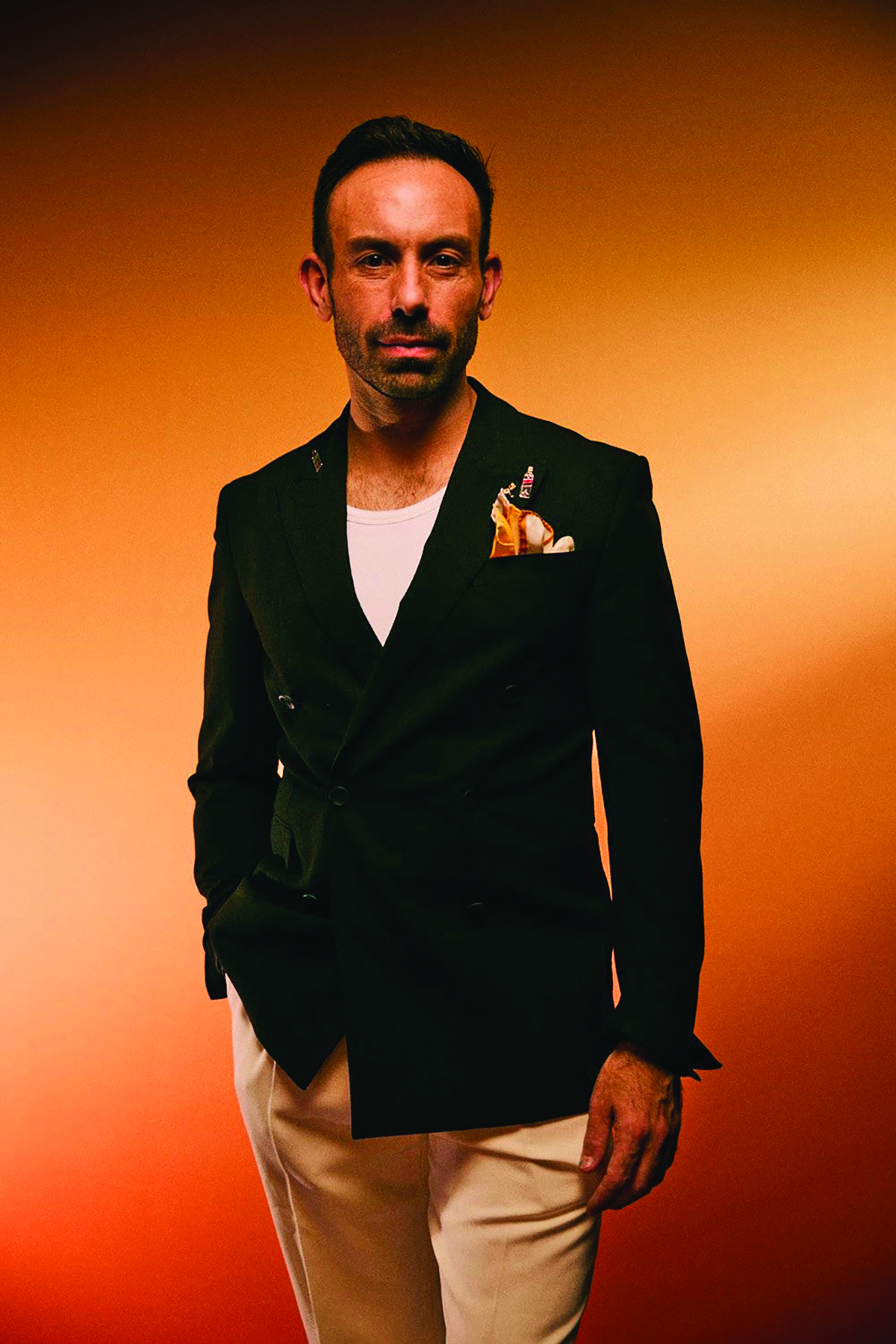
Rupi Chinoy, Director of South Seas Distilleries

Years turned into decades. The distillery grew under the stewardship of successive generations, guided by principles that favoured patience over haste, restraint over spectacle. The Chinoy family, descendants and present custodians, continued the founder’s path. This chronicle was told to us by Hamavand Chinoy and Rupi Chinoy, Directors of South Seas Distilleries, who now guard the lineage.

A Legacy Reignited

Their ethos stands on simple conviction: excellence matures through time, not acceleration. The copper stills, massive and burnished, are treated as instruments of character, not machines of speed.

From this philosophy came the company’s first consumer brand, Crazy Cock Single Malt Whisky, in 2023. Its two expressions—Rare, the unpeated variant, and Dhua, the peated—form an eloquent dialogue between subtlety and smoke. The name itself holds meaning layered with sentiment. “Crazy” pays tribute to the founder’s audacity, his unflinching pursuit of perfection, and the years of waiting that turned conviction into spirit. “Cock” was chosen as the mascot because the rooster’s call heralds a new dawn; a poetic emblem for South Seas’ renewal and the awakening of Indian single malts on the global stage.

Rare matures in bourbon and sherry oak casks within India’s largest copper stills, offering aromas of honey, pear, chocolate, raisin, cinnamon, and vanilla. Dhua, its lightly peated sibling, draws from first-fill bourbon and sherry casks, revealing dark chocolate, mandarin, oak, and a trace of smoke. Both carry a deep amber colour and a silken finish, reflecting the tropical maturation unique to Dahanu’s climate.

The Flower Returns

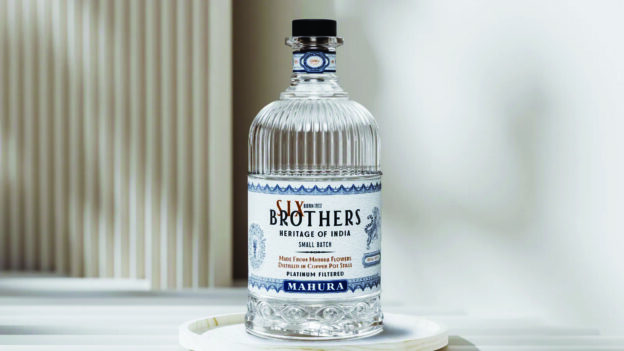
A year later, in April 2024, South Seas introduced Six Brothers Mahura, a spirit born again a century after its first creation. The release was hailed as India’s most exclusive small-batch heritage spirit, limited to 102 bottles priced at ₹1,02,000.

It honours the pioneers whose names crown its label. The blossom once regarded as rustic gained new finesse through double distillation and platinum filtration. In the glass, the spirit reveals warmth balanced with clarity; aromas of figs, raisins, dried hay, ginger, pepper, and apricot. Its taste unfolds in layers: a hint of salinity, traces of fruit, and a whisper of spice that lingers. Its adaptability has made it a favourite among mixologists and connoisseurs alike. Bandra Born in Mumbai has even launched the world’s first dedicated Mahura bar, serving cocktails built entirely around Six Brothers expressions that have become signature draws for the city’s patrons.

Each bottle carries symbols that narrate its ancestry. Six pairs of engraved eyes form a circle at the base; sentinels representing the brothers who began it all. A single all-seeing eye crowns the closure, signifying their shared vision. The tiger that marks the label is not decoration but emblem; a creature drawn from the forests where the mahua blooms, embodying endurance, confidence, and native strength.

To walk through the distillery today is to witness tradition entwined with invention. Rows of casks stand in patient formation, their staves breathing with moisture and craft. Workers test temperature by feel, marking variations in chalk upon wood.

South Seas Distilleries, once a local venture reborn from family lore, now stands among India’s most respected producers of malt and indigenous spirits. Yet the company remains resolutely private in tone, disinterested in corporate spectacle. Its focus lies in substance, a discipline that traces its roots back to 1922, when six brothers dared to dream of distilling the Indian earth itself.

When Hamavand and Rupi speak of the distillery, they describe not a company but an inheritance that breathes. The copper stills remain burnished and loyal. The casks sleep in Dahanu’s humidity, surrendering what they must, preserving what they can. In their aroma lies the persistence of memory; the same fragrance that once enchanted princes, now refined for a global connoisseur.

DeVANS’ GianChand Collection Positions Indian Single Malt on the Global Map

Three whiskies—GianChand, Adambaraa, and Manshaa—trace the brand’s gradual climb from heritage to international acclaim.

Indian single malts have entered a stronger phase. Once the outsiders of the whisky world, they now find recognition among collectors and bartenders alike. Across India, distillers are treating whisky-making as both science and art; experimenting, observing, and letting the climate define their spirits’ tone and temperament.

That same focus filled the evening at The Quorum, Gurgaon, where DeVANS Modern Breweries Ltd. hosted an immersive tasting session for a select audience. The spotlight was on GianChand, the brand’s single malt range, introduced in three distinct variants: GianChand, Adambaraa, and Manshaa. Each bottle told a different story, tied by a common pursuit of integrity and finesse.

Later, I interacted with Prem Dewan, Chairman and Managing Director of DeVANS Modern Breweries Ltd., who outlined the brand’s journey and the meticulous ethos behind its whiskies.

A heritage that progressed with time

DeVANS’ step into the single malt category came from decades of hands-on expertise, not impulse. “For more than thirty years, we supplied matured and fresh malt spirits to various companies across India,” Prem Dewan said. “The quality of our matured stocks was exceptional. Eventually, we decided to bottle them ourselves rather than sell them away. That decision led to the birth of GianChand.”

The name, he explained, carried both sentiment and symbolism. “We wanted an identity that reflected Indian origins,” he said. “Our founder, Shri Gian Chand, had begun as a journalist before entering the liquor business in the 1940s. He built DeVANS on ethics, precision, and quality; values we continue to uphold. The single malt honours that legacy.”

Three whiskies, one intention

At the tasting, guests sampled the three expressions sequentially, noting how each carried a separate flavour identity. “GianChand has a gentle peat layer and matures for around four years,” Prem Dewan explained. “Adambaraa and Manshaa age for over seven. Adambaraa is unpeated, while Manshaa introduces peat for the first time in our lineup.”

All are matured in once-used American bourbon barrels. “We work with first-fill casks because they provide richness and subtle sweetness,” he added. “They lend character without overpowering the malt.”

Adambaraa delivers notes of barley, caramel, and dried fruit; Manshaa introduces restrained smoke with malt sweetness and earthy undertones. The original GianChand balances spice and soft oak. “Our whiskies carry a texture people instantly recognise,” Prem Dewan mentioned. “It’s refined and coherent across the collection.”

Technique moulded by terrain

Prem Dewan described DeVANS’ process as faithful to traditional whisky-making yet flexible to Indian realities. “The fundamentals remain constant: fermentation, distillation, maturation,” he said. “We allow natural fermentation, letting yeast perform at its own rhythm. Distillation is where innovation thrives. That’s where we influence the spirit without losing authenticity.”

The company’s custom-built copper pot stills help preserve uniformity and definition. Jammu’s natural environment does the rest. “Summers are warm, winters are crisp, and both have strong day–night contrasts,” he explained. “This variation promotes ideal interaction between wood and spirit. Our water source, pure and mineral-rich, adds clarity to the whisky.”

India’s temperature accelerates maturation, but Jammu’s geography adds poise. “One year of ageing here equals several elsewhere,” Prem Dewan said. “Yet it happens with balance, not haste. The outcome is layered complexity rather than intensity.”

Recognition and practice

Acknowledgement soon followed. DeVANS’ single malts have earned international distinction, reinforcing the quiet discipline behind their creation. Adambaraa won Best Indian Single Malt at the IWC 2025 in Las Vegas, while Manshaa received International Whisky of the Year at ISW 2025 in Germany.

“Such honours affirm years of disciplined work and a clear production philosophy,” Dewan said. Yet he quickly grounded the discussion. “Awards matter,” he said, “but maintaining quality is our real goal. We have detailed systems and trained teams ensuring each batch meets our benchmark. The bottles reflect a process we never compromise.”

From Jammu to the wider world

DeVANS’ legacy in brewing continues to influence its approach to whisky. “Brewing taught us control and hygiene,” Dewan said. “Those same principles guide our distilling operations. Precision ensures consistency, and consistency builds trust.”

Exports have expanded steadily. “We’re now present in the United States and Australia,” he said. “Canada and several other markets are in line. The response has been remarkable. International buyers appreciate our structure and purity, while Indian consumers feel pride seeing homegrown malts performing globally.”

Looking forward

Before we concluded, I asked Dewan about upcoming releases. He offered a glimpse without revealing too much. “Our production units are actively developing new ideas,” he said. “Fresh expressions and limited editions are in progress. Once ready, they’ll extend the GianChand narrative. Innovation is ongoing; it’s a part of our DNA.”

As the evening drew to a close, one thing was evident: Indian whisky no longer seeks validation. It has earned its standing through intent, technical precision, and an unwavering commitment to progress. GianChand represents that maturity; an Indian malt that speaks clearly, without excess, and leaves an impression built on substance.

Oaksmith Introduces Nagomi: A New Benchmark in Indian Whisky Craftsmanship

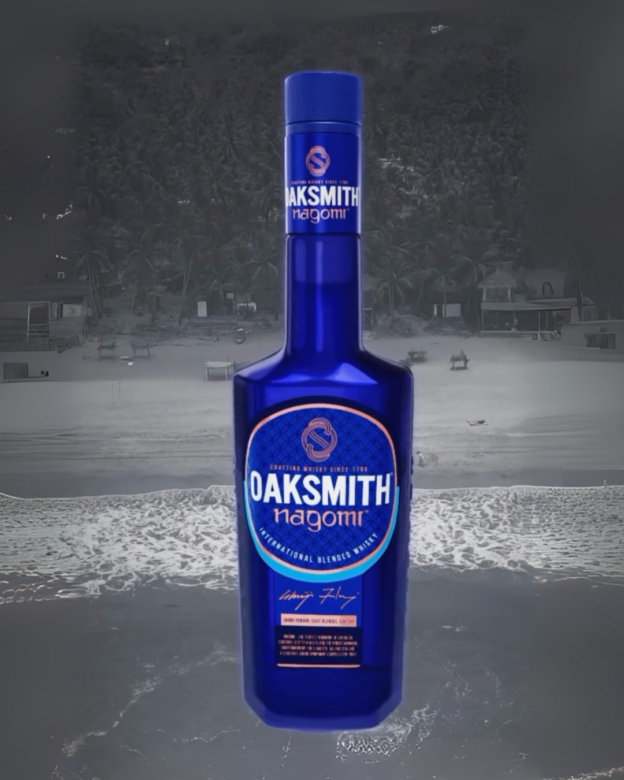
Oaksmith has unveiled its most premium expression yet – Oaksmith Nagomi. With this launch, the brand blends Japanese craftsmanship and global whisky making expertise, setting a new benchmark for modern Indian whisky.

This expression brings together the richness of aged Scotch malts, smoothness of American Bourbons, and the precision of Japanese blending techniques to craft a whisky that is rich, smooth, and harmoniously balanced. Inspired by the Japanese philosophy of ‘Nagomi,’ which represents harmony and balance–this whisky is a testament to the art of bringing diverse elements together in perfect sync. Oaksmith Nagomi has been crafted by Shinji Fukuyo, Chief Blender at Suntory, who was recently honoured as Master Blender of the Year at the International Spirits Challenge 2024.

 “With Oaksmith Nagomi, we are not just introducing a new expression; we are reaffirming our commitment to elevate the Indian whisky segment,” said Rishi Walli, Senior Director – Marketing & IMFL Brands, Suntory Global Spirits. “Nagomi, inspired by the Japanese ethos of harmony and balance, is a whisky crafted for those who seek a fresh expression of aspiration. It also represents our dedication to blending global excellence, heritage, and authenticity, creating distinctive, high-quality whiskies that offer a premium experience with a truly international spirit. This launch marks the next chapter of Oaksmith’s journey where our Japanese legacy creates something more elevated for the evolving tastes of India,” he added.

 Oaksmith Nagomi is a sensorial celebration crafted for the Indian palate. From its intense rich gold appearance to smoky, spicy, and fruity aromas, it offers a full-bodied experience with woody undertones from oak casks, finishing bright, smooth, and surprisingly long. Inspired by Japanese aesthetics, the bottle design reflects strength, simplicity, and timeless elegance, resonating with modern Indian consumers who value authenticity and character.

Currently launched in Goa and West Bengal, Oaksmith will soon expand to more cities. With Nagomi – its most premium expression yet, joining Oaksmith International and Gold, the brand continues to bring Japanese craftsmanship and modern whisky-making expertise to India.

Piccadily Combats Counterfeiting with NFC Technology

  • First Indian alcobev company to do so
  • Innovative Smart Labels on Indian Single Malts

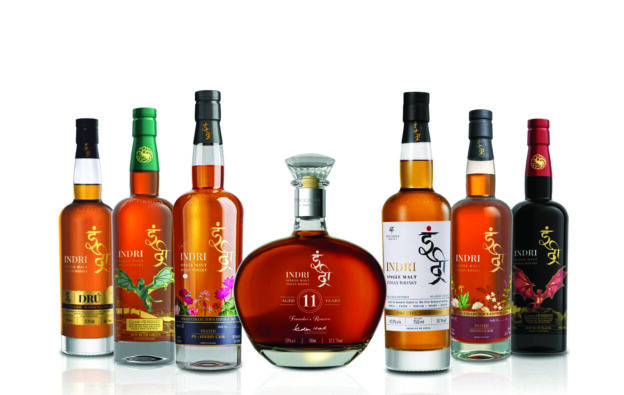
In a pioneering move to safeguard consumers and reinforce trust in premium Indian spirits, Piccadily Agro Industries Limited has become the first Indian alcobev company to implement ForgeStop’s cutting-edge anti-counterfeit smart label technology for its acclaimed Indri Single Malt.

With counterfeiting rampant in India—where it’s said that more Scotch is consumed than Scotland even produces—Piccadily has taken a bold and proactive step. By integrating NFC-enabled smart labels into its packaging, the company is setting a new benchmark in authenticity and transparency, investing significantly to ensure consumers receive only genuine, original products, reinforcing trust in premium Indian spirits.

ForgeStop InfoTap Labels on Piccadily products utilise EM Microelectronic echo-V chips with 128bit AES encryption and dynamically changing tokens – giving them bank level security and making them virtually impossible to fake. They also feature tag-tamper detection – alerting a consumer if the bottle seal has ever been broken – this prevents bottle re-use, a major issue with Alcohol counterfeiting that is difficult to combat with other technologies. Its platform creates a unique digital twin of every product at the moment of production and secures the product until it’s enjoyed by the customer. The software allows for app-free authentication and provides batch level product information – making it the most user-friendly anti-counterfeit technology available. This technology can be connected to the blockchain generating an immutable product journey – securing supply chains.

Unlike static technologies such as QR codes or holograms, this NFC tap and verify experience allows customers to simply tap their smartphones to the bottle to instantly confirm its authenticity and view batch-level information.

 “As a brand committed to authenticity and quality, we’re proud to be the first Indian single malt brand to take this bold step,” said Praveen Malviya, CEO (IMFL), Piccadily Agro Industries Limited. “Counterfeit alcohol is a serious issue in India and globally. With ForgeStop’s smart technology, our customers can enjoy Indri with the confidence that what’s in the bottle is exactly what we crafted.”

 “We’re proud to partner with Piccadily Distilleries, a globally recognised brand leading the way in product integrity. With ForgeStop’s smart label technology, consumers can instantly verify authenticity and access product information with a simple tap—no app required. It’s a seamless blend of security and brand storytelling.” said Terry Katz, CEO of ForgeStop.

 As per the TRACIT (Transnational Alliance to Combat Illicit Trade) September 2023 report on India, a significant share of alcohol sold in India is counterfeit—well above the global average—and the problem is escalating rapidly. Counterfeit alcohol not only harms brands, but also poses serious risks to consumer health.

What an Expedition it has been…….

Rakshit Jagdale, the Managing Director of Amrut Distilleries in a podcast conversation with Bhavya Desai talks about how the 75-year-old company has evolved over the years, starting from heritage brands such as Amrut XXX rum and Silver Cup brandy in the 1950s to the Amrut Single Malt and now to a limited edition of the oldest whisky from the sub-continent – The Expedition.

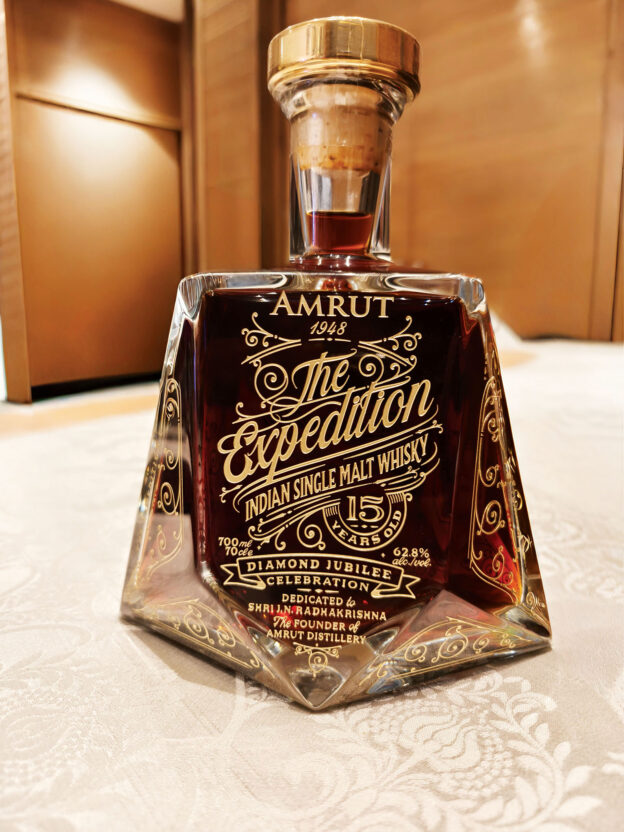
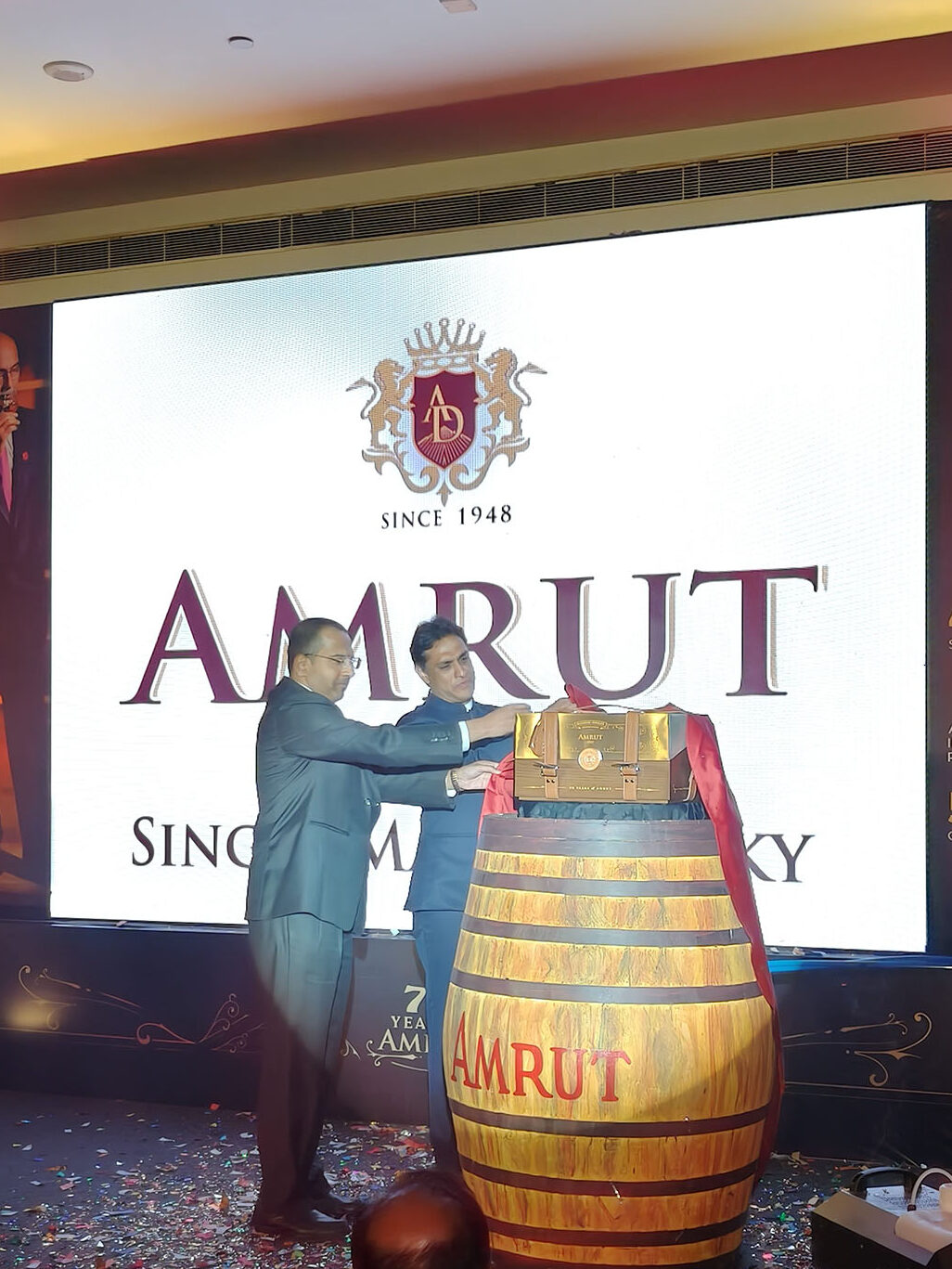
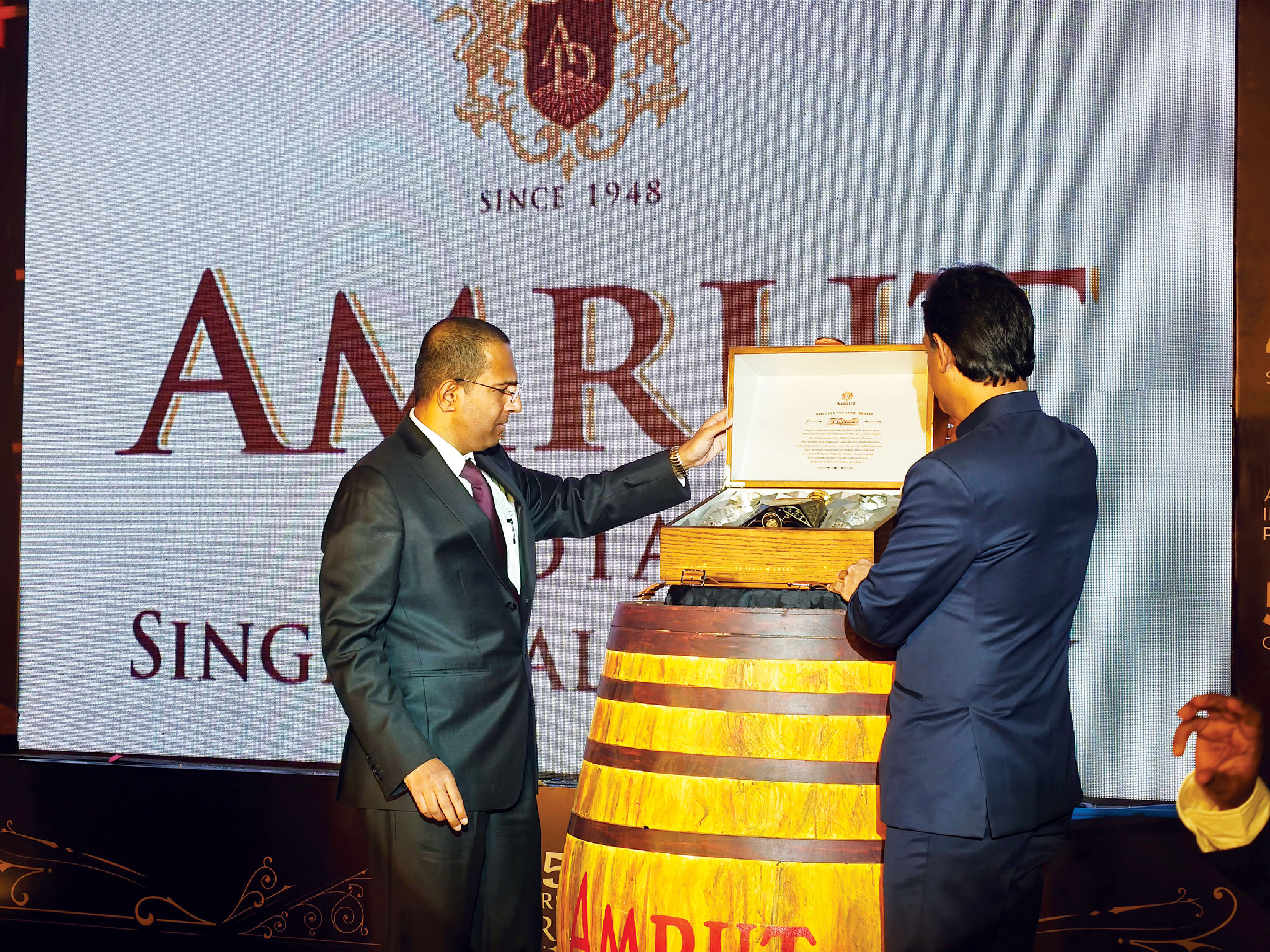
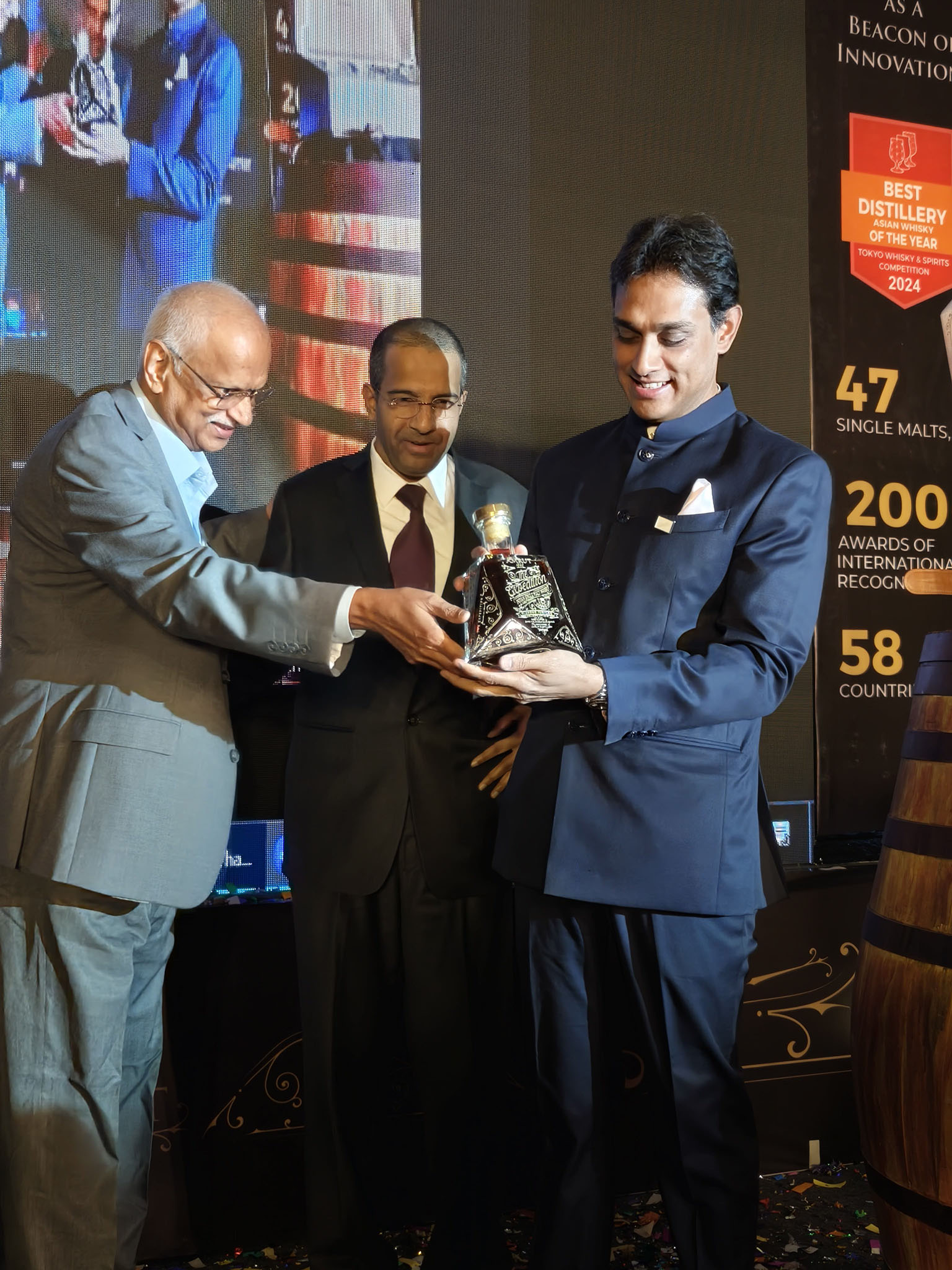
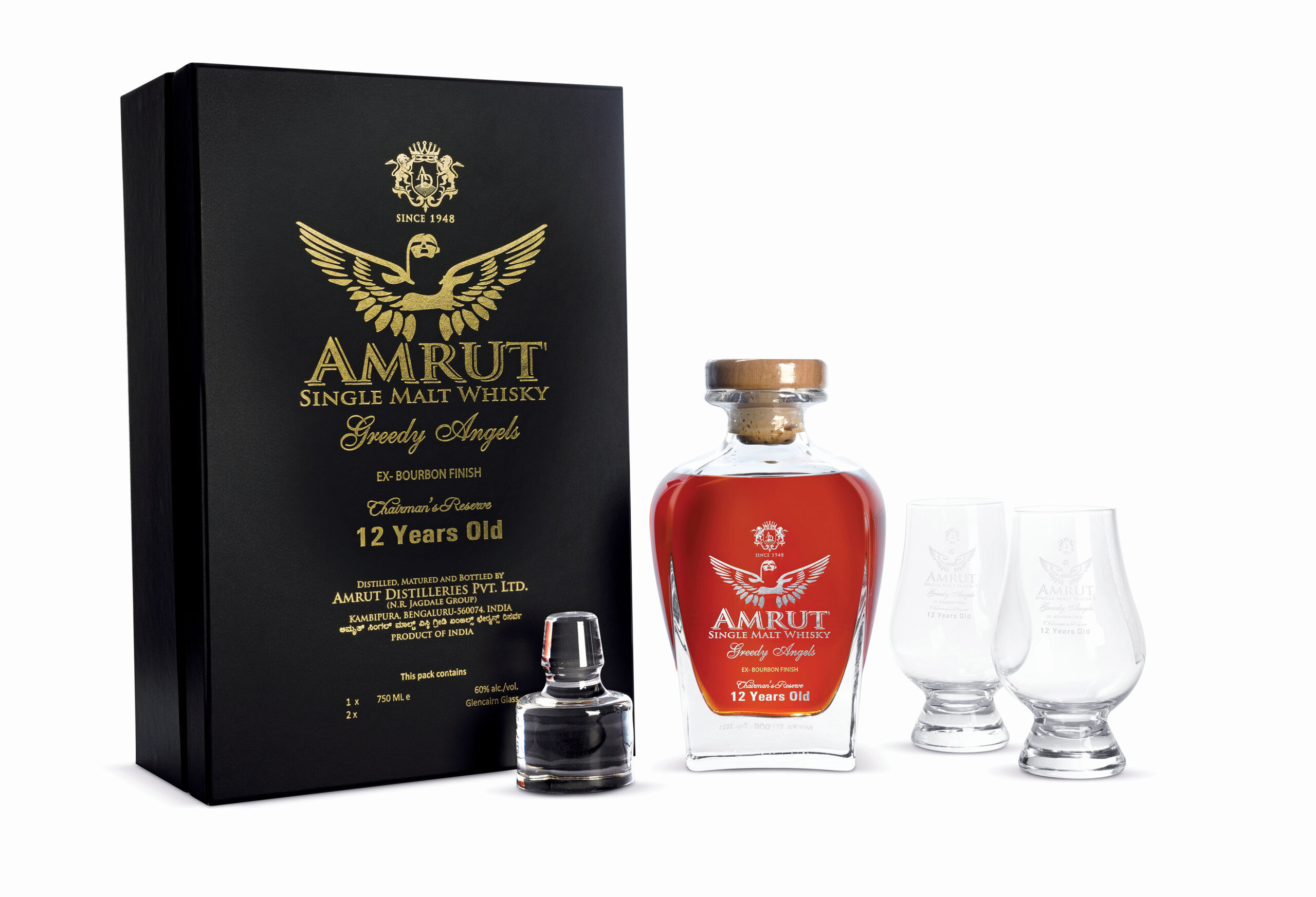
On February 26, 2025, Bengaluru-based Amrut Distilleries reached yet another highpoint in the alcobev sector when it launched The Expedition, the oldest single malt whisky in India, matured for 15 years, and sold for 12,000 USD (₹10.50 lakhs) per bottle. Celebrating its 75th anniversary, Amrut Distilleries released 75 bottles of this rare whisky, 66 of it for the international market and the rest for the Indian market.

Matured for 15 years

The Expedition is matured for 15 years, initially in European Sherry casks for 8 years and then American Bourbon casks for 7 years, developing deep, opulent flavours, complexity and depth.  Amrut’s Expedition packaging exudes the grandeur of a royal heirloom. The merging of metal and wood took six months. Each handcrafted box houses an individually engraved and numbered bottle, featuring a diamond-cut design with intricate gold engravings. A regal silver peg measure, crafted by a Bangalore silversmith, has been embedded with a near-field communication (NFC) tag and authentication card.

Globalisation and the Market

Not just The Expedition, the international market for Amrut has been the US, followed by Europe and the APAC region, the last one is fast growing for single malt whiskies. “It has been a very exciting time for us in the industry now. We should see how it will unfold,” Rakshit said and mentioned how the markets opened up in India in 1990-91 with globalisation. “Seagram’s came with advertising blitzkrieg for Royal Stag, something which we had not seen. People started shifting from drinking heavier blended whiskies like MaQintosh or Peter Scot or Royal Challenge into drinking lighter whiskies like Royal Stag. At Amrut, we did not stop distilling, we kept on maturing our malts.”

Lighter Whiskies

It was around 1995-96 that Amrut cut down using heavier malts in MaQintosh from 35% to 10% to 8%. “It was then we thought why not go for single malt whisky, why not explore.” The first batch was matured for four years average and now the company is using a larger percentage of older whiskies. “We don’t have that much of quantity, we run out of supply,” confesses Rakshit.

Denying that the company created a demand to jack up prices and make it luxury, Rakshit said, “We didn’t have enough whisky, even now it is the case, but we do come up with special edition whiskies. Who wouldn’t want to sell more of their product.”

Technologies at play

Talking about how the company has evolved over the years, Rakshit said, “Techniques have evolved and barleys have improved from two row to six row. The yeast varietals have undergone massive change. Distillation technologies have also improved.  The world over, the yield per ton of malt spirit has improved significantly now. Earlier, we were probably touching around 350 to 360 alcoholic litres per tonne, we are now hitting close to 400 alcoholic litres per tonne. With Scottish malts it’s even higher going up to 415 to 425 litres per tonne.”

On location advantage, Rakshit said Bangalore at an altitude of 950 metres above sea level has significant advantage with relative humidity remaining high in summer and dropping significantly in winter. “We lose angel’s share in our warehouses at an average of 9% every year. Probably it doesn’t happen anywhere else, may be in Kentucky. We lose more water than alcohol. If you go down anywhere near the coast or if you mature in Scotland, it is the other way around, because in Scotland’s cooler clime, the angel’s share is 2% per year, but they lose more alcohol than water, with the strength dropping. Humidity and altitude play a very significant role for us.”  

The MBA Thesis That Catapulted Indian Single Malt to the Global Stage

The success story of Indian Single Malt (ISM) whisky in the global market place, pioneered by Bengaluru-based Amrut Distilleries, has been well documented. It is not only an interesting story, but also an inspiring one on how the Jagdales – father-son duo – the late Neelakanta Rao Jagdale and Rakshit Jagdale – hit upon the idea of making a breakthrough in the whisky landscape, dominated by Scotland.

Rakshit Jagdale, in a podcast ‘Expert Talk with Bhavya Desai’ recalls his student days at Newcastle University doing an intense one-year MBA programme. “It was a Sunday morning and I was strolling along Northumberland street, a busy shopping center in New Castle upon Tyne, when my father called up and asked what I was planning to do for my thesis. I said a theoretical project on supply chain management. He said ‘no, no… you should do a practical project’ and suggested ‘why don’t you check whether there is scope to sell Indian single malt whisky in Indian restaurants within Great Britain’ stating that Kingfisher and Cobra beers were quite popular in Indian restaurants there. My father asked me to check out whether there was demand for Indian single malt as an aperitif or a digestive. I said it’s a brilliant idea.”

Miniatures that captured the imagination

Neelakanta Rao Jagdale then sat down with the excise officials in Karnataka and had two cases of miniatures of single malt whisky sent over to New Castle. “It was in June when exams were going on. I went over to the Customs bond and duty paid and cleared one case. The packaging was very rudimentary with a black and white label with simple words ‘Amrut’. We knew our product was exceptionally good. The colour of the whisky was good, dark enough and natural. We don’t add any caramel, it is 100% natural. My father had sent 300 miniatures of 60 ml each in two boxes. It was a live project for the company. I did a lot of my survey in New Castle, Edinburgh in Scotland and in the Midlands. I visited several Indian restaurants and bars in Scotland and the response was amazing. Everybody liked it. Some said it’s a 10-year old whisky, some said its Irish, when I said it was Indian, it was a jaw dropping moment.”

On returning to India, Rakshit presented the project to the family board. “It took us two years to conform to the packaging standards of the European Union and on August 24, 2004, we launched Amrut in Café India in Glasgow. That is how the journey of Indian Single Malt whisky began.”

Making the Grade in Whisky Bible

Not to sit on these laurels, they set off on taking it to the world, creating Amrut Fusion which was next level to the Classic Indian Amrut. “Fusion is a completely different product. It is a combination of peated barley and unpeated barley, the former coming from Scotland and the unpeated from India. It is an 80:20 ratio. My father felt that as the Indian palate is accustomed to little bit of peat with Johnnie Walker Red Label and Black Label, they would like the combination. That was running in his mind.”

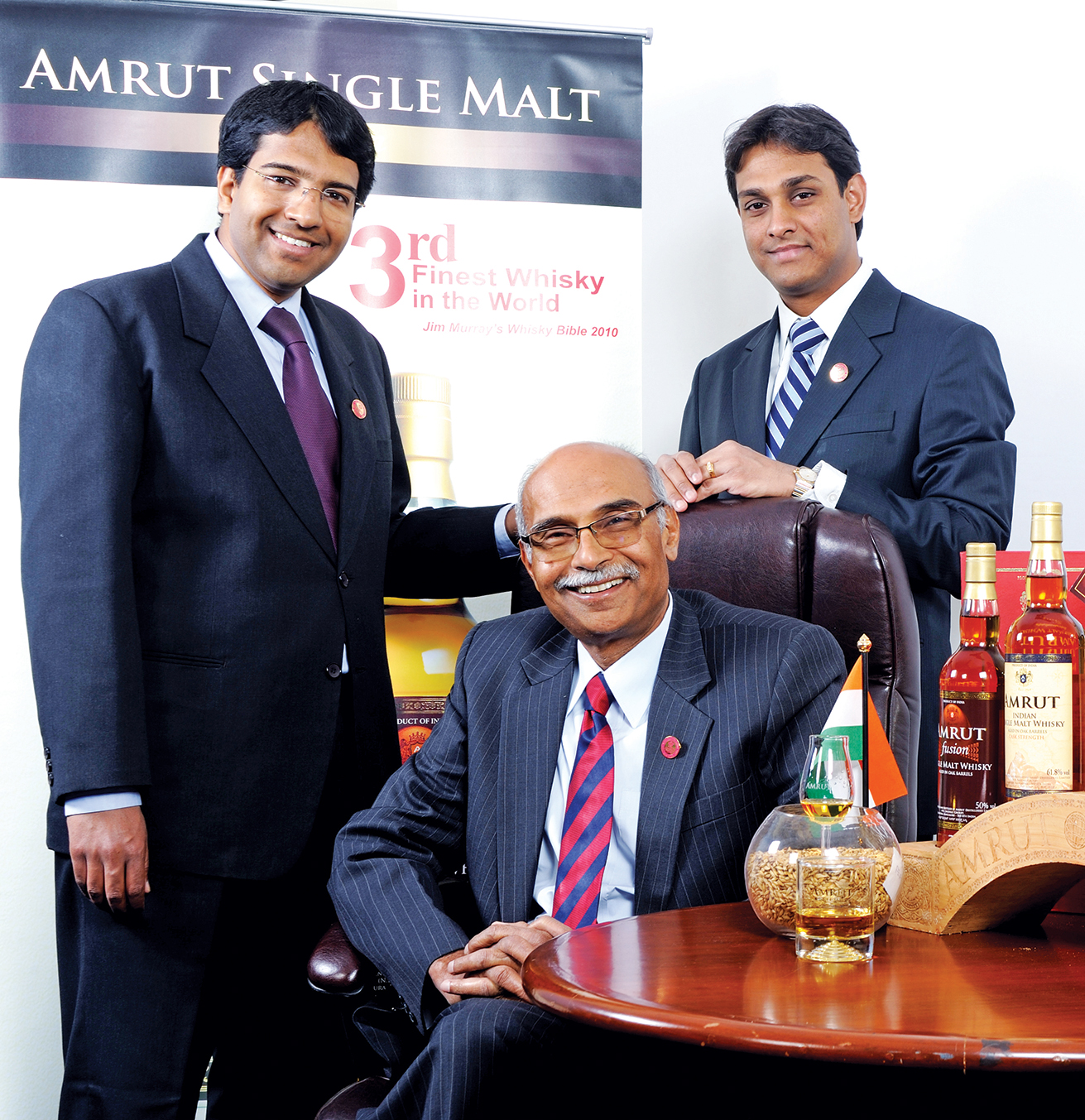
Explaining the process, Rakshit mentioned, “Fusion is matured for a longer period, five to five and a half years. The base malt, both peated and unpeated, is matured for four years and then we marry them and mature it again for nine months to one year, which gives it not only depth, but also complexity of flavours. When Jim Murray first savoured it in 2009 and found it unique and said there was no other product in the world that had this kind of combination. He loved Amrut and gave 97 of 100 in his Whisky Bible in 2010 and ranked it as the third finest whisky in the world.”

From humble beginnings in 1948 as a simple bottling company, Amrut is a name to reckon with. It moved on early into distillation and premiumisation and that has paid dividends. “We have reasonably come a long way. We have grown organically and we are happy with progress we have made.”

This is the third generation of the Jagdale family which is running the business, started by Radhakrishna Rao Jagdale in 1948. The fourth generation is getting ready and Rakshit mentions that ‘the time is right to discus with his son and niece to find out if they have any interest, prima facie, in carrying forward the rich legacy of my grandfather and father.”  

Legacy, Bacardi’s first ‘Made-in-India’ whisky, announces pan-India expansion

Marking a milestone in India’s brown spirits segment, Bacardi in India announces the pan-India expansion of Legacy, its first-ever made-in-India whisky. Following its success in debut areas, the whisky will now reach new markets across Goa, Pondicherry, Jharkhand, Odisha, Meghalaya, Assam, Tripura, Arunachal Pradesh, Kerala, and Rajasthan – highlighting Bacardi’s commitment to India, one of its fastest-growing markets globally.

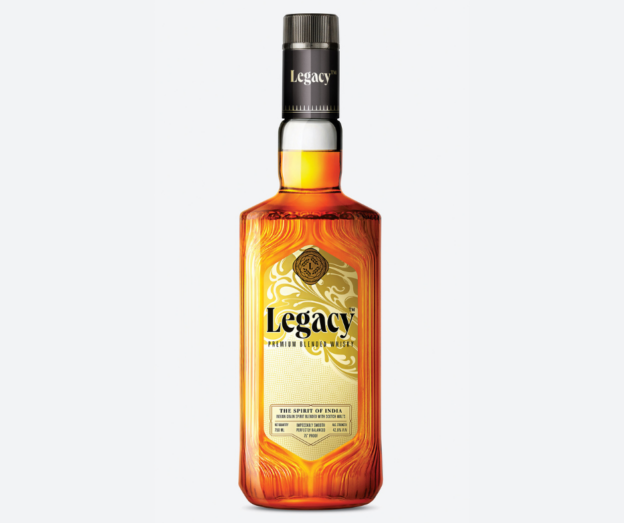
Introduced in 2022, LEGACY offers a one-of-a-kind blend of Indian and Scottish malts with Indian grains, delivering a smooth, balanced whisky tailored to the discerning Indian palate. Embodying the culture and passion of India in its flavour, make and narrative, the whisky has received an extraordinary response since its debut. Capitalising on the positive momentum, this expansion represents a strategic investment in Bacardi’s ambitious vision for growth in the country.

Elated to announce the expansion of LEGACY, Vinay Golikeri, Managing Director, Bacardi in India, said, “Our unwavering commitment to creating exceptional experiences for the discerning Indian consumer has established a legacy of excellence in innovation – one that we aim to uphold with each and every one of our offerings. Legacy, our inaugural premium Indian-made whisky, has resonated deeply with new-age enthusiasts seeking quality, homegrown expressions – driving us to amplify our investments and expand Legacy nationwide. This expansion not only fortifies our brown spirits portfolio in the country but also underscores our dedication to exceeding Indian consumers’ expectations with each new market unlocked in this thrilling journey.”

India is one of the fastest-growing alcoholic beverage markets globally. For locally made whisky, the consumption is at an all-time high, having risen tenfold in the past 30 years and doubled since 2010 (IWSR 2023). Strengthening the presence of LEGACY across the country, Bacardi’s investments in the market will help the alcobev giant tap into the large consumer base seeking options in the premium Indian whisky segment.

Sharing her excitement, Ayaesha Gooptu, Category Head, Domestic Browns & RTD, Bacardi in India, said, “India’s whisky-loving community is thriving, especially when it comes to local whiskies, which are enjoying record-high consumption nationwide. Our newest innovation, LEGACY, blends Indian and Scottish malts with Indian grains, creating a distinctively Indian taste that has quickly won over India’s vibrant whisky loving community. With their affinity for quality homegrown spirits on the rise, we are thrilled about this new leg of our journey in strengthening the legacy of brown spirits across the country, with our crafted in India, for India innovation – Legacy.”

Legacy is available in three sizes (750ml, 375ml, and 180ml) in key markets across Haryana, Punjab, Uttar Pradesh, Rajasthan, Jharkhand, Meghalaya, Assam, Tripura, Arunachal Pradesh, West Bengal, Odisha, Maharashtra, Telangana, Kerala, Pondicherry and Goa – showcasing Bacardi’s commitment to India as one of its top priority markets worldwide. The made-in-India premium blended whisky was also recently awarded ‘Best IMFL Premium Whisky’ at the 16th edition of the mega alcobev event, INDISPIRIT 2024.