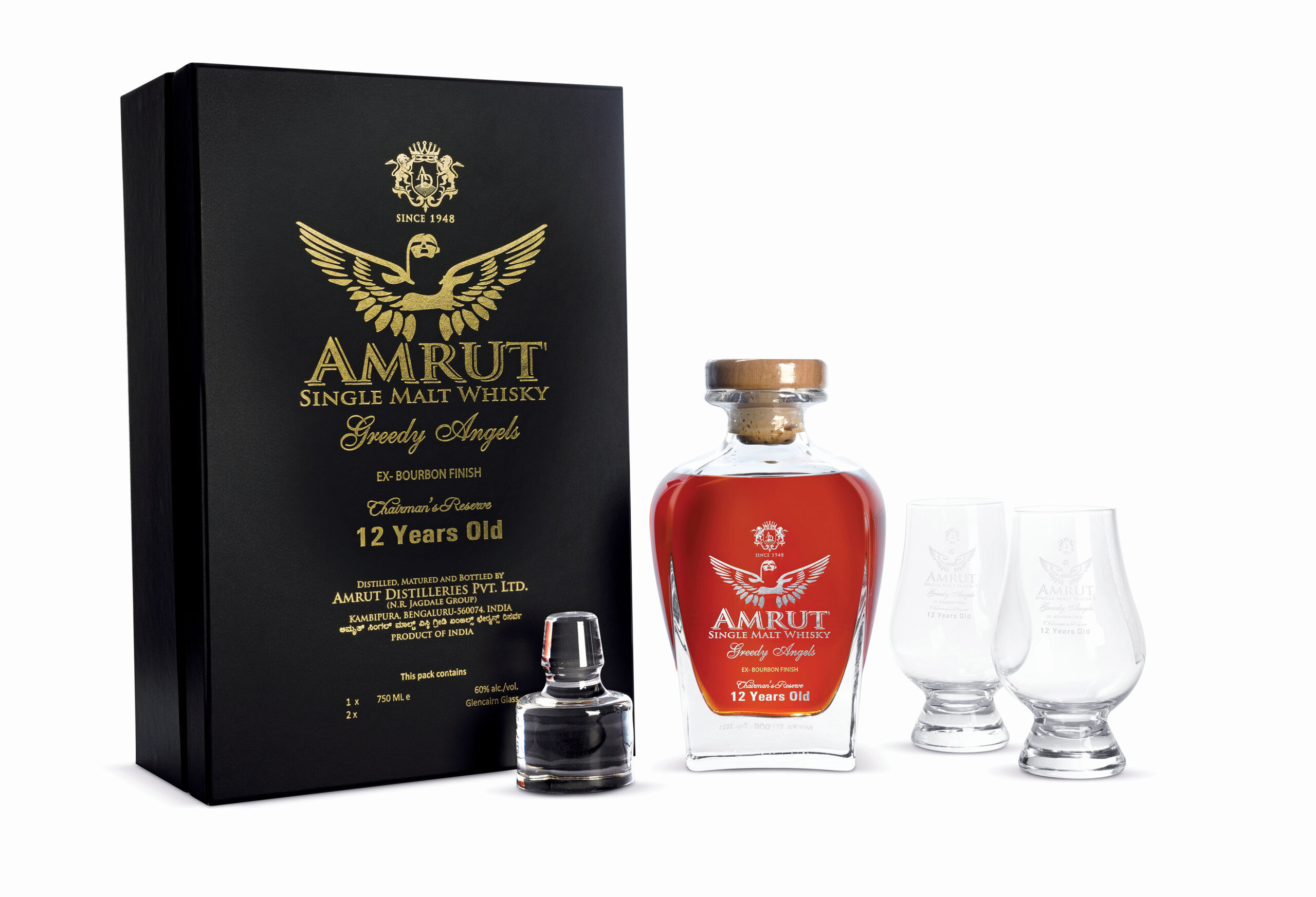

Tag Archives: Whisky Heritage

From Mahua to Malt: How a Century-Old Indian Distillery Reclaimed Its Spirit

What began as a family experiment in Dahanu has grown into one of India’s most distinctive houses of whisky. South Seas Distilleries now brings the same discipline of craft to Crazy Cock and Six Brothers Mahura; spirits built on legacy and made for the present.

The story of South Seas Distilleries and its modern incarnation, Six Brothers Mahura, unfolds across a century. It begins in 1922, when six Parsi brothers—Khurshedji, Faramroze, Rustomji, Kuvarji, Nanabhoy, and Jehangirji—turned their gaze inward, towards the soil of India itself. While the colonial elite toasted imported blends, the brothers sought a flavour born of Indian wilderness; a flower that had perfumed tribal celebrations for centuries. They found it in the mahua blossom.

That pursuit gave rise to what would become India’s earliest recorded distillery for luxury indigenous spirits. The brothers captured the mahua’s delicate nectar and distilled it through copper stills that gleamed under Dahanu’s coastal sun. The result carried fragrance both earthy and floral; a creation that drew admiration from princely patrons and curious palates alike. The Maharajas of Jawhar and Akkalkot tasted it and declared it remarkable. For a moment, the native bloom found a seat beside the imported malt.

Then history intervened. Prohibition arrived like a curtain drawn mid-performance. Stills cooled, cellars emptied, and the brothers’ labour faded into legend. The mahua returned to forest soil. Its spirit—literal and symbolic—fell silent.

Decades passed. Generations scattered. Yet memory survived, fragile but persistent, within a few stories whispered through the family. One man, Jehangirji Behramji Kohinoor, refused to let it vanish entirely. In 1984, at seventy-three, he decided that the distilling heritage of his kin must live again. He chose Dahanu as his ground of renewal, a coastal expanse between the Arabian Sea and the Sahyadris. There he founded South Seas Distilleries, restoring copper stills to flame.

What emerged was less a reconstruction than a resurrection. Against skepticism, Jehangirji installed India’s largest copper pot stills and built the country’s biggest privately owned maturation warehouse. Critics doubted whether whisky could mature in tropical heat without losing itself to evaporation. Yet the barrels filled, and time performed its silent alchemy. The whisky matured with unexpected complexity; touched by sea breeze, sunlight, and the patient rhythm of Indian weather.

Rupi Chinoy, Director of South Seas Distilleries

Years turned into decades. The distillery grew under the stewardship of successive generations, guided by principles that favoured patience over haste, restraint over spectacle. The Chinoy family, descendants and present custodians, continued the founder’s path. This chronicle was told to us by Hamavand Chinoy and Rupi Chinoy, Directors of South Seas Distilleries, who now guard the lineage.

A Legacy Reignited

Their ethos stands on simple conviction: excellence matures through time, not acceleration. The copper stills, massive and burnished, are treated as instruments of character, not machines of speed.

From this philosophy came the company’s first consumer brand, Crazy Cock Single Malt Whisky, in 2023. Its two expressions—Rare, the unpeated variant, and Dhua, the peated—form an eloquent dialogue between subtlety and smoke. The name itself holds meaning layered with sentiment. “Crazy” pays tribute to the founder’s audacity, his unflinching pursuit of perfection, and the years of waiting that turned conviction into spirit. “Cock” was chosen as the mascot because the rooster’s call heralds a new dawn; a poetic emblem for South Seas’ renewal and the awakening of Indian single malts on the global stage.

Rare matures in bourbon and sherry oak casks within India’s largest copper stills, offering aromas of honey, pear, chocolate, raisin, cinnamon, and vanilla. Dhua, its lightly peated sibling, draws from first-fill bourbon and sherry casks, revealing dark chocolate, mandarin, oak, and a trace of smoke. Both carry a deep amber colour and a silken finish, reflecting the tropical maturation unique to Dahanu’s climate.

The Flower Returns

A year later, in April 2024, South Seas introduced Six Brothers Mahura, a spirit born again a century after its first creation. The release was hailed as India’s most exclusive small-batch heritage spirit, limited to 102 bottles priced at ₹1,02,000.

It honours the pioneers whose names crown its label. The blossom once regarded as rustic gained new finesse through double distillation and platinum filtration. In the glass, the spirit reveals warmth balanced with clarity; aromas of figs, raisins, dried hay, ginger, pepper, and apricot. Its taste unfolds in layers: a hint of salinity, traces of fruit, and a whisper of spice that lingers. Its adaptability has made it a favourite among mixologists and connoisseurs alike. Bandra Born in Mumbai has even launched the world’s first dedicated Mahura bar, serving cocktails built entirely around Six Brothers expressions that have become signature draws for the city’s patrons.

Each bottle carries symbols that narrate its ancestry. Six pairs of engraved eyes form a circle at the base; sentinels representing the brothers who began it all. A single all-seeing eye crowns the closure, signifying their shared vision. The tiger that marks the label is not decoration but emblem; a creature drawn from the forests where the mahua blooms, embodying endurance, confidence, and native strength.

To walk through the distillery today is to witness tradition entwined with invention. Rows of casks stand in patient formation, their staves breathing with moisture and craft. Workers test temperature by feel, marking variations in chalk upon wood.

South Seas Distilleries, once a local venture reborn from family lore, now stands among India’s most respected producers of malt and indigenous spirits. Yet the company remains resolutely private in tone, disinterested in corporate spectacle. Its focus lies in substance, a discipline that traces its roots back to 1922, when six brothers dared to dream of distilling the Indian earth itself.

When Hamavand and Rupi speak of the distillery, they describe not a company but an inheritance that breathes. The copper stills remain burnished and loyal. The casks sleep in Dahanu’s humidity, surrendering what they must, preserving what they can. In their aroma lies the persistence of memory; the same fragrance that once enchanted princes, now refined for a global connoisseur.

Scotch Whisky Association unveils GI map

The Scotch Whisky Association (SWA) has unveiled an interactive map showcasing the breadth of legal protection for Scotch Whisky around the world. Scotch Whisky is specifically protected in a number of different ways around the world, including as a Geographical Indication (“GI”), through bilateral agreements between the UK and third countries, through Certification Trademarks or Collective Trade Marks, and in the domestic legislation of some countries.

These protections mean that the description “Scotch Whisky” can only legally be used on whisky wholly produced and verified in Scotland under the terms of the Scotch Whisky Regulations 2009 and Product Specification for Scotch Whisky. 

Considered the “gold standard” of protection, GI status provides a robust legal framework for action against any infringement. It allows court proceedings to be initiated against counterfeiters, with the possibility of damages, seizure, and even destruction of fake products.  

The trade association successfully registered “Scotch Whisky” as a GI in Azerbaijan at the end of last year. It was the latest market to grant Scotch Whisky GI protection and joins over 85 others in providing this specific level of legal protection. 

Different types of protection for Scotch Whisky do not deliver the same level of protection or the same effectiveness, with some markets offering one type of protection or another but little enforcement. The SWA’s Legal Affairs team works closely with in-market advisors to determine the best form of protection for Scotland’s national spirit. 

Alan Park, Director of Legal Affairs at the Scotch Whisky Association

Alan Park, Director of Legal Affairs at the Scotch Whisky Association, said, “Scotch Whisky’s global reputation means that there are many who want to take advantage of it by suggesting that their products are Scotch Whisky when they are not. Strengthening protection around the world and taking action to prevent the sale of fake products to protect Scotland’s national spirit is a key priority for the SWA. 

“We thank the UK government and our local lawyers in different markets for their support in securing legal protections around the world, giving consumers confidence in the authenticity and quality of Scotch Whisky sold in their local market.”  
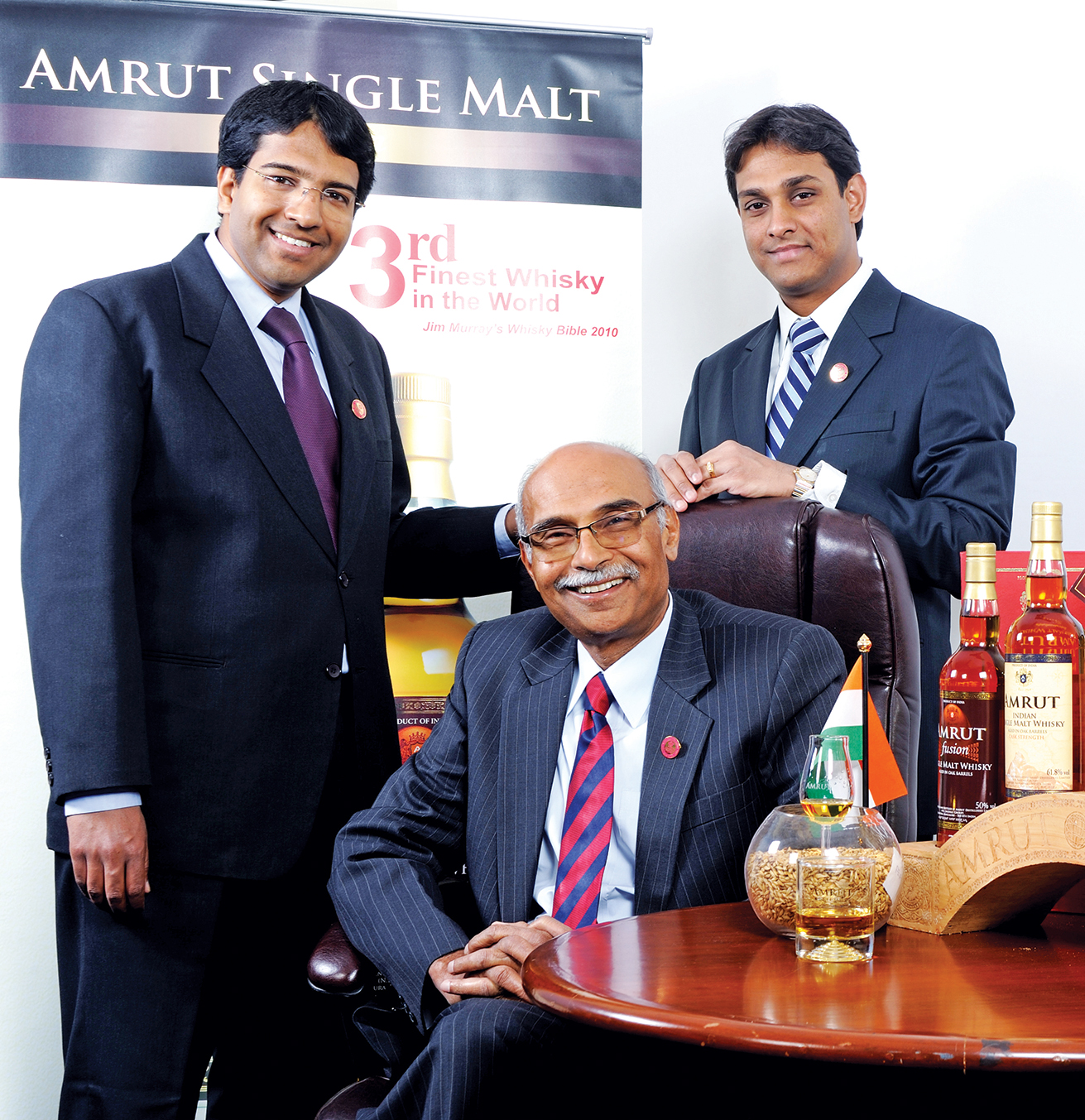
The MBA Thesis That Catapulted Indian Single Malt to the Global Stage

The success story of Indian Single Malt (ISM) whisky in the global market place, pioneered by Bengaluru-based Amrut Distilleries, has been well documented. It is not only an interesting story, but also an inspiring one on how the Jagdales – father-son duo – the late Neelakanta Rao Jagdale and Rakshit Jagdale – hit upon the idea of making a breakthrough in the whisky landscape, dominated by Scotland.

Rakshit Jagdale, in a podcast ‘Expert Talk with Bhavya Desai’ recalls his student days at Newcastle University doing an intense one-year MBA programme. “It was a Sunday morning and I was strolling along Northumberland street, a busy shopping center in New Castle upon Tyne, when my father called up and asked what I was planning to do for my thesis. I said a theoretical project on supply chain management. He said ‘no, no… you should do a practical project’ and suggested ‘why don’t you check whether there is scope to sell Indian single malt whisky in Indian restaurants within Great Britain’ stating that Kingfisher and Cobra beers were quite popular in Indian restaurants there. My father asked me to check out whether there was demand for Indian single malt as an aperitif or a digestive. I said it’s a brilliant idea.”

Miniatures that captured the imagination

Neelakanta Rao Jagdale then sat down with the excise officials in Karnataka and had two cases of miniatures of single malt whisky sent over to New Castle. “It was in June when exams were going on. I went over to the Customs bond and duty paid and cleared one case. The packaging was very rudimentary with a black and white label with simple words ‘Amrut’. We knew our product was exceptionally good. The colour of the whisky was good, dark enough and natural. We don’t add any caramel, it is 100% natural. My father had sent 300 miniatures of 60 ml each in two boxes. It was a live project for the company. I did a lot of my survey in New Castle, Edinburgh in Scotland and in the Midlands. I visited several Indian restaurants and bars in Scotland and the response was amazing. Everybody liked it. Some said it’s a 10-year old whisky, some said its Irish, when I said it was Indian, it was a jaw dropping moment.”

On returning to India, Rakshit presented the project to the family board. “It took us two years to conform to the packaging standards of the European Union and on August 24, 2004, we launched Amrut in Café India in Glasgow. That is how the journey of Indian Single Malt whisky began.”

Making the Grade in Whisky Bible

Not to sit on these laurels, they set off on taking it to the world, creating Amrut Fusion which was next level to the Classic Indian Amrut. “Fusion is a completely different product. It is a combination of peated barley and unpeated barley, the former coming from Scotland and the unpeated from India. It is an 80:20 ratio. My father felt that as the Indian palate is accustomed to little bit of peat with Johnnie Walker Red Label and Black Label, they would like the combination. That was running in his mind.”

Explaining the process, Rakshit mentioned, “Fusion is matured for a longer period, five to five and a half years. The base malt, both peated and unpeated, is matured for four years and then we marry them and mature it again for nine months to one year, which gives it not only depth, but also complexity of flavours. When Jim Murray first savoured it in 2009 and found it unique and said there was no other product in the world that had this kind of combination. He loved Amrut and gave 97 of 100 in his Whisky Bible in 2010 and ranked it as the third finest whisky in the world.”

From humble beginnings in 1948 as a simple bottling company, Amrut is a name to reckon with. It moved on early into distillation and premiumisation and that has paid dividends. “We have reasonably come a long way. We have grown organically and we are happy with progress we have made.”

This is the third generation of the Jagdale family which is running the business, started by Radhakrishna Rao Jagdale in 1948. The fourth generation is getting ready and Rakshit mentions that ‘the time is right to discus with his son and niece to find out if they have any interest, prima facie, in carrying forward the rich legacy of my grandfather and father.”