
Renowned for its rich history, complex flavours, and timeless elegance, Scotch whisky has long been regarded as the pinnacle of distillation craftsmanship. The world’s love for Scotch is unmatched, more Scotch whisky is enjoyed globally than American, Japanese, and Irish whiskies combined. In 2024, Scotch whisky exports reached £5.4 billion, with an astonishing 43 bottles shipped every second to markets across the world.
Representing over 90 companies, from global spirits giants to family-owned distilleries and emerging producers, the Scotch whisky Association (SWA) is the principal voice of an industry that accounts for the vast majority of Scotch production. Its mission is clear: To secure a sustainable and thriving future for Scotch whisky.

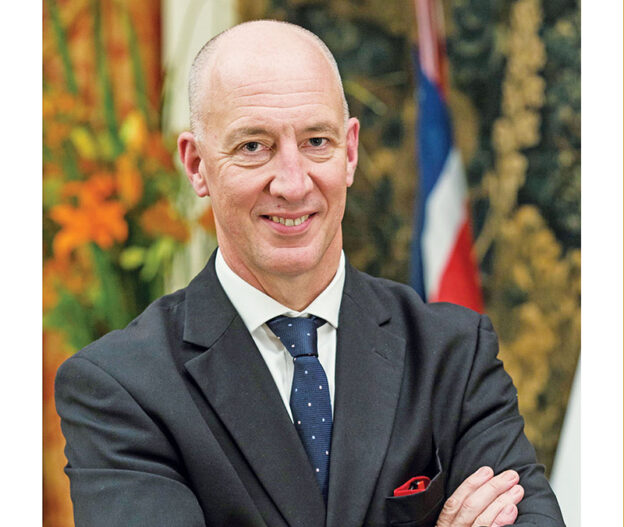
In this interview with Ambrosia, SWA Chief Executive Mark Kent discusses the challenges and opportunities that lie ahead for the industry in India, particularly in the wake of the landmark Free Trade Agreement between the United Kingdom and India.
With the UK–India FTA set to halve the current 150% tariff on Scotch whisky when it comes into force in 2026, how does the Scotch whisky Association expect this landmark agreement to reshape export growth, market access and industry collaboration with Indian producers over the coming decade?
The UK-India free trade agreement has the potential to be transformational for many Scotch whisky producers in the coming decades. Scotch whisky’s largest export market by volume, India is also the biggest whisky market in the world, and Scotch has the potential to grow its share over the long term as the FTA comes into force. The current 150% tariff, which will halve once the deal enters into force in 2026, has been a significant barrier for many Scotch Whisky producers in accessing this important developing market.

The growth opportunities for the Scotch category in India has seen the SWA campaigning for a UK-India deal for many decades. Our current focus is on the deal coming into force, and on Scotch whisky producers—whether they are currently exporting to India, or are planning to—getting the support needed here at home, which will enable them to grow sustainably and develop their offering in what is a complex and vast market. The Indian market is already well educated in Scotch whisky and is forecast to keep growing over the coming years across multiple categories.
We anticipate that the FTA will, over time, increase diversity of choice for Indian consumers as more Scotch whisky producers enter the market. It will also boost opportunities for growing bulk exports, which are either bottled in India or used as an ingredient in Indian Made Foreign Liquor (IMFL) products, strengthening an already-established spirit of collaboration between the Scotch whisky sector and Indian producers. There is real potential for the FTA to signal an era of strategic partnership between whisky sectors on both sides, and we’ll look to collaborate further with our counterparts in India on issues that will support each of our industries.
How is the SWA working with both governments and industry partners to ensure smoother market access for Scotch in India—especially given the state-by-state regulatory complexity—and to help distillers, including smaller companies, benefit from the FTA?
Ensuring smooth market access, not just to India overall, but to individual states will be particularly important over the coming years, particularly for smaller companies for whom India is a huge and complex market. The SWA is working with Indian industry colleagues and in-market trade bodies, as well as the UK and Indian Governments, to ensure a smooth implementation of the deal that supports the needs of businesses and consumers in both markets. The UK Government have championed the Scotch whisky industry’s growth prospects through negotiations, and the implementation of the FTA will be a positive opportunity for Scotch whisky distillers to tap into the market.
Alongside business growth opportunities, the FTA has the potential to increase revenue for the Indian government at federal and state level through an increase in sales as the tariff is lowered, so it is in everyone’s interest to ensure that the deal can come into effect quickly. The SWA’s recent visits to India, in October and early November, focused on creating the building blocks and relationships for a smooth and fair implementation of the deal for both markets.
How is the SWA working to deepen Indian consumers’ understanding and appreciation of Scotch whisky while supporting both large and small Scotch producers as they introduce new expressions in a rapidly evolving market?
As the world’s largest whisky market, the Indian consumer is already very discerning, so a lot of groundwork in educating the market on Scotch is well established. While the presence of different Scotch whisky companies varies in the Indian market depending on their size and years in business, there are opportunities to grow consumers’ appreciation of Scotch as new expressions and brands are introduced to the market. As a trade body, we look to support all our members, who range from multinational companies to small independent distillers, to realise their ambitions in the Indian market regardless of scale.
The tariff reduction in the FTA will also benefit the domestic Indian industry and drive investment in India by providing greater access to bulk Scotch whisky used in IMFL products or for bottling. The growth of Indian Single Malts, both in India and the UK, is testament to the premiumisation of the Indian market, and the Scotch whisky industry is committed to working with Indian industry partners to deliver these shared opportunities. The FTA is a signal of that collaborative approach, and we want sectors on both sides to thrive as a result.
Indian whisky brands are growing rapidly, both at home and abroad. How does Scotch plan to differentiate and retain its heritage appeal in a market where Indian whiskies are gaining sophistication and global recognition?
It is really positive to see such interest in the entire whisky category in India, with Indian Single Malts also growing in popularity in the UK, and this growing appreciation can only be a good thing for the entire category. Both categories are benefiting from increased investment between the UK and India, and this will be further driven by the FTA, as well as the partnerships between the Indian and Scotch industries. As consumers in India explore the whisky category, Scotch is a natural step on the “whisky journey” due to its unique heritage, provenance and quality. Scotch whisky’s current share of the Indian whisky market is around 3%, and even as this grows over time through the implementation of the FTA, it will still retain a relatively small portion of the market. What’s exciting for our sector is the potential to increase the range of Scotch whisky brands and expressions available to the Indian consumer, which enhances the global appeal and reach of the Scotch category overall.
Sustainability is increasingly important for global consumers. How is the Scotch whisky industry integrating sustainability into its export growth strategy in India, particularly given the environmental challenges of expanding in new markets?
The Scotch whisky industry is committed to long-term sustainability from grain to glass, and our sector’s work to decarbonise our operations and supply chain run in tandem with our ambitions for growth. Ongoing dialogue with regulators here in the UK and around the world is important to ensure that the industry’s forward planning aligns with policies that address climate impact, always bearing in mind external factors such as the development of key growth markets.
How is the Scotch whisky industry working with Indian partners to explore deeper collaborations—whether in production, standards, sustainability, or tourism—and to unlock new cross-sector opportunities as the FTA opens up the market?
The Scotch whisky industry is keen to work with our colleagues in India on shared challenges and cross-sector opportunities for growth in both markets. This can include work to strengthen the definition of single malt and guarantee standards for consumers, to exploring the opportunities that a greater variety of bulk Scotch whisky can offer to Indian importers. During our recent visit to India, we met with representatives from across the Indian industry, discussing how we can continue to develop our partnerships to support sustainable growth and deliver on shared objectives, and we hope to be able to continue these conversations in Scotland next year. From driving sustainable production methods and encouraging responsible alcohol consumption, to tourism and hospitality promotional activities, collaboration should benefit and futureproof industries in both the UK and India and give consumers a greater access to the fantastic range of Scotch whiskies that the sector has to offer.