Tag Archives: hospitality industry

World Class India 2026, bartending competition returns

  • Bartending competition by Diageo India nurtures the rise of a new bartending generation
  • India, Nepal and Sri Lanka come together under one platform for the first time
  • 11-city roadshow across India, Sri Lanka and Nepal sets out to find the next voice that will shape Indian mixology 

There was a time when India’s cocktail culture was defined by a handful of bars, spirits, and bartenders who dared to push boundaries. Today, that world has changed dramatically. Over the last few years, World Class India has become the engine powering one of the country’s most exciting hospitality movements, shaping talent and transforming how India drinks. As the globally renowned bartending competition by Diageo heads into its 12th edition in 2026, it opens a new chapter for Indian bartending. 

India’s cocktail landscape has shifted in remarkable ways. Bars across Mumbai, Delhi, Bengaluru, Goa, Kolkata, and beyond have moved from spaces of experimentation to full-fledged innovation labs. Storytelling, science, hospitality rituals, and guest experience now define the benchmarks of excellence. But the real story is in the programmes designed to support the bartenders who are rewriting what India’s cocktail future looks like. 

How does World Class work? 

World Class follows a multi-stage format designed to identify and elevate the country’s most promising bartenders. The journey begins with an online submission round in which bartenders share their cocktail concept, recipe, and inspiration. From these entries, the top 100 are selected to participate in regional challenges across key cities, where they are judged on flavour, technique, storytelling, and hospitality. The highest-scoring bartenders from each region advance to the national stage, where the top 16 compete in a series of themed rounds from speed and efficiency to flavour innovation and community-led concepts.

These challenges test not just skill but creativity and personal expression. Ultimately, three finalists emerge in the national showdown, where they present signature serves, complete experience-led challenges, and showcase their individual bartending philosophies. One winner is crowned World Class India Bartender of the Year and represents the country at the Global Finals in Dubai in September.

The 2026 roadshow is already underway, taking the programme directly to bars and communities across the region. In recent times the team has travelled through 11 cities, including Mumbai, Bengaluru, Delhi, Goa, Kolkata, Colombo, Kathmandu, Hyderabad, Pune, and Guwahati, engaging hundreds of bartenders in immersive workshops, flavour modules, and hands-on mixology sessions.   

World Class India 2026 deepens this transformation with a comprehensive, year-long programme designed to help bartenders grow, experiment, and find their voice. Beginning with education, the team has introduced a ‘flavours module’ which breaks it down into science, memory, and emotion, encouraging bartenders to build cocktails from the palate up rather than relying on theatrics. It expands through community, past winners and alumni return as mentors, judges, and leaders—bringing global expertise back into India’s bar culture.

Aanchal Kaushal, VP, Customer Marketing, Diageo India, said, “Every city has revealed one thing—South Asia’s bartending culture is evolving at extraordinary speed, driven by talent that is hungry to learn, experiment, and push the boundaries of flavour and hospitality. From metropolitan bars to rising neighbourhood spaces, we are travelling across India, bringing training, mentorship, and experiences to find the next voice that will shape Indian mixology.” 

HPMF Celebrates 15 Years of Transforming Hospitality Procurement

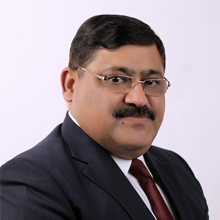
Mohan Deshpande, HPMF Chairman

The Hospitality Purchasing Managers’ Forum (HPMF) marked its 15th Foundation Day recently, celebrating a journey that has reshaped hospitality procurement across India and several international chapters. Founded in 2010, the Forum has grown into one of the most respected procurement communities, bringing together professionals, suppliers, and industry partners under one collaborative network.

HPMF Chairman Mohan Deshpande noted that HPMF’s 15 years represent a powerful story of ethics, collaboration, and growth. “What began as a small initiative is today a movement that influences procurement strategy across the country.”

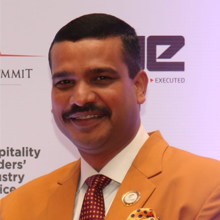
Dr. Sanjay Goyal, Vice Chairman

Vice Chairman Dr. Sanjay Goyal emphasised HPMF’s strategic influence, noting that it has transformed procurement into a knowledge-led, technology-enabled, sustainability-driven discipline. He highlighted the Forum’s role in promoting Atma Nirbhar Bharat and Make in India by empowering Indian suppliers and supporting economic self-reliance. He reiterated the focus on building global-standard procurement professionals.

Dr. Nitin Nagrale, Founder & General Secretary

Founder & General Secretary Dr. Nitin Nagrale said HPMF was envisioned as a platform to unite procurement professionals, and enhance industry capabilities. The Forum contributes to national missions, supports local industries, and sets new benchmarks in global procurement practices.

Over the past decade and a half, HPMF has strengthened the procurement ecosystem through knowledge-sharing, capability development, ethical sourcing, and sustainability advocacy. It has worked to elevate industry standards, encourage cross-industry collaboration, and create a unified platform for hospitality professionals and supply partners. The Forum’s work mirrors India’s national development priorities, integrating progressive procurement practices into broader economic and sustainability goals.

Aligned with national missions, HPMF has championed Make in India by motivating members to discover, support, and source from homegrown manufacturers. It has further advanced the vision of Atma Nirbhar Bharat by empowering MSMEs and local suppliers to build world-class competencies. The Forum has contributed to the Skill India Mission through training programmes and knowledge platforms that raise professional capabilities across the sector. It has promoted Digital India ideals through its advocacy for automation, digital procurement tools, and enhanced transparency. In addition, HPMF has been a strong supporter of Swachh Bharat and sustainability-led initiatives focusing on responsible sourcing, waste reduction, and eco-conscious practices.

HPMF’s 15-year track record reflects a series of milestones: a growing community spanning India, the Middle East, and Asia-Pacific; 12 National Conventions held across Indian destinations; engagement through panel discussions, training sessions, white papers, and supplier development forums; support for MSMEs, startups, and local manufacturers; and ongoing efforts to benchmark and elevate the standards of hospitality procurement.

As part of its forward-looking agenda, HPMF has launched the ambitious Project 100 – 100 Activities in 1000 Days. This initiative aims to deliver long-term impact through capability-building programmes, standardisation measures, supplier development initiatives, sustainability frameworks, digital transformation guidelines, and youth-focused skilling efforts. The project is designed to redefine procurement practices and help build a strong pipeline of future-ready professionals.

Woodpecker Partners Madhya Pradesh Travel Mart 2025

 The Madhya Pradesh Travel Mart (MPTM) 2025 which concluded recently saw over 400 travel agents from India and 27 participate and Woodpecker was a beverage partner, hosted at the Jehan Numa Palace, Bhopal.

The evening showcased Madhya Pradesh on a global platform highlighting the heritage and potential of its tourism. It also displayed a curated culinary spread celebrating the region’s cuisine, and an open-air experience where guests mingled, accompanied by Woodpecker’s refreshing brews.

Deepak Arora, CEO, SOM Group of Companies, said, “Woodpecker’s partnership with the Madhya Pradesh Travel Mart is a celebration of Indian entrepreneurship, craftsmanship, and culture. We are proud to be part of an event that not only showcases Madhya Pradesh’s tourism potential, but also connects India with the world. Jehan Numa Palace provided the perfect setting for Woodpecker, a brand born in India yet global in its spirit to complement the evening’s energy and elegance. The gala dinner became one of the most talked-about highlights of MPTM 2025, where state officials, global travel professionals, and international media representatives shared experiences over fine food and craft beverages. It symbolised the essence of modern tourism, a meeting of ideas, cultures, and shared aspirations for sustainable growth. We are happy to be a part of such an initiative by the Govt. of Madhya Pradesh. With its continued commitment to premium experiences, Woodpecker aims to engage with more lifestyle and tourism-led platforms that resonate with the brand’s philosophy- refreshing, youthful, and proudly Indian.”

No Liquor on May 21 in Karnataka, Industry Opposes Constant hikes in excise duty and license fee

  • As per draft notification the annual license fee has been increased from ₹27 lakh to ₹54 lakh
  • For distilleries and warehouses, it has been increased from ₹45 lakh to ₹90 lakh

Distilleries and liquor shops in Karnataka are up in arms against the Karnataka Government which has been raising excise duty and license fees at regular intervals. As a mark of protest, they have called for a strike on May 21 and retailers have decided not to purchase liquor from government depots.

On May 15, yet again, the Karnataka government issued a draft notification to double the license fee on May 15. Organisations such as the Karnataka Wine Merchants Association, the National Restaurant Association of India, and the Karnataka Brewery and Distilleries Association have opposed this move and have given a call to all liquor vends in the state to close on May 21. They said across the State almost 12,000 licensed liquor shops will down the shutters.

According to the draft notification the annual license fee has been increased from ₹27 lakh to ₹54 lakh. For distilleries and warehouses, it has been increased from ₹45 lakh to ₹90 lakh. The new fees will come into effect from July 1.

The associations said the repeated hikes by the government had rendered the business unviable, leading to closure of many liquor shops.

The Congress-I government has been increasing excise, milk prices, flat registration charges etc. as to fund the many freebies it announced during the elections. Excise officials say that the fee was increased this year to make up for the shortfalls of the previous financial year. The revenue target for the financial year 2024-25 was 38,525 crores. But only 35,530 crores could be collected. Retailers said the new license fee hike will hit budget segment sales and small outlets. They said that nearly 40 pubs in Bengaluru closed last year as doing business was becoming difficult.

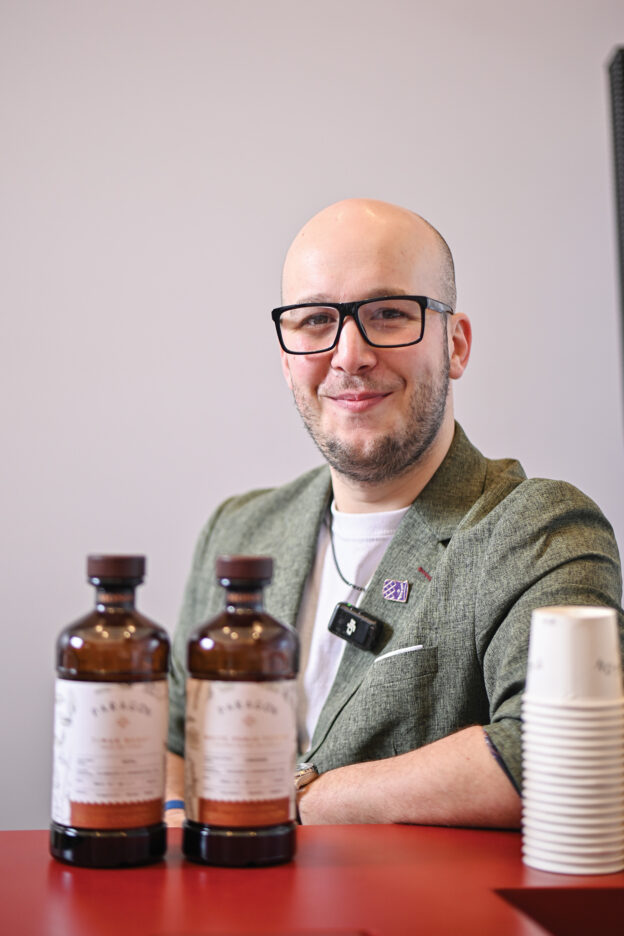
Tony Kousoulou

Mixing It Up with Tony Kousoulou

From whisky distilleries to award-winning bars, Tony Kousoulou has spent over 15 years figuring out what makes a great drink work. Whether consulting on cocktail menus or experimenting with molecular mixology, he has always had a knack for blending flavour with technique. In 2021, he joined MONIN, swapping the late nights behind the bar for a role that lets him shape the future of drinks on a bigger scale. As Global Advocacy Beverage Expert for Paragon, he now works with bartenders around the world, helping them make the most of MONIN’s range; especially the botanical concentrates that are shaking up cocktail-making. Currently in India, Tony is working with some of the country’s best mixologists to explore new possibilities with Paragon. We sat down with him to chat about his journey, the changing bar scene, and why coriander keeps turning up in unexpected places.

You’ve had an incredible journey in the hospitality industry, from working with gin and whisky distilleries to consulting for award-winning bars. What led you to MONIN, and how has the transition been for you?

I had always used MONIN products throughout my career, so I was fairly familiar with the range MONIN offered, but the idea of working for a brand that shared similar values to mine—while making quality products and maintaining a fantastic CSR policy—was the biggest factor that appealed to me.

I had also worked my last bartending gig throughout the COVID-19 pandemic, and once restrictions started to lift, I decided to close that chapter of my career and focus on brand-related work. I’ve now been with MONIN for almost four years and haven’t looked back once.

Regarding my transition, I joined the company towards the end of the pandemic, when things were fairly quiet. This gave me plenty of time to familiarise myself with the whole range, which includes over 250 unique products.

MONIN is a globally recognised brand in the beverage industry. How do you see its role evolving in the world of cocktails and mixology today?

The staffing crisis in hospitality is not just a local issue but a global one. We’re seeing lower staff retention, fewer training opportunities provided by venues, and sadly, less passion behind the bar.

We’re aligning ourselves with a more advocacy-based approach, championing creativity while helping venues upskill and develop their staff. As an example, we’ve developed a training programme called MONIN-FUSION, which explores multiple ways to create in-house products behind the bar using a stable and consistent base (our MONIN products). This programme covers everything from foams, liqueurs, super-blends, garnishes, cordials, and much more.

With bartenders constantly experimenting with flavours, how are MONIN products being received in high-end bars across the UK, Europe, and India? Have you seen a shift in how mixologists use them?

In the past, many high-end venues dismissed commercially made syrups altogether. However, in recent years, through brand training and relationship-building, we’ve made significant progress.

One of the biggest challenges with high-end venues is their pursuit of innovative flavours while maintaining consistency. You could easily create the best possible version of a wild strawberry syrup, but can you replicate it exactly a week later? Will the sugar content be identical? Will the colour hold? Most importantly, will it taste the same?

With global supply issues and increased seasonality, our products offer reliability; whether you open a bottle in January or in the middle of August, the flavour remains the same.

Paragon, the latest addition to MONIN’s portfolio, is all about botanical concentrates. What inspired this range, and how do you see it changing cocktail-making?

Paragon is all about the pursuit of excellence while highlighting flavours and regions that are often underrepresented in the drinks and food industry. The idea was to bring these outstanding flavours—often found in remote areas—into the hands of bartenders.

We use a combination of acids and extraction methods to create a liquid that is perfectly balanced between sweet and sour, with an intense burst of flavour. This means bartenders can create drinks with the complexity of 8-10 ingredients while using only a few. All thanks to Paragon!

Among the ingredients in the Paragon range, white Penja pepper and Timur berry stand out for their unique profiles. What are some of the most exciting ways you’ve seen them used in cocktails?

There are quite a few to choose from! The most exciting ones I’ve seen play into the natural flavour profiles of the peppers themselves.

For example, Timur berry has bright notes of pink grapefruit in both aroma and taste, with a subtle numbing spice in the background. I’ve seen many variations of the Paloma using this as a substitute for both agave and pink grapefruit juice. Because of the nature of the liquid, you essentially get a completely clarified Paloma with no compromise on flavour; something that leaves guests wondering how it was achieved.

What’s the biggest challenge in introducing new flavours or products to bartenders and the alcohol industry? How do you overcome it?

I wouldn’t necessarily call it a “challenge”, as it’s part of my role at MONIN. However, we are known for pushing the envelope with innovation across all our ranges.

This sometimes means we introduce flavours or products that most people haven’t tried before. It’s on us to get out there, advocate for them, provide knowledge and training, and immerse our customers in the possibilities these flavours offer. It’s a lot of work, but it’s essential for bringing world-class products to bartenders.

You’ve worked with some of the finest names in the industry. Can you share a career highlight or an unforgettable product innovation that has stayed with you?

Not directly related to me, per se, but seeing many amazing people I’ve worked with over the years go on to open their own venues or take on key roles in global brands has been a personal highlight. Career growth is great, but it’s even better when you see your friends thrive.

With India being one of the fastest-growing markets for premium spirits and craft cocktails, what trends have caught your attention during your visit?

If I had to name just one, it would be the Picante. Back home in the UK, it’s growing in popularity year after year, but it’s often made in multiple ways, most without coriander, which is actually a key ingredient.

I’ve seen some really interesting takes on Picantes throughout my travels in India, all staying pretty faithful to the original concept. Bonus points for all the fabulous whisky highballs I’ve tried. It’s my go-to drink.

Are there any exciting expansions or new MONIN products in the pipeline that bartenders and mixologists should look forward to?

We have a new factory opening in early 2026. Once fully operational, it will allow us to introduce more region-specific flavours…think raw mango and spiced jamun. I can’t reveal too much yet, but exciting things are in the works!

What’s next for you at MONIN? Any special collaborations or projects in the works that will excite the beverage industry?

I’ve a few things I’m working on internally, mainly new product developments for the UK market, which may well launch globally if they prove to be successful. I’m always open to suggestions and ideas to present to our R&D department, so I encourage people to reach out.

Besides that, hopefully, some more travel later in the year. I’ve always wanted to visit our Yuzu plantation in Portugal. Maybe even make it to Athens Bar Show?

Rapid-Fire Round

1. If you had to create a cocktail inspired by your personality, what would it be called and why?

The Maverick. A lot of my colleagues poke fun at me for straying from classic expectations of what drinks should be.

2. One MONIN flavour you think is underrated but has massive potential?

Guava. It works well with almost any spirit and is by far my favourite of the tropical/exotic flavours we have.

3. If you could have a drink with any legendary bartender—past or present—who would it be, and what would you sip on?

Sasha Petraske, hands down. I’ve read ‘Regarding Cocktails’ cover to cover numerous times and had the pleasure of going to Milk & Honey in London a couple of times before it closed due to COVID-19. Easily some of the best approaches to cocktails and service I’ve ever seen.

4. What’s the strangest or most unexpected ingredient you’ve ever mixed into a cocktail?

Clarified pig’s blood. Please don’t ask me to elaborate. Those were dark times.

5. Describe your India visit in one drink. What would it be, and what ingredients would it feature?

Likely some form of a coriander-spiced whisky highball; a combination of the two drinks I’ve enjoyed the most here (Picante + Highball). Probably with a dash of Paragon Timur.