Yearly Archives: 2022

Indri – The Indian Single Malt

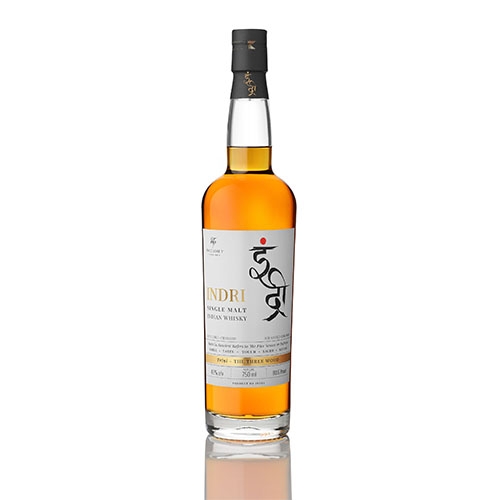
Indri – Trini is the first Single Malt expression to be launched from the house of Piccadily, which will be available to select customers in India, the US and Europe by Christmas this year. Trini has been created by its Master Blender, Mr Surrinder Kumar, who has a rich experience of more than 40 years in the Single Malt Industry. This malt manufacturing powerhouse is also set to bring to us soon some new variants of the exotic Indian Single Malt ‘Indri’.

Indri: A Taste through the Five Senses

Indri is a single malt whisky that is aptly named after the area in which it is situated. It is also synonymous with ‘Indriya’ or the five Indris responsible for Touch, Taste, Smell, Sight, Sound. Indri professes to pleasantly evoke all your five senses and make you enjoy the smooth golden liquid on the palate and the burst of flavours that soon follow. Indri – Trini is the first Indian whisky to be launched using the three-wood expression, ex-bourbon, ex-French wine and PX Sherry casks.

Indri single malt has a tropical good taste and it is not harsh. The name Indri is used very thoughtfully because it reflects the senses used in whisky-making at a distillery. Graeme Bowie, who is the Master Distiller and has 32 years of rich experience in the Scottish Malt Industry.

Flavour Profile of the Whisky

Nose: Hints of black tea, caramelised pineapple with a whiff of oak from the barrel comes forward, followed by vanilla and honey from the bourbon oak and traces of spiced tannins from the European oak, finally topped up with vinous raisin and sweet sherry notes. Gentle and mellow on the nose.

Taste: Elegant richness, smooth and warm on the sides of the mouth. Gentle spice and wood characters come through, followed by nutty flavours and hints of burnt pineapple, citrus and raisins.

Finish: A subtle and balanced finish where each flavour compliments one another without dominating. A smooth and long after taste with sweet fruity flavours coming up from the warmth of the throat, lingering long after.

The All-New Royal Challenge: A Smooth & Rich New Blend

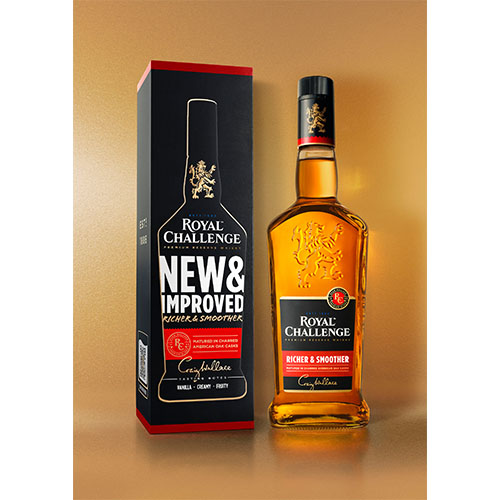
Royal Challenge Whisky, India’s most aspirational whisky brand that’s known to challenge the norms, recently unveiled its brand-new renovation. The new Royal Challenge Whisky has a completely new liquid and a striking new pack that will stand out on the shelf.

Diageo India has created a truly unique blended whisky dedicated to the spirit of Delhi. The all-new Royal Challenge whisky is a perfect fusion of select imported scotch blended with perfection to deliver a sweet profile and subtle notes of vanilla, that will give the consumers a richer and smoother drinking experience.

With the vision to be an iconic millennial brand, Royal Challenge’s new pack has been re-designed for a premium look-and-feel and an elevated experience – the Lion sigil and red and black colours represent the bold and fearless spirit that the brand exemplifies. Further, with this renewed blend, Royal Challenge has evolved to be the most accessible and preferred brand for the younger generation.

Speaking about the renovation, Ruchira Jaitly, VP of Marketing and Prestige portfolio head said, “Royal Challenge is a brand which has always believed that, to build a better tomorrow, we must challenge the stereotypes of today and reinvent the rules. With the vision to become the first whisky of choice that appeals to the people of Delhi, there was a need to reinvent and offer an experience that perfectly blends into the changing consumer palettes and choices. I am excited with what is in store and look forward to the people of Delhi embracing an all-new refreshed Royal Challenge as they have always done.”

The launch of the all-new pack will look to explore an integrated communication strategy in Delhi that builds on this new positioning.

The phased launch will see the refreshed pack on shelves across the city this Festive season.

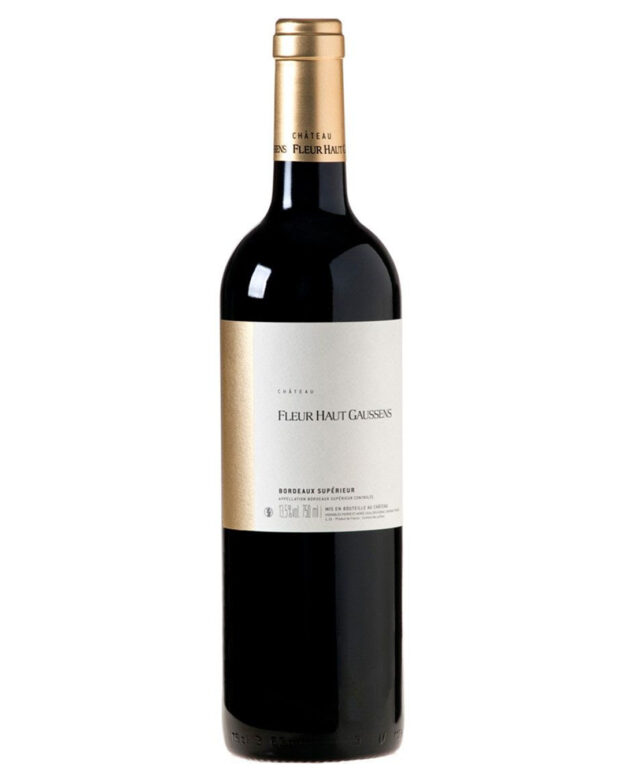
Château Fleur Haut Gaussens looking to launch in India

Château Fleur Haut Gaussens, located in Vérac, not far from Saint-Emilion, is the result of the heritage of a family of winegrowers. It was in 1996 that Hervé Lhuilier created it. Over the years, he has managed to keep a dynamic company, by carrying out work to improve the technical tool. The winemaker now cultivates the 40ha of vines on the property, spread over 27 plots, combining tradition and innovation. Concerned about the environment and the ecosystem have adopted a reasoned management of the vines and are certified Hight Environmental Value level 3.

The wines, recognised throughout the world with numerous distinctions, are worked according to the criteria of the PDO Bordeaux Supérieur. They distinguish themselves by the production of atypical wines. Indeed, offer a modern approach to Bordeaux wine through the production in 400L barrels of varietals wines with an access profile on the fruit such as La Bergeronette a 100% Cabernet Franc, its annual production is around 14,000 bottles.

They obviously offer blended wines. Château Fleur Haut Gaussens produces around 165,000 bottles per year and has been the bestseller for 20 years now. It results from a blend of a majority of Merlot with a hint of Cabernet Franc, Cabernet Sauvignon and Malbec. This is aged at 50% in French oak barrels for 6 months. This is a modern Bordeaux wine that knows how to (re) discover the wines of the region.

Their inventory management allows them to offer you ready-to-drink vintages. Their wines offer a very interesting quality-price ratio, and many partners already trust them in more than 20 countries.

In parallel to their wine activity linked to Château Fleur Haut Gaussens, in 2018 they created “Le Couturier du Terroir”, a trading company attached to their family-run wine estate. They developed a range of wines from different horizons. Thanks to their various hats, they can thus offer their red Bordeaux Supérieur wines Château Fleur Haut Gaussens ranked in the top 5 of the PDO but also entry-level Bordeaux and other products according to your needs.

Oaksmith launched in Delhi

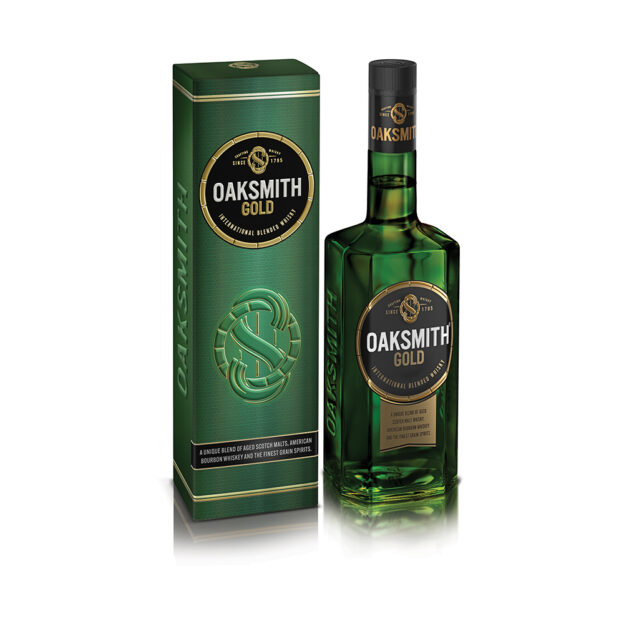
Oaksmith, India’s First Truly International Blended Whisky, crafted by Suntory’s Chief Blender Shinji Fukuyo, creator of iconic Japanese whiskies Hibiki and Yamazaki – combines the finest Scotch Malts with the smoothest American Bourbons using world class Japanese blending techniques, bringing the best of East and West to Indian consumers

.

Beam Suntory, a world leader in premium spirits, has launched Oaksmith, India’s first International Blended Whisky in Delhi. After a successful launch in December 2019 in Maharashtra and Telangana followed by rapid expansion in West Bengal, Goa, Assam, Chandigarh, UP and Karnataka, the iconic brand is now available in Delhi with both blend variants – ‘Oaksmith Gold’ and ‘Oaksmith International’. The brand has delivered 300,000 cases since its launch in India.

Oaksmith has been created by world-renowned Shinji Fukuyo, Chief Blender, Suntory, the founding house of Japanese Whiskies – with world-class Japanese craftsmanship, blending high quality Scotch Malt whiskies and smoothest American Bourbons to build a recipe that is unique and designed taking inspiration from the Indian palate. From seed to sip, the whisky is meticulously crafted to achieve a blend like no other resulting in a bold spirit that is rich on the nose yet approachable and well balanced with a bright, smooth and unexpectedly long finish. Launch of Oaksmith Gold and Oaksmith International whisky in Delhi is key to Beam Suntory’s growth strategy, and this expansion signifies the importance of India to the global spirits company.

“We are delighted with the response that the blends of Oaksmithhave received from consumers since it’s launch. The growing premiumisation of the Indian market and the appreciation for finely crafted spirits made this the right time to expand the brand across various markets in India, finally bringing it to the nation’s capital – New Delhi. Delhi’s rich history blended with modernity adorned with touches of its traditional heritage attracts people from across the country and the world. We see a growing opportunity for high quality, world class spirit brands and look forward to receiving the same overwhelming appreciation for Oaksmith Gold and Oaksmith International here,” says Neeraj Kumar, Managing Director of Beam Suntory India.

India Travel Retail Market

GROWTH, TRENDS, COVID 19 IMPACT AND FORECASTS (2021-2026)

Travel Retail is the next great frontier of the Indian Retail Sector, and as people’s incomes rise, India’s position as a business powerhouse and tourist destination will also continue to solidify, leading to the growth and prosperity of this industry.

Covid-19 has all but wiped out the travel industry in India and the passenger numbers continue to be affected in India even in 2021 owing to existing lockdowns and restrictions in the wake of the second wave of the pandemic. In 2020, less than 3 million foreign tourists visited India with a dip of around 75% when compared to 2019 due to travel restrictions imposed. The Covid-19 outbreak is impacting duty-free shopping behaviour, spend, and browsing likelihood on a category level, with this being particularly the case with luxury items in India. As a result of the pandemic, shoppers have moved to online shopping in greater swathes than before, and several travel retail operators, including Delhi Duty-Free, have introduced new online retail services facilitating home delivery of travel retail exclusive and duty-absorbed products.

A combination of a large and growing population, increasing air connectivity, inbound tourism, and the growing disposable incomes and propensity to travel internationally by India’s middle class are some of the major factors fuelling the growth of India’s travel retail market.

As per a research, it is estimated that nearly 80% of the country’s duty-free shoppers are Indians which is quite unlike other markets in the region, such as Korea or Thailand, where most duty-free sales are from international travellers rather than local travellers. However, this is likely to change with the growth in international tourism in the country. While India accounts for only 4.8% of the Asia Pacific region’s total international tourist arrivals, its year-on-year growth rate has been well above the region’s average in recent years and as of 2019, India attracted nearly 17.9 million international tourists. The changes by the Indian Government to its e-visa regime are simplifying procedures, making it friendlier to international tourists and these developments will further help in the growth of India’s travel retail market.

The growth of e-commerce can be seen as part of a broader digitalisation of the travel industry in India and especially airports. This is in part due to younger profiles of travellers, growth of low-cost airlines, and airport privatisation. The introduction of Goods and Service Tax (GST) has decreased the cost and time of logistics and interstate transport which has made the Indian retail market more lucrative for foreign investors who can invest in single brands, multi brands, wholesale/ cash and carry, e-commerce and duty free.

Travel Retail is commonly used to describe the duty-free retail industry, in addition to all retail activities dedicated to travellers and tourists. A complete background analysis of the Indian Travel Retail Market which includes an assessment of the economy, market overview, market size estimation for key segments, and emerging trends in the market, market dynamics, and key company profiles are covered in the report. The Indian Travel Retail Market is segmented by Product Type into Fashion and Accessories, Wine & Spirits, Tobacco, Food & Confectionary, Fragrances and Cosmetics, Others (Stationery, Electronics, Watches, Jewelry, etc.) and by Distribution Channel into Airports, Airlines, Ferries and Other Distribution Channels. The report offers market size and forecasts for the Indian Travel Retail Market in terms of value (USD Billion) for all the above segments.

Airports Constitute the Major Retail Channels in India’s Travel Retail Market

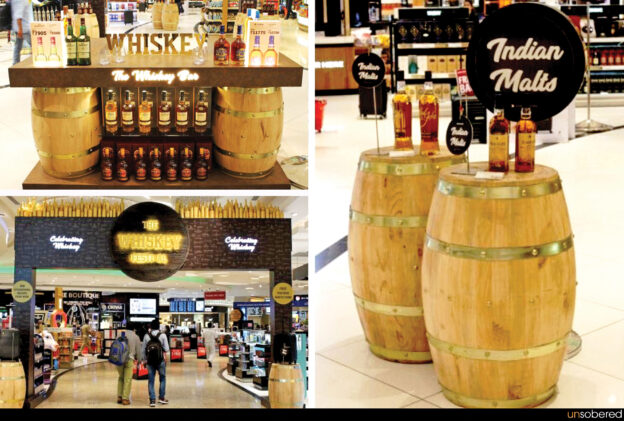
Nearly 50% of an international airport’s revenue is generated from duty-free and travel retail activities and in terms of sheer size and range offered, the duty-free retail areas at Indira Gandhi International Airport in Delhi, Chhatrapati Shivaji International Airport in Mumbai are nothing less than high-end malls. The largest duty-free area in India is currently operated by Mumbai Duty-Free at Mumbai International Airport Limited (MIAL) followed by New Delhi International Airport Limited (DIAL) which is operated by New Delhi Duty-Free Services (DDFS). The duty-free revenue per passenger for New Delhi and Mumbai was the highest in India at USD 11 and 10 per passenger for FY2019.

The future of airport retail is defined by data, omnichannel, and personalisation. Online pre-purchase orders for airport pickup are more popular in the Indian market than anywhere else in the Asia Pacific region and there is a growing response by duty-free operators to the increasing flexible payment, ordering pickup, and delivery needs of customers. Delhi Duty-Free’s ‘Shop and Collect’ plan for instance offers an extra 10% discount to those who pre-book orders at the airport on their outbound journey and pick them upon return.

SWA announces Mark Kent as new Chief Executive

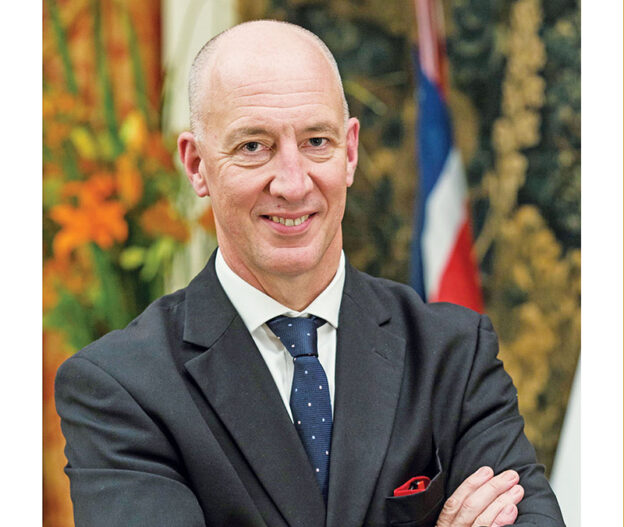
The Scotch Whisky Association (SWA) has announced that Mark Kent, former British Ambassador to Argentina, will succeed Karen Betts as Chief Executive, when Karen leaves the SWA later this year.

Mark joins the SWA following more than three decades with the Foreign, Commonwealth and Development Office (FCDO). Most recently, he served as Ambassador to Argentina from 2016 to June 2021. He also served as the Ambassador to Thailand, Ambassador to Vietnam, as well as roles at British Embassies in Mexico City, Brasilia and the UK Representation to the European Union.

Commenting on his appointment as the ninth Chief Executive in the SWA’s 110-year history, Mark Kent said, “I am delighted to have been appointed as CEO of the Scotch Whisky Association. As a former Ambassador, I know in what high regard the Scotch Whisky industry and the SWA is held worldwide.

“After a challenging period, I’m looking forward to helping the industry to unleash its full potential and enable people across the globe to discover and enjoy our premium and iconic product. The Scotch Whisky industry has a fantastic history, great stories to tell and continues to innovate. I can’t wait to get started.”

Welcoming Mark Kent to the role, Scott McCroskie, Chair of the SWA Council, added, “I am delighted that Mark will be joining the Scotch Whisky Association, to lead the organisation’s and the industry’s next exciting chapter. Mark brings with him an outstanding depth of experience which will allow the SWA to continue to support the industry’s interests around the world.

“We look forward to working with him as the industry looks to make new ground in key growth markets and build a sustainable future for the industry by continuing our push towards net-zero.”

Mark Kent, who will take up the position in January 2022, will take over from Karen Betts, who leaves the SWA in December 2021 to take over as Chief Executive at the Food and Drink Federation.

IndSpirit 2021 Awards underline quality of brands and packaging: Judges

After two years of Covid, Indspirit 2021 Awards evaluation got underway with all seriousness.

It was indeed nice to see the coming together of professionals, after a two year lull, for the Ambrosia wine and spirits tasting sessions, as part of the Indspirit 2021 awards which is happening on December 17 in New Delhi. Five judges for the Ambrosia Alcobev products tasting and four judges for the packaging awards huddled together for two days to judge 252 brands. The eminent jury tasted different brands in all categories of whisky, vodka, gin, rum, brandy, craft spirits, wine and beer and the jury on packaging evaluated on various parameters.

Eminent jury panel

The eminent tasting jury comprised Dr. Binod.K.Maitin, ex-USL and an independent consultant; Graeme Bowie, President – Malt Plant, Piccadily Agro Industries Ltd; Ajoy Shaw, Wine Maker and consultant; Sheetal Kadam, Wine & Spirits promoter and independent consultant; and Bernard Schaefer, a veteran judge from Germany.

The expert packaging jury consisted of Pranav Bhide, Leo Burnett Creative Director; Prof. K. Munshi, former Head of IIT Design department and independent consultant; Dr.Santosh Kshirsagar, Dean of J.J.School of Applied Arts; and Shekhar Ambedkar, Assistant Director and Head of the International Packaging Centre.

Scope for new entrants

The alcobev industry in the country largely comprises of Indian made whisky which accounts for a sizable share in boosting the growth of this sector. Across segments, domestically produced brands account for a higher share of consumer preference and there is still significant scope for new entrants to gain consumer preference.

The spirits industry in India with over 60% preference for whisky, offers great untapped potential for growth. There are several opportunities within the domestic sector markets for Indian whiskies to grow. There is huge country liquor consuming audience base that is seeking better quality products and have been upgrading over the years. India’s relatively young population sees newer individuals/consumers added each year to the legal drinking age – wherein Indian whisky could become the entry point for this audience. There has also been a growth of women whisky drinkers aided by on-premises and retail environments. All of these factors indicate the scope to fully explore the Indian spirits market.

Internationally, markets with a large Indian diaspora as well as those having similar palette to the Indian consumer see a strong preference for Indian whiskies. Some of the world’s top-selling whisky brands come from India and find much consumer love, globally as well.

What the judges have to say about the range

Dr. Binod Maitin says Indian whiskies are predominant among the top whisky rankings based on volume of sales. Indian whiskies have a distinct identity due to the tradition of blending with neutral alcohol produced from cane molasses to produce extra neutral alcohol (ENA). Economy whiskies are made with ENA and flavourings, premium blended whiskies contain Indian and Scotch malts, and single-malt whiskies use only Indian malts. Neutral alcohol from grain has also been adopted by manufacturers, particularly for premium whiskies.

Graeme Bowie, opines that there is huge improvement in quality of the products, even in the economy category. “There is passion for quality.”

Ajoy Shaw is impressed with the huge variety of spirits available for the Indian consumer. The discerning consumer looks for good value, good quality and a plethora of options. Similarly, Sheetal Kadam is delighted to see the expanding range of spirits in the Indian market. The portfolio is ever expanding and good for the consumer who is now spoilt for choice.

Bernard Schaefer, a veteran judge, is always in awe of the brands presented at Indspirit competition, however, some don’t exactly make the mark according to him. One good thing, he says is that there is constant improvement in the quality of products presented every year.

Sensory evaluation

Talking about the competition, Binod Maitin says, “Sensory evaluation is used as the primary means of flavour control in the industry. This chapter describes the origins of flavour in whisky and the typical sensory methods used both during production and in consumer research. The panel is experienced and harmonised. Mistakes in samples are pointed out. Samples are provided for references.”

Graeme Bowie says the brands are fairly good, endorsing the same is Ajoy Shaw who feels that all brands can easily get a bronze medal and more. Sheetal Kadam believes that the quality is above average.

Technology driving change

Technology is driving change in operations and strategy – right from crop analysis to smartphones scanning product labels. Big data and analytics have also been major drivers for the alcobev industry when it comes to improving insights across the supply chain. Having in-place solutions to provide real-time insights can help identify the largest problems at hand and find ways to optimise production and maintain quality.

Analytics is beneficial

Additionally, when we look at operations and quality assessment, and analytics strategy can go a long way in helping run plants, raw material test analysis, blend inspection analysis, quality control, compliance, end of line quality analysis, hygiene assessment, and managing customer complaints. There are multiple visual and physical checks required across various stages, and because it is a restricted environment wherein companies are bound by various regulations, analytics can be extremely beneficial.

Quality of brands improving every year

Talking about the quality of brands on offer, Binod Maitin, who has created many succesful blends, says the alcobev brands are okay. Wines are a problem, he says because of storage issues. Graeme Hamilton opines the products are plausible. Ajoy Shaw believes all brands can do well in the market place. Sheetal Kadam says there is improvement to a large extent as there is demand for upgradation.

Packaging market to touch nearly $39 billion by 2026

The alcoholic drinks packaging market was valued at USD 29.84 billion in 2020, and it is expected to reach a market value of USD 38.87 billion by 2026, registering a CAGR of 5.06% during the forecast period (2021-2026). Globally, growth in disposable income, coupled with increased spending on recreational activities, is a major influencing factor that collectively lead to growth of alcohol consumption, which fuels the growth of the alcoholic drinks packaging market over the forecast period.

Major manufacturing companies in the alcohol industry follow attractive packaging formats, which include ceramic glass bottles, whiskey pouches, bag-in-box, bag-in-tube, etc. Changing consumer preferences are also affecting the market significantly. Over the years, growing awareness among the brand manufacturers about differentiating their alcoholic products based on the packaging is also expected to contribute to the growth of the alcoholic drinks packaging market.

Conventionally, European and American manufacturers are often referred to as the leading producers of alcohol beverages. However, with the rise in demand for Chinese beer and Japanese whiskey, Asia-Pacific is increasingly becoming a major market for alcoholic beverage production, creating a massive demand for alcoholic drinks packaging solutions.

Metal packaging growing market

Owing to various benefits offered by metal packaging, such as better hermetic sealing and high mechanical strength, there is a growing preference for metal packaging from the companies present in the alcoholic drinks packaging market.However, fluctuating raw material prices and implementation of stringent regulations on packaging materials used for alcoholic beverages may hinder the growth of the market.

Judging parameters

The judges looked at parameters such as unit pack, canister, graphics, new ideas and feel. This is what judges had to say on the brands that were presented for packaging, their sustainability and their comparison in the international market place.

Pranav Bhide said the first impressions of the packaging is its versatility. It is important for the brands to stand out. The buzz word in today’s world is sustainability. There is a sea change in the packaging of Indian liquor and it is towards Indianness. Indian brands can match international brands, but it is still not there.

Prof. K. Munshi says after two years of pandemic it is a nice feeling to be here for Indspirit and once again judging packaging. He felt that despite the pandemic entries this year are more and also there is qualitative improvement in packaging. “It was a tough time judging” and hoped that there would be more creativity. However, he felt there was no evidence of sustainable packaging. “Indian liquor industry needs to take help and take advice. Indian brand packaging has long way to go. We need to put in efforts in R & D and innovation.”.

Dr. Santosh Kshirsagar was of the view that this year’s packaging industry did not have much variety as compared to last year. “Indian liquor industry should have a different approach. Indianness needs to be reflected and must stand out in the market place. Sustainability is an extremely important world issue. We have not identified a value for it. It is not easy, but it is a fundamental issue. Caps of bottles are a sensitive issue.. There is a long tradition in design. India has traditional visual imagery. Futuristically it is possible to succeed with this imagery. We need to make a mark with packaging.”

Shekhar Ambedkar says he has seen at Indspirit a range of unique packaging and innovation. “There is uniqueness in materials and the future should be sustainable packaging and believes that regulation would help in that direction. This year there are very commendable glass bottles for beer, especially those with a special tint. Good design is also present. We have been matching international standards. Companies should work towards being unique and that will sell.”

Beam Suntory moves towards 2030 goal, launches Oaksmith in North India

Following a massive success in various markets since its launch, Oaksmith, a premium Indian whisky and the Iconic portfolio from The House of Suntory – Yamazaki, Hibiki, Toki – and Japanese craft gin – Roku –  are all set to expand presence in North Indian states including UP, Haryana, Chandigarh, Rajasthan, Punjab and Delhi.

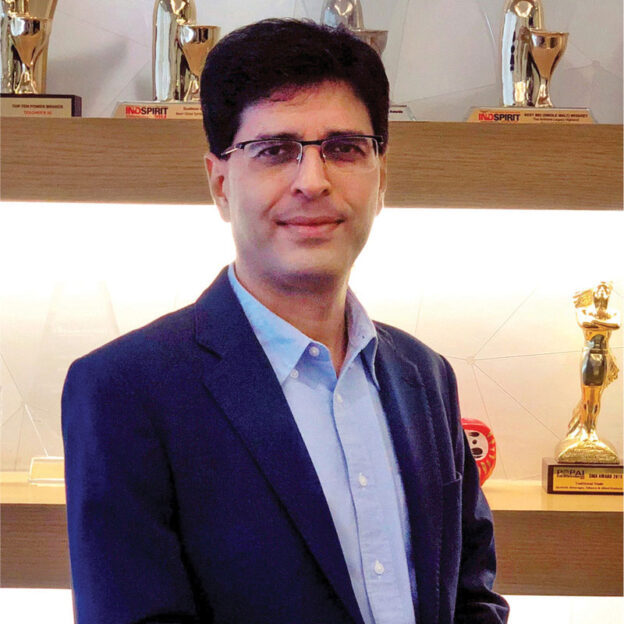
Beam Suntory, the global premium spirits company, has introduced a range of five premium spirits in markets of North India, signaling its commitment and strategy to grow in India in line with its ambition to reach USD 1 billion in revenue by 2030. Continuing the momentum after launching successfully in pilot markets in 2019, the entry of five premium brands in North Indian market is a huge stride for the company to tread strongly towards its 2030 ambition. The launch of Oaksmith in North India is key to Beam Suntory’s growth strategy in India.

“India is a strategic market for Beam Suntory, and we are thrilled by the appreciation that Oaksmith, Toki, Hibiki and The Yamazaki have received from consumers in India. The growing premiumization of the Indian market and the appreciation for finely crafted spirits make this an exciting time to expand the launch of these brand in India. Indians today are exposed to global trends, which inspired the creation of Oaksmith for whisky lovers in India,” says Neeraj Kumar, Managing Director of Beam Suntory India. On Oaksmith and Oaksmith Gold, he said, “The beautiful blend incorporates our East Meets west competitive advantage and incorporates years of tradition that the Beam Suntory family upholds while showcasing Shinji-san’s award-winning blending capabilities making it a whisky that, quite simply, no one else could possibly create. We are excited to launch our brands across North India with its diverse offerings in terms of culture, people and places. We see a growing opportunity for premium quality spirits across these states”