Tag Archives: Whisky Investment

Marrowbone Lane Irish Whiskey and the Long Game of Cask Investment

  • Emerging as an alternative Asset Class
  • Moving beyond consumption to custodianship, and from the bottle to the barrel

Whisky is no longer viewed solely as a drink to be enjoyed in the glass. Over the past decade, it has steadily emerged as an alternative asset class, with whisky cask ownership gaining traction among collectors and long-term investors worldwide. Unlike bottled whisky, which is static once released, a cask is a living asset, one that matures year after year, gaining complexity, character and scarcity over time. This quiet evolution has drawn growing interest from investors seeking assets shaped by patience rather than volatility.

As global demand for premium and aged whisky or whiskey (as the Irish and Americans spell) shifts eastward, Asia has become central to this transformation. While traditional hubs such as Scotland and Ireland remain the custodians of production and ageing, participation is increasingly international. Southeast Asia has established itself as a regional trading and storage hub, while South Asia, particularly India, is beginning to engage with whisky not just as a consumer market, but as a participant in the upstream economics of maturation and long-term investment opportunity.

It is within this context that Marrowbone Lane Irish Whiskey (MLIW) positions itself, rooted in heritage, guided by restraint, and aligned with the long arc of whisky itself.

A Peek into Dublin’s Distilling Past

Marrowbone Lane is one of the oldest streets in Dublin’s historic Liberties district, an area whose origins stretch back to the 17th century. For generations, the Liberties served as an epicentre of skilled trades, housing coopers, brewers, merchants and distillers who formed the backbone of Ireland’s whiskey economy.

By the late 19th century, this compact neighbourhood was home to some of the world’s largest distilleries and exported more whiskey globally than Scotland. Though the industrial landscape has changed, the legacy of craftsmanship and resilience remains etched into the cobbled streets and historic warehouses of Dublin 8. Marrowbone Lane Irish Whiskey takes its name from this lineage, not as a stylistic flourish, but as a statement of values.

Premium Whiskey Stocks

Marrowbone Lane Irish Whiskey draws its identity from the people and practices that shaped Ireland’s whiskey reputation long before its modern revival. Rather than pursuing high-volume production, the Ireland-linked, UK-based house focuses on the long-term stewardship of premium whiskey stocks.

Working exclusively with licensed distilleries and bonded warehouses in Ireland and Scotland, the emphasis is clear: patience over pace, provenance over promotion. The approach reflects a belief that whiskey rewards time, discipline and transparency, principles increasingly important as interest in cask ownership expands globally.

Founder and Senior Partner Professor Vijay Edward Pereira has consistently underscored that whiskey cask ownership should be approached as a long-term commitment rather than a speculative trade. Value, he notes, is created through maturation, responsible warehousing and careful asset management, not quick exits or inflated expectations.

Opening the Cask Door for India

Marrowbone Lane occupies a distinctive position in India’s evolving whisky landscape. “It is the first company to formally enable Indian participants to legally own maturing whiskey casks stored in duty-suspended bonded warehouses in Ireland and Scotland, a category traditionally limited to distillers, bottlers and institutional buyers in Europe,” states Gora Mukherjee who is joining in January as Global Director – Commercial of Marrowbone Lane Irish Whiskey.

Through structured offerings, participants gain access to properly documented, regulated cask ownership aligned with international best practices. This marks a fundamental shift in how Indian consumers engage with whisky, moving beyond consumption to custodianship, and from the bottle to the barrel. The model introduces governance, traceability and education into a space that has historically lacked clarity, positioning cask ownership as a long-term engagement rather than a transactional product.

Irish Whiskey, One of the fastest-growing spirits

Irish whiskey is among the fastest-growing spirits categories globally, supported by premiumisation, a younger and more globally exposed consumer base, and rising interest in aged expressions. India, in particular, has emerged as a high-potential market, not only driving consumption but increasingly influencing upstream demand for maturing stocks held in Ireland.

This growth has shifted attention from retail shelves to distilling capacity, bonded warehousing and long-ageing inventories, reinforcing the strategic importance of cask management and long-term planning.

 Cask Ownership

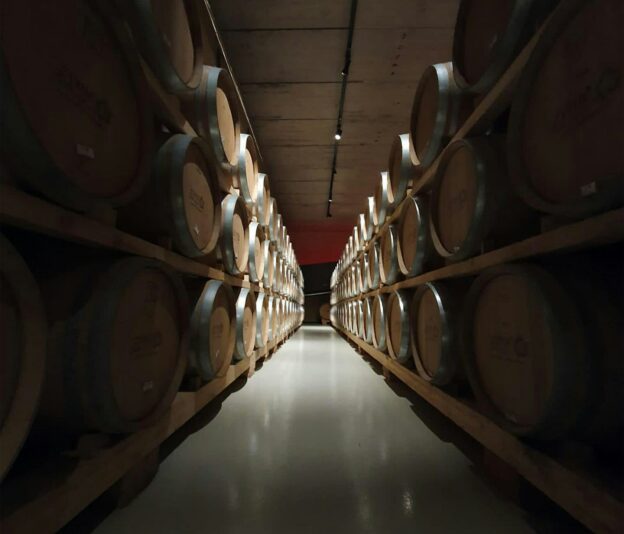
At its core, whisky cask ownership involves holding new-make spirit or maturing whisky in oak barrels within licensed bonded warehouses. Over time, interaction between spirit, wood and environment enhances flavour, while evaporation, the “angel’s share”, steadily reduces volume, increasing scarcity.

Each cask is a tangible, regulated asset, valued on factors such as distillery provenance, age, cask type, alcohol strength, expected yield and global demand. Entry points for Indian participants are designed to be relatively accessible by international standards, lowering barriers to a category traditionally perceived as exclusive.

An Alternative Asset

Internationally, whisky casks are often discussed alongside other alternative assets such as fine wine, art and classic automobiles. Historical performance has shown steady appreciation driven by maturation and limited aged stocks. However, experts caution that returns are not guaranteed. Liquidity is limited, holding periods are long, and ownership should not be equated with regulated financial products.

Mike Ward, Founding Partner at Marrowbone Lane Irish Whiskey, reinforces this disciplined outlook. “Irish and Scotch whiskey earned their reputations over centuries, not seasons. If a whiskey is worth making, it is worth waiting for,” he says.

A Category Defined by Time

As global whisky demand continues to rise, the conversation is evolving, from labels and launches to the quieter economics of ageing, bonded storage and stewardship. For Marrowbone Lane Irish Whiskey, opening cask ownership to Indian participants is not about speed or scale, but about building the category responsibly. In a world driven by immediacy, whisky remains an exception shaped not by urgency, but by time.

R. Chandrakanth

Ambrosia

Continue reading

Glenmorangie unveils first Calvados cask finish as 12-Year-Old small batch whisky in India

Glenmorangie Highland single malt Scotch whisky is set to launch a uniquely fruity and floral whisky – its first ever finished in French Calvados casks. Glenmorangie Calvados Cask Finish is the fifth release in the Distillery’s Barrel Select Release series of small-batch single malts, which explores the flavours that arise from different cask finishes. Entwining scents of jasmine with baked apples and pears, this rare 12-year-old bottling offers new mellow depths to Glenmorangie’s signature fruity tones.

For 180 years, Glenmorangie’s whisky makers have been endlessly imaginative on their quest to create delicious single malt whiskies for more people to enjoy. Led by acclaimed Director of Whisky Creation Dr Bill Lumsden, they craft their delicate, fruity spirit in stills as tall as a giraffe to allow more space for taste and aroma, then age it in the world’s finest casks. Some time ago, Dr Bill became fascinated by the soft, orchard notes of Calvados, which is distilled from apples (and sometimes pears) in France. And he began to wonder how these casks – never used before at Glenmorangie – might further enhance the whisky’s classic, fruity finesse.

Inspired to experiment, he took a whisky which had spent more than 10 years ageing in American white oak bourbon casks, for Glenmorangie’s elegant style. He transferred that whisky into casks which, for 20 years, had held Calvados du Pays d’Auge, from Normandy, in France. After a carefully judged finish, Dr Bill’s creation was ready to share. Soft and delectably rich, Glenmorangie Calvados Cask Finish unites mellow fruits of baked apples and pears with subtle notes of jasmine, narcissus and vanilla.

Dr Bill said, “At Glenmorangie, we are always experimenting with ways to create delicious whiskies. Since Calvados casks have never been used before at Glenmorangie, I was intrigued to see how their elegant, orchard notes would complement our whisky’s award-winning fruity style, with a judicious finish. Glenmorangie Calvados Finish is a wonderful addition to our Barrel Select Release series of small-batch single malts. Entwining scents of baked pears, vanilla and jasmine with tastes of toffee apples, lemon balsam and spice, this rare whisky takes all that is good about Glenmorangie, to richly delicious new heights.”

From Indian whisky connoisseurs to collectors, this limited-edition malt is sure to garner many eyeballs. Glenmorangie Calvados is currently available in Mumbai priced at ₹7,050.  

Rampur Signature Reserve Single Malt sells at Rs. 5 lakhs per bottle

400 Bottles only, Grab it at Hyderabad Airport Duty-Free

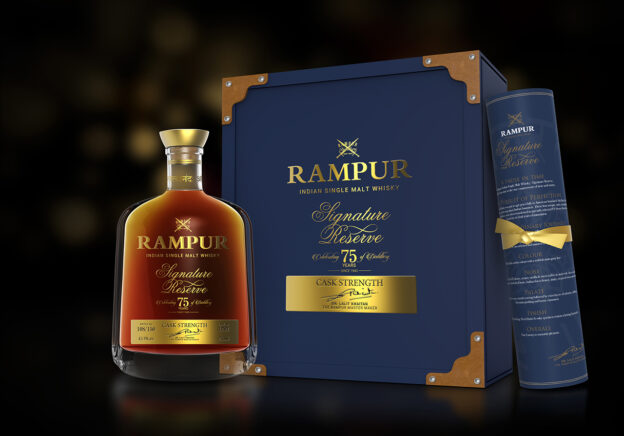
Rampur Signature Reserve Single Malt Whisky made history of its own when it the limited release of 400 bottles only sold for Rs. 5 lakhs per bottle. What’s even more surprising is that of the 400 bottles release, only two remain, which can be bought at the Hyderabad Airport Duty Free. The spirit comes from the distillery which produces the oldest single malt in the country.

In commemoration of Rampur Distillery’s 75th anniversary, Radico Khaitan introduced a super luxury variant of Rampur Indian single malt whisky to the international market. The Rampur Signature Reserve Single Malt is aged in American Standard Oak Barrels with handpicked four distinct casks by the master blender, which are then transferred to specially chosen PX Sherry Butts from Jerez, Spain, for the final maturation phase. Radico feels that it is this dedication to precision and excellence sets Rampur Signature Reserve apart as an exceptional expression of Indian whisky artistry.

Each bottle in this limited-edition collection is individually numbered and carries the signatures of Dr. Lalit Khaitan, Chairman, and the Rampur Master Maker, adding a personal touch to its exclusivity.

But if you aren’t able to grab a bottle of this ultra-exclusive offering, then fear not, the Rampur’s Indian Single Malt Whisky collection offers a diverse price range to suit every enthusiast. Beginning with the Rampur Select at Rs 14,000 per bottle in 2016, it includes the now sold-out PX Sherry variant at Rs 12,000 per bottle and the approachable Rampur Double Caskat Rs 8,500 per bottle in 2018. Leading the range is the prestigious Signature Reserve priced at Rs 5,00,000 per bottle, launched in 2018. Accompanying it is the Rampur Asava priced at Rs 10,000 per bottle since 2019.

Travel Retail exclusive, Rampur Trigun at Rs 17,000 per bottle and the Rampur Jugalbandhi series starting at Rs 40,000 per bottle.

Abhishek Khaitan, Managing Director of Radico Khaitan, expressed his excitement about this milestone, stating, “We are thrilled to announce that the last two bottles of Rampur Signature Reserve, out of the 400 bottles produced, are available exclusively at Hyderabad duty-free. This represents not just a whisky, but a legacy of Indian craftsmanship and heritage, inviting enthusiasts, collectors, and travellers to experience the unmatched quality of Radico Khaitan’s offerings.”

In addition to the Rampur Signature Reserve, other spirits like the Rampur Asava Indian Single Malt Whisky, the rich and complex Rampur Double Cask Indian Single Malt Whisky, the acclaimed Jaisalmer Indian Craft Gin and Gold edition, and the regal Royal Ranthambore Heritage Collection Whisky are also available at Hyderabad duty-free.

Amrut launches limited editions Bagheera and Portonova in India

• Jim Murray adds zing to whisky tasting event
• Plan to up exports to 100 countries from 57

As whisky enthusiasts gathered at The Oberoi, Gurugram, on March 3rd for the Amrut Distilleries’ whisky tasting event featuring Jim Murray, a distinguished whisky writer and critic renowned for his unparallel mastery of the spirit, it was evident that this was no ordinary experience. The event provided a platform for enthusiasts to engage, learn, and connect. The day culminated in the unveiling of Bagheera and Portonova, marking their debut in the Indian market.

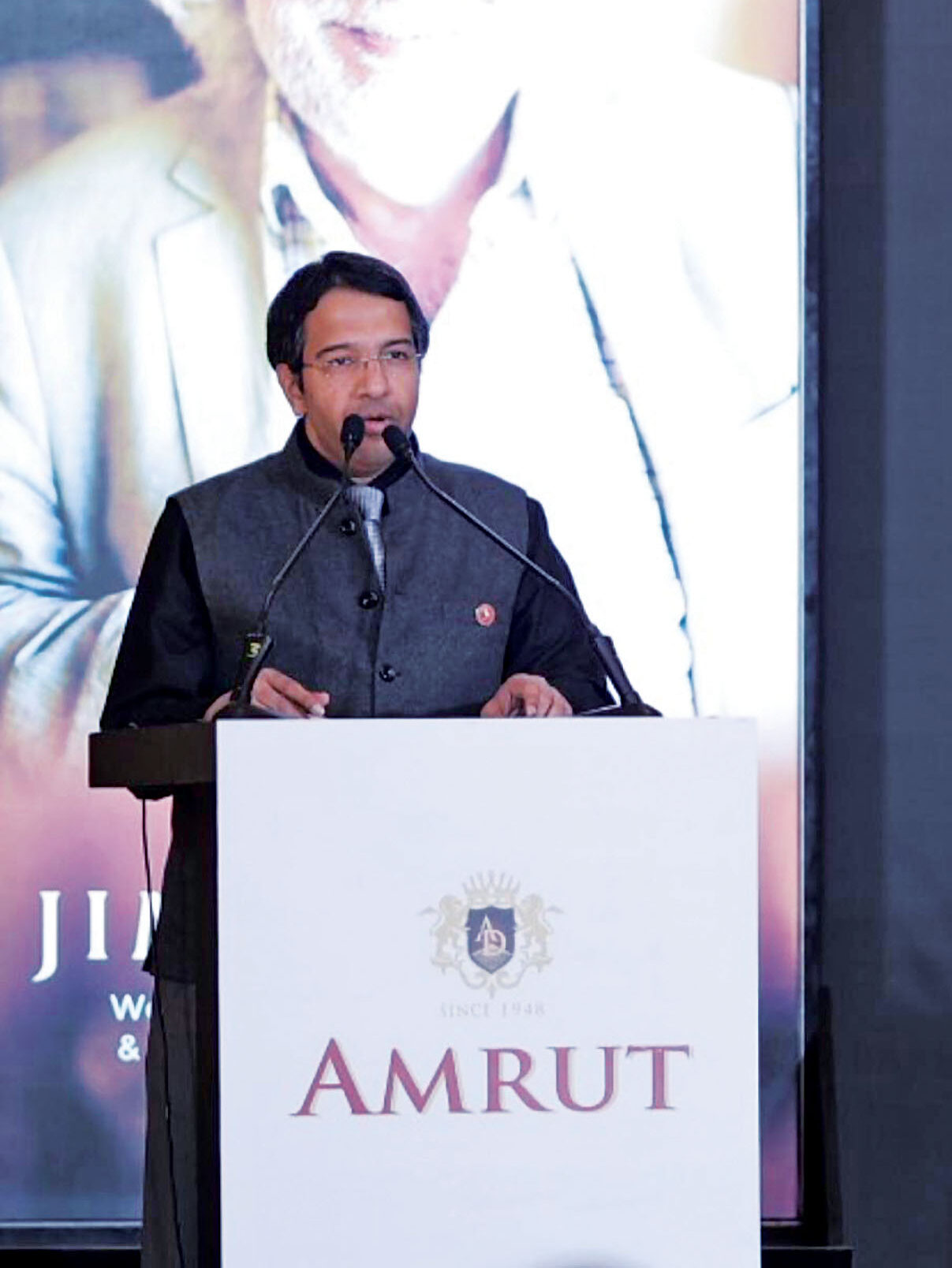
Rakshit N. Jagdale, MD, Amrut Distilleries Private Limited

New products offerings, same class and elegance

Rakshit N. Jagdale, Managing Director, Amrut Distilleries Private Limited said, “We challenge ourselves at every step to craft new Amrut Malt variants. Take Amrut Portonova, for instance, an un-peated single malt whisky, that undergoes a unique maturation process. Initially aged in a blend of new American oak and ex-bourbon barrels, it is then transferred to once-used port pipes imported from Portugal before returning to ex-bourbon casks.”

The name “Portonova” pays homage to the town of Parangipettai in Tamil Nadu. Jagdale describes its flavour profile as offering an exotic and vibrant experience with notes of raisins, vanilla, cherry liqueur, and spices, maintaining extraordinary smoothness despite its full cask strength. Tasting notes reveal a rich nose with fruity hints, toffee sweetness, tropical spices, coconut, and cracked black pepper, while the palate delights with homemade red berry jam, caramel sweetness, tropical fruits, banana fritters, and a subtle saltiness, leading to an exceptionally long and fruity finish with traces of raspberries and cranberries lingering on the palate.

Commenting on Amrut Bagheera, he said, “This single malt is one to cherish. It exudes a sensory journey that is both complex and rewarding, making it a cherished addition to any whisky enthusiast’s collection.”

Bagheera’s profile boasts vibrant fruity notes, with hints of dried fruits and peach, accompanied by subtle undertones of mild orangey citrus, vanilla, and toffee. Upon nosing, one is greeted with the enticing aroma of salted caramel intertwined with dark chocolate, alongside a medley of fruity notes, possibly dried fruits, with a subtle oak presence and a touch of sandalwood that gradually evolves into a floral bouquet. The taste is a delightful fusion of fruity flavours accented by floral nuances, with a velvety, oily texture. The creamy middle is enhanced by hints of sandalwood and wood phenols, expertly balanced by a gentle peat undertone. The finish is both sweet and dry, leaving a lingering essence of peat.

Limited to 300 bottles allocated for sale in Haryana, Bagheera proves to be a highly sought-after and competitive endeavour, given its status as a truly premium and versatile whisky offering. Jagdale noted, “Since the market release is limited to Haryana and considering their distinctive richness and special status, the MRP for Portonova is approximately ₹15,000, while Bagheera is marked at ₹23,000 per bottle.”

Murray endorses

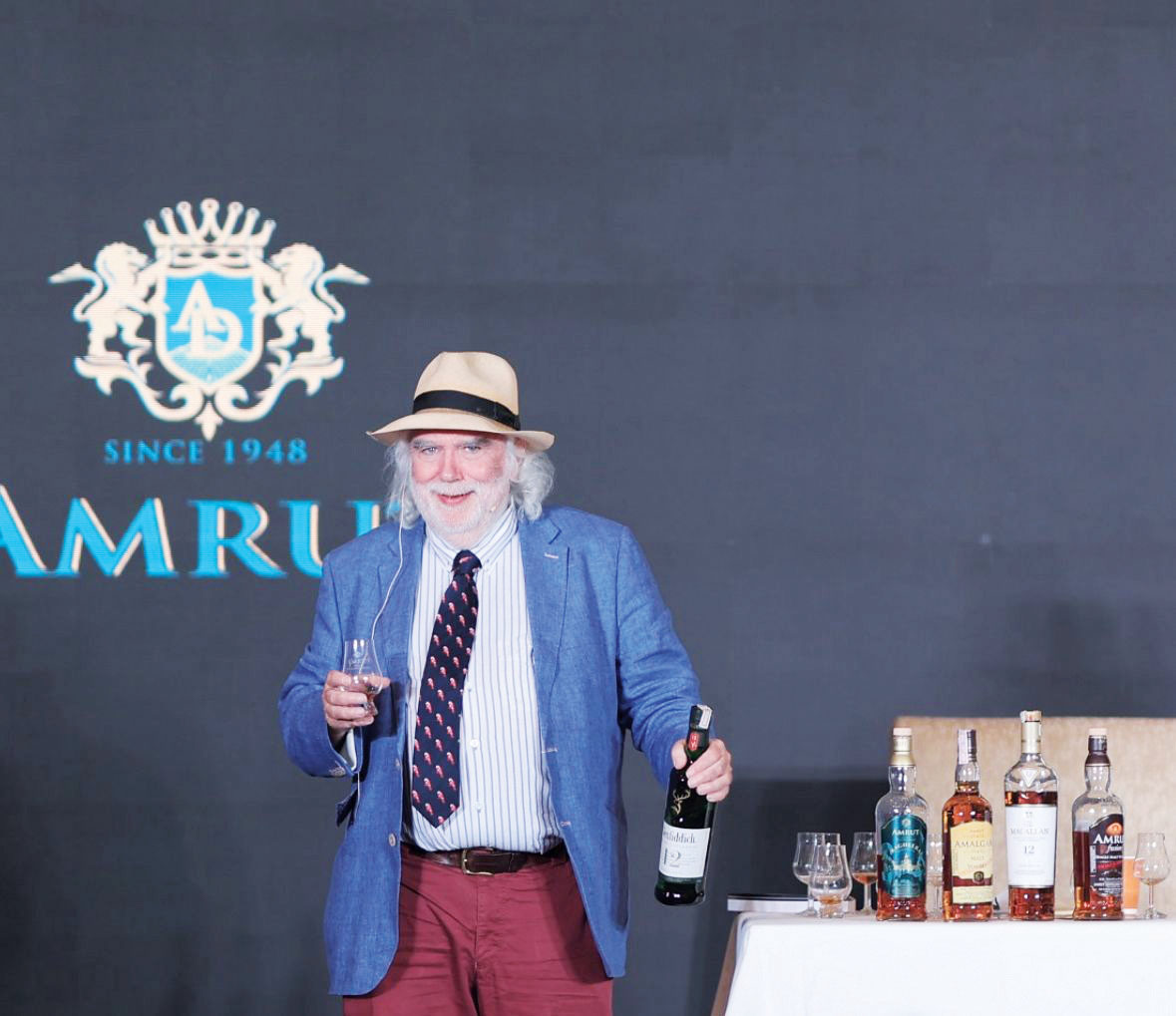
Jim Murray, Whisky Writer, Critic & Author of The Whiskey Bible

The tasting event gave an opportunity to whisky lovers to get a peek into the world of Amrut. Murray said, “I’ve known Rakshit [Jagdale] for an extended period. He embodies humility, gentleness, and authenticity, much like his father – a fact I find truly honourable. His expertise is on par with their master distiller and blender, Ashok Chokalingam. Together, they possess an acute understanding of the essence and nuances of their whiskies. I have a genuine appreciation for their creations. While I offered some minor input in guiding their direction, my primary inclination is to assist others naturally. When they released Amrut Fusion, I was thoroughly impressed. It stood out as a pinnacle of quality and innovation. In fact, I ranked it as the third-best whisky I tasted in 2010 due to its exceptional balance. The growing demand for their products prompted them to double their capacity. The recent additions, Bagheera and Portonova, hold immense promise. The dedication of the entire team is apparent in the exceptional quality of their products.”

Future plans and projections

Raju Vazirani, Head of Business Development & Adviser

Talking about future plans, Raju Vaziraney, Head of Business Development & Adviser, said the goal for Amrut is to remain a trusted brand in India and a place to find innovation and freedom. This means further experimentation into the soul of single malt distillation. “We will be taking our products to 100 countries around the world by 2030. Additionally, we have plans to introduce several special edition releases exclusively for the Indian market in the upcoming years. Furthermore, we intend to distribute limited batches of Portonova and Bagheera to regions beyond Haryana, but it’s important to move with the aspirational trend among Indian customers, emphasising the cautious approach in opening new markets without sufficient stock.” Amrut is presently exporting to 57 countries.

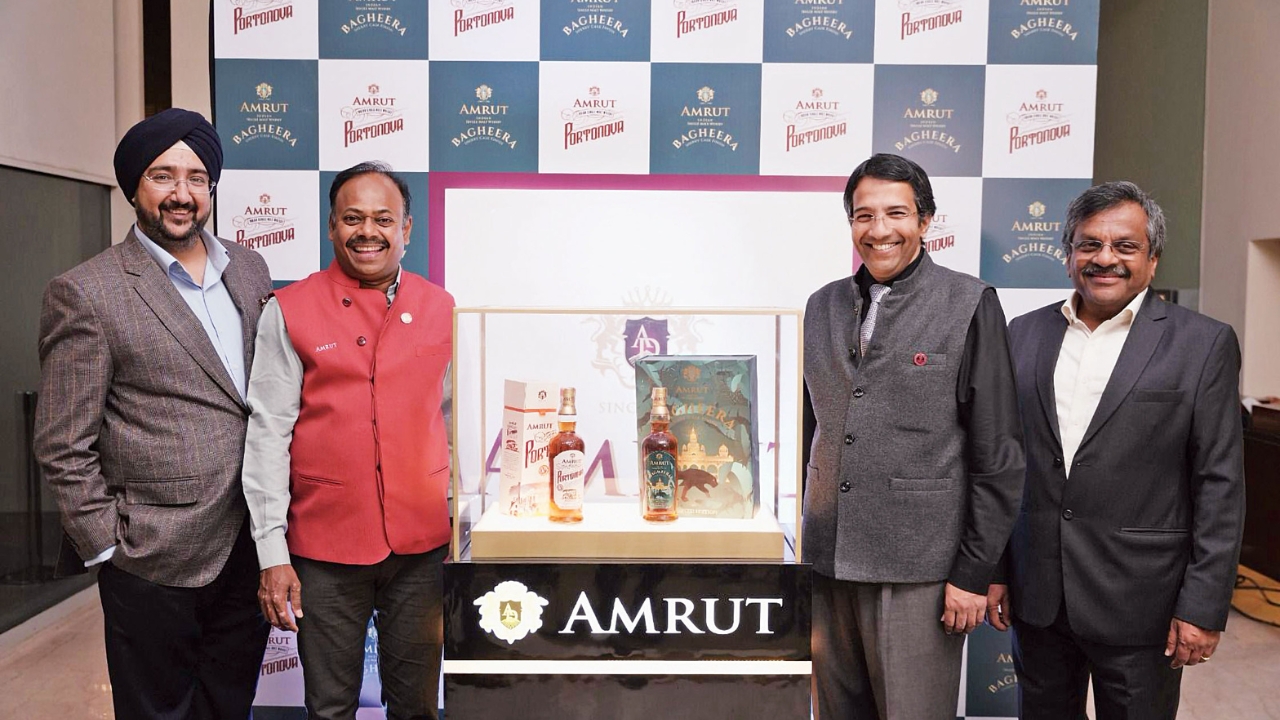
Amrut Team L-R (Mr. Gurmeet S. Johal, MD – GD Group – Mr. Ashok Chokalingam, Master Distiller of Amrut Distilleries, Mr. Rakshit Jagdale, MD, Amrut Distilleries and Mr V. Ravindran, Head of Marketing, Amrut Distilleries

Gurmeet S. Johal, MD of GD Group, the official distributor for Amrut, added, “We handle a few states for them in North India, including Punjab, Delhi, Chandigarh, and Haryana. Our belief in Amrut’s quality is solid, and their commendable passion for their products has been a driving force for us. Over the past six to eight months, we’ve been in discussions with Amrut to bring in some of their exported malts, even in small quantities, to ensure that local consumers can savour the best offerings from Amrut. We strategically selected Haryana due to its premier status as a high-end alcohol market and with a duty-free environment.”

Johal elaborated, “After months of discussions and tastings, involving Jim Murray in the process, we finalised Bagheera and Portonova. These limited quantities were brought into the market. Looking ahead, our plan is to introduce one or perhaps two limited editions annually. Importantly, these limited editions will not be repeated. With Amrut currently offering around 45-46 different expressions of single malt, even if we request one or two each year, it will be 20 years before we consider repeating something. I want the market to understand this about Amrut: we are not merely a one or two-expression single malt company like the rest.”

– Pritisha Borthakur