Soju’s easygoing character and food-friendly nature have carried it far beyond Korea; its growing following now finds new settings closer to home
HiteJinro Co., Ltd., the South Korean beverage major behind Jinro, the world’s highest-selling spirit brand, has initiated its India chapter through a partnership with Monika Alcobev Limited, entrusting the Indian company with import, distribution, and brand stewardship across key markets. The association reflects a considered entry into a complex and consumption-rich environment, shaped by evolving social rituals, culinary openness, and an increasingly cosmopolitan drinking public.
From HiteJinro’s perspective, India represents a market of exceptional consequence within its international outlook. “India is one of the world’s largest spirit-consuming nations and we see strong long-term potential for Jinro here,” said David, Export Manager at HiteJinro Co., Ltd., pointing to a convergence of scale and shifting taste structures. The country’s expanding hospitality sector and growing familiarity with international categories, he observed, have created conditions conducive to sustained category development.

That assessment finds resonance with Monika Alcobev’s reading of the domestic market. According to Kunal Patel, Managing Director of Monika Alcobev Limited, globalisation has made Indian consumers far more experimental and open to discovering new beverages. He attributes this change to increased travel, digital exposure, and the steady integration of international cuisines into everyday urban life, particularly among younger consumers.
Jinro arrives in India carrying substantial global authority. In 2024, the brand recorded sales of approximately 96.8 million cases worldwide, retaining its position as the world’s number one spirit for over two decades. For HiteJinro, this scale reflects entrenched consumption habits across more than 80 countries. Beyond its home market, China stands as Jinro’s largest international base, followed by Japan, Southeast Asia, and North America. Europe, including the UK, has increasingly contributed to growth. “That consistency stems from familiarity and trust built across generations of consumers,” David remarked, describing Jinro as an established presence within routine social occasions across diverse geographies.
Patel notes that comparable cultural signals have begun to surface locally. Korean cuisine, he said, has moved decisively into the mainstream, finding acceptance across metropolitan dining circuits. He observes that drinking preferences are increasingly aligned with lighter, lower-ABV spirits suited to extended meals and shared gatherings.
These shifts have informed how Jinro will be introduced to Indian consumers. “Soju lends itself to a wide spectrum of occasions,” David explained. “Its consumption spans informal social settings, food-led environments, and uncomplicated mixed serves.” This adaptability, he added, has supported Jinro’s international expansion and remains central to its market strategy.
Monika Alcobev’s execution plan centres on translating that versatility into recognisable Indian contexts. Patel describes an approach grounded in reassurance and continuity. Trial emerges through visibility and education in relevant venues. Repeat follows when access and experience remain dependable.”
Internationally, Jinro’s recent growth has been driven largely by consumers in the 25–35 age group, with increasing interest from early Gen Z. HiteJinro acknowledges that this demographic profile has influenced its communication framework. “Our engagement prioritises lifestyle, food pairing, and social interaction,” David said, rather than traditional spirits narratives.
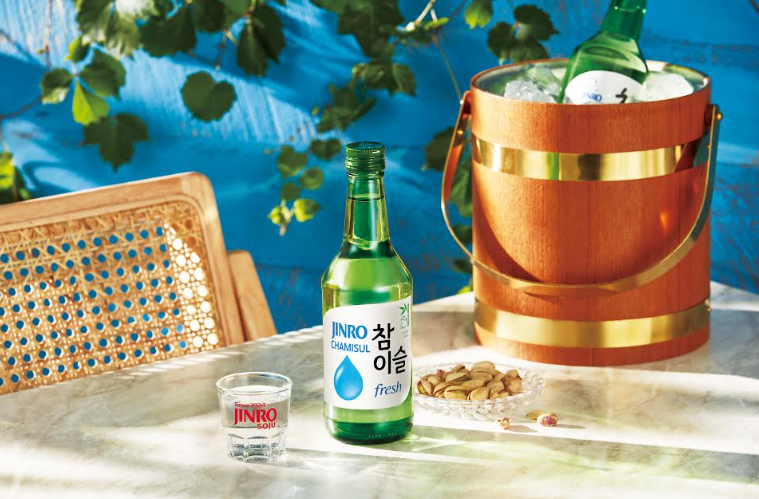
That orientation aligns closely with Monika Alcobev’s on-trade focus. Modern Asian restaurants, Korean dining formats, izakayas, and cocktail-forward bars will be instrumental in early adoption. It expects markets such as Delhi NCR, Mumbai, Bengaluru, Hyderabad, and Goa to establish the initial pace, supported by established hospitality ecosystems and premium retail infrastructure.
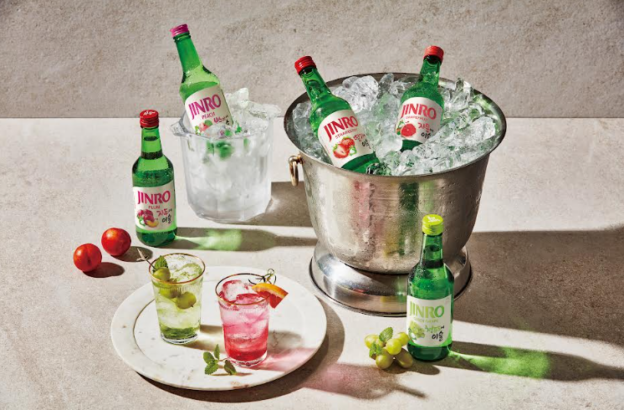
The Indian portfolio will feature Jinro’s flagship Chamisul Fresh alongside flavoured variants including Green Grape, Plum, Strawberry, and Peach. “Classic expressions continue to anchor our global volumes,” David said, while acknowledging the role flavoured variants play in attracting new consumers across international markets. Patel added that the flavour range offers familiarity for first-time Indian drinkers while supporting repeated consumption across occasions.
HiteJinro places particular emphasis on the influence of the on-trade during the early stages of market development. “For many consumers, their first interaction with soju will take place at a bar or restaurant,” David said. Bartender understanding and recommendation, he explained, carry considerable influence in shaping familiarity and confidence.
That view is echoed by Monika Alcobev. Bartenders act as the first interpreters of the category. When they understand production methods, cultural context, and contemporary serve formats, the category finds firmer footing within everyday drinking behaviour.
HiteJinro evaluates progress in new markets through phased benchmarks. “The initial 12 months focus on distribution reach and trial,” David said. “Between months 12 and 24, repeat consumption becomes the clearest indicator of sustained adoption.” Cultural engagement and consistent on-trade presence will guide subsequent expansion.
Patel shares that long-term perspective. Success, he said, will be evident when Jinro becomes a familiar and trusted presence across bars, restaurants, and retail, supported by disciplined execution and steady consumer demand.