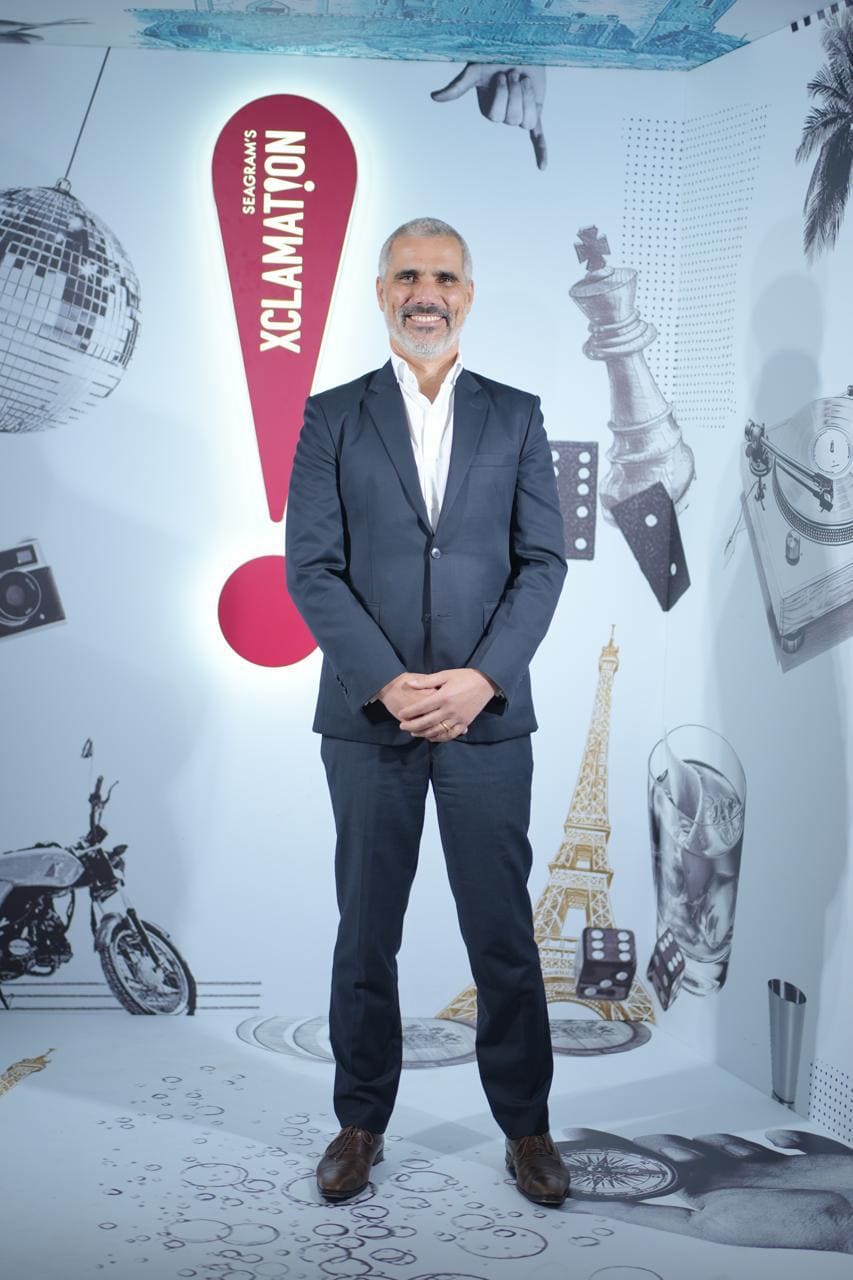
Allied Blenders and Distillers Limited (ABD) recently appointed Jayant Bhalchandra Manmadkar as its Chief Financial Officer (CFO). He will also serve as a Key Managerial Personnel (KMP) and Senior Management Personnel (SMP).
Manmadkar who took charge on October 10 is a qualified Chartered Accountant (CA), Cost and Works Accountant (ICWA), and Company Secretary (CS). With over 32 years of extensive experience, he has held leadership roles across diverse sectors such as financial services, pharmaceuticals, alcobev, research & development, manufacturing, real estate, and retail.
Over the course of his career, Manmadkar has been associated with Seagram India; Brigade Enterprises; Mahindra Lifespace Developers; Sai Life Sciences; Cohance Lifesciences; Wockhardt and Reliance Retail. Manmadkar’s core areas of expertise span strategic planning, mergers and acquisitions, international operations, treasury and corporate finance, financial planning and analysis, taxation, investor relations, information technology, corporate governance, and corporate affairs.
Alok Gupta, Managing Director, ABD said, “We are pleased to welcome Jayant to our leadership team. His extensive cross-sectoral experience, strong foundation in financial management, and proven track record in driving finance and business strategy at both national and international levels will be instrumental in strengthening our financial strategy. With his ability to drive strategic initiatives and operational excellence, we are confident he will play a pivotal role in supporting ABD’s next phase of growth.”
Manmadkar said, “Joining ABD at this exciting juncture is a tremendous opportunity. I look forward to leveraging my experience to build on the company’s strong financial foundation and contribute to its long-term strategic vision. Together with the leadership team, I aim to build on ABD’s strong foundation and advance its commitment to performance, efficiency, and sustained growth.”
Independent Sugar Corporation Limited (INSCO), part of Uganda-based Madhvani Group, has completed the acquisition of Hindustan National Glass & Industries Ltd (HNGIL) through the Insolvency and Bankruptcy Code (IBC) process, marking the conclusion of one of India’s most high-profile insolvency resolutions in recent years.
The transition was formally recorded at a meeting of HNGIL’s newly constituted board on Friday, after which INSCO assumed full control. The ₹2,250-crore resolution plan was led by Kamlesh Madhvani and Shrai Madhvani, with financial backing from Cerberus Capital Management and the International Finance Corporation (IFC).
Approved by the National Company Law Tribunal (NCLT) on August 14, 2025, the plan subsequently received clearances from the Reserve Bank of India (RBI) and the Competition Commission of India (CCI). Following a 45-day monitoring phase, the Monitoring Committee has now stepped down, paving the way for the new board nominated by INSCO to take charge.
According to the NCLT order, INSCO’s resolution plan includes an upfront payment of ₹1,901.55 crore to financial and operational creditors and workmen, along with ₹356.28 crore payable over the next three years. Additionally, a 5% equity stake has been earmarked for assenting financial creditors.
The tribunal noted that the plan value represents 72% of the average fair value and 114% of the average liquidation value, with creditors recovering around 60% of admitted claims. The Committee of Creditors (CoC) had approved INSCO’s plan in June with an overwhelming 96.16% majority.
Revival Strategy
With control now transferred, INSCO has outlined a broad revival strategy that includes modernising furnaces, upgrading equipment, expanding product lines, and strengthening both domestic and export competitiveness. The company has also pledged ₹1,000 crore in capital expenditure over the coming years to rebuild operations.
“We firmly believe that employees and workers are the foundation of any successful turnaround,” said Shrai Madhvani, newly appointed chairman of HNGIL. “HNGIL’s dedicated workforce has shown remarkable resilience during the insolvency period, and we are committed to working closely with them to build a safe, secure and sustainable future.”
He added that the company’s revival would require the collective support of employees, customers, suppliers, regulators, and governments. “Our vision is not only to restore HNGIL to its former glory but also to align our efforts with the Viksit Bharat vision of Hon’ble Prime Minister Shri Narendra Modi ji, contributing to India’s growth as a global industrial powerhouse,” Madhvani said.
Landmark IBC Case
HNGIL, India’s largest glass bottle manufacturer, entered the Corporate Insolvency Resolution Process (CIRP) in October 2021, following years of financial distress and litigation. The successful handover to INSCO ends a seven-year-long process that drew significant investor interest and multiple legal challenges.
An INSCO spokesperson said the company “remains fully committed to ensuring a seamless transition and is engaging with all stakeholders to ensure long-term sustainability.” The NCLT, under Section 31 of the IBC, has declared INSCO the Successful Resolution Applicant, making the plan binding on all stakeholders and lifting the moratorium under Section 14.
Earlier this year, Madhvani Group promoter Shrai Madhvani met Prime Minister Narendra Modi to discuss the Group’s strategic investments in India. During the meeting, he outlined the Group’s intent to invest ₹10,000 crore over the next five years to drive industrial growth and employment generation.
With HNGIL now officially under INSCO’s control, the acquisition sets the stage for a comprehensive turnaround of one of India’s oldest and most respected glass manufacturing companies and signals renewed global investor confidence in India’s IBC framework.
Set to boost excise revenues, even while the government promotes local production
MML licensees assure that quality will be prioritized and will compete with mass market IMFL
Margins will be tight, and success depends on efficient distribution, strong marketing, and retailer participation.
The Maharashtra government’s decision to introduce a new category of liquor, Maharashtra Made Liquor (MML), is set to transform the state’s alcoholic beverage landscape while increasing excise revenues. Industry experts say the move represents both fiscal foresight and a push to empower local manufacturers.
The Maharashtra liquor market is no stranger to innovation, regulation, and disruption. The MML policy is seen as a strategic attempt to bridge the gap between low-end IMFL and country liquor.
The rationale was straightforward: while premium IMFL and imported spirits dominate the higher price points, many local manufacturers were either dormant or underutilized. The government saw an opportunity to revive these units, create employment, and increase excise revenues. The MML category, pegged at ₹148.50 to ₹205 for a 180 ml pack, was positioned as a bridge offering, designed to be more affordable than IMFL yet higher in quality than country liquor.
Beyond the price, the policy introduced a nuanced excise structure. While IMFL attracts 450% duty on manufacturing cost, MML would be taxed at 270%, providing a margin buffer for manufacturers and retailers. At the time of announcement, government officials projected an incremental revenue target of ₹14,000 crore, on top of the existing ₹25,000 crore excise intake. However, industry insiders remain cautious about whether these numbers are achievable, citing consumer behaviour, market fragmentation, and distribution challenges.
MML is going to redistribute market-share: Sadanand Bapat
According to Sadanand Bapat, Managing Director of Associated Blenders Pvt. Ltd., the new policy is a strategic reform that aligns revenue generation with industrial growth. “The government will definitely benefit with increased revenues, there are no two opinions on that,” said Bapat. “Even if MML doesn’t perform fully as expected, collections will still be higher than before. The estimated additional revenue is around ₹3,000 crore over and above existing excise collections.” Maharashtra’s excise revenue was ₹25,468 crores from April 2024 to March 2025.
Sadanand Bapat, Managing Director of Associated Blenders Pvt. Ltd.
Maharashtra’s IMFL market currently stands at around 30 lakh cases per month. Bapat estimates that once all MML producers become operational, the new segment could account for 8–10 lakh cases monthly, effectively redistributing a share of the existing market rather than creating an entirely new one.
“It’s not an additional market, it’s a redistribution,” he explained. “Out of the total 30 lakh cases, about 8–10 lakh will now fall under MML, and 20–22 lakh under IMFL. Naturally, some IMFL players are worried, but this policy also opens up opportunities for local manufacturers to compete and grow.”
Initially, about 15 licensees are expected to enter the MML space, though the industry anticipates that only five or six major players will eventually dominate. The market, experts believe, could stabilise once consumer acceptance grows.
Grain-based liquor
The MML category, notified under the state’s amended excise regime in June 2025, introduces a grain-based liquor segment that can only be produced by Maharashtra-based manufacturers. Each MML brand must be registered locally, and units must have at least 25% shareholding by state residents. The aim, officials say, is to revive underutilised potable liquor license (PLL) units, encourage local production, and create employment.
Under the new structure, MML will be treated as a distinct type of Indian Made Foreign Liquor (IMFL), but with a crucial difference. It must use rectified spirit produced within the state and will carry a lower excise burden.
As per the excise department, if the manufacturing cost of IMFL is up to ₹260/- per bulk litre, the excise duty is 450 % of the manufacturing cost or ₹750/- per proof litre whichever is higher. If the manufacturing cost exceeds ₹260/- per bulk litre, the duty is 300 % of the manufacturing cost.
Assuming a manufacturing cost of ₹400 per litre, IMFL would cost ₹2,200 (including ₹1,800 in excise), while MML would retail at about ₹1,480 (including ₹1,080 in excise). MML products will be priced between ₹148.50 and ₹205 per 180 ml bottle, making them far more affordable than comparable IMFL brands.
Consumer Outlook and Perception
A major factor in MML’s success will be how consumers perceive the new category. “Let me tell you, MML is nothing but IMFL — it’s the same thing,” Bapat stressed. “The only difference is pricing. Consumers can expect the same quality at a more affordable rate.”
MML will be sold only through licensed retail (FL-2) and hotel/restaurant (FL-3) outlets, not country liquor shops — ensuring quality control and regulatory oversight.
Valsa Nair, Former Additional Chief Secretary, Government of Maharashtra
The MML initiative stems from a report by a committee led by former Additional Chief Secretary Valsa Nair, formed in January 2025 under the Devendra Fadnavis-led government. The Cabinet approved the recommendations on June 10, followed by a government resolution outlining operational guidelines.
The move also revives an earlier attempt to promote grain-based distilleries dating back to 2007, which was shelved after legal challenges. This time, however, the government has built stronger structural safeguards and economic rationale.
Beyond revenues, the new policy ties into Maharashtra’s goal of boosting local manufacturing and employment. With over 70 licensed potable liquor units in the state, of which 22 are defunct and 16 operate only as retailers, the new framework could rejuvenate many idle facilities.
A Model for Other States?
While some observers see shades of Tamil Nadu’s and Rajasthan’s liquor models, Bapat believes Maharashtra’s approach is more innovative. “People say it’s a mix between Tamil Nadu and Rajasthan’s policies, improved to suit Maharashtra’s needs,” he said. “But this is a well-drafted, homegrown framework. If it succeeds, other states will surely follow.”
As MML hits retail shelves, its dual promise, to bolster government revenues and support local industry, is being closely watched. For now, optimism runs high among policymakers and producers alike.
“Everyone — from consumers to manufacturers to the government, is eagerly awaiting the results,” Bapat concluded. “It’s a big reform, and if implemented well, it will redefine Maharashtra’s liquor industry.”
New Avenue of Growth for Domestic Distilleries: Karan Kalani
Echoing similar views is Karan Kalani, Director of Deejay Distilleries Pvt Ltd. He believes that the policy is poised to transform the state’s spirits market, opening a new avenue of growth for domestic distilleries and offering a structured, quality-driven alternative to illicit and imported low-end products.
Karan Kalani, Director of Deejay Distilleries Pvt Ltd.
The new MML category will help the state achieve multiple objectives from curbing illegal inflows of liquor to improving consumer access and strengthening regional industry participation. “The new category will offer high-quality products on par with IMFL, but at a more affordable price point. This will curb illegal liquor entering from other states and give consumers a safe, reliable, and good-quality alternative,” Kalani said.
Market Realignment
“The affordability factor will drive this category. Earlier, consumers seeking lower-priced options had to depend on country liquor or unregulated sources. Now, with MML, they will have a legitimate, high-quality product,” Kalani noted.
The government currently earns around ₹25,000 crore in excise revenue, and expects an incremental ₹3,000 crore once MML stabilizes. Kalani believes this is achievable. “The revised duty structure has increased prices for popular IMFL brands like Imperial Blue, Royal Stag, and McDowell’s No.1. Simultaneously, MML will contribute significantly to revenue growth as production and distribution expand.”
Transition Phase, Not Chaos
While the market is witnessing a degree of flux following duty revisions, Kalani views this as part of a natural adjustment. “It’s not a chaotic situation—it’s a transition phase. The entire industry is undergoing realignment. In the next six to eight months, sales and consumer preferences will stabilize as new players enter the market and distribution strengthens across Maharashtra.”
He also observed that while some consumers are “downgrading” due to price increases in IMFL, the MML segment provides a quality downgrade option, far superior to illicit or country liquor, thus retaining consumers within the formal sector.
The MML policy is expected to give a strong growth impetus to regional distilleries, many of which previously found it difficult to compete with national or multinational brands. “This policy levels the playing field. Local distilleries now have a fair chance to grow within Maharashtra without having to battle MNCs directly,” said Kalani.
Kalani believes the trade will also benefit from the emergence of MML. “Retailers will find the segment attractive, selling a ₹150 product instead of ₹80 boosts turnover and income. Once availability improves, MML products will gain rapid acceptance across retail channels,” he said.
He also emphasized that each manufacturer will have flexibility in crafting their blends. “Every company will have its own recipe and style. Overall, the category will deliver a product at par with popular IMFL in terms of taste and quality,”
Kalani expects MML to record the highest growth rate in Maharashtra’s alcobev sector over the next year. “We expect initial sales of around 5 lakh cases, scaling up to 7–8 lakh cases as more producers come onstream. The first year will be about consolidation — experienced players will strengthen their presence, and the ecosystem will stabilize,” he concluded.
Marketing and Consumer Education will be Crucial: Vishal Jaiswal
According to Vishal Jaiswal & Vaibhav Jaiswal, Managing Directors of Konkan Agro Marine Industries and a senior industry observer, the policy has been carefully formulated after studying models in neighbouring states. The MML category is positioned between Indian Made Foreign Liquor (IMFL) and country liquor and targets the mid-market segment, offering better quality at affordable prices. “They wanted to increase the price of regular segments and at the same time offer an alternative. So, they decided to introduce a mid-segment category,” Jaiswal explained.
He added that the move is also part of a broader effort to revive the state’s manufacturing units. “Many units were shut for ages. The government was not getting any revenue from them. This policy aims to revive those units, create employment, and generate state income,” he said.
“The government has fixed the minimum segment price at ₹148.50. If we want to match the quality of existing IMFL products, the price has to be in the ₹160–₹180 range,” Jaiswal said. He emphasized that all MML products will be made from grain spirit, not molasses, ensuring a smoother and higher-quality profile. “Those who are brand-conscious and want to establish a reputation will definitely focus on quality,” he added.
However, Jaiswal also pointed out that marketing and consumer education will be crucial. “Manufacturers will have to invest in trials and awareness — to get consumers to taste and trust this new category. This is a holistic move, boosting quality, reviving industries, and strengthening the state’s revenue base,” Jaiswal summed up.
Fraught with challenges for distributors, retailers, and even some manufacturers: Pradeep Lulla
Giving a contrarian view is Pradeep Lulla, President of the Maharashtra Wine and Retailers Association. “When the MRP changed in June, a 180 ml whisky that cost ₹160 jumped to ₹220 — a 37.5% increase overnight. Distributors lost 3–4% margins instantly, and low-end consumers were priced out. Many shifted to country liquor, which saw a growth during that period.”
Pradeep Lulla, President of the Maharashtra Wine and Retailers Association
Lulla warns that the MML policy may not generate the initially projected ₹14,000 crore in incremental revenue. He predicts a modest increase of ₹1,000–2,000 crore, mainly due to consumer segmentation and brand loyalty.
“Consumers will not switch entirely from established IMFL brands. Some will reduce frequency, while others will revert to cheaper options. Retailers and distributors will adjust accordingly, cutting stock, rationalizing infrastructure, and tightening credit.”
He also flags distribution and consumer experience challenges. MML is restricted to Maharashtra, which fragments brand exposure. Travelers or consumers moving to other states won’t find their preferred MML brands, potentially eroding loyalty.
Lulla highlighted financial constraints. He said if the manufacturing cost for a 180 ml MML bottle is ₹21.43, the excise duty per bottle is going to be ₹57.86 and the cost of the 48-bottle case will be ₹2,777. “Margins will be tight, and success depends on efficient distribution, strong marketing, and retailer participation,” he says.
In short, MML could redefine Maharashtra’s liquor market. But whether it becomes a game-changer or a market correction remains to be seen. The coming months will test the policy’s design, the resilience of distributors, and the willingness of consumers to embrace a new mid-tier category.
Debasree Dasgupta to take charge as CMO & Head of Global Business Development of Pernod Ricard India on November 1
Kartik Mohindra took charge as Managing Director of WG&S, India on October 1. He was formerly the Chief Marketing Officer & Head of Global Business Development at Pernod Ricard India. Sachin Mehta, the current MD, will be taking up an international role within the WG&S business, as Managing Director, Canada.
Kartik Mohindra’s position in Pernod Ricard India is being taken by Debasree Dasgupta, effective November 1. Currently Global Vice President for Absolut, Dasgupta took on the position in 2023 and has since overseen the brand’s international strategy. Her career spans senior marketing roles at PepsiCo, Reckitt, and Unilever, giving her a diverse portfolio across categories and geographies.
Premium spirits company William Grant & Sons is signalling a focused push to strengthen its presence in one of the world’s most promising alcoholic beverage markets. Kartik joined the business with over 26 years of experience as a senior leader in marketing and sales, primarily in the alcohol, beverage and FMCG sectors.
In his former role, he played a role in transforming business performance at Pernod Ricard, leading brand strategy and expanding into new global markets. He has also overseen brand-led innovation across various categories, from whiskies and wines to brand extensions.
“These appointments reflect WG&S’ continued investment in key growth markets and a commitment to strengthening our global leadership team. We are excited to welcome Kartik to our team in India – a strategically important market for us. Driven by his expertise, we’re confident that we will further build on the great progress Sachin and the team have made in India in recent years,” said Doug Bagley, Chief Commercial Officer, WG&S.
The company’s portfolio includes brands of Scotch whisky, like Grant’s Blended Scotch, Glenfiddich, The Balvenie range of handcrafted single malts and other spirits brands such as Monkey Shoulder, Hendrick’s Gin and Tullamore DEW Irish Whiskey. William Grant & Sons operates in India through its 100% subsidiary William Grant & Sons (India).
The Competition Commission of India (CCI) has given the green signal to home-grown alcoholic beverage maker Tilaknagar Industries’ Limited (TIL) proposal to acquire the Imperial Blue whisky business from the Indian arm of French liquor giant Pernod Ricard for Rs 4,150 crore.
In July this year, TIL had announced that it was set to acquire the Imperial Blue whisky business from Pernod Ricard at an enterprise value of 412.6 million Euros (around Rs 4,150 crore).
CCI in a post on X said “Commission approves the acquisition of the business of production, bottling, marketing, and sale of alcoholic and other beverages under the ‘Imperial Brands’ from Pernod Ricard India Pvt Ltd by Tilaknagar Industries Ltd.”
The acquisition will make TIL, which owns brands such as Mansion House Brandy, Courrier Napoleon Brandy, Mansion House Gold Whisky and Blue Lagoon Gin, a leading player in the fast-growing whisky market.
TIL and Pernod Ricard India had entered into a definitive agreement for the transaction related to the sale of the Imperial Blue business division (IB). The consideration includes a deferred payment of 28 million euros (Rs 282 crore as of date) to be paid four years after the date of the closure of the transaction, said a joint statement.
Imperial Blue is the third-largest whisky brand in India by volume. It has reported a revenue of Rs 3,067 crore for the year ended March 2025.
India is the second-largest market for Pernod Ricard. With a consolidated sales revenue of Rs 26,773.22 crore in FY24, Pernod Ricard India is the largest spirit maker in India. TIL had reported a revenue of Rs 1,405 crore and EBITDA of Rs 226 crore for the year ended March 2025. In the September quarter, it had become net debt-free after successfully restructuring its debt.
Launched in Rajasthan, expansion soon in Delhi, Gurgaon, Goa, and Mumbai
Globus Spirits Limited recently announced the launch of TERAI India Craft Vodka, the vodka filtered through amethyst crystals.
Handmade with care and cultivated from grain to glass at the TERAI distillery in Behror, Rajasthan, TERAI India Craft Vodka is crafted using locally sourced rice and bespoke production methods. The distillate undergoes a unique refinement process—filtered through amethyst crystals—creating a vodka which is smooth, playful, and unlike any other in the premium category.
Commenting on the launch, Shekhar Swarup, Joint Managing Director, Globus Spirits, said, “At Globus Spirits, our vision is to create world-class products that blend Indian tradition with global innovation. TERAI India Craft Vodka, with its unique amethyst crystal refinement, is a first for the world and a bold step in our premiumisation journey. We are confident it will resonate strongly with discerning urban consumers who seek authenticity, craftsmanship, and distinction in their spirits.”
TERAI India Craft Vodka has made its debut in Jaipur and Udaipur, Rajasthan, priced at `2,245 for a 750ml bottle. Expansion to Delhi, Gurgaon, Goa, and Mumbai is planned shortly, with availability across leading retail outlets and select premium channels.
With a distilling heritage dating back to 1958, Globus Spirits has been steadily strengthening its premium portfolio. The journey began with TERAI India Dry Gin, which has become a recognised name in the craft gin space, and now continues with the launch of TERAI India Craft Vodka.
Carlsberg India, the wholly owned subsidiary of Carlsberg Group, announced the signing of a Memorandum of Understanding (MoU) with the Ministry of Food Processing Industries (MoFPI), Government of India, at World Food India 2025. The agreement reaffirms Carlsberg’s long-term commitment to India through proposed investments of ₹1,250 crore across key states.
The investments will strengthen Carlsberg India’s brewing and packaging footprint with investments of ₹500 crore towards a new greenfield facility in Ahilyanagar, Maharashtra, ₹400 crore for brownfield expansion in Hoogly, West Bengal, ₹350 crore for brownfield expansion in Mysuru, Karnataka (previously announced).
Over the next three years, Carlsberg India expects incremental procurement of nearly ₹600 crore in raw and packaging materials, directly benefitting industries such as malt production, glass, cans, cardboard, and logistics.
Speaking on the occasion, Nilesh Patel, Managing Director, Carlsberg India, said, “India is a priority growth market for Carlsberg Group. Our investments in Maharashtra, West Bengal, and Karnataka underline our long-term commitment to India’s future. These projects will expand our operational capacity, create meaningful employment, and generate excise revenues for the states.”
Carlsberg India is also embedding sustainability at the core of these investments, with a focus on renewable energy, water efficiency, and sustainable packaging solutions. These initiatives are aligned with India’s climate and development goals, as well as the Carlsberg Group’s global sustainability programme, Together Towards ZERO and Beyond.
Allied Blenders & Distillers Ltd (ABD) has commissioned a polyethylene terephthalate (PET) bottle manufacturing facility at its integrated complex in Rangapur in Telangana. With an annual capacity of over 600 million bottles, the new plant is equipped with robotics, automation, recycling, and energy-saving technologies—part of the company’s backward integration strategy to boost self-reliance and cut costs.
The inauguration was led by founder Kishore Rajaram Chhabria, alongside managing director Alok Gupta and executive director Arun Barik. “This facility will significantly strengthen our supply chain while improving profitability through savings in logistics and packaging costs,” said Gupta.
The Rangapur complex is among ABD’s flagship assets, housing a 65-million-litre extra neutral alcohol (ENA) distillery, an Indian Made Foreign Liquor (IMFL) bottling unit, and now, the PET facility. Regulatory approval was recently granted to increase grain spirit production to 615 lakh bulk litres per year.
In addition, the site is witnessing fresh investment with the setup of a single malt whisky plant at an outlay of ₹75 crore. The facility, expected to commence production by the end of this fiscal year, will mark ABD’s entry into the premium single malt segment. Once distilled, the whisky will mature for at least three years before hitting the market—meaning ABD’s first single malt is expected post-2029.
Betting on Premiumisation and Global Demand
Alok Gupta highlighted that single malt whisky is one of the fastest-growing categories globally, and Indian brands are gaining traction with international accolades. “This will be a fascinating opportunity for ABD as Indian single malts have captured the imagination of global consumers.”
The company already exports to 27 countries and plans to expand its footprint to 35 markets. Exports currently contribute 8% of ABD’s topline.
ABD has also recently introduced five luxury brands since January 2024, diversifying beyond its mass-market Officer’s Choice whisky and Zoya premium gin. Historically known for its sub-₹1,000 price segment, ABD is now positioning itself to compete head-on with international premium players.
Capex-Driven Growth Story
ABD is in the midst of a ₹527 crore capital expenditure programme aimed at operational efficiency, premiumisation, and capacity expansion. About 25% of this investment was completed in FY24, with 60% earmarked for FY25 and the remainder in FY26. The spend will also support the company’s plan to expand total distillation capacity from 71 million litres per annum (mlpa) to 121 mlpa by FY27.
According to Gupta, these investments are expected to lift EBITDA margins from 7.5% to 17% and improve return on capital from 18% to above 20% by FY28. ABD has guided for 14–15% annualised growth in net sales over the next three fiscals, projecting its topline to double in just over five years.
Beyond expansion, ABD continues to embed sustainability in operations. The Rangapur site incorporates water recycling, biomass fuel handling, and energy-efficient automation across production. These measures not only reduce environmental impact, but also improve cost structures, complementing the company’s growth-driven investments.
Listed on Indian stock exchanges in July 2024, ABD reported revenues of ₹3,541 crore in FY25. With backward integration through packaging, aggressive capex in distillation, and a strategic push into single malt, the company is betting on premiumisation and global growth to shape its next decade.
“Consumers are upgrading, regulations are becoming more supportive, and Indian spirits are getting their due recognition globally,” Gupta said. “We see this as the perfect time for ABD to expand beyond our traditional base and build a strong premium portfolio for India and the world.”
Fresh issue proceeds earmarked for expansion and repayment/prepayment of borrowings
With its registered office at New Delhi- Alcobrew Distilleries India Ltd, the maker of whisky brands such as White & Blue and Golfer’s Shot, has filed its draft red herring prospectus (DRHP) with the Securities and Exchange Board of India (Sebi) for a proposed initial public offering (IPO). The IPO consists of a fresh issue of equity shares aggregating ₹258.26 crore and an offer for sale (OFS) of up to 18 million shares by promoter Romesh Pandita, the founder and chairman of the company. The equity shares carry a face value of ₹10 each. Other promoters include Veena Pandita and the Romesh Pandita Family Trust. According to the DRHP, Alcobrew plans to utilise the net proceeds from the fresh issue for business expansion, Repayment/prepayment of borrowings, and general corporate purposes. As per regulatory guidelines, 50% of the issue will be reserved for qualified institutional buyers (QIBs), 15% for non-institutional investors (NIIs), and 35% for retail investors. Founded in 2002, Alcobrew Distilleries was converted into a public limited company in 2022. The Company manufactures, markets, and sells a wide range of alcoholic beverages, including whisky, vodka, and rum. Its brand portfolio spans premium and mass-market offerings such as Golden circle, Golfer’s Shot (premium whisky), White & Blue (blended whisky), White Hills (regular whisky), and One More (vodka). The company operates manufacturing units in Solan (Himachal Pradesh) and Dera Bassi (Punjab) with integrated distillation and bottling facilities. It has also built a robust distribution network supported by contract manufacturing arrangements, giving it a strong pan-India presence. In addition to domestic operations, Alcobrew has been expanding its global footprint. The company currently exports to countries across Africa, Asia, and the Middle East,. It continues to scout new overseas markets to strengthen its position among India’s emerging liquor exporters. On the financial front, Alcobrew reported consolidated revenue of ₹1,615.01 crore in FY25, compared to ₹1,640.11 crore in FY24 and ₹1,216.87 crore in FY23. Its profit after tax (PAT) rose to ₹69.45 crore in FY25, up from ₹62.55 crore in FY24 and ₹52.30 crore in FY23. India’s alcoholic beverages market has been witnessing strong growth, fuelled by rising disposable incomes, premiumisation, and evolving consumer tastes. Industry experts believe Alcobrew’s diverse brand portfolio, integrated operations, and growing international presence position it well to tap this demand. Motilal Oswal Investment Advisors is the book-running lead manager to the issue, while KFin Technologies will act as the registrar.
If you’ve been following Ambrosia then you would know that Bar Swap’s are a new trend in the country.
And DEWAR’S in its new campaign is banking on that. Their new initiative Here’s to the Story, opens with a unique Bar Swap between SOKA in Bengaluru and LAIR in Gurugram, where two mixologists from SOKA will bring their signature cocktails to Delhi for a one-night takeover.
The campaign will run under the larger umbrella of DEWAR’S Discoveries, a series of activations designed to encourage exploration through flavour, storytelling, and shared experiences. Each event will highlight regional nuances in cocktails, food, and culture, creating opportunities for audiences to engage with Scotch in fresh contexts.
Actor Randeep Hooda has also joined the campaign, bringing his perspective on discovery and storytelling. From flavours rooted in India to experiences abroad, his collaboration highlights the cultural and sensory layers the campaign aims to explore.
Over the coming months, the Bar Swap format and other activations will travel to key cities including Mumbai, Bengaluru, and Kolkata, each edition introducing local elements and new interpretations of Scotch.
So keep an eye out for the dates for these curated experiences.