Author Archives: Bhavya Desai

Pernod Ricard’s Breakthrough Innovation Group unveils Opn at CES

Originally unveiled in 2014, under the working title Project Gutenberg, Opn is a pioneering, intelligent system, which will transform the way we enjoy premium spirits and experience mixology at home.

As ‘hometainment’ sees consumers turn to their homes for new social experiences and in a near future of ‘smart-homes’, Opn enhances the drinking experience through a holistic, user-friendly ecosystem of devices, applications and services.

Elegantly designed to encourage exploration and discovery, it enables the user to learn and customize cocktail recipes, adapting them to available ingredients. Coaching features guide through the spectrum of recipes and techniques to help build skills, for cocktail classics and more elaborate concoctions. From helping put together shopping lists to seamlessly ordering spirits online and having them delivered to your door, creating social calendars and offering inspiration on the art of hosting, Opn will simplify and enhance the way we organize events at home, and help us prepare our favorite cocktails, in the smoothest possible way.

“We are utterly committed to developing the future of entertaining at home: an experience that is connected, engaging, tailored and responsible”, says Alain Dufossé, Managing Director of the Breakthrough Innovation Group (BIG). “With Opn, our goal is to make it easier to enjoy meaningful moments of convivialité at home.”

Opn is the perfect embodiment of how Pernod Ricard leverages innovation as one of the 4 accelerators of its business model alongside portfolio management, digital acceleration and premiumisation & luxury. Whether it is with new products or radically different experiences for consumers, innovation contributes to the Group’s top line growth, delivering 1% of incremental growth, as well as building the future of convivialité.

As well as revealing the official product name and branding at the iconic tech event, BIG shared information about features developed over the past three years, including further details of Opn’s unique four-pillar system:

1 — THE OPN CARTRIDGE: AN INNOVATIVE CONTAINER, COMPLETELY REPLACING THE BOTTLE

The Cartridge is a disruptive, efficient design, space-optimized to be unobtrusive, whilst still holding the standard 70cl of spirit. Its integrated tech also enables it to communicate with the rest of the Opn system. A future design classic, the sleek Cartridge effortlessly blends into any home, with a clean, contemporary look that will appeal to a multitude of tastes, and compliment numerous design styles.

2 — THE OPN TRAY: AN INTELLIGENT CARTRIDGE-HOUSING DOCK STATION

The intelligent tray unit interacts with the Cartridges, releasing measures through a pour application, helping the consumer achieve the perfect mix. The tray also monitors spirit levels whilst informing the rest of the system on what cocktails can be made, with what’s currently available.

3 — THE OPN APPLICATION: THE HEART OF THE ECOSYSTEM

With a database of more than 300 cocktail recipes, created by top mixologists from around the globe, the core application opens up the world of cocktail-making for exploration, whilst its easily understood, step-by-step instructions help the user prepare a variety of mixes. As more recipes are learned and mastered, it encourages independent experimentation and customization of recipes. The application also ensures users have everything they need, by putting together shopping lists and placing cartridge orders. It even helps design event invitations, meaning every detail of social events is covered.

4 — THE OPN WEBSITE: UNRIVALLED EDITORIAL CONTENT ABOUT HOSTING AT HOME

The website features articles and films that share the stories and personal experiences of hosts around the world, who love entertaining at home. Whatever the scale, Opn’s friends and experts share their insights and advice on hosting and how to create a social gathering to remember.

Research to date has shown that Opn’s disruptive qualities are generating new rituals amongst consumers. Accordingly, over the next 12 months, BIG will continue to finesse Opn’s system, based on trials and interactions currently taking place with 200 individuals, in Paris.

“Since November 2016, we have been meeting consumers in five European cities and the feedback is clear: Opn provides simplicity, great cocktails and great moments with your friends and family”, says Dufossé, “Opn is redefining relationships between the user and product, creating a whole new range of experiences. Its potential is tremendous”.

Opn will be launched by Pernod Ricard in early 2018. Until then, Opn will be showcased at CES in Las Vegas (5-8 January, 2017) stand 40 164 in the Tech West Smart Home Area.

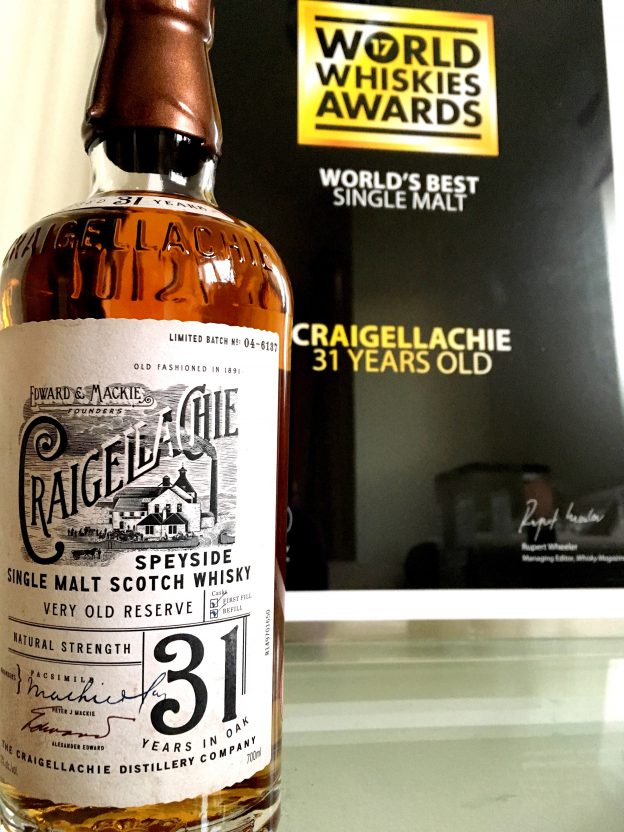
It’s Official! The World’s Best Single Malt is CRAIGELLACHIE

John Dewar & Sons Ltd. is delighted to announce CRAIGELLACHIE 31 Years Old has been awarded the World’s Best Single Malt at the World Whiskies Awards (WWA) 2017 presented by Whisky Magazine, the leading authority on the subject.

On March 30, the annual awards ceremony took place at the Waldorf Hotel in London. The WWA is one of leading award programmes in the whisky industry. An esteemed panel of internationally recognised whisky experts deemed CRAIGELLACHIE 31 Years Old as the best single malt whisky in the world, beating competition from hundreds of entries from across the world.

CRAIGELLACHIE Single Malt launched initially in September 2014 making this a highly notable accolade for a whisky which has only been available in market for less than three years.

“Since launching, CRAIGELLACHIE has built up a huge reputation in the on-trade and with whisky connoisseurs – it’s sought out and admired – and the accolade is true testimony to this,” says Georgie Bell, Global Malts Ambassador. “It shows how far the CRAIGELLACHIE brand has come in the last three years, and how from a production, maturation and blending perspective we really are second to none.”

Stephanie MacLeod, Malts Master and Master Blender for John Dewars & Sons, describes CRAIGELLACHIE 31 Years Old as being “beautifully balanced, smooth and rich, a swirl of smoke and sulphur accentuate the sumptuous fruits of kiwi and pineapple. The tang of old, leather bound books and tobacco emerge, with a hint of meatiness of a beef consommé.”

This prestigious award follows on from the outstanding success of CRAIGELLACHIE 23 Years Old being crowned as ‘Best in Show’ at the San Francisco World’s Spirits Competition in 2015, America’s most respected and influential international spirits event.

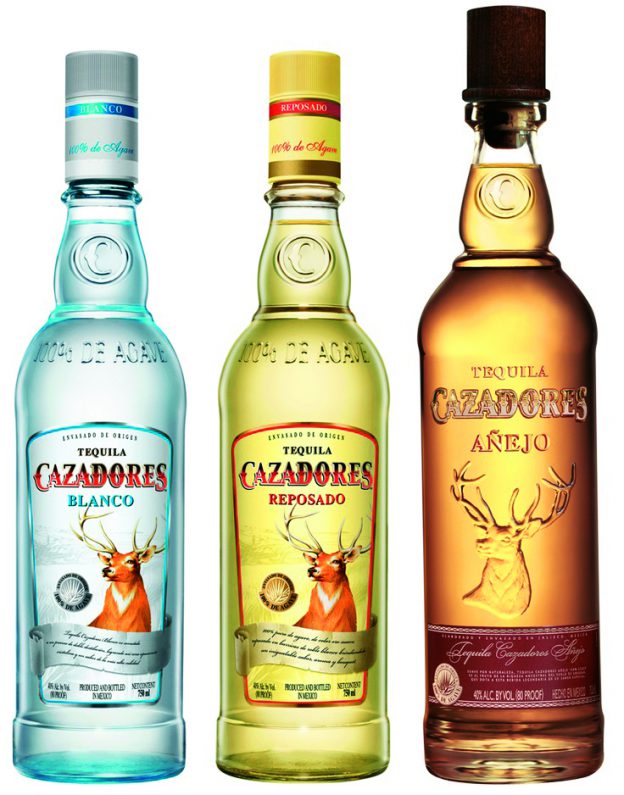
Tequila CAZADORES Captures the Real Mexico and its Hard-Working People

Timed perfectly for Cinco de Mayo, Tequila CAZADORES, the 100% blue agave premium tequila, launches the first installment of its new platform “Born in Los Altos De Jalisco.” The video and print mediums highlight the authentic and often unseen side of Mexico, bringing forward untold stories of the local characters behind the brand and from the region. The eight characters featured throughout the series embody the inherent sense of pride and personality that makes Arandas, the birthplace of Tequila CAZADORES, a magical place in Mexico worth celebrating.

“At CAZADORES we are exceptionally proud of our roots, which began, and continue to this day, in Arandas, Mexico.” says Lisa Pfenning, Vice President, Brand Managing Director, Tequila Portfolio for Bacardi in the US. “Storytelling has been a tradition in Mexico for generations and this new platform brings to life the vibrancy and the spirit of real people, with real voices, who echo our shared sense of pride for the Los Altos de Jalisco region.”

The first video in the series – launching on Cinco de Mayo – features Manny Hinojosa, tequila expert and CAZADORES brand ambassador, playfully describing the true meaning behind Cinco de Mayo. A total of forty videos, shot documentary style, will be released throughout the summer featuring eight characters who demonstrate how each plays a valued part in their community and showcase some specifically in their role in making sure Tequila CAZADORES is created with passion, pride and attention to detail. Whether it’s Jose Miranda, the Arandas town barber, Pancho, the museum owner with a passion for boxing, or Juan Martinez, a Tequila CAZADORES jimador who works alongside his son in the agave fields, each are linked by the pride in their hard work and dedication to their craft – the same way Tequila CAZADORES has been doing it for close to 100 years.

“We did not create an advertising campaign, but instead short documentaries about the liquid, the people, and the region, which showcase the deep pride that CAZADORES has for being a part of the Los Altos community,” says Zara Mirza, Head of Creative Excellence for Bacardi. “The content that was captured, which will be distributed through editorial and cultural platforms, is an inherent reflection of Tequila CAZADORES connecting to its roots and celebrating the subtleties of the everyday people and moments that link Los Altos and CAZADORES together.”

The series was directed by Santiago Fabregas, whose work is characterized by focusing on characters, stories and places and is always seeking to portray reality as it is, which is also the manner of style reflected by the “Born in Los Altos De Jalisco” photographer, Mark Alor Powell. Just like Tequila CAZADORES, the drive behind all their creative is to be made with and featuring real people with a commitment to authenticity. To view the unreleased “Why Do They Call You Coyote” video as part of the new “Born in Los Altos De Jalisco” series, please click here.

VIRTUE Worldwide, the creative agency by VICE, led by their Brooklyn office, conceptualized and brought to life the “Born in Los Altos De Jalisco” platform, focusing on true authentic characters and sharing their stories, capturing the effervescent spirit of Los Altos and Tequila CAZADORES. Consumers will find the new Tequila CAZADORES visuals in unexpected ways, in addition to social platforms, including wild postings, painted wall art, or with the videos hosted on the VICE Munchies partner page.

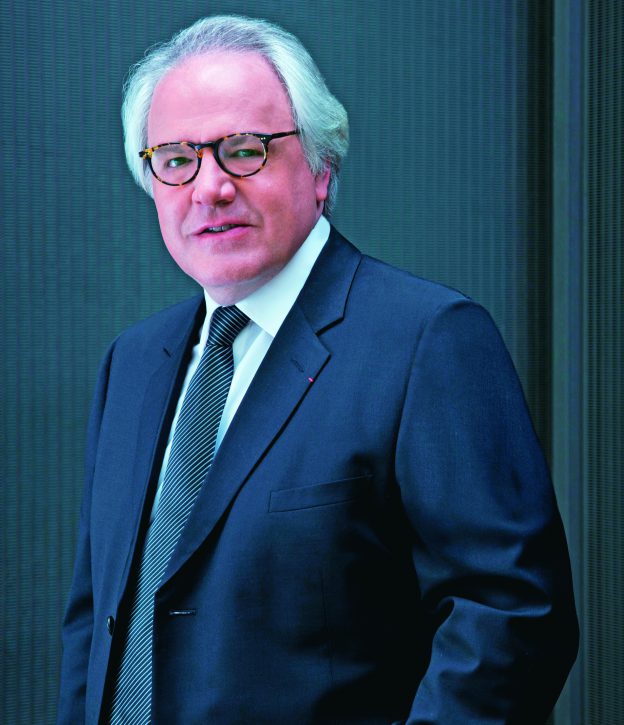
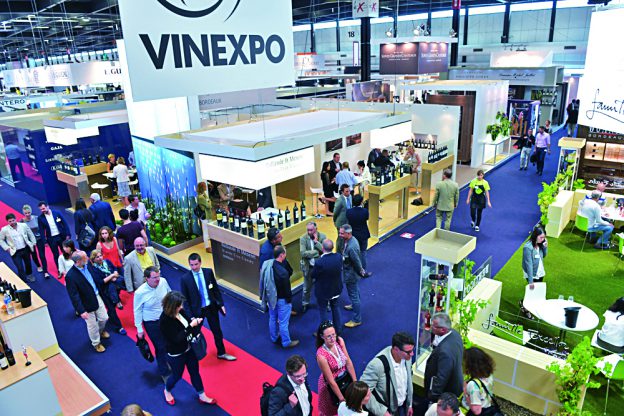
Christophe Navarre becomes President of Vinexpo’s Supervisory Board

The Supervisory Board of Vinexpo SAS, which met last month, has appointed Christophe Navarre, Chief Executive Officer of Moët Hennessy, as its new President.

Having been appointed as a member of the Supervisory Board at the General Meeting of Shareholders on 5 April, Christophe Navarre takes over from Xavier de Eizaguirre, who has completed his term of office.

Christophe Navarre also becomes President of the Supervisory Board of Vinexpo Overseas, the group subsidiary that manages Vinexpo’s international operations.

Christophe Navarre’s arrival represents a key milestone in the company’s development in France and internationally. With his experience at the helm of Moët Hennessy since 2001 and his in-depth knowledge of the major global wine and spirits markets, Christophe Navarre brings a fresh impetus to Vinexpo as it faces the challenges ahead.

“For more than thirty years the Vinexpo brand has successfully promoted the wine and spirits sector in general – and French exports in particular. I’m delighted to contribute to its development, working alongside the Management Board,” stated Christophe Navarre.

Patrick Seguin, President of the Management Board, and Guillaume Deglise, Chief Executive Officer of Vinexpo, added: “Appointing a professional of Christophe Navarre’s calibre as President of the

Supervisory Board reflects Vinexpo’s ambitions to take its skills and expertise to ever higher levels.”

Two other leading figures from the wine and spirits sector are also joining Vinexpo’s Supervisory Board: Philippe Castéja, President of Borie-Manoux and of the Conseil des Crus Classés 1855, and Philippe Guigal from Rhône producer E. Guigal.

Registrations open for drinktec 2017 in Munich

Registrations towards the forthcoming drinktec 2017 in Munich are now open. The forthcoming show will be held from September 11 – 15, 2017 at the Messe Muenchen, Germany.

Every four years the industry meets here to get new impetus for future business. What are tomorrow’s opportunities? What trends are conquering the market? Leading manufacturers and SMEs use drinktec to present their latest developments—live and in operation.

These include: Process technology; · Filling and packaging technology; Process automation, engineering, control and IT solutions; PETpoint (PET technology for beverages and liquid food); Containers, packing materials, equipment and closures; Raw materials, additives and agents; Energy systems, water and wastewater; Restaurant and catering supplies, mobile facilities, sales promotion and marketing

In 2017, SIMEI organized in Italy by the Unione Italiana Vini Società Cooperative (UIV), for the first time will be an integrated part of drinktec in Munich. SIMEI has taken place since 1963 in Milan and is considered to be the world’s leading wine technology show. In future, SIMEI will take place every four years in Munich with drinktec, the world’s leading trade fair for the beverage and liquid food industry. SIMEI will retain its traditional two-year cycle, but from now on, it will alternate venues between Italy and Munich.

With the inclusion of SIMEI, the hall space occupied by the world´s leading trade fair drinktec will extend to more than 150,000 m2. The drinktec exhibition area is located in the A and B halls and the SIMEI@drinktec exhibition area will be located in at least two of the C halls (C1, C2 & C3).

Carlsberg India launches ‘Tuborg Classic’- India’s first premium strong beer with Scotch Malts

Maharashtra to be the first state to get a taste of the new beer

Building on the tremendous success of Tuborg Green and Tuborg Strong, Carlsberg India announced the launch of Tuborg Classic, India’s first premium strong beer with Scotch Malts. Tuborg Classic, with its rich personality, is a refreshingly strong beer with imported Scotch Malts for a stronger and smoother taste. Presently launched in Maharashtra, Tuborg Classic will soon be available in select markets over the next few months.

Especially brewed for the Indian palate, Tuborg Classic is a rich tasting strong beer that offers the new generation of beer lovers a differentiated product. It is the perfect combination of strong and smooth. Superior quality scotch malts give the beer a well-rounded taste making the drinking experience easy and smooth.

Speaking on the occasion, Michael N. Jensen, Managing Director Carlsberg India Pvt. Ltd. said, “Today, consumers appreciate the distinctive quality and taste of premium beers. Keeping in line with the trends, we have launched Tuborg Classic, a brew made with Scotch Malts offering a stronger and smoother taste. We are confident this product will be appreciated by the consumers. With this launch, we aim to make Tuborg Classic one of the biggest innovations to have hit the Indian Beer industry in the last few years.”

Commenting on the new product, Mahesh Kanchan, Director Marketing, Carlsberg India Pvt. Ltd. said, “Tuborg is the number 1 international beer brand in India and is appreciated by consumers for its taste, quality and innovative packaging. With Tuborg Classic, we aim to further strengthen our commitment to the Indian market and expand our portfolio. Tuborg Classic is a great tasting beer made with Scotch Malts and offers our consumers a stronger and smoother beer experience.”

Tuborg Classic will be launched in 650ml bottles across all key markets nationally and in 500ml Cans in select markets. Maharashtra market will have both packs available.

ProWein Business Report assesses the International Wine Markets

The future of wine

In cooperation with Geisenheim University ProWein polled almost 1,500 wine sector experts from 46 countries on international wine markets, marketing trends and the development of wine sales channels. Those polled included wine producers (large and small wine-growing estates, wineries, cooperatives) as well as marketers (speciality retailers, wholesalers, importers/exporters, hotels and gastronomy). The combination of different perspectives of the producers on the one hand and the marketers on the other constitutes a unique barometer of opinions for the sector.

How does the sector view its economic situation?

The survey primarily polled sectoral leaders. These rate their current and future economic situation as satisfactory to good. It is interesting to observe that wine producers generally look to the future more optimistically than wine marketers who are in direct contact with end users. While export-oriented producers can try their luck on new export markets marketers have less opportunity to escape the structural changes of wine sales and increasing competition on their domestic markets.

On the producer side independent winemakers look to the future with more optimism than cooperatives and large wineries that find themselves amidst a strong process of concentration.

International and German specialty retailers focused on wine are the least satisfied and look to the future with less optimism than other marketers. This is primarily the expression of on-going structural change affecting wine sales channels where food retail and online channels are gaining importance internationally.

The results also reflect significant differences in mentality among countries of origin. German wine producers and marketers generally look to the future more negatively while producers primarily from Spain and Italy have very positive expectations about the future. Alongside real economic reasons these differences in expectations are sure to also reflect typical “German caution” and “Mediterranean optimism”.

What wine markets are attractive for wine producers now and in future?

The producers polled count more than 40 markets as their top 5 sales markets. Here Germany, the USA, Great Britain, Belgium and Switzerland are most frequently named as the most important sales countries. Currently rated as the most attractive sales markets among producers are Hong Kong, Switzerland, South Korea and the Scandinavian countries. Italy, France, Great Britain, Russia and Brazil are currently perceived as less attractive from the wine producers’ perspective.

What sales markets do producers expect to undergo the greatest rise in economic attractiveness?

The countries primarily named here are Russia, Hong Kong, Poland, South Korea, Brazil and China. In these assessments it becomes clear that export markets outside the traditional European wine countries will in future be of greater importance for wine producers. In addition to geographic distance producers must also overcome the cultural distance to countries that traditionally consume little or no wine and whose marketing structure often differs fundamentally from previous markets.

The lowest improvements are expected for Great Britain, France, Austria, Italy and Belgium. In France and Italy per capita wine consumption is still on a slight decline and on both markets predominantly domestic wine is drunk, which means fewer sales options for wine exporters. The forthcoming Brexit and constant rise in the tax on wine are the main reasons why wine producers rate Great Britain very low in terms of market attractiveness.

1

Changes in the future are always accompanied by risk. Producers see the greatest risk in market development for Russia, Brazil, China, Great Britain and Hong Kong. The growing levels of wine consumption expected for the Asian and South American markets are accompanied by a series of uncertainties. In addition to possible trade restrictions (Russia) and countries’ different sales structures, it is primarily the uncertainty about economic and legal development that will play a role in the years ahead. For Great Britain the risk primarily concerns the question of whether and how wine imports will be affected by import duties after Brexit and what countries of origin will sign trade deals with Great Britain.

The current and future attractiveness of a market was summarised in the form of a market barometer. By juxtaposing the market barometer and the risk four different market types can be identified (see table). The markets with high attractiveness and low risk in the lower right-hand box include Poland, Australia, Japan, Canada and the Scandinavian countries. These are countries where wine consumption has risen lately or where a coherent local trading structure exists with the monopolies. High attractiveness alongside high risk is the case for Russia, Brazil, China and Hong Kong in the upper right-hand box. Markets with low attractiveness and high risk are Great Britain and Italy.

3 2

What new markets do firms want to enter by 2020?

Nine out of ten leading international wine producers plan to extend their exports to new markets by 2020. Among wine exporters from the large European producer countries Italy, Spain and France this proportion stands at almost 100% and in Germany, which exports less, it stands at 55%.

Those countries which producers most often say they wish to extend exports to are the USA, Germany, Great Britain and China (see chart). It is predominantly China, Hong Kong, Russia, Japan, Australia, South Korea and Brazil that are named as new export destinations with the most disproportionate frequency relative to their currently low importance. For European wine producers successfully operating on these geographically and culturally distant markets in Asia and Oceania represents a great challenge over the next few years.

4

Which wine origins are in demand from marketers?

Two-thirds of international marketers attending ProWein wish to include wines from new countries of origin in their product range. Among German marketers the figure is only one third. Amongst other things this is because the wine range in Germany is already extremely international.

International marketers are most interested in including in their portfolio wines from Germany, Spain, Italy, Portugal and France (see chart). On the other hand, German marketers show the greatest interest in the countries of origin Austria, Portugal, Italy and Germany followed by France, Spain and South Africa. What is surprising here is that Austria and Portugal rank at the top of the list which might reveal some new market trends. Interest in Italy, France and Spain is less surprising as these are the main import countries on the German wine market.

5

What are the purchasing and sourcing channels of the future?

For marketers’ purchasing channels there is a clear trend towards shortening wine procurement channels. Marketers are clearly striving to increasingly source their wine direct from a small wine-growing estate or to a lesser extent directly from a large winery (see chart). By comparison, procurement via sales agents (importers, distributors, wholesalers or wine agencies) will decline considerably among marketers by 2020. This means for sales agents more difficult times lie ahead, which are in part already being indicated in their somewhat less optimistic outlook on the future. Small wine-growing estates, on the other hand, will need to rise to new challenges of coping, administratively and logistically, with the increasing direct enquiries from marketers.

Via what sales channels will wine reach end consumers in future?

Producers whose main sales market is Germany currently value speciality wine retail, gastronomy and ex-cellar sales as their most important sales channels. For the future, departing from the current low basis, a strong increase in online sales via wineries’ own online stores and external online retailers as well as food retailers is expected. For speciality wine retail, on the other hand, another stronger decline is expected which is less pronounced for gastronomy (see chart).

In the USA very similar trends can be observed concerning increased wine sales online and via food retailers and a decline in wine merchants/speciality wine retail. Unlike in Germany, where ex-cellar sales from small wine-growing estates are considered stable, this trend is anticipated to rise strongly in the US. This specific development reflects two current trends in the US: the number of small wine-growing estates is currently growing at a rate of 4% and “direct-to-consumer” sales from winemakers to end consumers is booming with double-digit growth rates.

How will wine be successfully marketed in future?

In the wine world competition between marketing via a wine’s origin (also terroir) or its brand has taken off. Who will be seen as the winner in future? The majority of both marketers and producers agree that in future wine will be marketed most successfully via its origin.

Surprisingly, the significance of the brand will in future be greater from the producers’ perspective than it is from the marketer’s. Among wine producers there are great differences. Firstly, the Mediterranean countries France, Italy and Spain focus much more on origin while in Germany the personality of the winemaker plays a greater role in marketing. Secondly, it is not surprising that winemakers focus more strongly on personality than cooperatives or large wineries.

Verdict

The verdict we can draw is that the wine sector is facing changes that are also reflected in the different future outlooks of the various market participants. Producers are increasingly looking to new distant wine markets and marketers are facing structural changes in the sale of wine where primarily sales via traditional wine merchants will decline. By contrast, purchasing wine via food retail and online will continue to rise. The wine trade between producers and marketers will change and supply chains will become even shorter as wine will be ordered direct from the producer. It will be interesting to see how this development unfolds over the next few years.

The study was conducted on behalf of ProWein by Geisenheim University’s Department of Business Administration and Market Research headed by Prof. Dr. Simone Loose and Heinz Küsters, Director of Market Research at Messe Düsseldorf, and their teams. ProWein and Geisenheim University also look forward to successfully continuing the ProWein Business Report in the coming years. This will provide the opportunity to check whether current expectations prove correct in future and see what currently unexpected changes will arise. In addition to providing long-term analysis of an international trend barometer, special interesting annual themes will be incorporated into the survey questionnaires. We thank survey participants and hope to also see continued avid participation among wine producers and marketers.


VINEXPO CONFRONTS THE CHALLENGES OF BREXIT

With UK elections around the corner, BREXIT once again becomes the hot topic of discussion.

On the eve of the historic triggering of Brexit negotiations, VINEXPO has pinpointed five key issues facing the wine and spirits industries which it will seek answers to at the June exhibition. The issues will be confronted at a conference in Bordeaux’s Parc des Expositions on Tuesday, June 20 at 4.00 pm.

The five topics identify key challenges for the UK and world wine and spirit industries: Trade agreement update; Main challenges for the W&S industry: The impact on the UK market in terms of duties; Consumer prices, category management and distribution; Whether the UK will lose its leading position for re-export?; Duty Free/Travel Retail opportunities; and Protection of designation of origin areas.

The conference opens with a review of the current EU trade agreement regarding wine and spirits

imports, exports and tariffs.

Upwards of 48,000 wine producers and buyers from 150 countries are expected to attend VINEXPO in

a climate this year of intense questioning about the impact on Brexit of trading conditions, prices and

sources of supply.

Jane Anson, wine writer who will moderate the conference during Vinexpo says, “Because the UK is

the world’s second largest imported wine market and a major spirits exporter, the Brexit challenge is

as acute for the UK as it is for wine producers in France, Italy and Spain and elsewhere in the world.”

Guillaume Deglise, CEO of VINEXPO added, “In a wider context, among our 48,000 attendees there will be producers and buyers currently excluded from the EU favourable tariff zone who see Brexit as an opportunity to penetrate the UK wine and spirits market.”

The value of UK wine imports is running at circa £28 billion according to VINEXPO/IWSR data for 2015. Volume imports are forecast to slow over the next five years.

Exports of all spirits from the UK reached £4.9 billion in 2016, according to the Wine & Spirit Trade

Association, the major part lead by Scotch whisky exports.

The line up of speakers will be announced in the coming weeks.

India Witnesses Beer Growth

With the beer consumption increasing in the country, industry experts say that Indians are fast catching up in their beer consumption as can be seen by the figures released by research agencies. India’s beer market is expected to reach volumes of nearly 470bn litters by the end of this year-a near thousand fold increase since 2011, read Food Navigator-Asia’s website.

The beer market is rapidly expanding and is expected to reach $9billion in 2018. It is the third largest market in the Indian alcoholic beverages industry. The size of the beer market has virtually doubled every five-and-a-half years. Beer market has been segmented into strong beer and mild beer on the basis of their alcohol content.

The country has 85 large breweries and a heavily centralised market, with just four large global players controlling 86 per cent of the market. With Heineken, Budweiser, SABMiller and Carlsberg enjoying brewing hegemony, India now ranks among the top five markets in Asia-Pacific in terms of volume, stated Food Navigator-Asia’s website.

According to ‘Outlook for India’s beer market’ report, beer sales in India are expected to see an annual growth of 7.5 per cent over the next five years despite regulatory hurdles, as rising disposable incomes in the hands of middle class will lead to higher spending.

“We believe India holds significant long-term growth potential as a beer-drinking culture is growing in momentum. We expect to see increasing levels of investment into the market from both local and global players over our forecast period,” the report said.

It further stated, “While spirits will continue to dominate India’s alcoholic drinks market, we expect to see strong growth in beer consumption over our forecast period. In volume terms, beer sales will rise at CAGR of 7.5 per cent between 2017 and 2021.”

Beer continues to be readily accepted, especially amongst the youth. In addition, prolonged periods of hot weather have a positive impact on the performance of beer in both on-trade and off-trade. Furthermore, the proportion of beer consumption is not skewed towards weekends as much as spirits, thus considerably increasing the occasions for beer consumption. Beer being a low alcohol by volume (ABV) beverage has also increased its proposition as a refreshment/entry level drink, especially amongst the youth, which currently is the biggest demographic segment in India. Also growing popularity of micro-breweries has promoted awareness and indirectly demand for off-trade beer sales

Craft beers and microbreweries are niche concepts in India which have been growing for past few years and are beginning to take shape now. They are mushrooming in many parts of the country. This is an emerging trend that is certainly attracting middle class Indians, particularly in urban areas. The craft beer market in India is pegged at Rs. 280 crore and may grow to Rs. 4,400 crore by 2020.

Beer in India is dominated by the off-trade channel which accounts for 79% of volume sales. 97% of the off-trade sales are through the food/drink/tobacco specialist channel. These are stores that are called ‘wine shops’ and are present in every city across India. However, companies are focusing on increasing their sales through the on-trade channel. Oktoberfests or beer festivals are organised in cities like Bangalore which is famous for its pub culture.

Jagatjit Distilleries set to regain its glory days

Once a formidable Aristocrat in the liquor industry Jagatjit is now recovering its lost glory and is looking forward to a new beginning under the stewartship of Roshini Sanah Jaiswal, Promoter, Chief Restructuring Officer of Jagatjit Industries. The Jagatjit story began when Ladli Prasad Jaiswal was gramted 300 acres by Jagatjit Singh, the ruler at a small place called Hamira on the road to Amritsar. Jaiswal put up a distillery there and named it after the king: Jagatjit Industries.

The erstwhile families of L P Jaiswal and NN Mohan, who acquired the Mohan Meakin from the British founders, used to rule over the Indian liquor industry before Vittal Mallya and Manohar Rajaram Chhabria took over during the 70s and 80s.

In the early 1990s, Jagatjit Industries formed a 50/50 venture with Hiram Walker and with Brown-Forman. that too met with the same fate. These partnerships were attempts by Jagatjit Industries to go premium. But as they ended the company was left with Aristocrat, with its many variants including ACP Neat and ACP Sexy, which catered to the mass market. Its volumes slid from 12.5 million cases in 2011 to 8.5 million last year and Roshini expects it to touch 9 million cases in 2016-17.

Roshini Jaiswal’s first venture was a lounge bar called 180 Proof in Bengaluru. Bars, lounges and pubs are a tough business. With the Supreme Court ruling of not permiting bars, restaurants, liquor vends 500 kms away from highways, her liquor business if feeling the heat. Demonetization qffected the business by 25 per cent and with 25 per cent of the vends along the highway this could impact the business in the short term. The ban does not address the problem of drunken driving. By restricting sale it does not mean consumers cannot get their drinks. Drunken driving is best stopped by creating highway patrols even to the tune of 100,000 by hiring people who can revoke licenses of people who break the law of drunken driving, she advocates. In places like Dubai and the US, people don’t drink and drive because they are scared of the law. No country has such restrictions. With patrols every 10 kms this could be a deterrent. The move to make Daman a part of Gujarat is also a bad move. It will kill tourism and the nation will also be seen as regressive and irrational.

At the moment, her priority is to get a full portfolio of products and brands at premium prices. Her company has taken some steps in that direction. Thus, it has come out with Royal Pride blended (Scotch with Indian) whiskey, King Henry VIII Scotch whiskey and Clan Sinclair Single Malt. While King Henry VIII is bottled in India, Clan Sinclair is bottled in Scotland. Jaiswal has also decided to make AC Black from grain instead of molasses in order to give it a premium spin. Even our country liquor in Punjab is made using grain spirits as the ENA is of good quality and molasses is not environment friendly, she emphasizes.

As part of the restructure, Jagatjit Industries also bought in international packaging house Sedley Place UK to refresh the packaging for its popular whisky brand AC Black and ACP. In addition, the Company worked with the Inver House Distillers from Scotland to improve the blends.

In the next 8 months she hopes to break even on EBITDA which is currently negative to around 35 lakhs. It would have been positive today, if there was no demonetization, she says. We have rationalized sales in markets like Kerala. The company is working on a royalty basis. Focus is on the northern markets and the distillery which is large and functional is being revamped to meet production needs. We have also built a strong team with new people, visible changes to the packaging giving the confidence to the sales teams to easily meet their targets. With diversification, reduction of costs, and the launch of new brands in the South we should meet our targets of 35 per cent and above. With 10 per cent growth we cannot reach our target of 12.5 million cases. Wiht our brands being well received this will be a critical year. Our March 2017 turnover should be around 900 crores. We hope to infuse funds to meet our last leg of growth.

Jagatjit Industries is now a household name in the IMFL sector with a particularly strong presence in Southern states of Andhra Pradesh and Kerala, in the East across Orissa, West Bengal and Jharkhand, and across India’s North and Northeastern states.