Author Archives: Bhavya Desai

Jagatjit Industries brings disruptive technology with Lost Spirits Technologies

An award-winning distilled spirits company which uses innovative accelerated ageing technology to manufacture its products will raise the quality of Jagatjit’s IMFL brands at an affordable price. The technology will also be made available to all players in the industry who choose to use it in India.
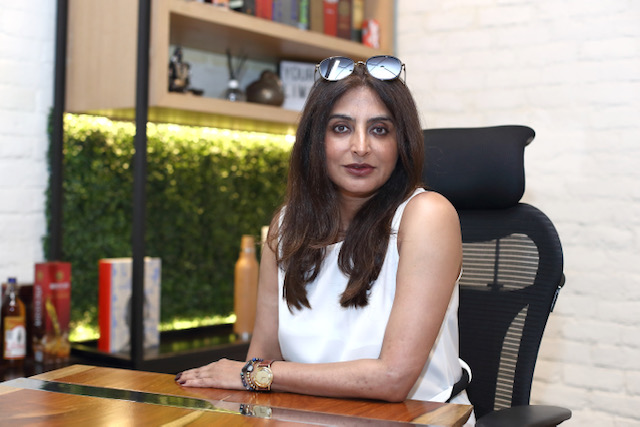
Roshini Jaiswal, Chief Restructuring Officer (CRO), Jagatjit Industries


Jagatjit Industries Limited (JIL), one of India’s oldest and established Liquor company, engaged in Indian Made Foreign Liquor (IMFL),Country Liquor, Malted Milk Foods, Malt extract and Real Estate, recently announced its proposed partnership and association with Lost Spirits Technologies (LST), USA, an award-winning Los Angeles-based distillery adopting disruptive accelerated ageing technology producing whiskey and rum.

LST is a pioneer and the most successful company to have mastered and demystified the chemistry involved in the barrel ageing of spirits and has been very successful in creating technology which can replicate very high quality accelerated ageing of alcoholic spirits. LST has been widely acknowledged for its use for this disruptive technology which results in replication of a 20 year aged alcoholic spirit in a span of six days producing the same chemical signature and taste.

With this association Jagatjit Industries Limited (JIL) will enhance current product portfolio and launch new products in the premium segment using this technology in the near future. The joint venture will help Jagatjit launch a premium whisky in the next three months and reduce its dependence on imports from Scotland and the high costs associated with barrel-ageing, the company said. The partnership will also allow the technology to be made available to all players in the industry who choose to use it in India. Since India is one of the largest liquor markets in the world, it is JIL’s objective to use this technology to reduce the dependence on imports from Scotland and the prohibitive costs associated with barrel ageing. With this technology JIL will strive towards world class aged and matured alcoholic spirits which will be “Made in India”. It will also further India’s position as a world class whisky hub capable of producing top of the line alcoholic spirits at very competitive price, further reducing import costs and increasing export value.

Talking about the association, Bryan Davis, Founder & Chief Executive Officer of Lost Spirits, said, “India is the world’s largest individual whiskey market. So for Lost Spirits, choosing a technology partner in India was a very important decision. We ultimately chose to work with Jagatjit Industries for a variety of reasons. We were seeking a partner with both the manufacturing and distribution capability to follow through at scale and a management style compatible with our board of directors. We believe we found the right partner in Jagatjit and Ms. Roshini Jaiswal. After working together for the past 18 months, we are delighted to see the project progress and excited to share the forthcoming developments.”

Photo Credit: Laurel Dailey (PRNewsfoto/Lost Spirits Distillery, LLC)


Roshini Jaiswal, Chief Restructuring Officer (CRO) of Jagatjit Industries, said, “Jagatjit Industries has always been a company that has been on the forefront of change and innovation. The founder Late Mr. L.P. Jaiswal was a visionary who set the trend by bringing in path breaking associations to India in the form of his tie-ups with Pepsico, Ovaltine and being the first company to introduce Bottled In India (BII) scotch in the form of Teachers Whisky. True to tradition we are now announcing our association with Bryan and Joanna (co-founders of LST), an association which will allow us to reshape the industry. This partnership between JIL and LST was possible because of the synergy in the vision of Bryan, Joanna and I which has allowed us to work very successfully together in bringing the company to a scalable position in the last 18 months. This is a significant strategy for our future to remain sustainable, designed to strengthen Jagatjit Industries, and to create long-term value for our shareholders and stakeholders across the value chain.”

The move is being described by Roshini, as the last part of the overhaul process she initiated ever since she came on board about five years ago. She has tried to make the management leaner, struck debt-restructuring deals with private equity company KKR and Indiabulls Commercial Credit, strengthened distribution networks and withdrawn from loss-making markets.

Roshini added:“Jagatjit Industries has always been a company that has been on the forefront of change and innovation. True to JIL’s tradition, we are announcing our investment in LST, which will allow us to reshape the global spirits industry. Disruptive technology is the future across all business categories. Uber, AirBnb, Smartphones, Tesla, have clearly demonstrated the impact of innovative technology. The accelerated ageing process developed and patented by LST will revolutionise the global spirits industry. The quality and cost advantages of this technology are unparalleled as compared to its predecessors.”

“Our future with disruptive technology is coming after series of steps that we are taking as a part of our restructuring exercise. The restructuring exercise started with our need to create an asset light, low working capital model at the national level by embracing established and strong partners/associates in every state who would be able to effectively utilise their existing manufacturing and distribution facilities for growth at lower cost. This restructuring has enabled JIL to work on product development, packageing and the new technology for the required push necessary for our state associates. Needless to say this transition has resulted in temporary disruption in sales volumes over the last few seasons.”

Further she pointed out, “Through this investment, we have also entered into an agreement with LST specifically for the Indian market. We will not only use this technology to improve our own product portfolio (and reduce costs at the same time), but will also license this technology to others in India. Further this will also exponentially grow India as an export hub. This is a significant strategy for our future to remain sustainable, designed to strengthen Jagatjit Industries, and to create long-term value for our shareholders and stakeholders across the value chain.”

Jagatjit, set up under the patronage of the Maharaj of Kapurthala and founded by the late L P Jaiswal, will use the technology to make the product in its distilleries. The move comes at a time when legacy Indian spirits makers such as Mohan Meakin, House of Khoday and Jagatjit have been struggling to cope with the stiff competition from the larger multinationals and seen their market share dwindle. While Jagatjit did not specify the nature of the whisky it intends to make, Meakin and Khoday have launched single malts in the last few months.
  • This technology was granted patent in the USA in the year 2017.
  • This breakthrough technology has earned LST encomiums in the form of:
  • Liquid Gold Award- Jim Murray Whisky Bible ( top 5% of Whisky)
  • Best World Whisky in Dominic Rioskrow’s Wizards of whisky
  • Best in Class for oven proof rum at the Miami Rum Renaissance
  • Favorable reviews in Whisky Advocate Magazine
  • Nominated for Craft Distillery of the Year in Whisky Magazine
  • Best in Class for super premium rum from the Spirits Business UK
AABL walking ahead of the competition

It all began in Madhya Pradesh when Associated Alcohols & Breweries Limited (AABL) was incorporated in 1989. The company was set up by its founder Chairman – the Late Bhagwati Prasad Kedia and has grown to become one of the largest distilleries in India today and the flagship company of the Associated Kedia Group, a `3000 million liquor conglomerate with interests in liquor manufacturing and bottling.The Group is in liquor trade since the last four decades and in an exclusive interview with Ambrosia,the management dwells on its history and the road ahead.

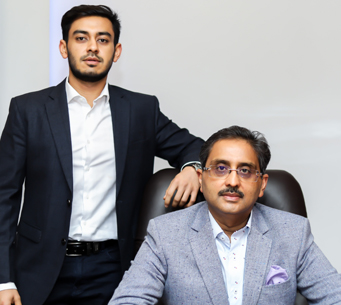
Anshuman Kedia and Anand Kedia

Growing over a period of four decade is one thing and also ensuring that you stay ahead of the curve is another. AABL till date produces 4 million cases of country liquor per annum and has cornered a market share of approximately 20-22% in Madhya Pradesh. “We have come a long way since 1989,” says Anand Kedia, Chairman of AABL adding that the company’s journey started from trading in molasses, country liquor and IMFL to now becoming a premium brand manufacturer. “In 1986 we applied for a license and by 1989 we started manufacturing quality Extra Neutral Alcohol (ENA). We soon transitioned from molasses to grain based ethanol and from day one of Diageo’s existence in India we have been manufacturing products for them. Some of these include Gilbey’s, Triple distilled vodka namely Smirnoff, Black & White, Vat 69 and Black Dog,” says Kedia. Our USP in the industry and the market is best quality in ENA and we have been supplying ENA to companies like USL, Pernod, ABD among others. We also supply ENA to other states and their demand for the same is through the roof says Anand. Their ENA manufacturing capacity has now increased from 31 million litres to 45 million litres with AABL having the licenses to produce upto 90 million litres.

Aspri Spirits launch Tito’s Handmade Vodka in India

Tito’s hand made vodka has become a successful brand and has catapulted its founder Bert Beveridge into the Forbes top 400 richest men in the world. John McDonnell, Managing Director International, Fifth Generation Inc, shares some of the reasons the brand has become a sensation.

John McDonnell

In 1995, Bert “Tito” Beveridge launched Tito’s handmade vodka with a philosophy “I was raised that if you are going to do something, do it right, do it better than anyone else, and charge a reasonable price.” -Tito. His philosophy has paid handsome dividends and it’s worth billions now, with $190 million in sales already and around 58 million bottles sold in 2017. To put it simply, in a 52-week year, means more than 1 million bottles of Tito’s being sold per week.

Tito’s Handmade Vodka is America’s Original Craft Vodka. It obtained the first legal permit given to one person to distill in Texas and created Tito’s Handmade Vodka. Says McDonnell, we batch distill our corn-based vodka using old-fashioned pot stills and the vodka is naturally Gluten-Free. Tito’s Handmade Vodka is distilled and bottled by Fifth Generation Inc. in Austin, Texas on the very same land where the whole venture started. Mr. McDonnell has been leading the spectacular global expansion for Tito’a Handmade Vodka – growing it in just two years from only a few international locations to 125 countries today, India being one of them. Considered as a man with a golden touch, John McDonnell, in his eight years at the helm of The Patrón Spirits Company aided tenfold increase in sales of Patron and the brand exploded in travel retail.

Grover Zampa on a growth spree

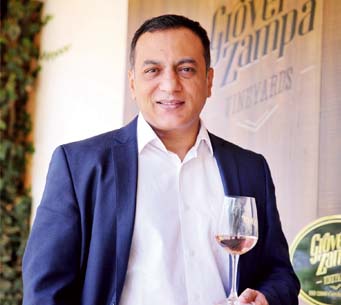
Vivek Chandramohan, Chief Executive Officer, Grover Zampa Vineyards, outlines the company plans as it expands in India and internationally.

Vivek Chandramohan


What are the new developments happening at Grover Zampa?

We have fortified our capacities and we will continue to innovate and introduce new wines tailored to suit the Indian palate. Also, in the offing is investment on new land to build a state-of-the-art Winery in Bangalore. We have also expanded our international footprint by venturing into newer markets and are exploring newer opportunities. For starters, the recent investment by Grover Zampa’s stakeholders of Chateau d’Etroyes is a matter of great pride for us. We are the first Indian winery to have claimed stake at a French winery, situated in the very heart of France – Burgundy. Our unison aims to bring together the best of both the regions, by combining Burgundy’s traditions of winemaking with India’s fresh wine making approach and unique terroir. With this alliance, we hope to help Indian wine aficionados discover the elegance and sophistication of burgundies while allowing the transfer of knowledge between the nations for their mutual benefit. Furthermore, owing to quality of our wines and our incessant efforts to create unparalleled experiences, we are now associated with Alain Ducasse au Plaza Athénée, a Michelin 3-star restaurant in Paris along with many other Michelin-starred restaurants around the world. In terms of distribution, we are already exported to 22 plus countries and are working vehemently to increase this number.

Is there any new philosophy used for the production of wines?

Our wineries are operated by qualified winemaker Mathias Pelissard with expert consultation given by Michel Rolland and his team and Simon Robertson renowned viticulturist. The philosophy of production of wines in the vineyard remains very focused on adapting and fine tuning each wine during the growing season. We ensure that there is a rigid temperature control for both heating and cooling during all phases of grape processing, wine production and storage. The prime importance is given to the vineyard site. Its location, climate, soil, aspect, drainage, air movement, fog, row direction, training methods and most important the vineyardist’s desire to create quality fruit to make wines which are true reflection of their grape varietal and terroir. Broadly speaking here are the basic steps for making a wine: Harvest the grapes; Crush the grapes; Ferment the grapes into wine; Age the wine and Bottle the wine. During harvesting white grapes are usually picked first followed by red varietals. At Grover Zampa Vineyards, they are hand harvested rather than harvested by a machine. At the next stage, they are hand sorted on sorting tables to ensure we use the best grapes and then destemmed and lightly crushed by a machine. At this stage, the grapes for white wine (most frequently white grapes) are crushed by a press and the juice extracted leaving behind the skin. The juice is then put into tanks to allow the sediment to settle and then racked which means that the sediment is left behind and they are put into a new tank for fermentation. For red wine, after the red grapes are lightly crushed and destemmed they go straight into the tank for fermentation with skins included, which are instrumental in giving red wines their colour, tannins and richer flavour. Yeast is added in the tank for both red and white wines to allow fermentation to take place. Red wines are racked i.e. sedimentation removed after the fermentation has taken place. In terms of ageing the wine, there are multiple options. They can be aged for months or years and can be aged in stainless steel tanks or in a variety of different barrels e.g. French oak, American oak, used, toasted etc. The way that they are aged imparts different flavours to the wine.Once they have been aged, they are bottled. At Grover Zampa, the grapes are processed in a cooling room. We have controlled cellars equipped with modern resources such as temperature controlled tanks and our own bottling lines. This ensures that the quality remains uncompromised throughout the winemaking process. Winemaking is done in different tanks according to the different kinds of grape and the plot of land where the grape has come from in order to respect the specificity of each terroir. Most of the wine processing equipment and tanks are imported, mainly from Italy, which is known for being one of the best manufacturers of stainless steel cellar equipment.

How are the wines faring in the export market?

We have wines of various quality, styles and price points to satisfy the diverse demands of the Indian and International patrons of our wines. Our vision has always been to be known as the finest winemaker of India, which is translated into the efficacious wine making processes undertaken by us to ensure that our wines are always of top quality. Currently, our wines are exported to over 22 countries with the biggest markets being France, Japan, USA, Germany and UK. As a result of this commitment to quality, Grover Zampa Vineyards won 111 international grand awards for 13 wines, from 7 competitions, across 3 continents. In 2017 alone, Grover Zampa Vineyards won 21 awards at many prestigious events including the Decanter Asia Wine & Spirits Awards and the Hong Kong International Wines and Spirits Fair.

What is the total production premium wine per annum?

Grover Zampa has seen a tremendous growth in super premium and premium wines as people trade up within the category. This is a trend consistent with other alcohol categories where, for example in whisky, single malts have been seeing much higher growth then their cheaper blended counterparts. Super premium wines (wines priced at around `2000 and above) have seen around a 45% growth rate in the last year alone and continue to grow at a higher pace this year. The volume of premium wine in India currently stands at around 25 million bottles according to IWSR data (2015-2016), with Indian wine making up 75% of this volume although imported wines are gaining share. Within this category red wine dominates making up over 60% of the volume sold – being more suited to the rich and aromatic Indian cuisine. Unlike other alcohol categories, wine is bought equally by men and women, perhaps as a result of the widely held belief that wine is a healthier and more sophisticated option to other beverages. And contrary to popular belief the 25-34 age group are picking up wine as frequently as other age groups – again perhaps the result of wine’s prominence in popular culture. As of now, Premium wine is seeing good growth rates of around 10%, the highest growth of any alcohol category, but there are huge opportunities to increase this even further by exposing a youthful emerging middle class to wine and its many benefits. The total Wine production according to ASSOCHAM has reached 21 million litres from 17 million litres.

How do you view the Indian market’s prospects?

The wine industry in India has witnessed an upward progression in terms of both sales and popularity (between 10 and 15% per year). This growth has been fostered by factors such as the country’s growing affluence and increase in abroad travel that has invariably exposed Indians to the international wine scene. Of this growth, Grover Zampa Vineyards hold a significant share as the second largest winery in India and the most highly regarded brand in terms of qualitative, premium wines. Most recently, there has been a visible spike in growth of super-premium wines in India – those priced at around `2000 and above, as people trade up. According to our statistics, this category has grown by 45% in the last year which is great news for us as we focus mainly on premium wines and have two wines that fit in this category. Chêne Grande Reserve priced at around `1900 and Insignia – our single vineyard wine – which is priced at `6000 for a magnum and is only available to buy at our vineyards or to select private customers. While there was a slow-down last year because of the highway ban, the outlook this year seems robust and should continue on either 15% or higher growth rates overall.

Have you considered getting into brandy?

At this point we will stay with wine production.

What style of wines are most popular in India?

When talking of wines that are most popular I would say that the super premium wines are gaining popularity, rose is seeing growth as well. But when it comes to the growth in sales most of the premium wine sells in the Art Collection range. Prosecco and similar style of wines are also making inroads and growing rapidly in sparkling wine category. Keeping that in mind Grover Zampa will be launching something very unique in the sparkling wine range this year.

Cheers for Ethanol


With oil prices on the uptake the need to blend ethanol at a faster pace is the need of the hour. A boon for sugar mills considering that India imports 20% of its oil requirements.


Coming to the aid of cash-starved sugar mills, the Cabinet Committee on Economic Affairs has decided to raise the prices of ethanol derived out of molasses by `2.85 a litre. The Committee decided to raise the price of ethanol derived out of C-heavy molasses to `43.70 per litre from `40.85, excluding GST and transportation charges.

Similarly, for the first time, the CCEA has fixed the price of ethanol derived from B-heavy molasses and sugarcane juice at `47.49 per litre, excluding GST and transportation charges. These prices are based on the estimated Fixed and Remunerative Price of sugarcane and will be applicable for the ethanol supply year, starting December 2018 and ending November 2019.

He also said that this will be one more step towards achieving 10% ethanol blending, for which 313 crore litres of ethanol is required, according to industry body ISMA. More ethanol blending translated into lower crude imports. The ethanol procured by Indian Oil, HPCL and Bharat Petroleum has increased from 38 crore litres in 2013-14 to an estimated 140 crore litres in 2017-18. Mills are expecting revenue realisation of over `5,000 crore from sale of ethanol to OMCs during the 2017-18 sugar season (October-September).


…………………