Tag Archives: Sustainability

Diageo India Delivers Tangible ESG Gains in FY25

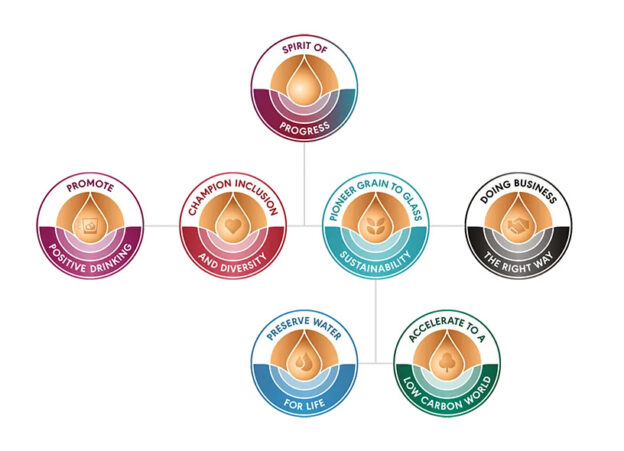
Diageo India recently released its fourth annual ESG Reporting Index, spotlighting advancements on its ‘Spirit of Progress’ ESG action plan. The Reporting Index outlines the company’s impact across three pillars of its Spirit of Progress framework: pioneering grain to glass sustainability, championing inclusion and diversity, and promoting positive drinking, all anchored in doing business the right way.

 Developed in line with the globally recognised GRI Standards, the Index also maps Diageo India’s performance against the UN Sustainable Development Goals (UN SDGs) and provides additional sector-specific disclosures under the Sustainability Accounting Standards Board (SASB) framework.

Jitendra Mahajan, Chief Supply and Sustainability Officer, Diageo India, said, “Our Spirit of Progress ESG agenda reflects the business we are deliberately building—one that grows responsibly, leads with integrity, and creates long-term value. From strengthening water security and accelerating our transition to renewable energy, to advancing inclusion and promoting responsible consumption, our actions demonstrate that a focus on ESG powers performance. As we deepen this momentum, we remain committed to working with partners to build resilient communities, protect natural resources, and shape a more sustainable future for India.”

Under its grain-to-glass sustainability pillar, Diageo India reported major gains in water efficiency, replenishment and collective action, improving water-use efficiency by 54% in distillation and 35% in packaging since 2020 while replenishing 182,000 cubic metres of water in FY25 (cumulative 1.1 million cubic metres) across Maharashtra, Uttar Pradesh, Rajasthan and Meghalaya, continuing to expand WASH interventions and maintaining AWS certification for its Alwar unit, while also co-founding The Godavari Initiative to restore aquifers and build watershed resilience in the Godavari basin.

On carbon and energy, the company has cut GHG emissions by 93% since 2020 by moving all distilleries to biomass-powered boilers and now sources 99% of its energy from renewables including 2.7 MW of in-house solar, achieving zero waste to landfill, reaching 99% recyclable packaging, and integrating 33% r-PET into its PET bottle portfolio, alongside community-led carbon projects including 31,500 mangrove seedlings in Odisha, 1 lakh trees for residual offsetting, and 2 lakh trees planted under Rajasthan’s TOFR programme, while regenerative agriculture efforts have trained 430 farmers—80% smallholders—across 2,000+ acres.

Advancing inclusion and diversity, Diageo India reported women’s representation at 28% of the executive workforce, 30% of the leadership team and 50% of the Executive Committee, supported by active ERGs such as the Spirited Women’s Network and Rainbow Network, while Project Saksham enabled the hiring and upskilling of 43 Persons with Disabilities and Learning for Life trained 1,922 individuals—including 1,282 women and 303 PwDs—bringing women’s participation across Diageo skilling programmes to 67%, and the Diageo Bar Academy trained over 9,400 bartenders and bar owners, as the company continued to strengthen inclusive workplaces recognised by a Gold Employer ranking at IWEI 2024 and a 16th position in Equileap’s Emerging Markets Gender Equality Report 2024.

Diageo India’s responsible drinking initiatives continued to scale nationwide, with Act Smart India reaching 200,000 youth in FY25 (cumulative 500,000), the Wrong Side of the Road anti-drink driving platform implemented across 79 RTOs in 10 states engaging 500,000 consumers in FY25 (total reach 1.2 million since 2021), and the DRINKiQ platform reinforcing moderation and awareness around alcohol-related harm.

Strengthening governance remained foundational to Diageo India’s ESG agenda with a diverse Board led by an Independent Chairperson, all key committees chaired by Independent Directors, and ESG oversight embedded through cross-functional teams reporting quarterly to the Executive Committee, reinforcing the company’s commitment to doing business the right way and driving sustained ESG leadership in India’s alcobev sector.
Growth of $4bn+ Expected from No-Alcohol Category by 2028

The no- and low-alcohol drinks market is experiencing a transformative period of growth, driven by evolving consumer behaviours and the momentum of no-alcohol. Across 10 key markets, the combined no/low-alcohol market is expected to expand by +4% volume CAGR through 2028, with no-alcohol driving the majority of this growth, at +7% volume CAGR, while low-alcohol volumes remain broadly static. The no-alcohol category is expected to deliver incremental growth of US$4bn+ by 2028, according to the latest findings from IWSR Global Drinks Industry Data.

IWSR stated that ‘No- and Low-Alcohol Strategic Study 2024’ shows that the no-alcohol segment recruits more new consumers than its low-alcohol counterpart, with an increase of 61 million buyers versus 38 million for low-alcohol (2024 vs 2022) in the 10 key markets (Australia, Brazil, Canada, France, Germany, Japan, Spain, South Africa, UK, US).

New recruits entering the category are skewing younger than the core buyer demographic across markets, and demonstrate higher frequency and intensity of consumption. In line with global trends, alcohol purchases among no/low buyers are decreasing, particularly in the beer and wine categories. Across the 10 key markets, per capita consumption in litres of pure alcohol is at 80% of its level in 2000.

As the no/low category develops and more products come to market, other drivers besides alcohol moderation are becoming increasingly important in increasing consumption frequency, particularly in emerging no-alcohol categories. Factors such as taste, availability and brand are increasing in importance in categories outside of no-alcohol beer.

Susie Goldspink, Head of No- and Low-Alcohol Insights at IWSR, notes: “As the no-alcohol category matures, consumers want more than just an absence of alcohol. They want products that deliver on taste, complexity, and overall drinking experience. This evolution is pushing the category further, prompting brands to innovate and raise the bar in terms of quality and variety.”

No-alcohol will continue to drive future growth

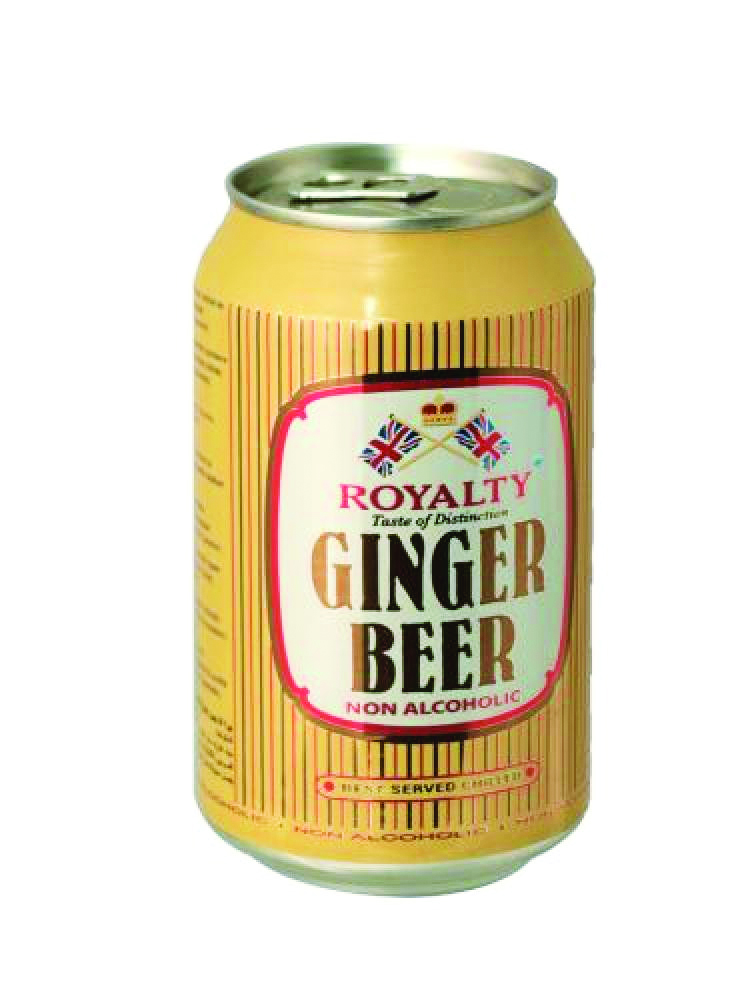
Royalty Non Alcoholic Ginger

Strong growth across no-alcohol categories has continued throughout 2024, with RTDs expected to have the fastest growth rate through to 2028, off a lower base (+10% volume CAGR, 2024-2028). Beer will grow at 7% volume CAGR, and will continue to lead future no-alcohol growth in absolute volume terms.

No-alcohol’s share of TBA across the 10 key markets will increase to over 3% by 2028, with its share of the US TBA market doubling in that time. Brazil, Canada and the US will see higher growth in the no-alcohol segment in the near future, whereas growth is predicted to be more gradual in Spain, South Africa and Germany.

The US and Brazil emerge as key growth markets

No-alcohol growth in the US (+18% volume CAGR 2024-2028) and Brazil (+10%) is expected to come from the recruitment of new consumers, increased frequency of consumption and increased incidence in both markets. Growth in the US will come from a wider array of no-alcohol subcategories, while in Brazil, growth will come almost entirely from beer. Smaller markets such as Canada and Australia, also offer attractive opportunities with relatively high growth rates (7.5% and 5% respectively) off a lower base.

No-alcohol consumption frequency driven by Gen Z and Millennial cohorts

Markets with a younger legal drinking age (LDA) consumer base for no-alcohol, such as Brazil, the US and South Africa, continue to show heavier consumption per occasion, while markets with an older consumer base, such as Japan and Spain, report fewer drinks per occasion.

Gen Z who have recently reached legal drinking age are more likely to substitute non-alcoholic drinks, especially soda and energy drinks, while older age groups are more likely to substitute alcohol, especially beer/cider.

Moderation attitudes vary by age cohort

Of the 10 key markets, the US has the largest proportion of Occasional moderators. Along with the UK, it’s a market in which more buyers have participated in alcohol-free challenges. Younger buyers are more likely to adopt an Occasional moderation strategy, limiting alcohol consumption during defined periods or participating in alcohol-free challenges such as Sober October or Dry January (albeit from a small base). Occasional moderators are more likely to choose no-alcohol beverages based on social influence and training for sports.

Overall, markets skew non-loyal to brands, while younger buyers show more loyalty

Markets such as Spain, UK and Japan tend to be less brand-loyal. In Spain where there is a wide range of available brands, buyers are more likely to choose a different brand in the same beverage category. Meanwhile in South Africa, US and Brazil, consumers are more likely to stay within their preferred brand.

Brand loyalty also varies by age cohort. Frequent drinkers and younger buyers, who are more engaged with the no/low category, are more likely to be driven by brand and sensory characteristics. Up to 57% of Millennials are driven by brands they are familiar with, compared to only 45% of Boomers, who are less engaged and claim more occasional consumption of the category.

“Younger consumers are more likely to be moderating alcohol, but they also drink less alcohol to begin with. These consumers tend to participate in a wider repertoire of no/low categories, and to be more brand-loyal,” notes Goldspink. “Older consumers are less likely to be moderating but more likely not to drink alcohol at all, and their preferences tend to be skewed to no/low beer and alcohol brand extensions.”

Availability remains the key barrier

Availability is the biggest reason preventing people from drinking no/low more frequently in emerging no/low markets such as Brazil, South Africa, and the US. It is a barrier for fewer no/low buyers in more established markets such as Spain, France, Japan and Germany. Greater product availability in the on-trade and via e-commerce is helping to enable category growth.

Pricing is not a main barrier to purchase for consumers, but pricing can enable growth. In the UK and Spain – more developed no-alcohol spirits markets – pricing becomes more aligned with full-strength offerings as the category gains traction.

Innovation trends

NPD investment continues to focus on functional attributes. The brand Free AF, for example, offers no-alcohol beverages that feature Afterglow, a patented 100% natural, gluten-free and vegetarian botanical extract that is said to mimic the warming sensation of alcohol. Meanwhile, Parch Spirits and Cocktails has launched a line of no-alcohol agave cocktails containing desert botanicals and adaptogens such as ashwagandha, L-theanine and ginseng.

Products that do not have added functionalities and are not direct analogues of alcohol categories are also on the rise. Examples include sparkling teas, hop waters, and vinegar-based switchels.