Tag Archives: mindful drinking

How DEWAR’S Is Redefining the Modern Drinking Experience

As India’s drinking culture evolves, the idea of indulgence is being quietly rewritten. Today’s consumer is no longer defined solely by what they drink, but how and why they drink it. Mindful moderation, premium non-alcoholic options, and experience-led consumption are reshaping bars, homes, and social rituals across the country. Bhavya Desai spoke to Inderjit Singh Dhingra, General Manager, Brown Spirits (India), Bacardi India on how DEWAR’S is navigating this transformation. Excerpts:
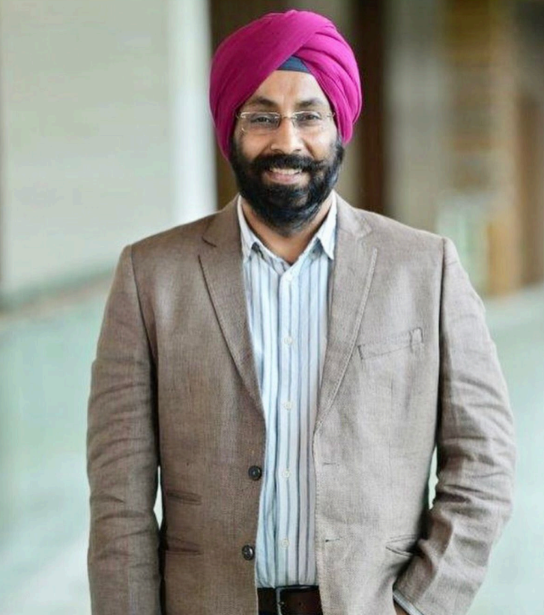
Inderjit Singh Dhingra, General Manager, Brown Spirits (India), Bacardi India

The non-alcoholic segment in India, Dhingra explains, is no longer a secondary choice or a compromise. Instead, it has emerged as one of the most dynamic spaces in the beverage landscape. Consumers today are making deliberate choices where they are choosing drinks that align with their lifestyles, moods, and social settings. And this ritual matters as much as the liquid. Glassware, presentation, complexity of flavour and the overall experience are now central to consumption—as much as the spirit.

This shift toward mindful moderation has prompted DEWAR’S to move beyond a traditional spirit-only mindset. The brand’s entry into premium mixers reflects a broader philosophy—one that ensures that every drink, alcoholic or otherwise, delivers the same standard of quality. Whether paired with a fine aged Scotch or enjoyed on its own, the aim is to make every moment feel elevated and intentional—and that Dhingra says is true to the DEWAR’S way.

What is particularly striking is how wide the appeal of this category has become. From younger consumers seeking visually appealing, well-crafted drinks, to seasoned whisky enthusiasts looking for balance without sacrificing quality, premium non-alcoholic options are finding a place across demographics. Even more traditional audiences are embracing these choices as part of modern socialising.

For DEWAR’S, this inclusivity fits naturally with its belief in experience-led drinking. Dhingra adds that for them every guest matters, and every serve should feel considered. By bringing craftsmanship and sophistication into mixers like soda and tonic water, the brand is extending its values beyond whisky— ensuring consistency in quality across the entire drinking occasion. Of course, that also gives them the fire power to do surrogate and expand the brand communication—an age old trick that many have used before.

Looking ahead to 2026, Dhingra points out that the way people drink is changing just as much as what they drink. Insights from Bacardi’s Cocktail Trends Report reveal a more intentional consumer—one who is trading up, learning more and engaging deeply with flavour and technique. Premiumisation is no longer reserved for special occasions; it has become an everyday expectation.

India’s consumers are also becoming increasingly cocktail-curious, eager to understand ingredients, methods and the stories behind their drinks. Social rhythms, too, are evolving. Earlier evenings, afternoon highballs and intimate gatherings are replacing late-night excess. The focus is shifting to meaningful connection— “day caps” instead of nightcaps—where quality trumps quantity. It is within this thoughtful, experience-first mindset that DEWAR’S feels most at home.

At the centre of DEWAR’S growth is a distinct consumer profile the brand calls “Life Explorers”. These are individuals who value authenticity, cultural awareness and enriching experiences over overt status symbols. Typically aged between 25 and 45, with higher disposable incomes, they invest in premium spirits and curated moments rather than fleeting trends. They are digitally engaged, socially active, and eager to share experiences—fuelling organic brand affinity.

Notably, DEWAR’S has also broadened its appeal beyond traditional whisky drinkers. As whisky appreciation becomes more inclusive, the brand has attracted a higher proportion of female consumers in India—around 34%, compared to the industry average of 24%. For these consumers, fulfilment comes from balance: success paired with freedom, and discovery paired with contentment.

Performance-wise, DEWAR’S continues to set benchmarks. It is currently the fastest-growing Scotch whisky in its segment, delivering a CAGR of over 30% in the last three years and maintaining year-to-date growth of over 25%. Yet, as Dhingra emphasises, what truly sets the brand apart goes beyond numbers.

DEWAR’S holds the distinction of being the world’s most awarded blended Scotch whisky—a testament to its unwavering commitment to quality. Central to this success is Master Blender Stephanie Macleod, whose ability to balance tradition with innovation has earned her the title of World’s Best Master Blender for six consecutive years. Her craftsmanship ensures that DEWAR’S remains timeless while continuing to resonate with today’s evolving consumer.

India, the world’s largest whisky market, represents a pivotal opportunity for the brand he adds. With the India–UK Free Trade Agreement expected to come into effect soon, Scotch whisky is poised to reach a wider consumer base than ever before he feels. For DEWAR’S, this makes India a must-win market.

The roadmap ahead focuses on consolidating leadership while sustaining momentum. Beyond scale and distribution, the brand is committed to building deeper connections through liquid innovation, immersive experiences, and culturally relevant storytelling. At its core, DEWAR’S remains anchored in its founding philosophy—creating moments and stories worth sharing.

He concludes that as India’s drinking culture continues to mature, DEWAR’S is not just raising a glass to growth, but to curiosity, craftsmanship, and connection. Here’s to discovering more. Here’s to the story.

More than moderation: the long-term rise of no and low

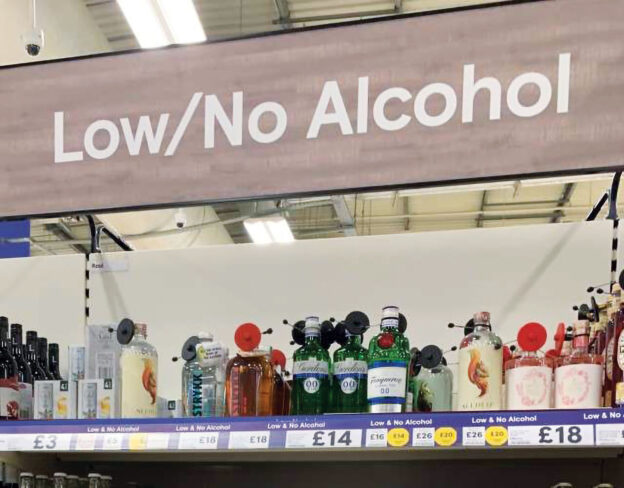
The no/low-alcohol market has enjoyed robust growth in the past few years, cementing its place as an area of significant opportunity for beverage alcohol, and one of increasing sophistication as well.

Moderation trends and demographic shifts have driven the long-term growth of no/low-alcohol around the world, but as the category matures and product quality improves, consumer trends in the space are becoming more nuanced and complex.

Another year of double-digit volume growth for no/low in the top 10 global markets (Australia, Brazil, Canada, France, Germany, Japan, South Africa, Spain, UK and US) during 2024 (+13%) capped a period of strong gains for the category: across those markets, 61m people were recruited into no-alcohol between 2022 and 2024, and 38m into low-alcohol, according to IWSR’s No- and Low-Alcohol Strategic Study.

This strong upward trajectory is expected to continue. While total beverage alcohol (TBA) volumes are expected to grow at a compound annual growth rate (CAGR) of 1% to 2028, no-alcohol is expected to gain share of TBA, driven largely by the well-established no-alcohol beer segment, but boosted by additional gains for RTDs, wine and spirits. The forecasted volume CAGR for no-alcohol beverages between 2024 and 2028 is +7%.

Susie Goldspink, Senior Insights Manager – RTDs and No/Low Alcohol

“The no/low-alcohol market has been experiencing significant growth for several years now, driven by moderation trends and younger demographics,” explains Susie Goldspink, Senior Insights Manager – RTDs and No/Low Alcohol. “It is not all about moderation, however, as no/low becomes more established and categories outside beer gain participation.

“Other drivers besides health and moderation are now increasingly important, particularly in those emerging no-alcohol categories. Factors such as taste, availability and brand are becoming key drivers of choice, especially among younger LDA consumers.”

Participation rates

The increased participation in no/low over the past few years has been spearheaded by the US and Brazil: the US added 37m new no-alcohol consumers between 2022 and 2024, and 36m new low-alcohol drinkers, according to IWSR data. Meanwhile, 13m people were recruited into no-alcohol in Brazil over the same timescale.

This increased participation comes against a backdrop of long-term declines in overall alcohol consumption. Since 2000, consumption in litres of pure alcohol has fallen faster than TBA volumes, reflecting a consumer switch to lower-ABV products such as RTDs and no/low.

This trend is also reflected by the performances of many of the top 10 markets. There is a clear contrast between the recent strong gains of no- and low-alcohol versus the softer performance of full-strength products in a number of key destinations, including the UK, US, Japan, Brazil, Canada, Australia and Canada. For instance, the US recorded a -1% CAGR decline in full-strength volumes between 2019 and 2024, according to IWSR data, while no-alcohol (CAGR +28%) and low-alcohol (+7%) grew strongly over the same timescale.

No/low buyers are also increasingly substituting full-strength beverages with no-alcohol drinks, according to IWSR consumer research. In 2024, when no/low consumers in the top 10 markets were asked what they would previously have drunk on the same occasion, 30% said full-strength products – materially higher than in 2022.

Meanwhile, when it comes to no/low categories, the picture has become more nuanced over the past few years: participation in no/low beer in 2024 was unchanged versus 2022, reflecting the more established nature of this segment, whereas other categories have seen increased participation from younger LDA consumers in particular.

“Boomers and Gen X have been in the category for a longer time and have established habits,” says Goldspink. “They are the main buyers of no-alcohol beer, as it was one of the first no/low options to be widely available.

“On the other hand, younger age groups, who are newer to the category and just entering legal drinking age (LDA), are discovering their preferences without established habits and are attracted across various categories. Millennials in particular, with more time in the category and higher disposable incomes, have the widest repertoires.”

Frequency drivers

As consumers become increasingly familiar with the no/low landscape, factors beyond health and moderation are becoming more and more significant in driving consumption frequency.

While trying to be healthier and reducing alcohol intake remain the most significant motivations, according to IWSR consumer research, taste, availability, brand and category awareness have all gained in importance since 2022.

“Frequent drinkers are driven by better-tasting options, highlighting how critical taste is for no/low growth,” says Susie Goldspink. “Better availability has been key for buyers in the US, where newer categories such as alcohol adjacents have a higher incidence than other categories.”

Purchase drivers

Brand familiarity is becoming an increasingly decisive factor in driving no/low purchases, when availability is not an issue. According to IWSR consumer research conducted in 2024, 52% of no/low buyers chose to drink a product because it was a brand they already knew, up from 48% in 2022, while 32% cited taste preference, up from 28%.

Consumer perceptions are shifting too: some 54% of no/low buyers described no/low products as brands they cared about in 2024, up from 50% in 2022, and 53% described no/low brands as exciting, up from 48%.

“Frequent drinkers and younger buyers, who are more engaged with the no/low category, are more likely to be driven by brand and sensory characteristics,” says Susie Goldspink. “Up to 57% of Millennials are driven by brands they are familiar with, compared to only 45% of Boomers, who are less engaged and claim more occasional consumption of the category.

“Meanwhile, the improvement in consumer brand perceptions is driven by Gen Z and Millennials, who are more engaged with the category: 62% of Millennials and 57% of Gen Z have brands they care about, explaining the higher rate of brand loyalty compared to other age groups.”

What’s next? The future of no/low

No-alcohol is set to continue to drive future growth for no/low, with forecast gains across all categories, including beer/cider (predicted CAGR growth of +7% between 2024 and 2028), RTDs (+10%), wine (+5%), spirits (+7%) and alcohol adjacents (+3%). Forecast trends for low-alcohol are softer, with the exception of RTDs, where low-alcohol products are predicted to grow at a CAGR of +17% over the same timescale.

While volume growth for no-alcohol is envisaged across all top 10 markets, there are strong regional contrasts, with Brazil, Canada, the US and the UK all likely to see higher growth in the near future (CAGRs of between +7% and +18% to 2028). However, growth is predicted to be more gradual in Spain, South Africa and Germany.

Smaller markets such as Canada and Australia offer attractive growth prospects, but the largest-scale opportunities sit in Brazil and the US – although the two markets have strongly contrasting characters.

“While Brazil and the US have a similar demographic distribution of no-alcohol drinkers, with similar frequency and intensity of consumption, the sources of expected future growth are diverse,” explains Susie Goldspink. “The US has high participation rates across a broader array of no-alcohol categories; their development will continue, particularly among younger consumers, who have a wider repertoire of no-alcohol drinks.”

By contrast, growth in Brazil will come almost exclusively from no-alcohol beer, thanks to the category’s dominant market position, the presence of large international players and high recruitment levels.