- The tax rate for MML is 270 per cent with zero foreign investment/ownership, while IMFL and other premium brands ranges from 300% to 450%
- Sales of impacted brands have fallen by 35-40% since the hike in excise duty
- Beer hit harder with ₹20–30 jump in per-bottle MRP
The International Spirits and Wines Association of India (ISWAI) has filed a lawsuit in the Bombay High Court against the Maharashtra government, challenging a sharp hike in excise duty on premium affordable liquor brands and also for exclusion of brands of major players such as Diageo India and Pernod Ricard India from a newly-created lower tax category – Maharashtra Made Liquor (MML).
The petition was filed on November 14 and the court is slated to hear the matter on December 9.
In mid 2025, the Maharashtra government introduced policy changes to incentivise local investment. It brought in the MML category, to include grain-based spirits produced exclusively by local manufacturers. The tax rate for MML is 270 per cent with zero foreign investment/ownership. The government believes that this will spur the local industry.
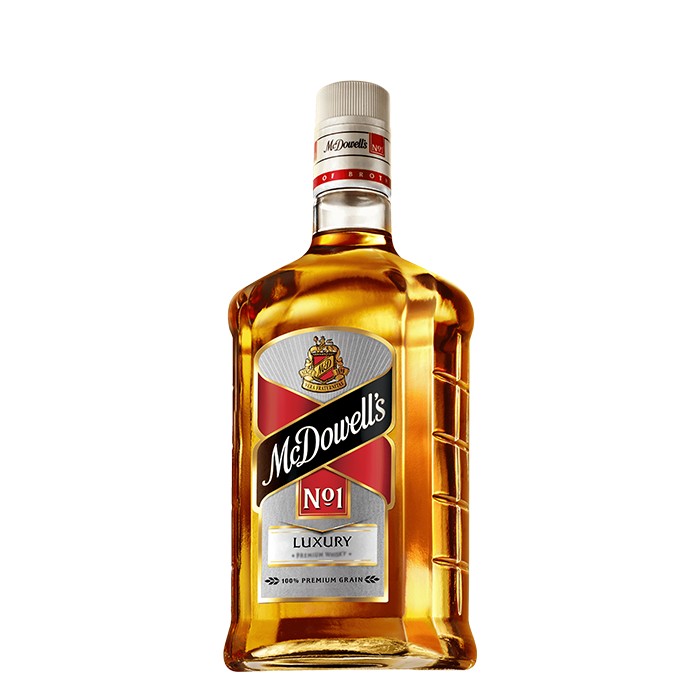

Parallelly, the government increased taxes on premium brands with production costs below ₹260 per litre from 300% to 450% and this is a big pain point. Several brands have been hit by this hike and they include Diageo’s McDowell’s No.1 and Pernod Ricard’s Royal Stag, among others. In the lawsuit, ISWAI mentions that the state sought to grant an artificial competitive advantage to the preferred class.
Not just brands from international companies are affected. Indian companies such as Allied Blenders and Tilaknagar Industries are also impacted. According to the Confederation of Indian Alcoholic Beverage Companies (CIABC), the affordable segment affected by the tax hike contributes 70% of Maharashtra’s premium spirit sales. It is estimated that sales of impacted brands have fallen by 35-40% since the hike in excise duty.
Maharashtra’s liquor market, one of India’s largest and most premium-heavy, is now navigating its sharpest disruption in recent years. The excise changes have triggered a noticeable drop in demand and widened price gaps with neighbouring states. The State government, however, is insisting that the policy changes will fetch in more revenue, encourage local industry and create new jobs.
As the liquor industry is a soft target, the government recently increased excise duties across IMFL, beer, and imported spirits. IMFL duties were increased by 15–20%, depending on category; beer saw a cumulative tax load rise of roughly 10–15%, when the revised excise plus additional fees are considered. For premium and imported spirits, the new slab pushed shelf prices far above national averages.
A bottle of mid-range whisky that retailed for ₹1,000 now sits closer to ₹1,150–1,250. Premium blends that previously hovered around ₹1,800–2,200 now breach the ₹2,500 mark in several cities. Imported labels have crossed psychological price barriers: a Scotch priced at ₹4,500 in 2023 is said to be retailing between ₹5,300–5,800.
Industry insiders say the difference in excise per case between the lower slab and next-higher slab can be as high as ₹90–₹140 per bottle equivalent, affecting retail pricing significantly. Smaller regional players, which operate with lower production costs, find it easier to qualify for the lower slab, allowing wider price gaps and competitive advantages.
The state’s argument is that Maharashtra, with its large consumption base and heavy urban footprint, can absorb a higher tax load. Industry counters that the elasticity of demand has been underestimated.
The impact has been immediate. Industry bodies estimate a 12–18% dip in overall IMFL sales in the first 4–5 months post-hike, with several premium categories reporting declines of 20–25%. Beer volumes fell faster because of price sensitivity ranging between 15–20% down, year-on-year during peak season.
Mumbai and Pune, which typically account for nearly 45% of premium spirits demand, has seen the sharpest contraction. Retailers in Mumbai reported that walk-ins dropped by 10–12%, but average bill values dropped even more as consumers down-traded to cheaper brands. Bars and restaurants also saw margins compress as selling prices increased while consumption slowed.
According to reports, neighbouring states are gaining. It is reported that Goa saw double-digit pickup in cross-border purchases. Karnataka’s border districts, especially Belgaum and Bidar, reported higher out-of-state footfall. Consumers with weekend travel habits shifted buying patterns, eroding Maharashtra’s taxable volumes.
Despite the volume decline, reports suggest that the state’s monthly excise collections grew by 6–8%, owing to the steeply increased tax per bottle. But industry believes this is short-term. If current trends continue, the full-year volume contraction could touch 12–15%, dragging down long-term revenue and pushing consumers toward parallel informal channels.
Retailers say the tax-led price jump has altered buying patterns with customers replacing a ₹2,000 whisky with a ₹1,200–1,300 option. Mumbai’s suburban retailers estimate that premium SKUs now contribute only 25–30% of sales, down from 35–40% last year.
Excise Revenues Up till March 2025
Maharashtra’s excise revenue rose to a new high of Rs 23,250 crore in 2023-24, 8% higher than the previous year. From April to March 2024-25, the revenues were Rs. 25,467.96 crore. It remains to be seen what the impact has been post March.
Maharashtra has one of the highest liquor taxes in India, competing only with Kerala and Tamil Nadu at the upper end of the spectrum. The consumption slowdown has also hurt hospitality venues which have reported lower beverage sales and shrinking margins, while distributors face cash-flow strain.
Even within large companies, strategy is shifting. Value whisky and rum brands are being pushed aggressively. New formats such as 90 ml, 180 ml, and smaller packs are showing stronger traction than 750 ml bottles. Premium Scotch and single malts, typically strong performers in cities like Mumbai, are said to be registering a 15–20% reorder slowdown from retailers.
Similarly, bars are said to be rewriting menus. Many have replaced several mid-tier imported labels with Indian premium whiskies or craft spirits. Cocktail bars that rely on imported bases have reported cost increase in the range of 18–25% per drink.
Beer, traditionally the most affected by price hikes, is hit even harder. The ₹20–30 jump in per-bottle MRP has nudged consumers toward home-grown mild beers, downtrading sharply from premium lagers and craft options.
Experts suggest rationalising slabs (bringing down the gap between economy and mid-tier segments); price stability; and increased border controls to reduce leakage to Goa and Karnataka.
Industry hopes that the state government will revisit the tax structure ahead of FY2026 budgeting, especially if volume declines continue. The legal battle could also force a relook at category classification criteria.
The liquor ecosystem in Maharashtra is too large, too important, and too revenue-rich to remain in a prolonged slump. But the current year is that of a market adjusting to a steep tax shock and recalibrating demand, supply, and legal frameworks.
_____________________________________________________________________
MML, Will it Upset the Apple Cart?
The new category, Maharashtra Made Liquor (MML), has already stirred the hornet’s nest. With MML getting preferential treatment in excise duty (270%), compared to 450% for IMFL and also MML remaining the exclusive domain of local producers, the larger alcobev sector (including domestic and international players) is up arms and has approached the courts for remedy.
At the time of MML announcement, government officials projected an incremental revenue target of ₹3,000 crore, on top of the existing ₹25,000 crore excise intake. However, industry insiders remain cautious about whether these numbers are achievable, citing consumer behaviour, market fragmentation, and distribution challenges. The industry has already reported slump in sales of some brands.
Maharashtra’s IMFL market currently stands at around 30 lakh cases per month. The proponents of MML say that once all MML producers become operational, the new segment could account for 8–10 lakh cases monthly, effectively redistributing a share of the existing market rather than creating an entirely new one.
As per reports, six licences have been already given and they are in the process of setting up production, while another 18 are at various stages of approval, either with the Ministry or in the excise department.
Under the new guidelines, MML manufacturers must have their registered head office in Maharashtra; maintain at least 25% state-resident shareholding; avoid producing or marketing MML outside the state; and register their brands within one year. Third-party production is not allowed, though leasing of plant capacity is permitted if the facility remains dedicated to MML production. If sold outside Maharashtra or if rules are violated, the MML status will be revoked, the guidelines state.
Economic Impact
At an assumed manufacturing cost of ₹400 per litre, IMFL retails at roughly ₹2,200 (including ₹1,800 in excise), while MML is expected to cost around ₹1,480 (with ₹1,080 excise), making it about ₹700 cheaper per litre. The government has set a minimum retail price of ₹148 for a 180 ml bottle of MML, compared to ₹205 for IMFL and ₹80 for country liquor. The MML category is positioned as a bridge offering, designed to be more affordable than top-tier IMFL yet higher in quality than country liquor.
According to reports, Maharashtra currently has 48 licensed IMFL manufacturing units, but only 10 dominate production; many operate at minimal capacity just to retain their licences. The government hopes MML will revive idle plants and generate up to ₹3,000 crore in additional annual revenue. The move is part of wider excise reforms targeting ₹14,000 crore yearly collections through measures including AI-powered monitoring of production and sales; new divisional excise offices; revised duty structures, IMFL at 3× to 4.5× manufacturing cost (capped at ₹260/litre), country liquor up to ₹205 per proof litre; and higher licence fees for FL-2 (retail) and FL-3 (bars) outlets.
The belief is that the affordability factor will drive this category. The entire industry is undergoing realignment and the next six to eight months, sales and consumer preferences will determine the fate of brands. Before that, there is the expected Court decision which will set the tone for the industry.
_____________________________________________________________________________________________