
Tag Archives: Consumer Protection

New Alcohol Labelling Rules, July 2026 Rollout

The Food Safety and Standards Authority of India (FSSAI) has notified sweeping changes to alcohol regulations, mandating clearer labelling norms and expanding category definitions across segments. The new rules will come into effect from July 1, 2026, giving manufacturers, importers and state excise authorities time to transition to the revised framework. The changes are being positioned as a move to bring greater transparency to the market and empower consumers with clearer information about what they are drinking.

One primary change is mandatory disclosure on labels. Alcoholic beverage companies will now be required to clearly mention the number of standard drinks contained in a bottle. A standard drink has been defined as containing 10 grams of pure ethanol. The declaration must be easy to read and printed in a manner that allows consumers to quickly understand how much alcohol they are consuming. This marks a significant shift from earlier practices where such disclosures were either absent or inconsistent across brands and states.

Making it easy for Consumers

FSSAI officials say the objective is simple. Consumers should know the strength of the product and the quantity of alcohol in a format that is comparable across beer, wine and spirits. India’s alcohol labels traditionally focused on alcohol by volume, or ABV, which many consumers do not fully understand. By converting this into standard drinks per bottle, regulators believe the information becomes more practical and relevant. The move also aligns India more closely with international labelling practices seen in markets such as Australia and parts of Europe.

Expanded Definitions

Alongside labelling reforms, FSSAI has expanded and clarified definitions of several alcohol categories. Emerging segments such as mead, flavoured wines, wine-based beverages and ready-to-drink spirit mixes now have more precise definitions under the regulations. Craft products and hybrid beverages that previously fell into grey areas will now be classified under clearer standards. The changes are expected to reduce ambiguity and disputes over product categorisation, especially for newer brands entering the market.

The wine segment in particular sees tighter specification norms. Definitions around sparkling wine, fortified wine and flavoured wine have been refined. Limits on ingredients and production standards have been more clearly outlined. Similar clarity has been introduced in the beer and spirits categories. Industry executives say this will help streamline approvals, though it will require careful scrutiny of formulations to ensure compliance.

Redesigning Labels

For the alcohol industry, the transition will involve logistical and financial adjustments. Companies will have to redesign labels, exhaust old inventory and seek fresh approvals where required. Given that alcohol remains a state subject in India, coordination between central FSSAI regulations and state excise labelling requirements will be crucial. Many states mandate their own warning statements, excise stamps and pricing declarations. Manufacturers will now need to incorporate the new standard drink information without violating state-specific rules.

Large multinational companies are expected to adapt relatively smoothly. Most already operate in markets with similar labelling requirements. However, smaller distillers, craft brewers and boutique wineries may face higher compliance costs. Printing new labels, recalibrating packaging lines and updating regulatory filings will add to operational expenses. Industry bodies have welcomed the extended deadline, saying it provides breathing room to plan production cycles and manage existing stock. The International Spirits and Wine Association of India (ISWAI) hassignalled support for steps aimed at improving transparency and aligning Indian norms with broader global practices, including better labelling and consumer information, particularly as the market grows and evolves.

India-specific labels

Importers will also have to ensure that overseas suppliers adjust packaging for the Indian market. Imported wines and spirits will need India-specific labels that include the mandatory standard drink declaration. This could increase turnaround time and costs for foreign producers looking to access the Indian market.

Public health advocates have largely supported the move. They argue that clearer labelling will encourage responsible consumption. When consumers can see the number of standard drinks in a bottle, they may be more conscious of intake. The measure is part of a broader global trend towards greater transparency in alcohol marketing and labelling. While the regulations do not impose new restrictions on advertising or availability, they signal a stronger emphasis on informed choice.

Industry representatives, meanwhile, stress that awareness campaigns will be important. Simply printing the number of standard drinks may not be enough if consumers do not understand what it means. Some companies are considering educational initiatives to explain how standard drinks translate into responsible drinking guidelines.

The reforms also come at a time when India’s alcohol market is evolving rapidly. Premiumisation is on the rise. Craft spirits and artisanal beers are gaining popularity. Ready-to-drink cocktails are expanding in urban centres. Clearer definitions could encourage innovation by giving entrepreneurs confidence about how their products will be classified. At the same time, stricter compliance will ensure that products meet uniform safety and quality benchmarks.

FSSAI has described the changes as part of its ongoing effort to strengthen food safety and consumer protection. Alcoholic beverages fall under the broader food safety framework, and regulators have been gradually updating standards to reflect market realities. By formalising definitions and standardising disclosures, the authority aims to reduce confusion in the marketplace.

As July 2026 approaches, the industry will focus on implementation. Companies will be reviewing artwork, recalculating alcohol content in terms of standard drinks and coordinating with printers and excise officials. Retailers may also need to update point-of-sale information. While the transition may pose short-term challenges, many stakeholders believe that clearer rules ultimately create a more predictable business environment.

For consumers, the most visible change will be on the bottle. There will now be a clearer indication of how many standard drinks the container holds. Regulators hope this small addition will make a meaningful difference. In a market as large and diverse as India’s, even incremental improvements in transparency can have wide impact.

The new regulations represent both a compliance exercise for the industry and a consumer awareness initiative for the public. Whether the standard drink declaration changes drinking behaviour remains to be seen. What is certain is that India’s alcohol sector is entering a more structured and clearly defined regulatory phase, with transparency at its core.

Supreme Court observation on Blenders Pride vs London Pride Whisky on Trademark Infringement

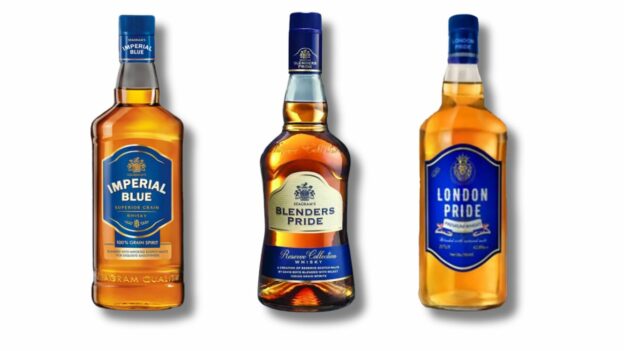
The Apex Court in an observation on January 22 has asked respondents Indore-based JK Enterprises if they are willing to change the trade dress of the brand London Pride whisky in a trademark infringement case filed by Pernod Ricard India Pvt Ltd., makers of Blenders Pride and Imperial Blue whiskies. A bench of the Chief Justice of India, D.Y. Chandrachud, Justices J.B. Pardiwala and Manoj Misra adjourned the case by two weeks while asking the respondents – JK Enterprises to get instructions in this regard.

The Supreme Court in two recent hearings saw the petitioners – Pernod Ricard India Pvt Ltd and ANR – presenting their case by bringing bottles of whisky of the two contending brands to highlight trademark infringement. Senior Advocate Mukul Rohatgi representing the petitioners had taken permission to display the bottles in the Court to point out the similarities in the name ‘Pride’, trade dress and the bottle shape. The trade dress between London Pride and Pernod Ricard’s another brand ‘Imperial Blue’ has similarities.

Pernod Ricard said, “The respondent has copied the trademark Blender Pride by adoption and use of London Pride and further copied the colour combination, get-up and trade dress of Imperial Blue of petitioners including use of bottles with embossing of Seagram, the house mark of the petitioner.”

Pride is a generic word, CJI

Presenting the bottles to the Court, advocate Rohatgi said, “In this case the name is not the copy. In this case the trade dress, and even the bottle is identical. And something worse, bottle is absolutely identical.” Rohtagi showed “London Pride” to the bench, however, the bench said the bottle had a different shape. Chief Justice Chandrachud said that the term “Pride” is a generic word. Rohatgi went on to argue on the ‘deceptive similarity’ by recalling similarities in name such as Royal Stag-Indian Stag, Blenders Pride-Casino Pride, Amritdhara- Lakshmandhara, Imperial Blue-Imperial Gold, Golden Deer-Double Deer, Johnny Walker-Captain Walker, Lal Kila-Hara Kila, Field Marshal-Sona Marshal, Officer’s Choice-Green Choice etc. It may be mentioned here that the Supreme Court had in September last year refused to grant interim relief to Pernod Ricard India in its trademark infringement plea against United Spirits which manufactures whisky under the name ‘Royal Challengers American Pride’.
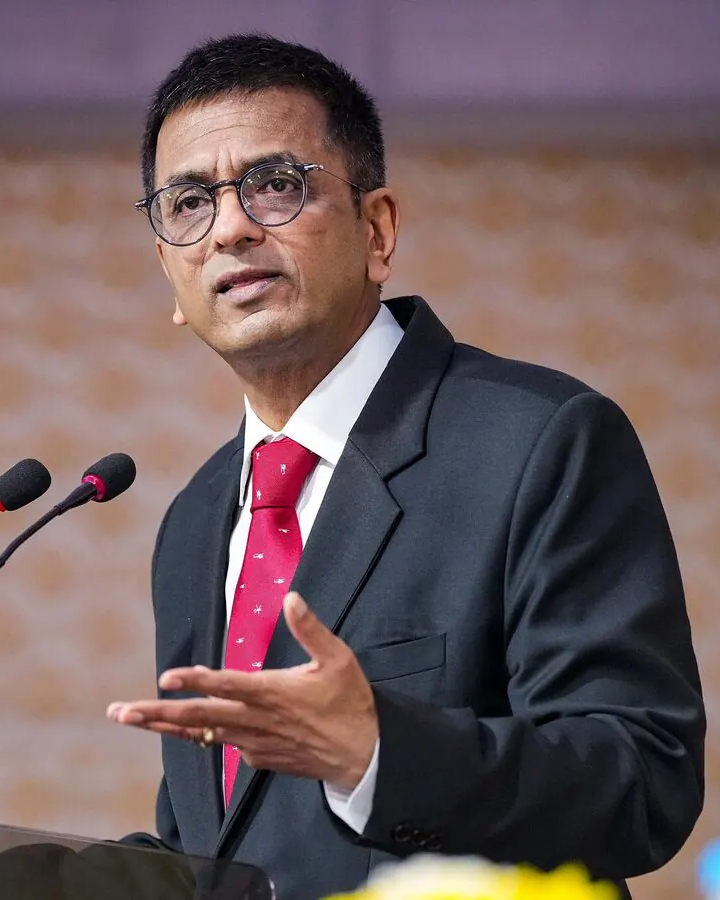
D.Y. Chandrachud, Chief Justice of India

Misuse of embossed bottles

Rohatgi further pointed out how the respondent had misused ‘Seagram’ embossed on the bottles. “Seagram is also mine, which they are using. They are either getting manufactured from somewhere else or getting from Kabadi. Because they can’t get Seagram.” The CJI then asked the petitioners to point out where the bottle was embossed with the word ‘Seagram’. The bench in lighter vein asked the petitioners not to hand over the bottle but to indicate from their place where the embossed word was.

The CJI on seeing the bottles remarked “Why have you (London Pride makers) but adopted the same trade dress and colour and all? Get instructions on whether you will change. We will keep it on Friday week. Ask yourselves, why you suddenly chose to use ‘Pride’?”

Price difference pointed out by respondents

The apex court witnessed interesting exchanges between the two parties. When Senior Advocate Dr. S. Muralidhar, appearing for the respondent, said that affluent customers can easily discern between London Pride and Blenders Pride, the latter being a premium product. Countering this argument, Abhimanyu Bhandari, representing JK Enterprises, submitted that London pride was much cheaper. He argued that while Blenders Pride was priced around ₹1,650, London Pride cost about ₹600. Therefore, someone willing to buy a Blenders Pride would never buy a bottle of London Pride, he contended.

The apex court bench pointed out that the question whether ‘London Pride’ name is deceptively similar to ‘Blenders Pride’ requires arguments from both sides. The petitioners had alleged that the Indore-firm was hurting Pernod’s ₹4,400 crore annual turnover.
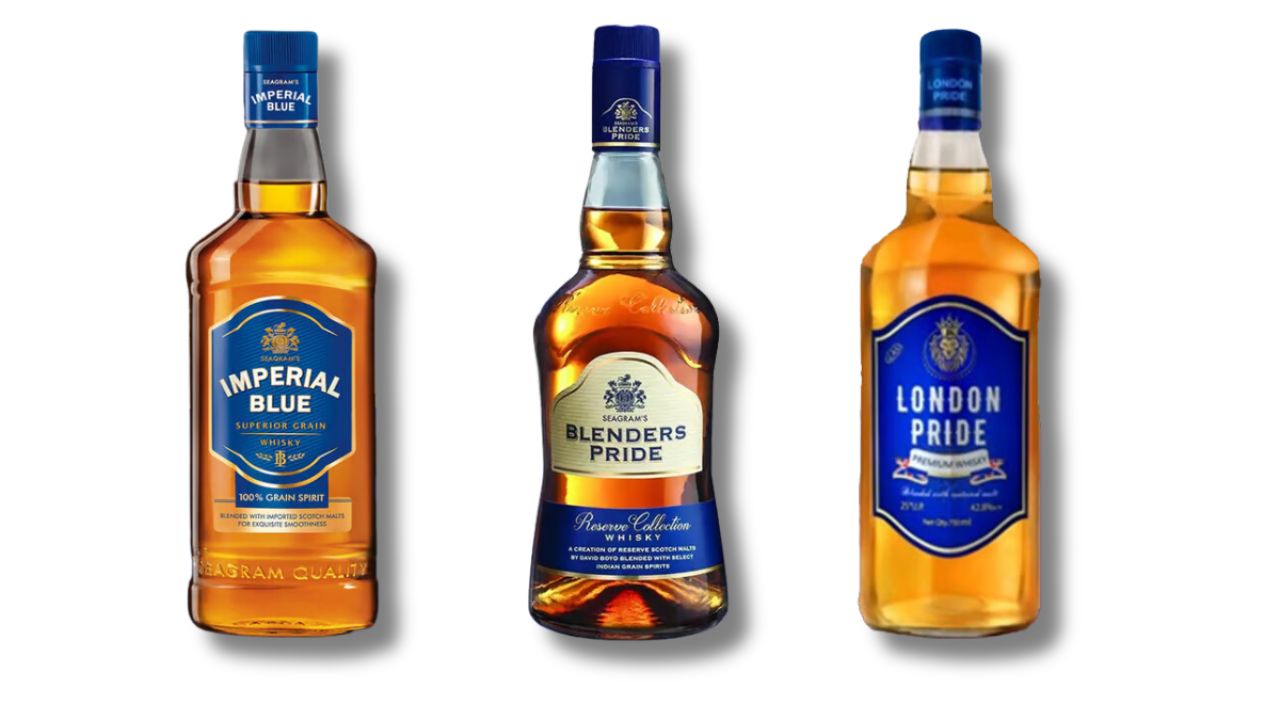
The Chief Justice of India observed there was no absolute similarity with regard to the names of Blenders Pride and London Pride. “You used the word ‘Blender’, they use the word ‘London’, and the bottles are also different. They are also saying 42 other manufacturers also use the word. Blender and London are two completely different words.” The CJI asked an open-ended question “Will a person walking into a store to buy Blenders Pride only say give me ‘Pride’ or ‘Blenders’?”

Appearing for Pernod Ricard, Senior Advocate Dr. Abhishek Manu Singhvi argued that the makers of London Pride were riding piggy-back on Blenders Pride. Pernod Ricard was also represented by advocates Hemant Singh, Mamta Jha, Mohit D Ram, Rajul Shrivastav, Monisha Handa, Sambhav Jain, Reha Mohan and Anubhav Sharma.

Appeal against Madhya Pradesh High Court order

Pernod Ricard India had approached the Supreme Court following the order of the Madhya Pradesh High Court of November 3, 2023, which had rejected their petition to stop the sale of London Pride whisky on grounds of trademark infringement. The Madhya Pradesh High Court had found no visual, phonetic or structural similarities between the two whisky brands.

The High Court in its judgment had held “…The first word of the trade mark of plaintiffs is ‘Blenders’ whereas that of the defendant is ‘London’. There is absolutely no similarity in them leave aside any dissimilarity. ‘Pride’ being a generic, common place and laudatory expression in ‘Blenders Pride’ mark, the common man would certainly treat ‘Blenders’ part of plaintiff’s mark as the dominant part. The question of comparison of the words ‘Imperial Blue’ and ‘London Pride’ does not even arise…”.

Court contends that consumers can distinguish between two brands

The High Court went on to conclude that “It can be safely presumed with a sufficient deal of certainty that the consumers of such products would be mostly literate and having reasonable intelligence to distinguish between the bottles of Blenders Pride/Imperial Blue and that of London Pride. Even if they are of average intelligence with imperfect recollection, they would be able to differentiate between the rival competing brands… Liquor consumers of scotch whisky are educated and discerning type. They are literate persons belonging to the affluent class of society.” During the conclusion of the day’s hearing in the Supreme Court, the CJI remarked in lighter vein that Dr. Muralidhar had spoken with “much authority” on the whisky products, to which the latter replied “I am the only sober one here.”

– R. Chandrakanth