
Tag Archives: Ambrosia Exclusive

Bombay High Court Directs Maharashtra to Open Portal for Label Registration

The Bombay High Court has directed the Government of Maharashtra to open the excise department portal for online registration of labels for all alcobev companies, a request filed by the advocates representing the International Spirits and Wines Association of India (ISWAI). This is a temporary directive, pending the hearing of the case filed by ISWAI against the State Government. The next hearing of the case is on December 16. ISWAI went to court, seeking, among other issues, a level playing field in the manufacture of ‘Maharashtra Made Liquor’ (MML).
The Court on November 24 had directed the Government representatives to open the portal for any alcobev player from within the state. However, till December 9, the excise department had not facilitated that process, forcing the Court to take notice of that and cautioning the government. A two-judge bench headed by Senior Judge Revathi Mohite Dere asked why the excise department had not followed the court directive and cautioned the government that it would take serious notice of the lapse.Sources in the Excise Department clarified that the portal is open for anyone to file an application for registering their labels, but it is the department’s prerogative to accept or reject the application.
Only the application for label registration will be accepted once the applicant fits in into the Guideline criteria set by the government. As of now 13 manufacturers are eligible and got the permission to produce MML.

The ISWAI contention has been that the process for companies to get their labels registered is time-consuming, not less than 45 days, and with the court case going on there would be further delay. This, the ISWAI source mentioned would give undue advantage to the eight players who have been granted licenses to set up MML units. They are already marketing MML in the price band of Rs. 160 and Rs. 205 where brand really does not matter to a particular segment of consumers.
As of now, reports from the ground indicate that the products launched under the MML category are doing ‘extremely well’ with product quality being good. Some of the MML players or the consultants who are guiding them come with enormous experience in the liquor industry, either having worked in major companies or having bottling plants or ethanol units. Some of them also own retail shops across Maharashtra where they can give good shelf position for their products.
The ISWAI source said that many of the players were ‘commodity players’ and not ‘brand players’ and they would flood the market having a good lead over the established companies. The source acknowledged that the MML players had drafted consultants who have had strong background in the liquor business and are helping the licensees to set up the businesses, thus giving ‘undue advantage’ to them.
ISWAI went to the court stating that some domestic and international players were producing brands in Maharashtra and selling exclusively in the state and hence should be considered a local player, a criteria to get MML license.
In mid-2025, the Maharashtra government introduced policy changes to incentivise local investment. It brought in the MML category, to include grain-based spirits produced exclusively by local manufacturers. The tax rate for MML is 270 per cent with zero foreign investment/ownership. The government believes that this will spur the local industry.
ISWAI then filed a lawsuit against the Maharashtra government, challenging the sharp hike in excise duty on premium affordable liquor brands and also for exclusion of brands of major players such as Diageo India and Pernod Ricard India from the newly-created lower tax category of MML. ISWAI is represented by Darius Khambatta and Rohan Shah.
The court also asked the government lawyer why the report of the Varsha Nair Committee was not submitted earlier on MML. The report highlights certain salient points to encourage those distilleries which are closed or underutilised in Maharashtra to produce cheap liquor. The report added that this would generate additional revenue to the excise department as well as generate employment provided it is made in Maharashtra for distribution in Maharashtra. It also prescribes certain minimum shareholding pattern for owners.

So far, the department has approved 13 licenses and many more are pending. Companies like Radico Khaitan; Diageo India; Pernod Ricard India and some more are keen on jumping on to this bandwagon to produce economy liquor priced between Rs.160 and Rs.205 for the Maharashtra consumers even while their focus is on premium brands. These companies could launch similar products in this price range with some brand extensions and so on.
The State government is insisting that the policy changes will fetch in more revenue, encourage local industry and create new jobs. MML category is expected to fetch additional excise revenue of Rs. 3,000 crores.

From Jalisco to India: The Loca Loka Story

Built on craft, culture, and collaboration, Loca Loka unites two vibrant worlds through a tequila that speaks to modern India’s global palate.

When three creative minds from business, cinema, and music came together, few expected tequila to take on such character. Within a year of its launch, Loca Loka, the premium tequila brand founded by Sree Harsha Vadlamudi, Rana Daggubati, and Anirudh Ravichander, has become a name that resonates across global bars, airports, and among discerning drinkers.

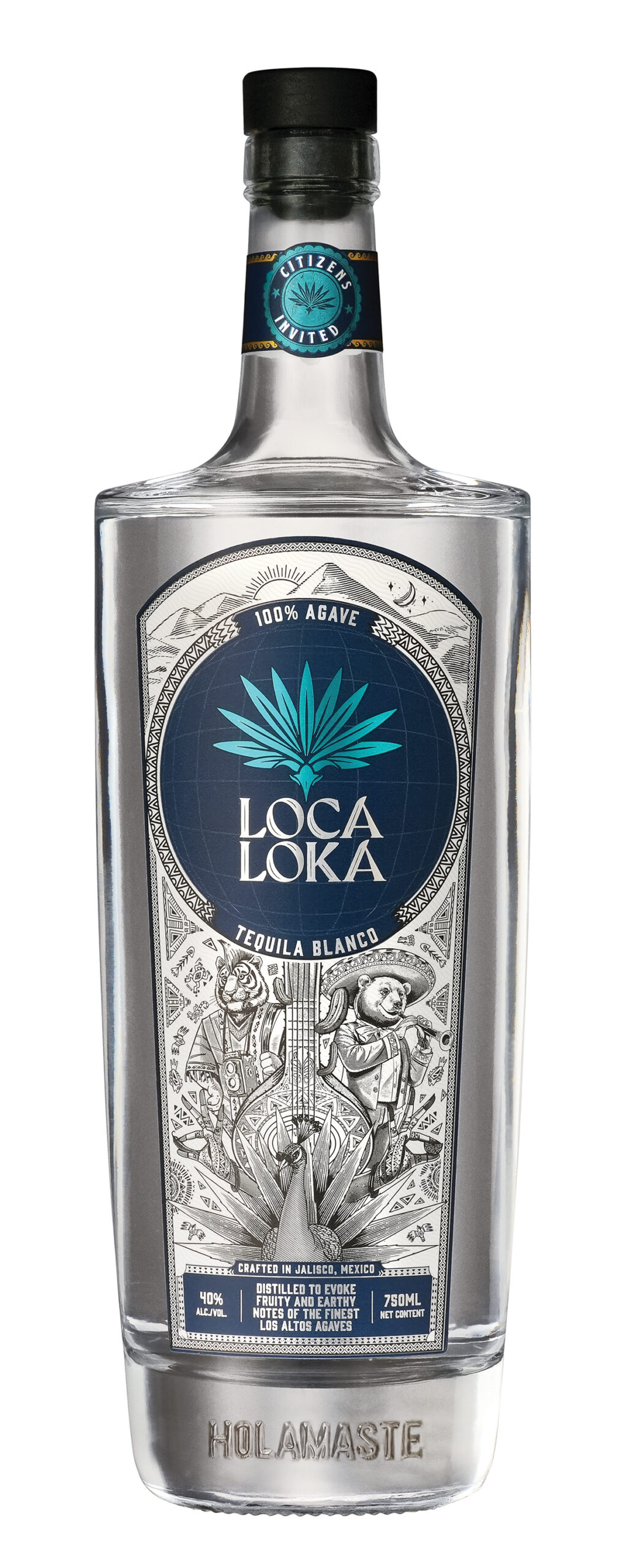
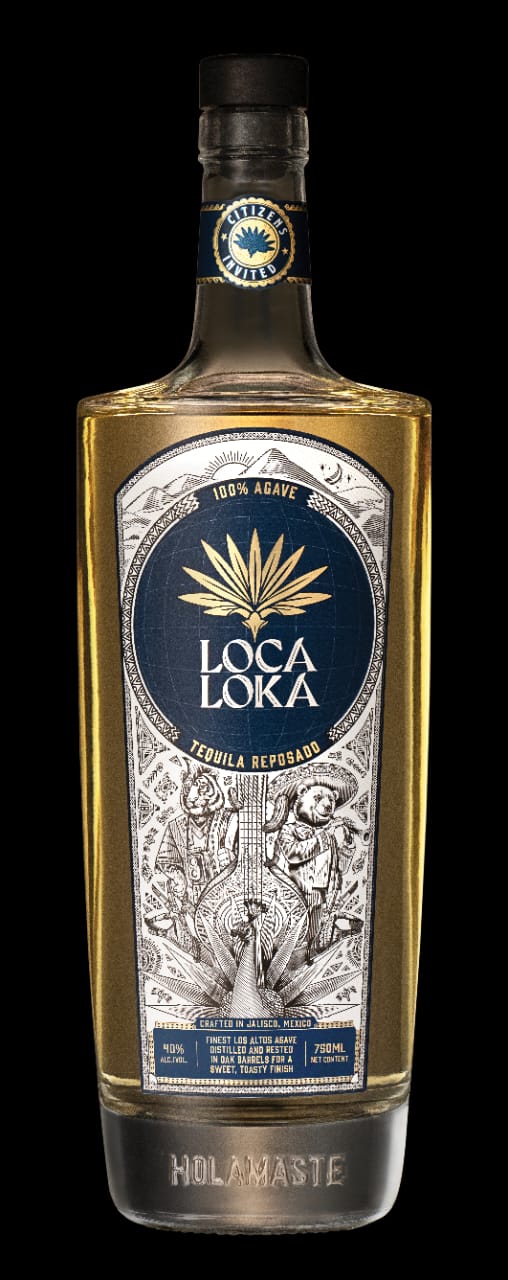
Born from highland agave in Jalisco and bottled with Indian finesse, the label’s Blanco and Reposado variants have earned medals at international competitions, including Gold at the San Francisco World Spirits Competition. For its founders, recognition affirms their pursuit of a spirit built with purpose. Vadlamudi calls Loca Loka “a bridge between craftsmanship and culture,” defining the brand as tequila that honours Mexican roots and carries an Indian cadence through its tone, colour, and personality.

The Origin of an Idea

The story began in 2024 when Vadlamudi, already known for ventures such as Ironhill India and PR Infra, noticed a shift in consumer behaviour. “Travellers were leading the change,” he recalls. “They evaluated brands through provenance, design, and story.”

Loca Loka entered through duty-free stores at Hyderabad and Delhi airports, where travellers’ behaviour revealed India’s readiness for agave-based spirits. “Duty-free gave us our first real insight,” he says. “Consumers had already experienced tequila abroad and were waiting for a credible brand to bring it home.”

That discovery shaped the rollout plan across Indian metros, beginning with Delhi and Mumbai. The company aims to capture meaningful market share within its first year, building a category that had long remained underexplored.

Building a New Tequila Culture

Tequila’s profile in India is evolving rapidly. The category recorded 26% growth in 2025, fuelled by curiosity, premium drinking habits, and the rise of cocktail culture. Vadlamudi views this moment as an opportunity to introduce tequila through education and craftsmanship. “India had limited awareness of terroir, ageing, and agave quality,” he says. “We wanted to change that.”

Production remains anchored in Jalisco under León Bañuelos Ramírez, whose distillery creates additive-free spirits from slow-cooked agave using techniques refined through generations. “When we met León, we found the balance we were seeking: purity, texture, and precision,” says Vadlamudi.

The result is a tequila admired by bartenders for its clarity and structure. During blind tastings, professionals described it as clean, expressive, and versatile. The Blanco works beautifully in citrus-forward cocktails, while the Reposado enriches spirit-driven serves.

“Bartenders are our first ambassadors,” Vadlamudi notes. “When they ask for Loca Loka by name, it signals belonging.”

Design, Story, and Soul

The founders’ diverse backgrounds shape every element of the brand. The bottle carries sleek shoulders, contemporary typography, and colours inspired by desert sands and Indian warmth. The name merges Loca—Spanish for ‘crazy’—and Loka—Sanskrit for ‘world’—capturing a sense of creative energy and cultural connection.

Daggubati brings narrative instinct from cinema, Ravichander lends rhythm and a grasp of cultural pulse, and Vadlamudi contributes scale and structure. Their combined sensibilities give the brand both artistic and operational depth.

Loca Loka’s presence extends beyond bottle shelves. The brand curates tastings, pop-ups, and design-led experiences with hotels and restaurants that shape India’s premium drinking scene. “We aim to create moments that feel alive and personal,” Vadlamudi says. “Every interaction should carry the same care that goes into the liquid.”

Expansion with Intention

The company secured $12.5 million from a Singapore-based family office to strengthen production, distribution, and market presence in India, the UK, and the Philippines. “Our capital philosophy is to invest where value endures,” Vadlamudi explains. “We prioritise excellence in product, accuracy in logistics, and storytelling that holds meaning.”

The India rollout focusses on premium bars, hotels, and tasting programmes, with airports continuing as key discovery points. Cities such as Bengaluru, Chennai, Goa, and Hyderabad are next in line. “Our measure of success lies in advocacy and repeat orders,” he adds. “When bartenders and consumers return to us naturally, the brand grows with authenticity.”

Globally, Loca Loka is expanding from 15 to 25 states in the United States, while preparing to enter Europe, the Middle East, and select Asian markets. The Añejo variant will soon join the portfolio, followed by limited editions celebrating Indian and Mexican craft traditions.

Sustainability as a Standard

Responsible sourcing guides Loca Loka’s production ethos. Mexican partners practise mature-harvest cycles, water-efficient cultivation, and soil-friendly farming. “Sustainability begins with agave,” Vadlamudi says. “Without healthy farms, there is no tequila.”

The company extends this principle to packaging and logistics designed for long-term resilience. Its environmental discipline forms part of everyday operations rather than a marketing statement, ensuring continuity for generations of growers and consumers alike.