
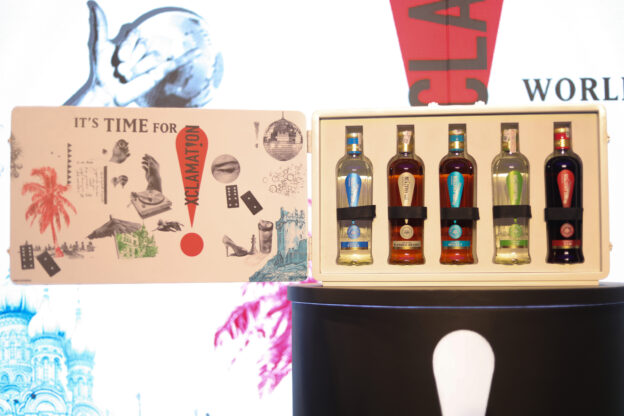
Seagram’s Xclamat!on unites whisky, gin, vodka, rum, and brandy under one name, responding to a generation that values flexibility, quality, and continuity across occasions.
India’s premium spirits market has been changing in ways that are subtle yet consequential. The shift is visible less in headline numbers and more in how people drink. Younger urban consumers are increasingly comfortable moving across categories, assembling their preferences around setting, company, and mood. A whisky-led evening may give way to gin another night, vodka on a different occasion, with brand trust travelling across those choices. Pernod Ricard India’s introduction of Seagram’s Xclamat!on sits squarely within this behavioural turn.
Launched as a single brand spanning whisky, vodka, gin, rum, and brandy, Xclamat!on reflects an attempt to respond to how consumption now unfolds in practice. The idea grew out of sustained engagement with drinkers in the 26–35 age bracket, a segment that shows high openness to experimentation alongside a growing insistence on quality. Jean Touboul, CEO of Pernod Ricard India, has observed that this cohort seeks “choice beyond whisky, with drinking acting as an expression of personality.” That insight pointed to a wide, under-addressed space: aspirational, price-aware, and underserved by structures that traditionally separated spirits into rigid compartments.
Xclamat!on has been positioned within this space with restraint. A uniform price architecture across five spirits introduces clarity, while distinct liquid identities preserve individuality. The brand does not require consumers to recalibrate expectations when shifting categories. It reflects repertoire-led drinking as an established behaviour.
A Unified Label for a Plural Consumer
For a company with a long history of category-specific branding, bringing five spirits under one label marks a notable shift. Xclamat!on is Pernod Ricard India’s first unified brand, conceived in response to consumption habits that privilege flexibility and situational choice. Internal research highlighted higher discretionary spend, increased at-home occasions, and a clear movement beyond whisky-centric consumption.
Jean has spoken of consumers expressing the need for “one reliable name that delivers quality and diversity across categories.” The liquids themselves are varied in composition and reference. The whisky combines Speyside Scotch malts matured in dual casks with Indian grain spirits. Vodka is produced from Indian grain and filtered using Russian moonstone technology. Gin brings together juniper berries sourced from Germany with Indian botanicals, resulting in seven expressions. Brandy draws on Indian and French grapes aged in Limousin wood, while rum blends Indian jaggery spirit with aged Jamaican rum, distilled using multi-column copper stills.
What holds these expressions together is not sameness but coherence. Jean has described Xclamat!on as offering “distinct taste and positioning within a single brand framework,” reflecting the way contemporary drinkers assemble their choices across different moments rather than committing to a single narrative.
Local Production, Global Reference
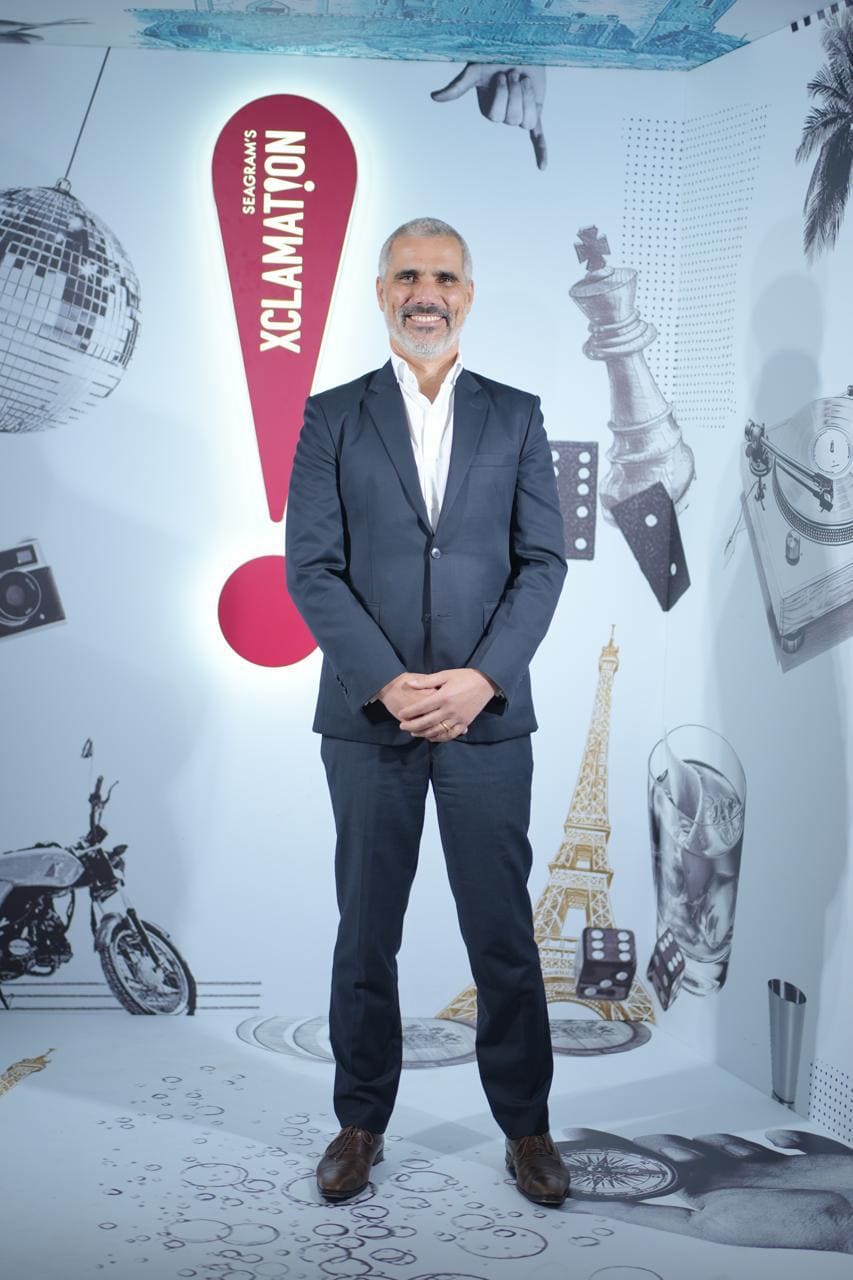
Xclamat!on has been produced in India, with local teams closely involved in formulation and execution. The range aligns with the Atmanirbhar Bharat vision. The emphasis remains on relevance and suitability for domestic preferences, supported by international reference points.
As Jean has noted, the brand has been “developed locally for India’s growing base of aspirational and quality-conscious consumers.” Global inputs appear throughout the portfolio as supporting elements. The approach focuses on alignment with domestic palates and social settings.
Packaging choices reinforce this outlook. Glow-in-the-dark labels, aluminium snap lids, and a bold visual language establish shelf presence, while the absence of mono-cartons reflects Pernod Ricard India’s sustainability-by-design approach. The bottles arrive unboxed, reducing material use while maintaining premium cues.
Expansion in a Complex Operating Climate
Xclamat!on’s rollout begins across Haryana, Uttar Pradesh, Goa, Rajasthan, and Daman, with plans to extend to fourteen markets within the first year. The phased approach suggests calibration rather than haste, allowing the brand to settle into distribution networks before wider availability. This pacing aligns with Pernod Ricard India’s broader growth outlook, where innovation occupies a central role.
India remains Pernod Ricard’s second-largest market globally by value and its largest by volume. Jean has indicated that innovation is expected to contribute around a quarter of the company’s growth over the next decade, with Xclamat!on projected to play a meaningful role in that trajectory.
At the same time, the operating environment remains demanding. Recent reporting has drawn attention to supply interruptions and regulatory constraints affecting retail presence in major metros, including New Delhi. These factors shape cash cycles, market access, and the sequencing of new launches, requiring companies to balance ambition with operational discipline.
Within this context, Xclamat!on reads as a long-horizon commitment. It enters the market with an awareness of governance expectations, compliance frameworks, and the realities of scaling in a fragmented regulatory landscape. Jean has spoken of India as a springboard for global innovation, a market whose scale and consumer maturity justify sustained investment. That confidence rests on the belief that premiumisation in India will continue to be driven by informed choice and responsible expansion.
Pritisha Borthakur