- Government defends ‘Maharashtra Made Liquor’ (MML) policy citing increase in revenue by 17%
- On December 16, United Spirits Limited applies for new label license – McDowell’s Century Blended Whisky, under MML category
- 64% of the total liquor manufactured in 2024–25 is from nine potable liquor license (PLL) holders
- MML necessary to revive struggling domestic license holders, government contention
- Section 49 of Maharashtra Prohibition Act Invoked, Questions Locus Standi of ISWAI
The Bombay High Court in its hearing on December 23 has allowed all companies to apply and directed the Excise Department to process their application for Maharashtra Made Liquor (MML) license, irrespective of earlier conditions. The Interim direction is subject to the final order.
The Court has posted the next hearing to January 19, 2026.
Justice Revathi Mohite Dere and justice Sandesh Dadasaheb Patil are hearing the case. It must be mentioned here that Justice Dere has been recommended as Chief Justice of Meghalaya starting mid January.
The December 23 directive basically states that all potable liquor licenses (PLL) holders should be allowed to apply for production and sale of MML and the Department must process their applications as if the exclusionary clauses 2 and 3 of the Government Regulations don’t exist (examples being Registered Office should be in Maharashtra; minimum 25% locally resident Directors; no foreign investment etc).
Department Cites Revenue Increase
On December 16, the Government of Maharashtra, had defended in the Court the MML policy, stating that it had led to a nearly 17 per cent increase in excise revenue. The government informed the Court that it had invoked Section 49 of the Maharashtra Prohibition Act, which gives it ‘exclusive privilege on trade in excisable articles’, thus questioning the locus standi of the International Spirits and Wine Association of India (ISWAI) which has filed the petition challenging the MML policy.
The government made the submission in response to the petition of ISWAI which represents several companies including global giants such as Pernod Ricard, Diageo and Bacardi.
The State Government took shelter under Section 49 of the Maharashtra Prohibition Act to argue that trade in excisable articles remains the exclusive privilege of the government, which may be conferred only upon license-holders for consideration.
While acknowledging that one ISWAI member, Pernod Ricard India, holds two potable liquor licenses (PLL), in Nashik and Kolhapur, the government affidavit said that most other members do not operate manufacturing units in Maharashtra. The State questioned ISWAI’s locus standi to challenge the policy, pointing out that ISWAI does not hold any potable liquor license.
“The State government has not imparted this privilege to ISWAI, it does not hold the right to bring an action against the policy decision on behalf of the alleged members of the association.”
Excise Revenues Surge
The Government representatives also made out a case of how excise revenue had surged post introduction of the policy. The excise collections between July and November 2025 rose from ₹9,665.64 crore in 2024–25 to ₹11,299.40 crore in 2025–26, it mentioned.
This growth contrasts with the average 12% rise recorded between April and June 2025, before duty revisions and the rollout of MML. “This shows positive growth after introduction of new policy,” the government said. The government further argued that the policy was aimed at addressing an uneven competitive landscape, promoting local liquor manufacturers and reviving idle capacities in domestic distilleries.
The government said that about 64% of the total liquor manufactured in 2024–25 came from nine potable liquor license (PLL) holders, many linked to ISWAI members or their subsidiaries. The State argued that these figures justified creation of the MML category and a reserved, incentive-based policy was necessary to revive struggling domestic license holders.
ISWAI had challenged the policy as arbitrary and discriminatory, arguing that it violates Article 14 of the Constitution by creating “a preferential class” of PLL holders who alone may manufacture MML, while excluding similarly placed licensees, including its members.
ISWAI argued that this criteria defeats the purported objectives of employment generation, investment promotion, full-capacity utilisation of distilleries and enhancement of excise revenue. It added that the same policy goals could be achieved by allowing all PLL holders to produce MML rather than reserving lower taxes and a price brand for a narrow class of locally structured licensees.
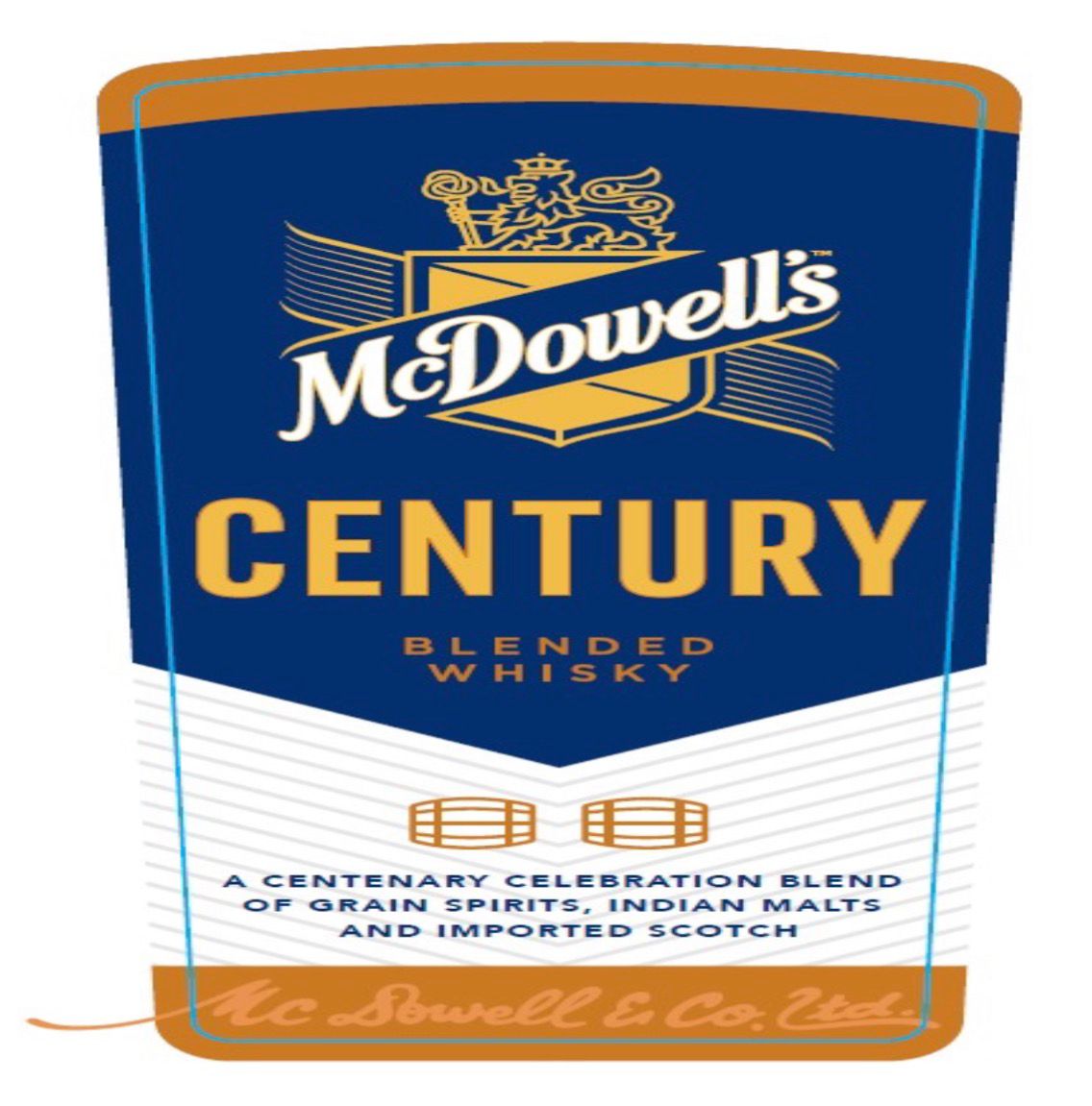
Even while, the Court is hearing the case, United Spirits Limited with unit in Chikhalthana in Aurangabad taluk has applied under MML category a label by name ‘McDowell’s Century Blended Whisky to be sold exclusively in Maharashtra.
Court Directs Department to Open Portal for Label Registration
On November 24, the Court had allowed the State and other stakeholders to go ahead with preparatory steps for execution of the policy decision, but clarified that the same will be without prejudice to the outcome of the case.
The Court had directed the Government representatives to open the portal for any alcobev player from within the state. However, till December 9, the excise department had not facilitated that process, forcing the Court to take notice of that and cautioning the government. A two-judge bench headed by Senior Judge Revathi Mohite Dere asked why the excise department had not followed the court directive and cautioned the government that it would take serious notice of the lapse.
Department Holds Right to Accept or Reject Application
Sources in the Excise Department clarified that the portal is open for anyone to file an application for registering their labels, but it is the department’s prerogative to accept or reject the application.
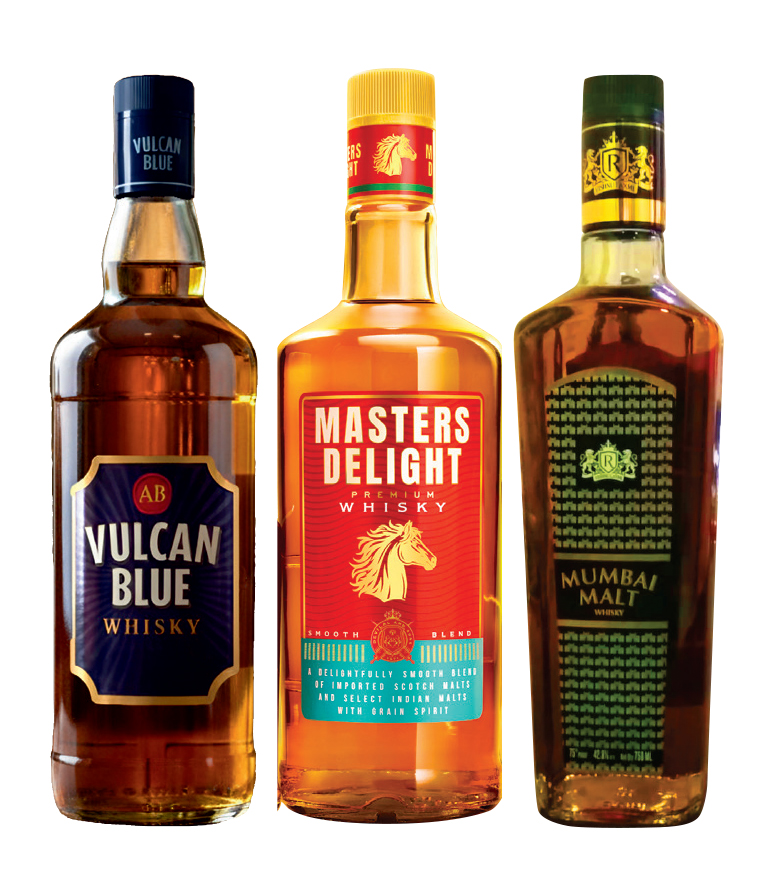
The ISWAI contention has been that the process for companies to get their labels registered is time-consuming, not less than 45 days, and with the court case going on there would be further delay. This, the ISWAI source mentioned would give undue advantage to the eight players who have been granted licenses to set up MML units. They are already marketing MML in the price band of Rs. 160 and Rs. 205 where brand really does not matter to a particular segment of consumers.
MML Category Doing Well
As of now, reports from the ground indicate that the products launched under the MML category are doing ‘extremely well’ with product quality being good. Some of the MML players or the consultants who are guiding them come with enormous experience in the liquor industry, either having worked in major companies or having bottling plants or ethanol units. Some of them also own retail shops across Maharashtra where they can give good shelf position for their products.
The ISWAI source said that many of the players were ‘commodity players’ and not ‘brand players’ and they would flood the market having a good lead over the established companies. The source acknowledged that the MML players had drafted consultants who have had strong background in the liquor business and are helping the licensees to set up the businesses, thus giving ‘undue advantage’ to them.
In mid-2025, the Maharashtra government introduced policy changes to incentivise local investment. It brought in the MML category, to include grain-based spirits produced exclusively by local manufacturers. The tax rate for MML is 270 per cent with zero foreign investment/ownership. The government believes that this will spur the local industry.
ISWAI then filed a lawsuit against the Maharashtra government, challenging the sharp hike in excise duty on premium affordable liquor brands and also for exclusion of brands of major players such as Diageo India and Pernod Ricard India from the newly-created lower tax category of MML.
The court also asked the government lawyer why the report of the Varsha Nair Committee was not submitted earlier on MML. The report highlights certain salient points to encourage those distilleries which are closed or underutilised in Maharashtra to produce cheap liquor. The report added that this would generate additional revenue to the excise department as well as generate employment provided it is made in Maharashtra for distribution in Maharashtra. It also prescribes certain minimum shareholding pattern for owners.
Eleven Licenses Approved, Several in the Pipeline
So far, the department has approved eleven MML licenses and many more are pending. Companies, both International and nation, are keen on jumping on to this MML bandwagon to produce economy liquor priced between Rs.160 and Rs.205 for the Maharashtra consumers even while their focus is on premium brands. These companies could launch similar products in this price range with some brand extensions and so on.
The Government is represented by Advocate General Milind Sathe with government pleader Neha Bhide and additional government pleaders Shruti Vyas and GR Raghuwanshi. ISWAI is represented by senior advocate Rohan Shah and advocates Darshan Bora, Chirag Shetty, Anchal Mundada, Kanika Birje, Surabhi Prabhudesai, and Vidhi Shah.
Trilok Desai / R.Chandrakanth
Ambrosia
Section 49 in The Maharashtra Prohibition Act
Exclusive privilege of Government to import, etc., intoxicants, etc., and fees levied include rent or consideration for grant of such privilege to person concerned.
Notwithstanding anything contained in this Act, the State Government shall have the exclusive right or privilege of importing, exporting, transporting, manufacturing, bottling, selling, buying, possessing or using any intoxicant, hemp or toddy, and whenever under this Act or any licence, permit, pass, thereunder any fees are levied and collected for any licence, permit, pass, authorisation or other permission given to any person for any such purpose, such fees shall be deemed to include the rent or consideration for the grant of such right or privilege to that person by or on behalf of the State Government.