
- In the 2025–26 Budget, Chief Minister Siddaramaiah proposed allotting unused liquor licences through e-auction
- To boost the State’s additional resource mobilisation.
The Karnataka Excise Department has initiated the process of auctioning unused retail licenses, in the hope of raising additional revenue of nearly Rs. 1,000 crores. The State Government has issued a gazette notification on the e-auctioning of 579 unused CL-2A (retail liquor shops), CL-9A (bars & restaurants), and CL-11-C (government-owned Mysore Sales International Limited) licences.
The government on November 3 had issued the final notification on the amendment to the Karnataka Excise (General Conditions of Licences) Rules, 1967, Karnataka Excise (Lease of the Right of Retail Vend of Beer) Rules, 1976 and Karnataka Excise (Sale of Indian & Foreign Liquors) Rules 1968 for e-auctioning of defunct/unused licences.
The amended rules are now called the Second Amendment Rules, 2025 in the above three categories. Two new license categories, CL-2A for CL2 (retail liquor shops) and CL-9A for CL-9 (bars & restaurants) have been created for the unused licenses under consideration for auction.
“This is the first time unused and unallotted Excise licences are being auctioned to generate revenue. The government is expecting to earn around Rs 1000 crore through the e-auctioning process. Some licences that the department had issued to government-owned MSIL (CL-11C) and were not opened have been taken back and are being auctioned under the CL-2A (CL2 retail liquor shops) category only. The CL-9A licences (CL9 bars & restaurants) that are being auctioned were discontinued and hence brought under the auction pool,” Joint Commissioner, Excise, Indian Made Liquor (IML), T Nagarajappa has said.
He added that 182 out of 569 will be auctioned for the eight (Excise) districts in Bengaluru Urban District (BUD) alone. Majority of licences will be auctioned for Bengaluru city. The rest will be auctioned in corporations and other taluks. CL-9A is likely to be auctioned for corporation areas like Bengaluru, Mysuru, Mangalaru and Belagavi.
Registration for bidders began on December 22, while live e-bidding will take place between January 13 and January 20, 2026, according to the gazette notification. Bidders can participate only after completing registration and confirming online payment in their wallet. They have been advised to complete the registration process at least 48 hours before the start of the auction slot they wish to participate in.
Base bidding for the auction is likely to be pegged at Rs 1.5crore for licences in Bengaluru city. For other areas, it may be between Rs 80 lakh and Rs 1 crore. The process of e-auction is slated to be over by January 10, 2026. The government is likely to mop up around Rs 600 crore revenue through the auctions, according to sources.
Interested bidders must register on the MSTC Limited e-auction platform. A one-time registration fee of Rs 1,000 plus applicable GST must be paid online. The application fee for each licence is a non-refundable Rs 50,000. The government has provided reservations in the auction process: six per cent each for Scheduled Caste-A and Scheduled Caste-B categories, five per cent for Scheduled Caste-C, and seven per cent for Scheduled Tribes for CL-2A and CL-9A licences. Discontinued or unallotted CL-2 and CL-11C licences have been reclassified as CL-2A, while discontinued CL-9 licences have been reclassified as CL-9A. Accordingly, 477 CL-2A and 92 CL-9A licences are available for e-auction.
For participating in the auction, bidders have to pay a non-refundable application fee of around Rs 50,000 and refundable Early Money Deposit (EMD) of around 3% of the base bidding price. MSTC Limited, a Government of India enterprise, will conduct these auctions through a transparent electronic (e-auction) system.
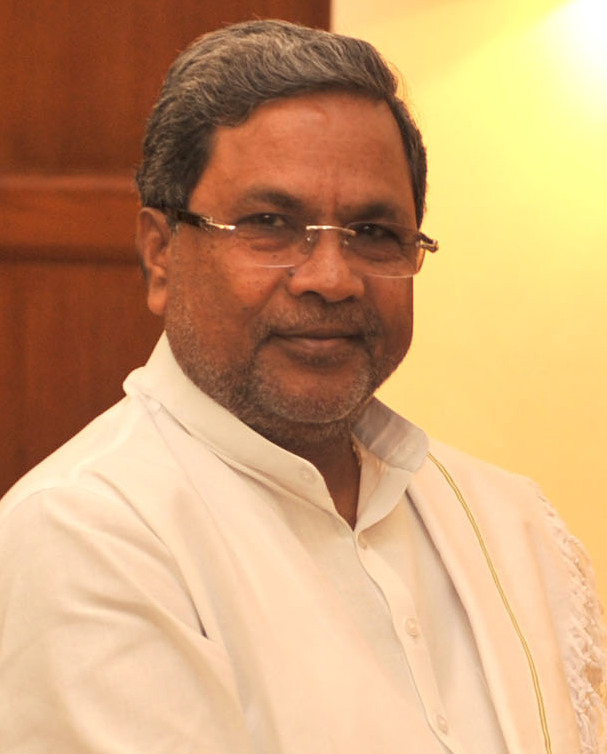
The Chief Minister Siddaramaiah had proposed allotting unused liquor licences through a transparent electronic auction to aid additional resource mobilisation for the State. He had made this statement while presenting the 2025-26 state budget. Details of the e-auction schedule are available on the Karnataka State Excise Department portal and the MSTC e-auction platform.
R.Chandrakanth
Ambrosia