AB InBev and the International Cricket Council (ICC) have signed a global partnership. Starting in 2026, AB InBev will be the Official Beer Partner for all major ICC tournaments. The partnership will be led by Budweiser 0.0, Budweiser’s no-alcohol beer in India, with other ABI mega brands activating in Europe and Africa.
From attending a match live in-stadium to watching one at a bar or pub with friends, with a lower alcohol-by-volume (ABV) and no-alcohol options like Budweiser 0.0, beer is the natural choice to enjoy responsibly. Through this partnership with the ICC, AB InBev will create more moments of cheers, choice and celebration for cricket fans of legal drinking age all over the world.
Cricket is one of the world’s most loved sports with more than two billion fans and ICC events are its largest platforms for passion, while AB InBev has been at the forefront of creating experiential activations to grow and deepen fandom,” said Sanjog Gupta, CEO of the ICC. “This partnership is a natural alliance between organisations striving to elevate moments, create memories and deliver experiences via innovation in avenues for fan engagement. We welcome AB InBev to the ICC’s august list of commercial partners and look forward to co-delivering multi-modal event experiences across our tournaments and amplifying excitement for the sport around the world. We look forward to working together to create unforgettable match-day experiences and amplify the exuberance of cricket in countries all around the world.”
The partnership between the ICC and AB InBev reinforces how beer and sports are better together by offering consumers of legal drinking age more balanced choices for more occasions.
“Cricket is one of the world’s most popular and fastest-growing sports, and we are excited to connect with fans on this mega platform,” said Marcel Marcondes, Global Chief Marketing Officer of AB InBev. “Beer is the beverage for socialisation and moderation, and our partnership with the ICC provides another occasion for our brands to create unforgettable experiences for consumers everywhere.”
The partnership includes all major ICC men’s and women’s events through 2027 including the ICC Men’s T20 World Cup 2026 in India & Sri Lanka, the ICC Women’s T20 World Cup 2026 in the UK, the inaugural ICC Women’s Champions Trophy 2027 in Sri Lanka, the ICC World Test Championship Final 2027 in England and the ICC Men’s Cricket World Cup 2027 in South Africa, Zimbabwe and Namibia.
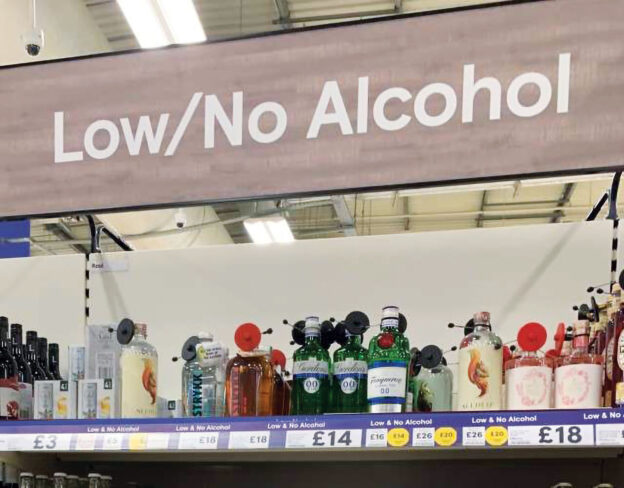
The no/low-alcohol market has enjoyed robust growth in the past few years, cementing its place as an area of significant opportunity for beverage alcohol, and one of increasing sophistication as well.
Moderation trends and demographic shifts have driven the long-term growth of no/low-alcohol around the world, but as the category matures and product quality improves, consumer trends in the space are becoming more nuanced and complex.
Another year of double-digit volume growth for no/low in the top 10 global markets (Australia, Brazil, Canada, France, Germany, Japan, South Africa, Spain, UK and US) during 2024 (+13%) capped a period of strong gains for the category: across those markets, 61m people were recruited into no-alcohol between 2022 and 2024, and 38m into low-alcohol, according to IWSR’s No- and Low-Alcohol Strategic Study.
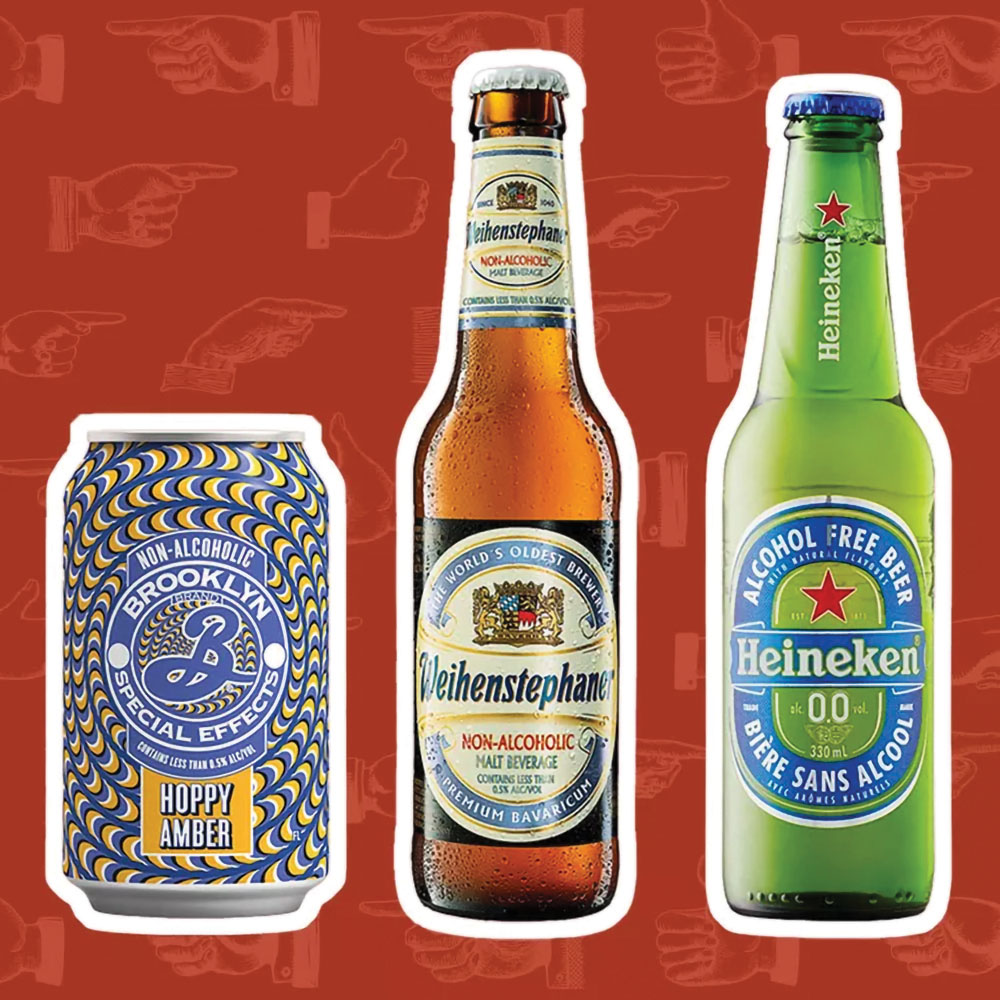
This strong upward trajectory is expected to continue. While total beverage alcohol (TBA) volumes are expected to grow at a compound annual growth rate (CAGR) of 1% to 2028, no-alcohol is expected to gain share of TBA, driven largely by the well-established no-alcohol beer segment, but boosted by additional gains for RTDs, wine and spirits. The forecasted volume CAGR for no-alcohol beverages between 2024 and 2028 is +7%.
Susie Goldspink, Senior Insights Manager – RTDs and No/Low Alcohol
“The no/low-alcohol market has been experiencing significant growth for several years now, driven by moderation trends and younger demographics,” explains Susie Goldspink, Senior Insights Manager – RTDs and No/Low Alcohol. “It is not all about moderation, however, as no/low becomes more established and categories outside beer gain participation.
“Other drivers besides health and moderation are now increasingly important, particularly in those emerging no-alcohol categories. Factors such as taste, availability and brand are becoming key drivers of choice, especially among younger LDA consumers.”
Participation rates
The increased participation in no/low over the past few years has been spearheaded by the US and Brazil: the US added 37m new no-alcohol consumers between 2022 and 2024, and 36m new low-alcohol drinkers, according to IWSR data. Meanwhile, 13m people were recruited into no-alcohol in Brazil over the same timescale.
This increased participation comes against a backdrop of long-term declines in overall alcohol consumption. Since 2000, consumption in litres of pure alcohol has fallen faster than TBA volumes, reflecting a consumer switch to lower-ABV products such as RTDs and no/low.
This trend is also reflected by the performances of many of the top 10 markets. There is a clear contrast between the recent strong gains of no- and low-alcohol versus the softer performance of full-strength products in a number of key destinations, including the UK, US, Japan, Brazil, Canada, Australia and Canada. For instance, the US recorded a -1% CAGR decline in full-strength volumes between 2019 and 2024, according to IWSR data, while no-alcohol (CAGR +28%) and low-alcohol (+7%) grew strongly over the same timescale.
No/low buyers are also increasingly substituting full-strength beverages with no-alcohol drinks, according to IWSR consumer research. In 2024, when no/low consumers in the top 10 markets were asked what they would previously have drunk on the same occasion, 30% said full-strength products – materially higher than in 2022.
Meanwhile, when it comes to no/low categories, the picture has become more nuanced over the past few years: participation in no/low beer in 2024 was unchanged versus 2022, reflecting the more established nature of this segment, whereas other categories have seen increased participation from younger LDA consumers in particular.
“Boomers and Gen X have been in the category for a longer time and have established habits,” says Goldspink. “They are the main buyers of no-alcohol beer, as it was one of the first no/low options to be widely available.
“On the other hand, younger age groups, who are newer to the category and just entering legal drinking age (LDA), are discovering their preferences without established habits and are attracted across various categories. Millennials in particular, with more time in the category and higher disposable incomes, have the widest repertoires.”
Frequency drivers
As consumers become increasingly familiar with the no/low landscape, factors beyond health and moderation are becoming more and more significant in driving consumption frequency.
While trying to be healthier and reducing alcohol intake remain the most significant motivations, according to IWSR consumer research, taste, availability, brand and category awareness have all gained in importance since 2022.
“Frequent drinkers are driven by better-tasting options, highlighting how critical taste is for no/low growth,” says Susie Goldspink. “Better availability has been key for buyers in the US, where newer categories such as alcohol adjacents have a higher incidence than other categories.”
Purchase drivers
Brand familiarity is becoming an increasingly decisive factor in driving no/low purchases, when availability is not an issue. According to IWSR consumer research conducted in 2024, 52% of no/low buyers chose to drink a product because it was a brand they already knew, up from 48% in 2022, while 32% cited taste preference, up from 28%.
Consumer perceptions are shifting too: some 54% of no/low buyers described no/low products as brands they cared about in 2024, up from 50% in 2022, and 53% described no/low brands as exciting, up from 48%.
“Frequent drinkers and younger buyers, who are more engaged with the no/low category, are more likely to be driven by brand and sensory characteristics,” says Susie Goldspink. “Up to 57% of Millennials are driven by brands they are familiar with, compared to only 45% of Boomers, who are less engaged and claim more occasional consumption of the category.
“Meanwhile, the improvement in consumer brand perceptions is driven by Gen Z and Millennials, who are more engaged with the category: 62% of Millennials and 57% of Gen Z have brands they care about, explaining the higher rate of brand loyalty compared to other age groups.”
What’s next? The future of no/low
No-alcohol is set to continue to drive future growth for no/low, with forecast gains across all categories, including beer/cider (predicted CAGR growth of +7% between 2024 and 2028), RTDs (+10%), wine (+5%), spirits (+7%) and alcohol adjacents (+3%). Forecast trends for low-alcohol are softer, with the exception of RTDs, where low-alcohol products are predicted to grow at a CAGR of +17% over the same timescale.
While volume growth for no-alcohol is envisaged across all top 10 markets, there are strong regional contrasts, with Brazil, Canada, the US and the UK all likely to see higher growth in the near future (CAGRs of between +7% and +18% to 2028). However, growth is predicted to be more gradual in Spain, South Africa and Germany.
Smaller markets such as Canada and Australia offer attractive growth prospects, but the largest-scale opportunities sit in Brazil and the US – although the two markets have strongly contrasting characters.
“While Brazil and the US have a similar demographic distribution of no-alcohol drinkers, with similar frequency and intensity of consumption, the sources of expected future growth are diverse,” explains Susie Goldspink. “The US has high participation rates across a broader array of no-alcohol categories; their development will continue, particularly among younger consumers, who have a wider repertoire of no-alcohol drinks.”
By contrast, growth in Brazil will come almost exclusively from no-alcohol beer, thanks to the category’s dominant market position, the presence of large international players and high recruitment levels.